 Semiahmoo
 Siding in Ferndale: A Different Kind of Wear
Ferndale sits close enough to the water and open farmland that its homes take on a specific mix of weather stress: salty, moisture-laden air drifting in off the Strait and bay, wind-driven rain that doesn't just fall but gets pushed sideways into wall assemblies, and a wet season that stretches long enough for moss and algae to get a real foothold on north-facing walls and anything shaded by trees. None of this is exotic or rare for Whatcom County. It's just relentless. Siding here isn't decorating a house — it's the first line of defense against water intrusion, and it's working every day of the year, not just during a storm.
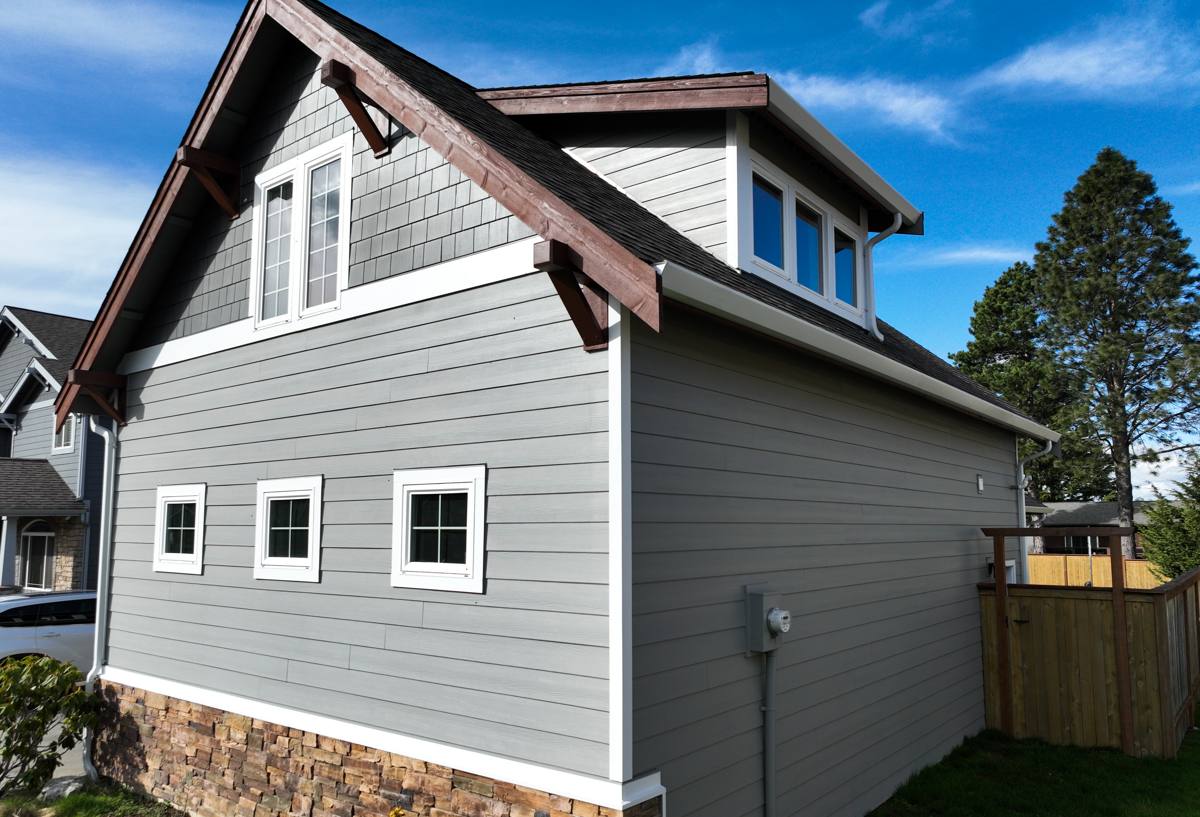
We're a local crew that works this stretch of Washington, and we install one product: James Hardie fiber cement siding. Not vinyl, not LP SmartSide, not primed wood, not cedar. That's a deliberate call, and it comes from watching how different siding materials actually hold up around Ferndale, Blaine, and the surrounding Whatcom County towns over years of exposure — not from a sales pitch.
What Ferndale's Climate Actually Does to a House
Salt Air and Metal Fasteners
Proximity to Semiahmoo Bay and the Strait means airborne salt makes it inland further than most homeowners assume, especially on breezy days. Salt accelerates corrosion on exposed metal — fasteners, flashing, trim screws — and it can slowly degrade certain coatings and adhesives faster than manufacturers' inland test data predicts. Any siding system installed here needs corrosion-resistant fastening and flashing details treated as non-negotiable, not optional upgrades.
Driving Rain
Ferndale doesn't get hurricane-force wind, but it gets a steady pattern of wind-driven rain, especially in fall and winter. Driving rain finds every gap: unsealed laps, poorly flashed windows, siding installed too tight to the ground or a deck ledger. Water that gets behind siding and can't drain or dry out is what actually rots wall sheathing — not the rain itself.
Moss and Algae Season
Long stretches of overcast, damp weather from October through May give moss and algae plenty of time to establish on shaded or north-facing walls, especially under tree cover, which is common on Ferndale's more wooded lots. Porous or absorbent siding materials hold moisture longer and give organic growth more to grab onto. Non-porous, factory-finished materials resist this far better over time.
Why We Only Install James Hardie
We used to install a wider range of siding products. Over time, the callbacks, the moisture damage we found behind other materials during tear-offs, and the maintenance complaints from homeowners all pointed the same direction. James Hardie fiber cement is:
- Non-combustible — it doesn't contribute fuel to a fire, which matters given wildfire smoke and ember exposure that has become a more regular late-summer concern across Western Washington.
- Dimensionally stable — it doesn't expand and contract with humidity swings the way wood-based products do, so joints and paint lines stay tighter over the years.
- Factory-finished with ColorPlus Technology — the color is baked on in a controlled environment, not brushed on in the field, which means better UV and moisture resistance than field-applied paint.
- Backed by a real transferable warranty on both the substrate and the factory finish, structured around Hardie's own engineering data.
- Available in HZ5 formulations engineered for wetter, harsher climate zones like ours, not a generic one-size-fits-all product.
We're not going to tell you every other product on the market is junk — that's not fair, and it's not our call to make about a competitor's material. What we will say is that after years of installs and repairs in this specific climate, Hardie is the one product we're willing to put our name behind and warranty our workmanship against.
What We Won't Install, and Why That's Actually a Service to You
Vinyl Siding
Vinyl is inexpensive and low-maintenance in the sense that it doesn't need repainting, but it can warp or become brittle with UV and temperature cycling over decades, its seams and J-channels are common points where wind-driven rain gets behind the wall, and it's a petroleum-based product with real limits on fire performance compared to fiber cement.
LP SmartSide and Primed Wood/Cedar
These are wood-based products, and wood-based products are fundamentally more vulnerable to sustained moisture exposure — which is exactly what Ferndale's climate provides in volume. Even with good engineered treatments, any breach in the coating or caulking gives moisture a path into a material that's naturally more absorbent than cement board. Cedar in particular looks great initially but demands ongoing refinishing to keep that moisture barrier intact, and in a climate with this much sustained dampness, that maintenance schedule gets expensive and easy to fall behind on.
How a Siding Job Actually Works Here
Assessment and Moisture Check
Every job starts with a real look at the existing wall assembly, not just the visible siding. We're checking for soft sheathing, prior water staining, and flashing condition around windows, doors, and any roof-to-wall intersections — the spots most likely to have taken on water over the years in this climate.
Water-Resistive Barrier and Flashing
Before any Hardie board goes up, the house needs a properly lapped water-resistive barrier and correctly integrated flashing at every penetration and transition. This is the layer that actually stops driving rain from reaching the sheathing — the siding itself is the second line of defense, not the only one.
Installation to Manufacturer Spec
James Hardie publishes detailed installation requirements — fastener type and spacing, clearance from grade and roof lines, gapping at butt joints, caulking specifications. Skipping these isn't a minor shortcut; it's what voids warranties and what we most often find has failed when we're called out to look at someone else's installation. Correct clearance from the ground and from decks and patios matters especially in Ferndale, where splash-back off wet surfaces is a regular event, not an occasional one.
Finish and Trim Details
Corner boards, trim, and caulked joints get finished to shed water outward and downward, not trap it. In a salt-air environment, we also pay attention to fastener selection so corrosion doesn't become a slow-motion problem behind the finish surface.
Beyond Siding: Roofing, Windows, and Decks
Siding doesn't work in isolation. A roof that's shedding water improperly, windows that leak at the flashing, or a deck ledger board that's trapping moisture against the wall all undermine even a perfect siding installation. We handle roofing, window replacement, and deck work as well, which matters in a climate like Ferndale's because these systems all touch each other at rooflines, wall penetrations, and ledger connections. Addressing siding without checking the roofline above it, or the window flashing beside it, just moves the water problem somewhere else.
Cost Factors to Understand Before You Get Quotes
| Factor | Why It Matters in Ferndale |
|---|---|
| Home size and wall complexity | More corners, dormers, and roof-to-wall intersections mean more flashing detail work, which drives labor time more than material cost. |
| Existing wall condition | Hidden moisture damage found during tear-off (common on older homes near the coast) adds sheathing repair before new siding goes up. |
| Siding profile and trim choice | Lap width, shingle-style panels, and trim detailing affect material cost and installation time differently. |
| Access and site conditions | Wooded or sloped lots, common around Ferndale, can add setup and staging time. |
| Color and finish | ColorPlus factory finishes cost more upfront than field-primed products but remove the repainting cycle from your maintenance schedule. |
Why Hiring Local Actually Matters Here
A crew that works Whatcom County regularly has already seen how a given wall orientation, tree cover pattern, or proximity to water plays out over a few winters — not just in a sales brochure. We know which details get skipped by installers unfamiliar with this specific combination of salt exposure, driving rain, and moss pressure, because we've torn open walls where those shortcuts caused real damage. A local reputation also means accountability: if a warranty issue comes up five years from now, we're still the same crew, working the same towns, not a name that did one job and moved on.
Questions Worth Asking Any Siding Contractor
- Are you installing to the manufacturer's published spec, including fastener type, spacing, and clearances?
- What water-resistive barrier and flashing details are included, not just the visible siding?
- Is the workmanship warranty separate from the manufacturer's material warranty, and what does each actually cover?
- Have you worked on homes in this specific area, and what moisture or corrosion issues have you seen locally?
- What's the realistic maintenance schedule for the product you're recommending, over 10 and 20 years?
Maintenance Reality: What Ownership Looks Like After Install
One reason we push toward fiber cement is that the ongoing maintenance burden is genuinely lower — no repainting cycle every few years, better resistance to moss and algae buildup on shaded walls, and a factory finish that isn't relying on a field-applied coat to hold up against salt air and UV. That said, no siding is maintenance-free. Keeping gutters clear, trimming vegetation back from walls, and doing an occasional visual check of caulked joints and trim after a rough winter are simple habits that extend the life of any exterior, Hardie included.
If you're planning a siding project in Ferndale or anywhere else in Whatcom County, we're happy to take a look at your home and walk you through what we're seeing — no pressure, no obligation. Reach out below for a free estimate.