 Semiahmoo
 Allura Isn't a Bad Product — It's Just Not the One We Put on Your House
If you've been pricing out fiber cement siding for a home in Semiahmoo or anywhere else in Whatcom County, you've probably run across Allura. It's a real fiber cement product, made by a real manufacturer, and it shows up in a lot of bids because it's often priced a step below James Hardie. We want to be upfront about something before you get further into your research: Semiahmoo Siding does not install Allura. Not because it's junk, but because after years of installing fiber cement in this specific climate, we've settled on one manufacturer we trust completely, and we'd rather explain our reasoning than dodge the question when it comes up.
This page isn't a takedown of Allura. It's an honest look at the differences that matter when the siding in question is going to spend the next 30-plus years absorbing salt air off Semiahmoo Bay, driving winter rain, and the long moss season that Whatcom County is known for.
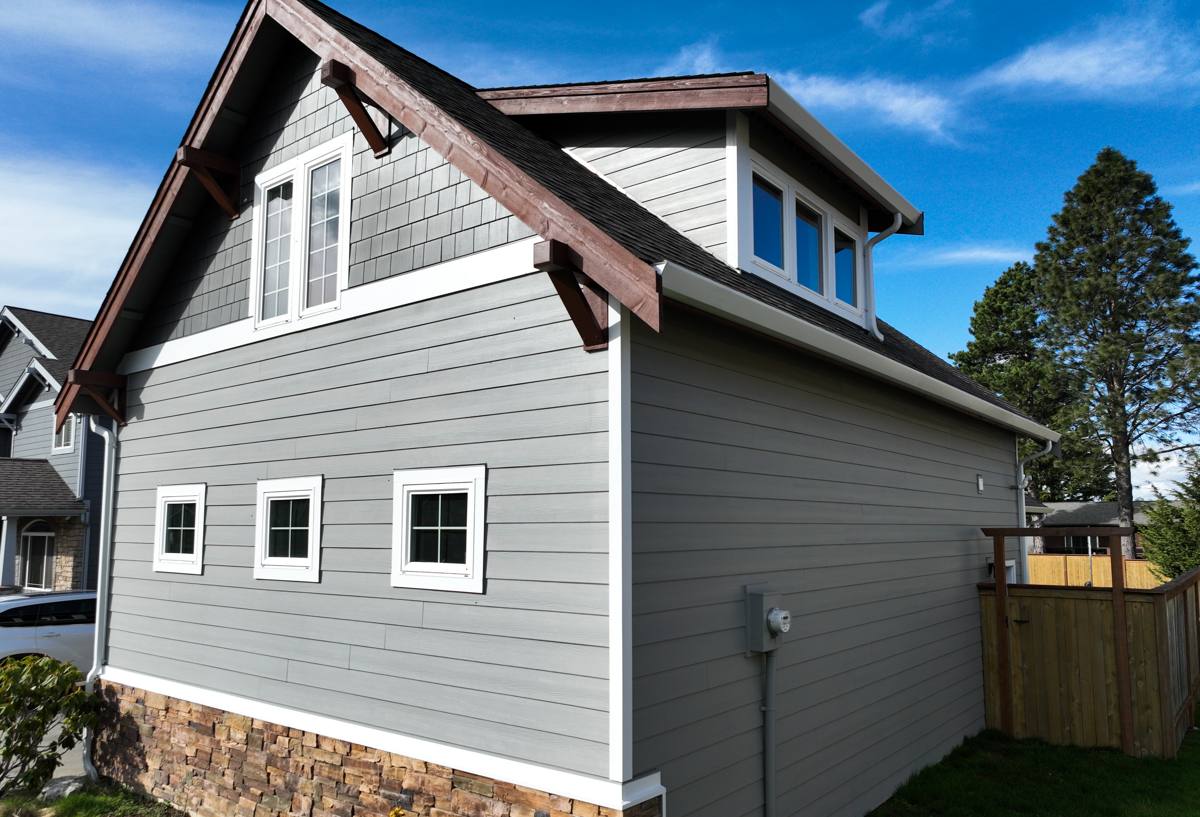
What Allura Gets Right
Fiber cement as a category is a good choice for this region, and Allura is part of why. It's a Portland cement, sand, and cellulose fiber composite, same basic recipe as most fiber cement siding on the market, including Hardie's. That means it shares the core advantages over wood, vinyl, or engineered wood siding:
- Non-combustible material, which matters for insurance conversations and fire-rated assemblies
- Doesn't rot the way untreated wood or primed spruce can when moisture gets behind it
- Holds paint and factory finishes far longer than wood clapboard
- Resists pests like carpenter ants and woodpeckers that go after cedar
- Available in lap, panel, and shingle profiles, so the look isn't limited
Allura also has a legitimate manufacturing history and is ICC-ES certified for code compliance. We're not questioning whether it's a real building product. It is. The differences we care about show up in the details below the surface-level spec sheet.
Where the Trade-Offs Show Up: Formulation and Weather Resistance
The moisture question
All fiber cement is more moisture-tolerant than wood, but "more tolerant" isn't the same as "engineered for wet, marine climates." Semiahmoo sits right on the water, with salt-laden air moving inland constantly, plus the driving, wind-blown rain that comes through Whatcom County off the Strait of Georgia. Siding here doesn't just get rained on — it gets rained on sideways, and it dries slowly because of persistent humidity and long stretches of overcast, low-evaporation weather.
James Hardie manufactures region-specific product lines (their HZ5 formulation, for example) engineered around exactly this kind of moisture and freeze-thaw exposure. Allura's product line is more general-purpose across its formulation, without the same tiering by climate zone. That doesn't mean it fails here — it means the margin for installer error is thinner, and the manufacturer hasn't built the same climate-specific engineering into the product itself.
The finish question
This is the bigger factor in our decision. James Hardie's ColorPlus finish is a baked-on, factory-applied finish process with a dedicated multi-coat warranty against fading and peeling. Allura offers factory-primed and some factory-finished options, but the finish warranty structure and track record aren't built around the same long-term color retention promise. In a climate with intense UV in summer and constant damp the rest of the year, finish failure is one of the most common callback reasons we see on any brand of fiber cement — and it's the one variable where we didn't want to compromise.
Installation Sensitivity: Why the Installer Matters as Much as the Product
Fiber cement siding, regardless of brand, is unforgiving of shortcuts. Gapping, flashing, and fastener patterns that would be a minor issue on vinyl become moisture entry points on fiber cement if they're wrong. This is true of Hardie too — it's not immune to bad installation. The difference for us is documentation and support.
James Hardie publishes detailed, climate-specific installation instructions (including a dedicated Pacific Northwest installation guide), runs a contractor certification program, and backs certified installations with a stronger labor-inclusive warranty structure. That gives us, and you, a documented standard to install to and a manufacturer relationship if something ever needs to be addressed. Allura's installation guidance is less regionally specific, and its contractor network and certification infrastructure are smaller in the Pacific Northwest. When we're the ones standing behind the work for the next few decades, we want the manufacturer's engineering, documentation, and warranty support fully lined up behind us.
Comparison at a Glance
| Factor | Allura Fiber Cement | James Hardie Fiber Cement |
|---|---|---|
| Base material | Cement, sand, cellulose fiber | Cement, sand, cellulose fiber |
| Climate-specific engineering | General formulation | Region-specific HZ formulations, incl. HZ5 for wet/freeze zones |
| Factory finish | Primed and some finished options | ColorPlus baked-on finish with dedicated fade/finish warranty |
| PNW-specific install documentation | General installation guidance | Dedicated Pacific Northwest install guidance |
| Contractor certification network locally | Limited in this region | Established certified contractor program |
| Warranty structure | Standard product warranty | Non-prorated product warranty, transferable, labor coverage varies by certified install |
Why We Only Carry One Brand
Some contractors bid multiple fiber cement brands and let price steer the homeowner's decision. We chose the opposite approach: standardize on one system, know it inside and out, install it the same correct way every time, and be able to back every job with a manufacturer that has skin in the game if something goes wrong. Splitting our crews' expertise across multiple fiber cement brands with different fastening specs, flashing details, and finish systems increases the odds of a mistake — and on a coastal Whatcom County home, a small installation mistake compounds over years of salt air and rain into a real problem.
James Hardie's scale in North America also means a more established supply chain for matching trim, replacement boards, and touch-up paint years down the line — something that matters when you need to repair a section after storm damage or a remodel.
Cost Is a Real Part of the Conversation — Here's How We Think About It
We won't pretend Allura and similar alternative fiber cement brands don't often come in lower on material cost. They frequently do. But siding is a once-a-generation purchase for most homeowners, and the cost difference needs to be weighed against:
- Expected repaint or refinish cycle, given ColorPlus's longer factory-finish warranty versus primed-and-field-painted alternatives
- Resale and appraisal recognition — Hardie's name recognition among Pacific Northwest buyers and appraisers is high
- Warranty claim experience if a defect surfaces — a manufacturer with deep local contractor infrastructure is easier to get support from
- The real cost of a callback or repair on a coastal property, where scaffolding, moisture remediation, and moss-related maintenance add up fast
When you run the total cost of ownership over 20-30 years rather than the invoice on install day, the gap narrows substantially, and in a lot of cases it reverses.
What This Means for Your Semiahmoo Home Specifically
Homes along the water in Semiahmoo take a different beating than homes even a few miles inland. Salt-laden air accelerates corrosion on fasteners and trim, driving rain off the Strait tests every lap joint and flashing detail, and the long moss season in this part of Whatcom County keeps north- and shade-facing walls damp for extended stretches. None of that is a reason to avoid fiber cement — it's a reason to be selective about which fiber cement system and which installation standard goes on the house. That's the whole basis of our decision to standardize on one manufacturer instead of quoting whichever brand is cheapest that month.
What We Actually Recommend Instead
We install James Hardie exclusively — their lap siding, panel systems, and shingle products, all in ColorPlus factory finish, installed to Hardie's Pacific Northwest specifications. It's not the only fiber cement product on the market, and we understand if a homeowner wants to shop around and compare bids from contractors who carry other brands. But if you're asking us to put siding on your home, this is the one system we'll stand behind, because we've seen how it performs in exactly this climate over the long haul.
Questions Worth Asking Any Siding Contractor Before You Hire
- Which fiber cement brand do you install, and why did you choose it over the alternatives?
- Are your installers certified by the manufacturer, and can you show documentation?
- What does the warranty actually cover — material only, or labor too — and for how long?
- How do you handle flashing and gapping around windows, doors, and butt joints?
- Can you provide a written installation spec, not just a verbal explanation?
If you're weighing siding options for a home in Semiahmoo or elsewhere in Whatcom County, we're happy to walk through what we install, why, and what it would look like on your specific house. Reach out for a free, no-pressure estimate — there's no obligation, and we'll give you a straight answer even if fiber cement isn't the right fit for your situation.