 Semiahmoo
 Exterior Work in Custer and Semiahmoo: What the Climate Demands
Homes in Custer and the Semiahmoo area sit close enough to Drayton Harbor and the Strait of Georgia that salt air is a daily fact of life, not an occasional nuisance. Add Whatcom County's steady winter rain, frequent wind off the water, and a moss season that can run eight or nine months of the year, and you have an exterior environment that's genuinely harder on a house than most inland Washington locations. We work on homes throughout this stretch of the county, and the patterns repeat: siding that's failed at the bottom courses first, roofs carrying more moss than the neighbors' inland, and trim and fascia showing rot years before a manufacturer's warranty would suggest they should.
None of that means Custer and Semiahmoo are bad places to own a home near the water — they're beautiful, and that's exactly why people live there. It just means the exterior envelope has to be chosen and installed with that environment in mind, not treated the same as a build 40 miles inland.
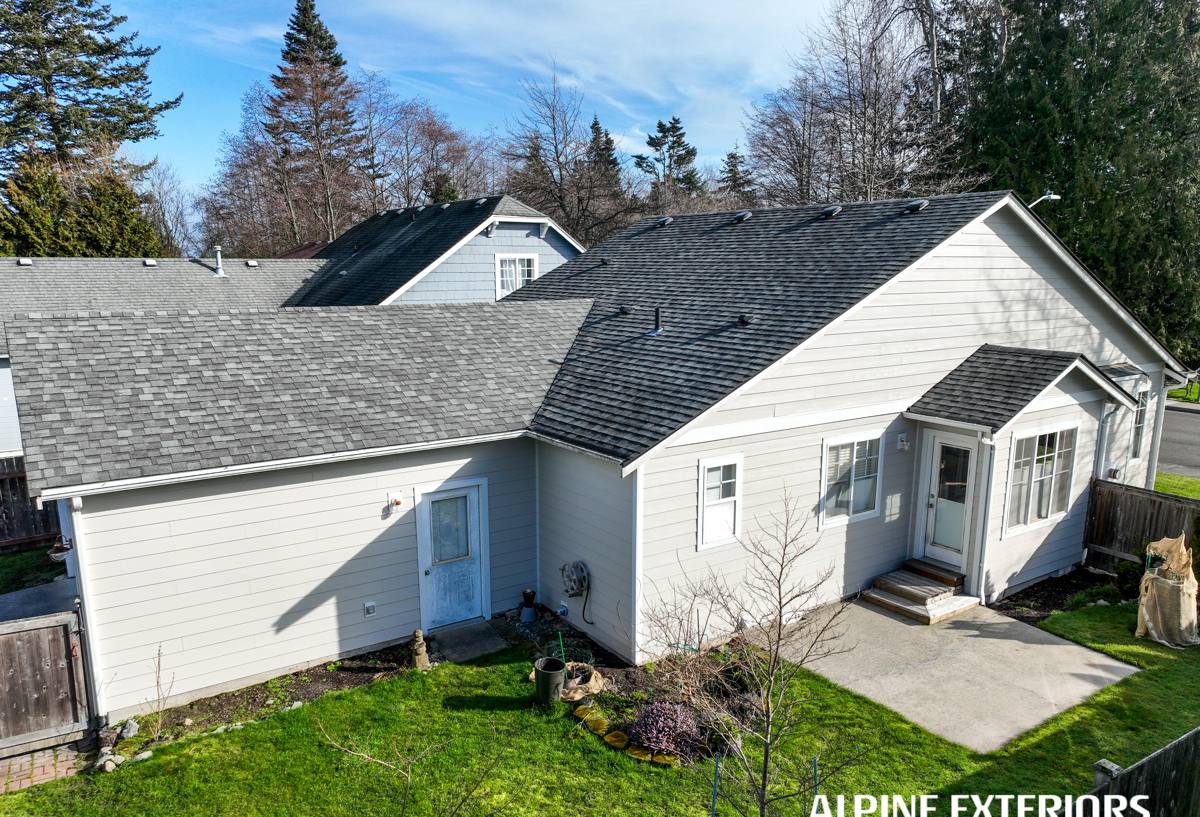
How Salt Air, Rain, and Moss Actually Damage a House
Salt Air and Corrosion
Airborne salt from the harbor and strait settles on every exterior surface — siding, flashing, fasteners, window hardware — and accelerates corrosion in anything not rated for a marine-adjacent environment. Cheap or mismatched fasteners are usually the first thing to fail, showing rust streaks down siding panels long before the siding itself is compromised. Once corrosion starts at a fastener, water finds its way behind the cladding through that same point.
Driving Rain and Wind-Driven Moisture
This part of Whatcom County gets rain that doesn't fall straight down. Wind off the water pushes it sideways into wall assemblies, which is a different — and more demanding — condition than a typical vertical rain event. Siding, flashing details, and window sealing all have to account for wind-driven rain, not just water running off a roof. Products and installation methods that work fine in a sheltered inland lot can underperform here.
The Long Moss Season
Shade, moisture, and mild temperatures are a moss factory, and Custer has all three for most of the year. Moss on a roof isn't just cosmetic — it holds moisture against shingles and underlayment, works its way under shingle tabs, and can shorten roof life significantly if it's never addressed. Moss and algae also creep onto north-facing siding and anywhere tree cover keeps a wall shaded and damp.
Siding: Why We Only Install James Hardie
Siding is the first line of defense against all three of the issues above, and in a coastal, high-moisture climate like this one, the material matters as much as the installation. We install James Hardie fiber cement exclusively — no vinyl, no LP SmartSide, no primed wood, no other fiber cement brands — and that's a deliberate standard, not a sales preference.
What Fiber Cement Gets Right Here
- Non-combustible material that doesn't rely on a paint film alone to keep moisture out
- Engineered HZ5 product lines built specifically for high-moisture, freeze-and-thaw coastal exposure
- ColorPlus factory finish, baked on under controlled conditions rather than field-painted, which holds up better against salt air and UV than most field-applied coatings
- Dimensionally stable — it doesn't swell, cup, or rot the way wood-based siding can when it stays damp for months at a time
- A strong transferable warranty backed by a manufacturer that engineers specifically for this climate zone
Wood-based and vinyl products aren't disasters everywhere — they just carry trade-offs that get magnified in a salt-air, high-rainfall environment: more frequent repainting, more vulnerability to moisture intrusion at seams and edges, and shorter realistic service life before something needs attention. We'd rather put one product on every home we touch and stand behind it fully than install several products and hope each one performs.
Coastal Climate Siding Comparison
| Material | Moisture Performance | Maintenance Near Salt Air | Typical Service Life Locally |
|---|---|---|---|
| James Hardie fiber cement | Engineered for high-moisture zones; dimensionally stable | Occasional rinse; factory finish resists fading | 30+ years with proper install |
| Vinyl siding | Can warp/buckle with temperature swings; seams are entry points | Low, but UV and salt exposure fade color over time | 15-25 years, often less near the water |
| Primed wood/spruce | Absorbs moisture at cut edges and joints if seal fails | Repainting every few years; rot risk in shaded, damp areas | 10-20 years without diligent upkeep |
| Other fiber cement brands | Varies by product line and moisture rating | Depends on finish quality and installation | Varies; not standardized the way HZ5 lines are |
Roofing: Working With the Moss, Not Just Against It
A roof in Custer or Semiahmoo needs more than a good shingle — it needs installation and maintenance habits that account for how much moisture and shade this area gets. Proper underlayment, ventilation, and flashing at every valley and penetration matter more here than in a drier climate, because a small gap gives moisture months to work rather than days. We also talk with homeowners honestly about moss management: preventive treatment and periodic cleaning extend a roof's life considerably, while ignoring it for years tends to shorten it.
Windows: Sealing Against Wind-Driven Rain
Because rain here often arrives at an angle, window flashing and sealing details carry more weight than they would on a sheltered inland lot. Poorly flashed windows are one of the most common sources of hidden water intrusion we find when we open up a wall during a siding replacement — the window looked fine from outside, but water had been tracking behind the trim for years. When we replace windows, we treat the flashing and integration with the siding plane as part of the job, not an afterthought, because that's the detail that actually keeps water out in this climate.
Decks: Built for Wet Shoulder Seasons
Decks in this area spend a lot of the year damp, whether from direct rain, morning fog off the water, or shade from surrounding trees. Fastener choice, ledger flashing, and gap spacing between boards all affect how well a deck sheds water and resists rot and mildew. A deck built without those details in mind will show soft spots, staining, and slippery moss growth well before it should.
Signs Your Home's Exterior Needs Attention
A lot of exterior damage in this climate develops slowly and out of sight. These are the signs worth checking for, especially if your home hasn't had a close exterior inspection in a few years:
- Rust streaking below fasteners or at panel seams on siding
- Soft or spongy siding, especially near the bottom courses or around windows
- Visible moss buildup on the roof, particularly on north-facing slopes or under tree cover
- Peeling or bubbling paint on wood trim, fascia, or older siding
- Water stains on interior ceilings or walls near exterior corners
- Gaps or cracking in caulking around windows and doors
- A deck surface that stays damp or slick long after rain has stopped
Why a Local Crew Matters in This Area
Exterior work in Custer and Semiahmoo isn't identical to exterior work in Bellingham proper or further inland in Whatcom County — the exposure to wind off the water, the salt content in the air, and the shade-and-moisture combination that drives moss growth are all more pronounced this close to the harbor and strait. A crew that works this specific area regularly recognizes those conditions immediately: where flashing details need extra attention, which sides of a house take the worst of the wind-driven rain, and how aggressively moss needs to be managed to protect a roof's lifespan. That local pattern recognition is hard to replace with a generic install, no matter how good the crew is on paper.
What to Expect When You Work With Us
We handle siding, roofing, windows, and decks, which means we look at your home's exterior as one connected system rather than a set of unrelated projects. A siding replacement is a natural time to check window flashing; a roof inspection often reveals whether moss has already started affecting the deck below a shaded section of roofline. We walk the property with you, point out what we actually see — not a scare list, just an honest read — and explain the trade-offs of any recommendation in plain terms.
If siding replacement is part of the conversation, we'll explain why we install James Hardie exclusively and how the specific HZ5 product line fits a Custer or Semiahmoo exposure, but we're not going to pressure you into more work than your home needs. Sometimes the right answer is targeted repair and better moss management, not a full replacement.
If you're noticing any of the warning signs above, or it's simply been a while since your home's exterior had a real look, we're happy to come take a look. Estimates are free and there's no pressure — just an honest assessment of where your siding, roof, windows, or deck actually stand.