 Semiahmoo
 Why Whatcom County Siding Fights a Different Battle
If you live on the Semiahmoo Spit or anywhere along Drayton Harbor, your siding works harder than siding almost anywhere else in the state. You've got three things stacked on top of each other: salt-laden air coming off the water, long stretches of driving, wind-blown rain, and a moss and algae season that can run eight or nine months out of the year. Any one of those is manageable. All three at once, on the same wall, year after year, is what actually causes premature siding failure in this area.
This isn't a scare piece. Most siding problems we see in Whatcom County are slow and preventable — they just don't get caught until the damage is already inside the wall. This page walks through how moisture actually gets behind siding, what the early warning signs look like, and why the material you choose matters more here than it does in a drier inland climate.
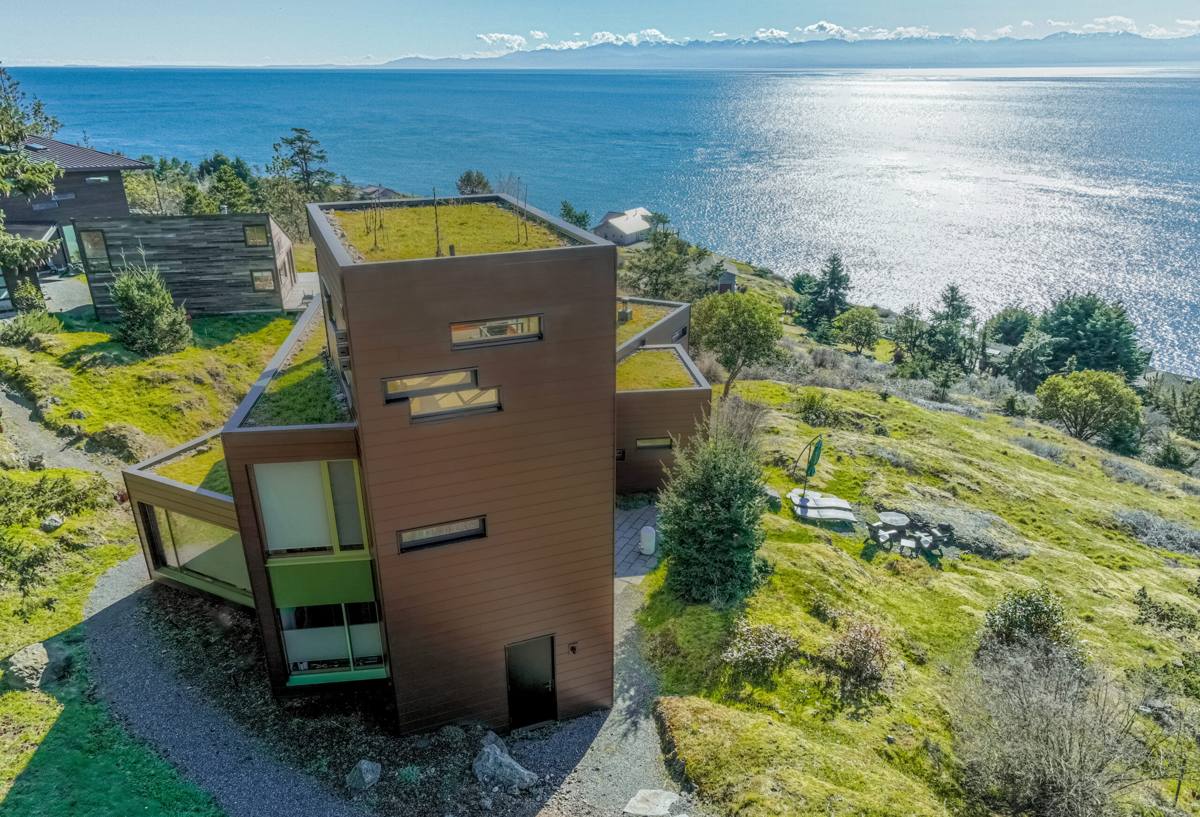
How Moisture Gets Behind Siding in the First Place
Siding's job isn't to be 100% waterproof on its own — it's to shed the vast majority of water and work together with the weather-resistive barrier (the housewrap or building paper underneath) to manage whatever gets through. Problems start when that system has a gap. The most common entry points we find:
- Failed or missing caulk at butt joints, trim, and window/door flashing
- Siding installed in direct contact with soil, decking, or hardscaping, wicking moisture straight up
- Missing or improperly lapped flashing above windows, doors, and horizontal trim
- Nail penetrations that split the material or sit proud, creating a wick point
- No rainscreen gap, so siding sits flush against the WRB with nowhere for incidental moisture to drain or dry
- Panel or board edges left unsealed at cuts, especially around penetrations like hose bibs and light fixtures
Any single gap might not matter much in a dry climate. In a coastal Whatcom County location that sees driving rain off the Strait and Georgia Basin, that same gap gets tested constantly — and eventually it lets water in.
Why "It Looks Fine From the Street" Isn't Reassuring
Rot almost always starts on the back side of the siding or inside the wall cavity, not on the visible face. By the time paint is bubbling or a board feels soft to the touch, moisture has usually been working behind the surface for one to three years. That's why we always recommend an actual hands-on inspection rather than a drive-by look when a home is more than 12-15 years old, especially on the west and south-facing walls that take the brunt of Pacific storms.
The Warning Signs of Rot Behind the Siding
You don't need to be a contractor to catch most of these early. Walk your home's exterior once or twice a year, and look for:
- Paint that's bubbling, peeling, or alligatoring in a specific spot rather than evenly across a wall
- Dark staining or streaking below butt joints, seams, or window trim
- Siding that feels soft, spongy, or gives when you press on it (a flathead screwdriver test at the base of walls is a quick check)
- Visible swelling, warping, or delamination, especially at board ends and corners
- A musty smell in an adjacent interior room, or unexplained interior paint/drywall damage on an exterior wall
- Persistent moss or algae growth concentrated in one area, which holds moisture against the surface longer than the rest of the wall
Any one of these is worth a closer look. Several together, especially near ground level or under a roof valley, usually means active moisture intrusion.
Why Some Siding Materials Handle Moisture Better Than Others
Every siding material handles water differently, and in a climate like ours that difference shows up faster than it would in Eastern Washington or Arizona. Here's how the common options actually behave over time in a wet, coastal environment:
| Material | How It Handles Moisture | Common Long-Term Issue Here |
|---|---|---|
| Cedar / primed spruce | Natural wood absorbs and releases moisture with humidity swings | Cupping, checking, and rot at end grain and fastener points without diligent repainting |
| OSB-based engineered wood (LP SmartSide and similar) | Resin-treated wood strand product, water-resistant but not waterproof | Swelling and edge softening if the factory seal is compromised at cuts, seams, or fastener heads |
| Vinyl | Doesn't absorb water itself, but isn't a moisture barrier — water can travel behind panels | Traps moisture against the WRB in wet climates; panels can warp or crack in temperature swings |
| Cemplank / Allura fiber cement | Cement-based, moisture-resistant core | Performance depends heavily on installer's caulking, flashing, and finish quality |
| James Hardie fiber cement (HZ5 / HardieZone) | Engineered specifically for wet, marine-influenced climates; factory ColorPlus finish resists moisture at the surface | Still requires correct installation, but the material itself doesn't rot, swell, or support fungal growth |
We install James Hardie exclusively, and this is the core reason why. Wood-based products — whether it's traditional cedar, primed spruce, or an engineered wood product like LP SmartSide — all share a wood or wood-fiber core that can absorb moisture and, given enough time and a small installation gap, begin to break down. Fiber cement doesn't have that vulnerability at the material level. Hardie's HZ5 product line is specifically engineered and warranted for regions like ours with sustained moisture exposure, which matters more here than almost anywhere else in Washington.
Moss, Algae, and the Long Wet Season
Whatcom County's moss season isn't a minor cosmetic issue — it's a moisture management issue. Moss and algae hold water against a surface long after the rain has stopped, extending the amount of time siding stays wet by hours or days depending on shade and airflow. North-facing walls, areas under overhangs with poor drying airflow, and anything close to mature trees are the usual hot spots.
Growth itself isn't necessarily damaging fiber cement — Hardie's factory finish resists it better than bare wood or primed products — but heavy, long-term moss buildup on any material traps moisture at seams and fastener points, which is exactly where rot and finish failure start. Gentle, regular cleaning (never pressure-washing directly into seams or under panels) goes a long way toward keeping moss from becoming a moisture problem rather than just a cosmetic one.
Salt Air and Coastal Exposure at Semiahmoo
Homes near the water — along the Spit, around Drayton Harbor, and anywhere with a direct line to Semiahmoo Bay — deal with an added factor most inland Whatcom County homes don't: airborne salt. Salt spray accelerates corrosion on fasteners, flashing, and hardware, and it can degrade certain paint and coating systems faster than plain rainfall would. Corroded fasteners are a quiet problem — a rusting nail head can eventually split the siding around it or lose its grip, opening a new water entry point exactly where you don't want one.
For coastal properties, we pay close attention to fastener material and flashing details during installation, and factory-finished siding (rather than field-painted) holds up noticeably better against salt exposure over the long run, since the coating is baked on under controlled conditions rather than applied on site.
Installation Details That Actually Prevent Moisture Problems
The single biggest factor in whether siding stays dry over 20-30 years isn't the brand on the box — it's whether the installer got the details right. The things that matter most:
- Proper rainscreen gap behind the siding so water can drain and air can circulate to dry the wall assembly
- Correctly lapped and sealed flashing at every window, door, and horizontal transition
- Siding held clear of grade, decks, patios, and roof lines per manufacturer minimums — usually 6 inches or more from soil
- Butt joints and trim caulked with a flexible, paintable sealant rated for exterior use, not just gapped and painted over
- Fasteners driven correctly — not overdriven, not underdriven — and placed per the manufacturer's nailing pattern
- Cut ends and field-cut edges sealed before installation, not left raw
This is why we're specific about installing to James Hardie's published specifications rather than treating siding as a generic wrap-the-house job. A premium material installed loosely will fail faster than a mid-grade material installed correctly — but the two together, correct material and correct installation, is what actually gets you decades of trouble-free performance in this climate.
What To Do If You Suspect Rot Already
If you're seeing soft spots, staining, or bubbling paint, don't wait for it to spread. The first step is a proper inspection — probing suspect areas, checking behind trim where possible, and in some cases pulling a board or panel to look at the WRB and sheathing underneath. Small, isolated rot can sometimes be cut out and repaired without a full re-side. Widespread moisture damage, especially if it's reached the sheathing or framing, usually means a larger repair is the more honest recommendation, because patching over compromised structure just delays the real cost.
Either way, get an actual look before assuming the worst — or assuming it's nothing. A short inspection is far cheaper than a guess in either direction.
A Simple Maintenance Checklist for Whatcom County Homes
| Task | Frequency |
|---|---|
| Visual walk-around, all elevations | Twice a year (spring and fall) |
| Clear moss/debris from siding, trim, and butt joints | Annually, or as needed in shaded areas |
| Check and re-caulk gapped or cracked joints | Every 1-2 years |
| Inspect flashing above windows/doors for gaps | Annually |
| Confirm grade/mulch hasn't crept up against siding | Annually |
None of this takes long, and catching a failed caulk joint or a bit of moss buildup early is the difference between a five-minute fix and a section of wall that needs to be opened up.
If you're noticing any of the warning signs above, or you'd just like an honest, no-pressure look at how your current siding is holding up against Whatcom County's climate, we're happy to come take a look and give you a straight answer. Reach out below for a free estimate.