 Semiahmoo
 Exterior Work Built for California Creek's Coastline Conditions
California Creek sits in the stretch of Whatcom County where the land meets Drayton Harbor and Semiahmoo Bay, and that location shapes everything about how a home's exterior ages here. Homes in this area deal with a combination most inland Washington neighborhoods never see: salt-laden air off the water, driving rain that comes in sideways during winter storms, and a moss season that can run eight or nine months out of the year in shaded, north-facing spots. None of that is exotic — it's just the day-to-day reality of building close to the Salish Sea. But it does mean that exterior materials and installation details that work fine forty miles inland can fail early out here.
We're a Whatcom County-based crew, and we treat California Creek the way we'd treat our own street: same crews who know which corners of a roof hold moss the longest, which siding details need extra flashing near the water, and which product choices actually hold up under years of marine exposure instead of just looking good on install day.
What Salt Air and Coastal Moisture Actually Do to a Home
Salt Air
Airborne salt is corrosive to exposed metal fasteners, flashing, and hardware, and it accelerates the breakdown of paint films and lower-grade siding materials. Over years, homes closer to the water tend to show chalking, fading, and edge deterioration faster than homes even a mile or two inland. This is one of the biggest reasons material choice matters more here than in a lot of other parts of the state.
Driving Rain
Storms rolling in off the Strait of Georgia and the Salish Sea don't just drop rain straight down — wind-driven rain gets pushed sideways into wall assemblies, window trim, and butt joints. A siding system that isn't installed with proper flashing, gapping, and drainage behind it will eventually let that water find a way in, and once moisture gets behind siding it can sit there for a long time before anyone notices a problem.
Moss and Persistent Shade
Between tree cover and the region's long, damp winters, north- and east-facing walls and rooflines in California Creek can stay damp for weeks at a stretch. That's ideal moss and algae growth territory. Moss holds moisture against a surface, and on the wrong material that constant dampness accelerates rot, delamination, or paint failure.
Why We Only Install James Hardie Fiber Cement Siding
We get asked fairly often why we don't offer vinyl, LP SmartSide, or other engineered wood products, and the honest answer is that we made a standardization decision based on what actually holds up in this climate, not on what's cheapest to install.
- Vinyl siding can work fine in mild climates, but it expands and contracts with temperature swings, can crack in cold snaps, and its seams and J-channels give wind-driven coastal rain more opportunities to get behind the wall.
- LP SmartSide and other engineered wood products are wood-based, which means the entire system depends on the factory coating and field-applied caulking staying intact. Any cut edge, nail hole, or gap that isn't sealed correctly becomes a place for moisture to enter — and once moisture gets into a wood-based product, it can swell, delaminate, or rot.
- Primed spruce and cedar require ongoing homeowner maintenance — repainting, caulk inspection, moisture checks — that most people don't keep up with on a strict enough schedule to matter in a wet marine climate.
James Hardie fiber cement is cement-based rather than wood-based, so it doesn't rot, doesn't feed pests, and isn't affected by moisture absorption the way wood-based products are. It's also non-combustible, which matters increasingly to insurers and homeowners alike. The factory-applied ColorPlus finish is baked on and warranted separately from the substrate, so you're not relying on a field-applied coat of paint to be the only thing standing between the material and the weather. For a neighborhood dealing with salt air, driving rain, and long stretches of shade, that's the material profile we trust enough to put our name behind.
James Hardie Product Lines We Install
| Product Line | Best Use | Notes |
|---|---|---|
| HardiePlank Lap Siding | Most common wall application | Available in several textures and exposures |
| HardieShingle | Accent areas, gables | Staggered or straight-edge shingle profiles |
| HardiePanel | Modern vertical siding looks | Often paired with battens |
| HardieTrim | Corners, window and door trim | Matches ColorPlus finish system |
Homes in coastal-influenced areas often do well with Hardie's HZ5 product engineering, which is formulated for climates with more moisture cycling — something worth discussing during an estimate for a California Creek property specifically.
Roofing for the Same Conditions
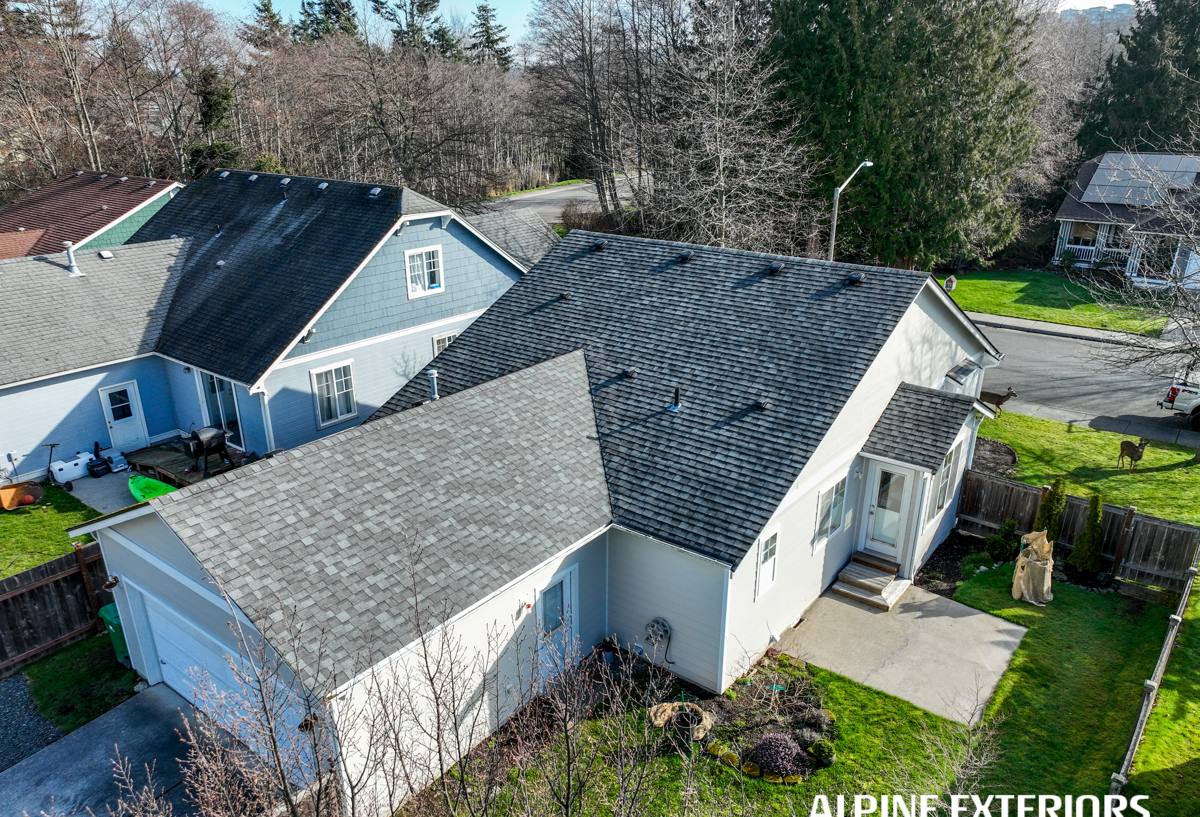
Roofs in California Creek face the same moss and moisture pressures as siding, but with more direct sun and rain exposure. A few things we pay close attention to on roofs out here:
- Proper underlayment and flashing at valleys, chimneys, and roof-to-wall transitions, where wind-driven rain is most likely to find a weak point
- Ventilation, since trapped moist air under a roof deck accelerates rot and shortens shingle life
- Moss prevention details on shaded slopes, including zinc or copper strips where appropriate, rather than relying on homeowners to scrape and treat moss every year
A roof and siding system that are both installed with coastal exposure in mind work together — poor flashing at the roofline is one of the most common ways water ends up behind siding in the first place.
Windows: The Other Half of a Weathertight Home
New siding doesn't solve a leaking window, and a good window install doesn't mean much if the siding around it isn't flashed correctly. We look at windows as part of the same water-management system as the siding and roof. In an area with regular wind-driven rain, the flashing tape, sill pans, and head flashing details around each window opening matter as much as the window unit itself. Old, single-pane, or poorly flashed windows are also a common source of drafts and condensation in homes that sit in persistently damp, shaded spots.
Decks: Built for Wet Weather, Not Just Summer
A deck in California Creek spends most of the year wet, shaded, or both. Framing, fasteners, and ledger board connections need to be built to resist moisture intrusion, not just look good for the handful of dry summer weekends. Composite decking has become popular locally because it doesn't require the annual staining and sealing that wood decking does to keep moisture out — a meaningful advantage in a climate where a missed maintenance season can mean real damage.
What a Project Looks Like
Typical Process
- On-site evaluation of your current siding, roofing, windows, or decking, including moisture and rot checks in problem areas
- Honest assessment of what needs full replacement versus repair
- A written estimate with product options and straightforward pricing
- Scheduling that accounts for Whatcom County's weather windows — we don't install siding in the middle of a storm system
- Correct flashing, house wrap, and fastening details at every step, not just the visible finish work
Questions Worth Asking Any Contractor Before You Hire
- Are you licensed and insured to work in Washington State, and can you provide proof?
- Who will actually be on my roof or wall — your employees or a subcontractor crew?
- What flashing and moisture-barrier details do you use around windows, doors, and roof transitions?
- What warranty covers the material, and what warranty covers your labor — and are they separate?
- Can you explain, in plain terms, why you recommend one material over another for my specific home?
Cost Factors to Expect
| Factor | Why It Matters |
|---|---|
| Home size and wall complexity | More corners, gables, and trim details mean more labor |
| Extent of existing damage | Rot or moisture damage found during tear-off adds repair scope |
| Product line and profile | Lap width, texture, and trim choices affect material cost |
| Access and site conditions | Steep lots, tree cover, or limited access can affect labor time |
| Roof and window condition | Combining siding with roofing or window work can improve overall efficiency and sequencing |
Why a Local Crew Matters Here
A crew that mostly works inland or in drier parts of the state doesn't always think about salt exposure, wind-driven rain angles, or which walls in a given neighborhood hold shade and moss longest. We work throughout Whatcom County, including areas around Semiahmoo, Blaine, and the coastline near California Creek, and we build our flashing and material decisions around what actually happens to a home out here over ten and twenty years — not just what looks finished on the day we pack up the trailer.
If you're weighing a siding, roofing, window, or deck project for your California Creek home, we're happy to take a look and walk you through honest options. Reach out for a free, no-pressure estimate — we'll tell you what we'd actually recommend for your home and why.