 Semiahmoo
 Cherry Point's Exterior Climate Challenge
Homes around Cherry Point sit close to the water in one of the more demanding exterior environments in Whatcom County. This stretch of shoreline along the Salish Sea takes on salt-laden air moving off the water, long stretches of driving rain through the fall and winter, and a moss season that can run for months at a time. None of that is unusual for northwest Washington, but the combination of salt exposure and near-constant moisture is harder on a home's exterior here than it is even a few miles inland. Siding, trim, roofing, and deck materials that hold up fine in a drier part of the state can start showing problems years earlier out here.
We're a local exterior contractor working the Semiahmoo and greater Whatcom County area, including Cherry Point. We install siding, roofing, windows, and decks, and we've standardized on one siding product for every job we do: James Hardie fiber cement. This page covers what Cherry Point homes are actually up against, how our services address it, and why we think a local, product-focused crew makes a real difference here.
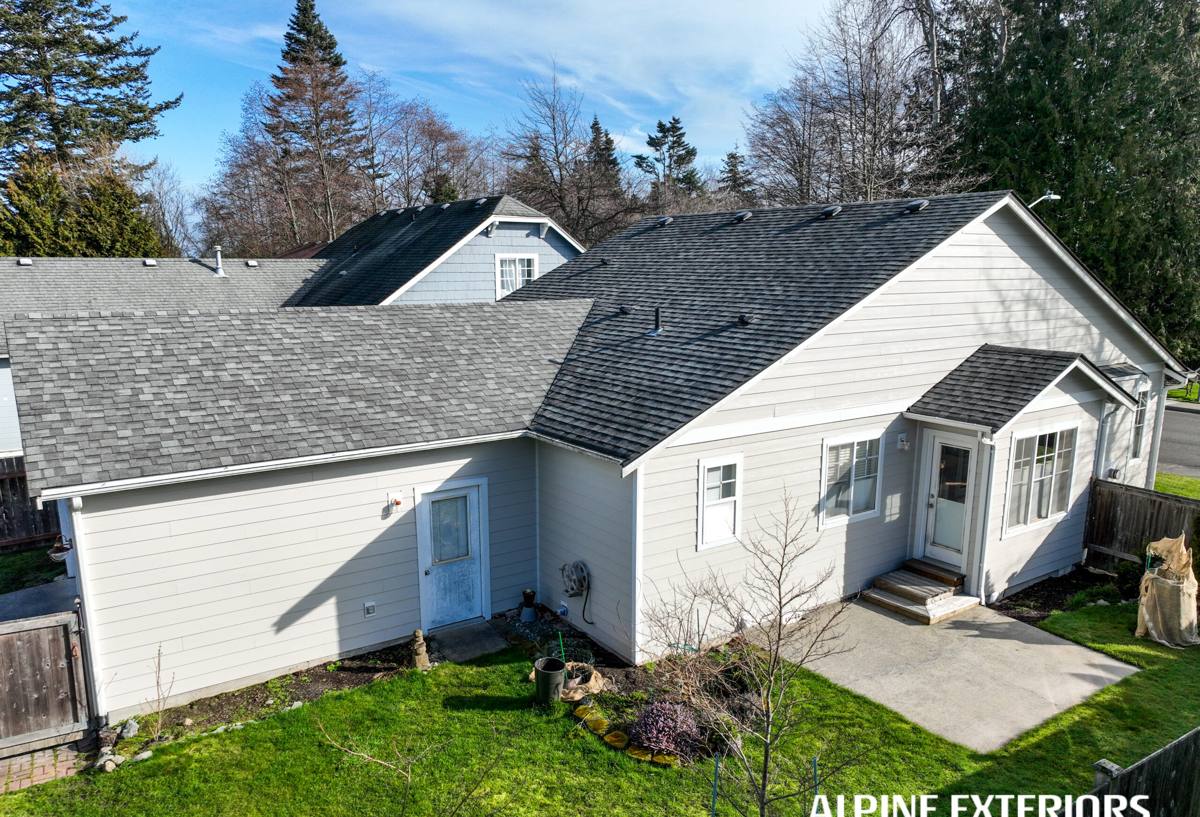
What Coastal Whatcom County Weather Does to a Home's Exterior
Salt Air and Corrosion
Salt air doesn't just affect boats and railings. Airborne salt settles on siding, trim, fasteners, and roofing components, and over years it accelerates corrosion on anything metal that isn't rated for the exposure — nails, flashing, hinges, and hardware. On wood-based siding products, salt exposure combined with moisture speeds up the breakdown of paint film and the wood fibers underneath it, which is part of why homes closer to the water tend to need exterior repainting and repair more often than homes set back from the shoreline.
Driving Rain and Wind-Driven Moisture
Cherry Point gets its share of storms moving in off the water, and those storms often bring rain at an angle rather than straight down. Wind-driven rain finds its way into seams, laps, and fastener penetrations that would stay dry in a calmer climate. That's a siding installation issue as much as a material issue — house wrap detailing, flashing at windows and doors, and proper lap and gap spacing all matter more here than they would in a low-wind, low-rain region. A product that's technically water-resistant can still fail if it's installed without accounting for how hard the rain actually hits the wall in this area.
A Long Moss and Mildew Season
Between the rain, the marine humidity, and the tree cover common in this part of Whatcom County, moss and mildew have a long growing window on north-facing walls, roofs, and anywhere sunlight and airflow are limited. Moss holds moisture against a surface far longer than open air would, and on organic siding materials that sustained dampness is what eventually leads to rot at seams, butt joints, and bottom edges. Roofing sees the same pressure — moss buildup on shingles is one of the more common reasons roofs in this area need earlier attention than their rated lifespan would suggest.
Why We Install Only James Hardie Fiber Cement
We don't install LP SmartSide, vinyl siding, Cemplank, Allura, primed spruce, or cedar. That's a deliberate standard, not a lack of options. Each of those products has legitimate uses, but for the climate conditions homes face around Cherry Point and the rest of coastal Whatcom County, we've found that James Hardie fiber cement gives homeowners the best combination of durability, appearance, and long-term value — and it's the only siding we stand behind with our installation work.
What Makes Hardie Different
- It's fiber cement, not wood or wood-based — it doesn't feed moss growth or rot the way organic siding materials can when they stay damp.
- It's non-combustible, which matters for insurance considerations and general peace of mind, not just wildfire-prone regions.
- The ColorPlus factory finish is baked on and warranted separately from the substrate, so the color layer is engineered to hold up against UV and moisture rather than relying on a field-applied coat of paint.
- Hardie's HZ product lines are climate-engineered for different regions, including the wetter, milder Pacific Northwest zone Cherry Point sits in.
- It carries a strong transferable warranty, which matters to homeowners who may sell before the siding's functional life is over.
None of that means Hardie is maintenance-free or that installation quality doesn't matter — it does, and we'll get into that below. But as a base material choice for a home exposed to salt air, driving rain, and a long moss season, we think it's the right call, and it's the only one we put our name on.
Beyond Siding: Roofing, Windows, and Decks for Cherry Point Homes
Siding is only one piece of a home's exterior envelope, and in a climate like this the pieces work together. We handle roofing, windows, and decks alongside siding because moisture problems rarely respect those boundaries — a failing roof valley can soak the wall below it, a poorly flashed window can rot the siding around it, and a deck ledger attached without proper flashing can send water straight into the house framing.
Roofing
Roofs in this area deal with the same driving rain and moss pressure as siding, plus the added stress of wind off the water. We look at ventilation, flashing details, and moss resistance as part of any roofing conversation, not just shingle brand.
Windows
Window replacement and window flashing integration are two different things, and getting the second one wrong is one of the more common sources of hidden water damage we see. When we replace windows or re-side around existing ones, we pay close attention to how the window opening is flashed and sealed against the siding system.
Decks
Decks facing the water take a beating from sun, salt, and moisture cycling — wet, then dry, then wet again. Ledger flashing, fastener choice, and board spacing all affect how long a deck holds up in this specific environment.
What a Full Exterior Assessment Looks Like
When we come out to a Cherry Point property, we're not just quoting siding panels. A thorough assessment covers the whole envelope:
- Current siding condition — checking for soft spots, moss buildup, failed caulk joints, and signs of moisture behind the surface, not just what's visible from the street.
- House wrap and flashing condition wherever siding is being removed or repaired, since this is the layer that actually keeps water out.
- Window and door flashing integration, especially on walls that take direct wind-driven rain.
- Roof condition and moss load, since a roof problem can undermine new siding work.
- Deck structure and ledger flashing if decking is part of the scope.
- Overall drainage around the foundation and how it affects the base of the walls.
We'd rather flag a related issue upfront than have a homeowner deal with a surprise a year after new siding goes up.
Why a Local Crew Matters in This Area
Exterior work in a marine climate isn't identical to exterior work anywhere else, and a crew that mostly works drier, inland projects can miss details that matter here. A local contractor who works Whatcom County regularly has a working sense of which walls take the worst of the weather, how moss actually behaves on roofs and siding in this specific area, and what installation details hold up over a full winter of driving rain rather than just looking good on install day.
| Consideration | Local, Regionally Experienced Crew | Out-of-Area or Generalist Crew |
|---|---|---|
| Familiarity with salt air and marine exposure | Built into daily practice | May be an afterthought |
| Flashing details for wind-driven rain | Standard practice | Varies by crew experience |
| Response time for follow-up or warranty questions | Local, faster turnaround | Often slower or unavailable |
| Knowledge of local permitting and code | Established relationships | Learning curve each project |
Maintenance That Actually Matters Near the Water
Even the right materials, correctly installed, benefit from some basic upkeep in this climate. Homeowners near Cherry Point can extend the life of their siding, roofing, and decks with a few simple habits:
- Rinse salt residue and grime off siding periodically, especially on walls facing open water.
- Keep gutters clear so water isn't overflowing and running down siding it wasn't designed to handle constantly.
- Trim back vegetation and tree cover that keeps shaded walls and roof sections damp longer than they need to be.
- Address moss on roofing and siding early rather than letting it establish and hold moisture against the surface.
- Re-caulk and inspect trim joints every few years, since caulk failure is often the first small crack that lets moisture in.
- Check deck ledger and fastener areas annually for early signs of moisture staining.
Cost Factors for Cherry Point Exterior Projects
Every home is different, but a few factors consistently move the cost of siding, roofing, window, or deck projects in this area:
| Factor | Why It Matters Here |
|---|---|
| Home size and wall complexity | More corners, gables, and transitions mean more flashing and labor detail |
| Existing damage or rot | Salt air and moisture exposure can mean more substrate repair than expected before new siding goes on |
| Water exposure of the specific site | Direct waterfront and wind-exposed lots often need more robust detailing than sheltered inland lots |
| Scope — siding only vs. combined roofing, windows, or decks | Bundling exterior work can reduce redundant setup and access costs |
| Access and site conditions | Slopes, tree cover, and driveway access affect labor time |
We don't quote specifics without seeing the property, but these are the factors that typically drive the range from one Cherry Point home to the next.
Ready to Talk About Your Cherry Point Property?
If you're dealing with aging siding, a moss-covered roof, drafty windows, or a deck that's starting to show its age, we're happy to take a look and give you an honest read on what's going on and what your options are. Reach out for a free, no-pressure estimate — there's a form below to get started.