 Semiahmoo
 Siding Built for Laurel's Corner of Whatcom County
Laurel sits in one of the more distinctive microclimates in Whatcom County. You're close enough to Semiahmoo Bay and the broader Salish Sea shoreline to catch salt-laden air on a regular basis, but you're also inland enough to get the full brunt of the marine rain systems that roll off the water and stall over the foothills. That combination is harder on a home's exterior than either factor alone. Salt air accelerates corrosion and finish breakdown. Driving rain finds every gap in a siding installation. And the long, damp shoulder seasons that define this part of Washington keep exterior surfaces wet for weeks at a stretch, which is exactly the condition moss, algae, and rot need to get established.
None of this is unique to Laurel — it's a Whatcom County story, and really a whole-Pacific-Northwest story. But it matters where you live specifically, because siding that performs fine in a drier inland climate can fail years early here if it wasn't designed, or installed, with this environment in mind.
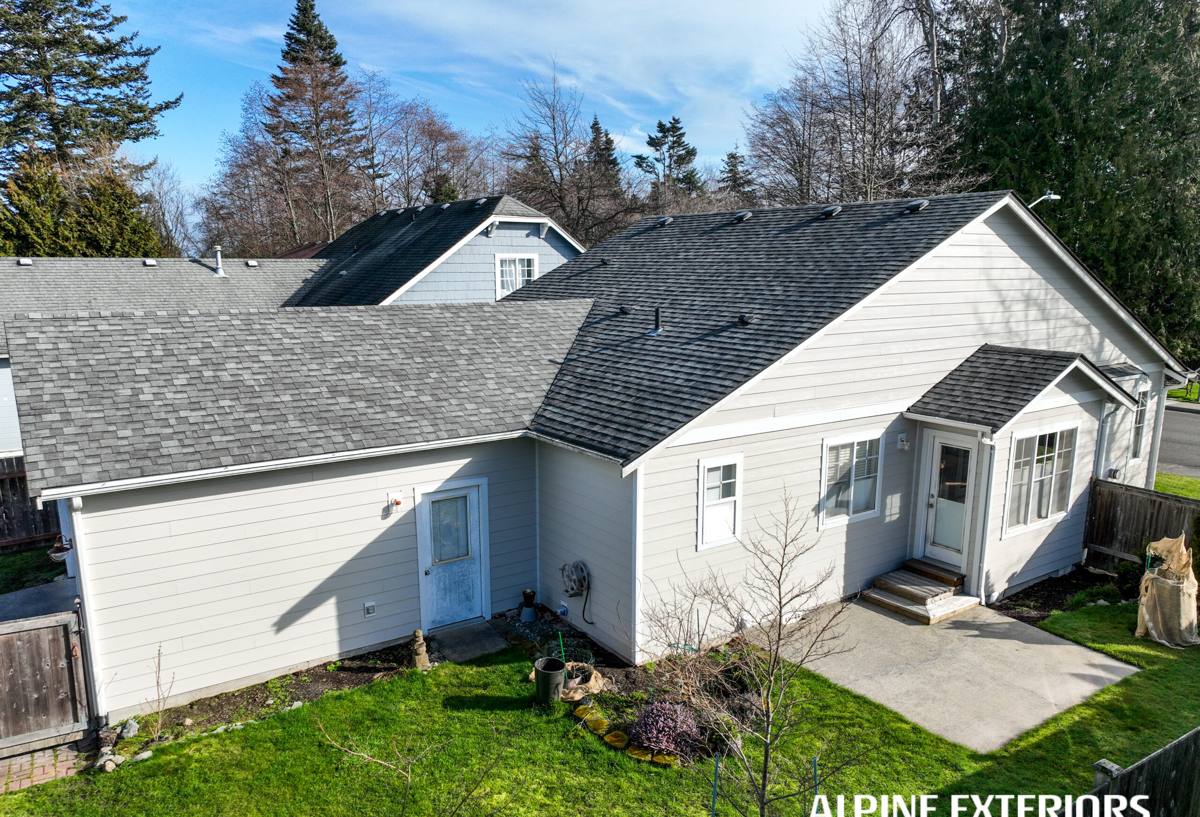
What Laurel Homes Actually Face
Salt Air and Corrosion
Even a few miles from open water, airborne salt settles on siding, trim, fasteners, and flashing. Over years, that accelerates the breakdown of paint films, promotes corrosion on exposed metal fasteners, and can leave chalky residue and premature fading on materials that aren't rated for coastal exposure. It's a slow process, which is part of the problem — homeowners often don't notice the cumulative damage until a repaint or a siding replacement reveals how much wear has actually happened underneath.
Driving Rain
Storms coming off the Strait of Georgia and the Salish Sea don't just fall straight down — wind-driven rain hits siding at an angle, which pushes water into laps, seams, and butt joints that would stay dry in a calmer climate. This is why installation detail (not just the siding product itself) matters so much here. Flashing, weather-resistant barriers, proper lap spacing, and correctly sealed penetrations around windows and utility fixtures are what actually keep a wall assembly dry through a wet Whatcom County winter.
The Long Moss Season
Moss and algae need sustained moisture and shade to take hold, and Laurel's tree cover combined with our extended wet season gives them plenty of both. North-facing walls, areas under eaves, and anything near mature trees are especially prone. Moss itself doesn't just look bad — it holds moisture against the siding surface, which is a slow but real contributor to rot and coating failure over time, especially on wood-based products.
Why We Install Only James Hardie Fiber Cement
We made a deliberate decision to install one siding system across every job we do: James Hardie fiber cement. That's not a marketing position — it's a response to what we've seen hold up (and what doesn't) in this exact climate over years of doing exterior work in Whatcom County.
Fiber cement is non-combustible, dimensionally stable when wet, and doesn't feed moss and algae growth the way wood-based products can. James Hardie's ColorPlus factory-applied finish is baked on under controlled conditions rather than field-applied, which gives it better adhesion and color retention against sun, salt air, and repeated wet-dry cycling than most site-painted finishes achieve. Combined with Hardie's climate-engineered HZ product lines (built specifically for regions like ours with sustained moisture exposure), it's the system we're comfortable standing behind for the long haul.
We won't install LP SmartSide, vinyl, Cemplank, Allura, primed spruce, or cedar. Some of those are reasonable products in the right climate. We simply don't think they're the right call for a Whatcom County coastal exterior, and we'd rather turn down a job than install something we don't expect to perform for the homeowner over the next 30-plus years.
Comparing Siding Options for a Coastal Whatcom County Home
| Material | Salt Air Resistance | Moisture/Moss Behavior | Maintenance Burden | Typical Lifespan Here |
|---|---|---|---|---|
| James Hardie Fiber Cement | Strong — factory finish holds up well | Does not rot; resists moisture absorption | Low — occasional wash | 30+ years |
| Vinyl | Can fade/chalk faster in salt exposure | Doesn't rot, but can trap moisture behind panels | Low, but limited repair options | 15-25 years |
| Cedar | Attractive but vulnerable to salt and UV | Prone to rot and moss without diligent upkeep | High — regular staining/sealing | 15-20 years without heavy maintenance |
| Primed Wood/Spruce | Weak — coating is the only protection | High risk of moisture intrusion at joints | High — repainting cycle | 10-15 years |
| LP SmartSide / Engineered Wood | Moderate, coating-dependent | Manufacturer sealing/caulking schedule is strict | Moderate — edge sealing upkeep | 20-25 years with proper maintenance |
These are general patterns, not guarantees — actual performance always depends on installation quality, sun/shade exposure, and how consistently a home is maintained. But the pattern holds across the products we've worked with: materials that resist moisture intrusion at the material level, rather than relying entirely on a coating or caulk joint, tend to hold up better in this exact climate.
How We Approach a Laurel Siding Project
Assessment First
Before we talk product or price, we walk the exterior and look at what's actually happening: where moisture is getting in, where moss has established itself, where old caulk or flashing has failed, and whether there's any hidden rot in sheathing or trim. On a coastal property like yours, this step matters more than on a typical inland home, because problems here tend to hide behind the siding rather than show up on the surface early.
Weather-Resistant Barrier and Flashing
Correct installation starts before the siding goes up. A properly installed weather-resistant barrier, correctly lapped and taped, combined with flashing at every window, door, and penetration, is what actually stops wind-driven rain from reaching your sheathing. This is the part of the job that doesn't show once the siding is on — and it's the part that determines whether the wall stays dry for the next several decades.
Fastening and Lap Detail for Coastal Conditions
We pay close attention to fastener selection and placement, proper lap spacing, and sealing at trim and butt joints — details that matter more where driving rain is a regular event rather than an occasional storm. James Hardie's installation guidelines are specific about these details for good reason, and following them to spec is non-negotiable on every job we run.
Trim, Fascia, and the Full Building Envelope
Siding doesn't act alone. Trim, fascia, soffits, and flashing around roofing and windows all work together to keep water out. We look at the whole envelope, not just the field of the wall, because a gap in any one of those components can undermine even a well-installed siding job.
Roofing, Windows, and Decks: The Rest of the Envelope
We're a full exterior contractor, not just a siding crew, and in a climate like Laurel's that matters. Roofing, window flashing, and decking all interact with the same moisture and salt exposure that drives siding decisions. A deck built with the wrong fastener hardware corrodes early in salt air. A window installed without correct flashing integration becomes the leak point that undermines an otherwise good siding job. Roofing that's shedding water incorrectly at the eaves can drive moisture straight down the wall behind new siding. Handling all of it under one crew means those transitions get built correctly the first time, instead of becoming someone else's problem to diagnose later.
What Drives Cost on a Job Like This
- Home size and wall complexity — more corners, dormers, and trim details mean more labor and material.
- Existing condition — hidden rot or sheathing damage found during tear-off adds repair scope.
- Siding profile and color — lap width, shingle-style panels, and certain ColorPlus finishes vary in material cost.
- Trim and accessory work — fascia, soffit, and window trim replacement alongside siding.
- Access and site conditions — steep lots, limited access, or extensive tree cover near the home can affect scheduling and labor.
- Tear-off vs. overlay — full removal of old siding is usually the right call for long-term performance, and it affects scope.
We won't quote a number without seeing the home, but we're upfront that a full fiber cement replacement is a meaningful investment — one that's easier to justify when you're weighing it against the 30-plus-year lifespan and low maintenance burden of a correctly installed Hardie system versus repeated repainting or repair cycles on shorter-lived materials.
A Practical Maintenance Checklist for Laurel Homeowners
- Rinse siding annually, focusing on north-facing walls and areas under tree cover where moss tends to establish first.
- Keep gutters clear so overflow doesn't run down the siding face during heavy rain events.
- Trim back vegetation that keeps siding shaded and damp for extended periods.
- Inspect caulk joints at trim, window, and door edges yearly — failed caulking is often where moisture problems start.
- Watch for soft spots, staining, or bubbling paint, especially near ground level and roof-to-wall transitions.
- Have flashing and trim checked whenever roofing or gutter work is done nearby, since that work can disturb existing seals.
Why a Local Crew Matters Here
Semiahmoo and the surrounding Whatcom County communities have their own weather pattern, and it's not identical to Seattle, Vancouver, or even other parts of western Washington. A crew that works this specific coastline regularly knows where driving rain tends to hit hardest on a given lot orientation, how much moss pressure to expect on a shaded north wall, and which installation details actually matter here versus in a drier climate. That local, repeated experience shows up in the small decisions made on-site — flashing details, fastener choices, sequencing around a wet forecast — that a homeowner never sees but absolutely benefits from.
If you're in Laurel and thinking about your home's exterior — whether it's siding showing its age, a roof due for attention, windows that leak in a storm, or a deck that needs rebuilding — we'd be glad to take a look and give you an honest read on what your home actually needs. Reach out for a free, no-pressure estimate using the form below.