 Semiahmoo
 Cedar Has Real Merit — We're Not Pretending Otherwise
Cedar siding has a long track record on the Pacific Northwest coast, and it's easy to see why homeowners still ask for it. Western red cedar is naturally rot-resistant compared to most softwoods, it takes stain beautifully, and there's a warmth to a cedar-clad home that fiber cement and vinyl simply can't fake. If you've grown up around Semiahmoo or Blaine and associate cedar with "real" Pacific Northwest architecture, that instinct isn't wrong. It's a legitimate, historically appropriate material.
So this isn't a page about cedar being a bad product. It's a page about why, after years of installing and repairing siding in Whatcom County, we made a business decision to stop installing it — and why we think that decision serves our clients better in this specific climate, on this specific coastline.
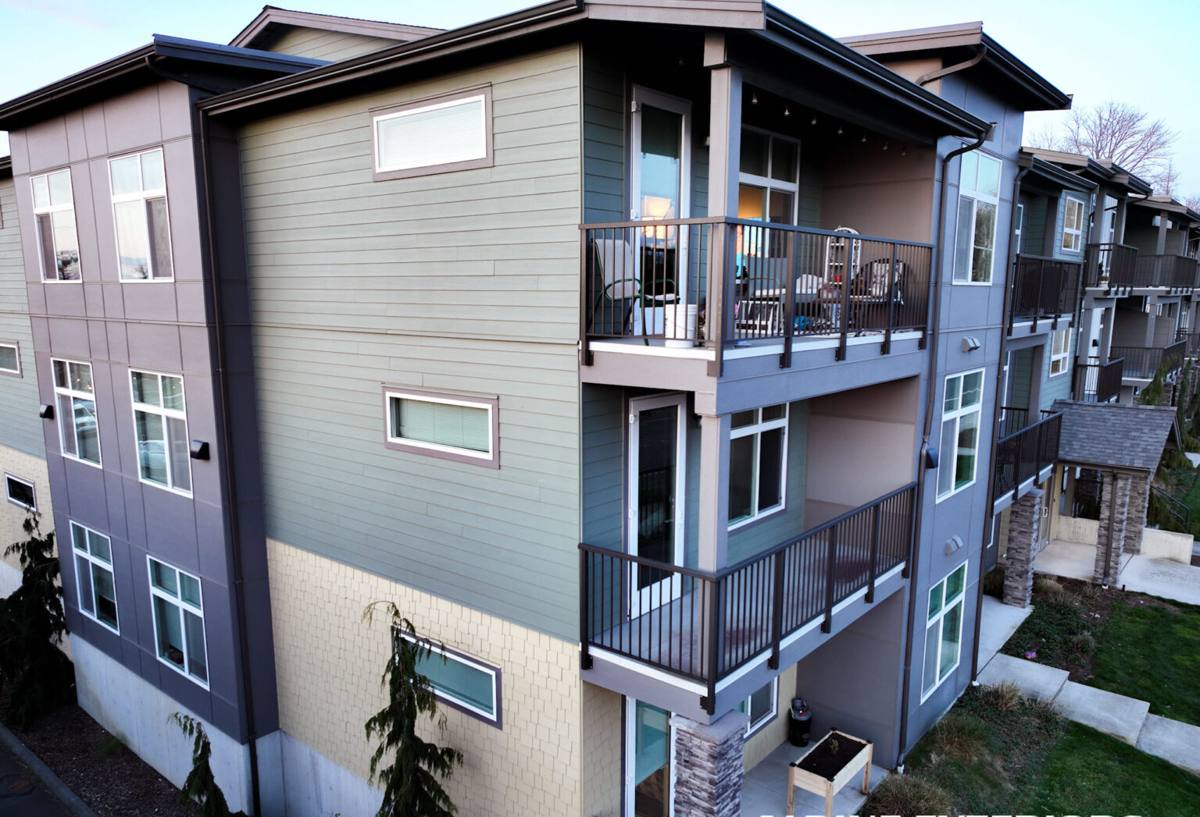
The Semiahmoo Climate Problem
Semiahmoo sits on a spit surrounded by Semiahmoo Bay and Drayton Harbor, which means every siding material here deals with three things at once: salt-laden air blowing off the water, long stretches of driving rain typical of Whatcom County winters, and a moss and algae season that can run eight or nine months out of the year in shaded, north-facing exposures. Wood siding is the material most sensitive to all three.
Salt Air and Wood Fiber
Salt air doesn't rot wood by itself, but it does two things that accelerate wood's natural weaknesses. It keeps surfaces slightly damp longer than inland air would, and salt residue draws moisture back into the wood grain even after a surface looks dry. Over years, that cycle works against any finish applied to the wood, causing it to fail earlier near the water than the same product would fifteen miles inland.
Driving Rain and Grain Orientation
Cedar siding, especially bevel and lap profiles, relies on lapped joints and a sound finish to keep water out of the end grain — the most vulnerable part of any wood board. Wind-driven rain off the Strait of Georgia doesn't just fall straight down; it gets pushed sideways into laps, corners, and butt joints. Once water finds its way into end grain, it travels along the wood fibers far faster than it would through the face of the board.
Moss, Algae, and Shade
North and east-facing walls in Semiahmoo, particularly ones shaded by mature trees or neighboring structures, stay damp for days after a storm. That's exactly the environment moss and algae need. On cedar, organic growth isn't just cosmetic — it holds moisture against the wood surface, which shortens the life of both the finish and the board underneath.
What Cedar Actually Requires to Perform Well Here
None of this means cedar siding fails quickly. Properly finished and maintained cedar can last decades. But "properly maintained" is the operative phrase, and it's a bigger commitment than most homeowners expect when they first choose the material.
- Re-staining or re-sealing every 3-5 years, sometimes sooner on sun- or salt-exposed elevations
- Annual inspection of caulking, flashing, and butt joints before the fall rains arrive
- Periodic soft-washing to remove moss and algae before it takes hold
- Prompt repainting or re-staining of any spot where the finish has worn through, since bare wood weathers fast once exposed
- Watching for woodpecker or insect damage, which is more common in softer, untreated sections
- Budgeting for board replacement on the most weather-exposed sides sooner than the rest of the house
That maintenance schedule is manageable for an owner who wants a hands-on relationship with their home's exterior. It's a real burden for a rental property owner, someone planning to sell in five years, or a homeowner who simply wants to stop thinking about the siding once it's installed.
The Installation Sensitivity Issue
Cedar siding is far less forgiving of installation shortcuts than most homeowners realize. Back-priming (sealing the backside of every board before installation) is one of the single biggest predictors of how long cedar will last, and it's also one of the steps most often skipped on production installs because it adds labor and material cost without being visible in the finished product. Unprimed backsides absorb moisture from behind the board — from the wall assembly itself — which is invisible until the wood starts cupping, splitting, or rotting from the inside out.
Fastener choice matters just as much. Cedar's natural tannins react with standard steel fasteners, causing dark staining streaks down the face of the board within a year or two. Doing it right means stainless steel fasteners throughout, which raises the material cost of the job. We've seen enough cedar installs cut corners on both of these points — often by well-meaning crews trying to hit a budget — that we didn't want to be in the position of either compromising on installation standards or pricing ourselves out of the cedar market entirely.
Why We Standardized on James Hardie Fiber Cement
Rather than installing cedar to a lower standard than it deserves, we made the call to offer one siding system across every job: James Hardie fiber cement. It's engineered specifically to resist the conditions that wear cedar down fastest.
Non-Combustible and Dimensionally Stable
Fiber cement doesn't expand and contract with humidity swings the way wood does, so it doesn't cup, warp, or split from moisture cycling. It's also non-combustible, which matters increasingly as wildfire smoke and dry summer stretches become more common even on the wet side of the Cascades.
ColorPlus Factory Finish
Hardie's ColorPlus finish is baked on at the factory under controlled conditions, not brushed or sprayed on-site. That finish is backed by its own warranty against fading and peeling, which sidesteps the re-staining cycle that cedar owners deal with every few years. Homeowners still get a real color palette — not the bare-fiber-cement look people sometimes picture.
HZ5 Product Line for Marine Exposure
James Hardie makes climate-specific product lines, and the HZ5 formulation is engineered for wetter, harsher regions — including areas with salt air exposure like ours. That's not a marketing detail; the substrate itself is formulated differently for coastal moisture conditions than it would be for a dry inland climate.
A Strong, Transferable Warranty
Hardie's product warranty is transferable to a new owner if the home sells, which matters to anyone who isn't planning to stay in their Semiahmoo home forever. That's a meaningful difference from a wood finish warranty, which typically resets or voids with a change in maintenance history.
Side-by-Side: Cedar vs. James Hardie in a Marine Climate
| Factor | Cedar Siding | James Hardie Fiber Cement |
|---|---|---|
| Refinishing cycle | Every 3-5 years, more often on exposed walls | ColorPlus finish rated for decades before repainting is needed |
| Moisture behavior | Absorbs and releases moisture; end grain is a weak point | Dimensionally stable; not prone to cupping or splitting |
| Salt air resistance | Finish degrades faster near the water | HZ5 formulation engineered for marine/coastal exposure |
| Moss and algae | Requires periodic soft-washing and finish upkeep | Factory finish resists organic growth better and cleans up easily |
| Fire resistance | Combustible | Non-combustible core material |
| Warranty | Typically tied to finish product, not the siding itself | Manufacturer warranty on both substrate and finish, transferable |
| Installation sensitivity | High — back-priming and stainless fasteners are essential | Lower — engineered fastening and joint systems reduce error points |
What This Means If You Already Have Cedar Siding
If your Semiahmoo home already has cedar siding, this page isn't telling you to panic or rip it off early. Well-maintained cedar with a sound finish can still have years of service life left. What we'd actually look at during an inspection is the condition of the finish, whether back-priming was done originally, how the butt joints and flashing are holding up, and whether any boards show early signs of rot at the bottom courses or around window trim — those are the areas that fail first in this climate. When it does come time to replace, that's the point where we'd talk through moving to fiber cement rather than reinstalling cedar.
Our Honest Recommendation for This Area
We understand cedar's appeal, and we're not going to pretend it's the wrong material everywhere. But for a coastal Whatcom County property dealing with salt air off Semiahmoo Bay, wind-driven rain, and a long moss season, we think a factory-finished, non-combustible, climate-engineered product gives homeowners a better ratio of upkeep to performance. That's the reasoning behind standardizing our crews and warranty on James Hardie rather than splitting our installation standards across multiple materials.
If you're weighing cedar against fiber cement for a Semiahmoo, Blaine, or greater Whatcom County home, we're happy to walk your property, look at your exposure and sun/shade patterns, and give you a straight answer about what we'd actually recommend. Reach out for a free, no-pressure estimate — there's a form right below this page.