 Semiahmoo
 What Primed Spruce Siding Actually Is
Primed spruce siding is solid wood board siding — usually milled from spruce-pine-fir stock — that arrives from the mill with a factory primer coat already applied. The primer is meant to give the wood a head start against moisture before it goes up on the wall and gets its finish coat of paint on site. It's been a staple of Pacific Northwest construction for generations because spruce is affordable, machines cleanly into lap, channel, and board-and-batten profiles, and takes paint well when it's brand new.
We're not going to tell you primed spruce is a bad product on paper. Plenty of homes in Whatcom County still wear it, and some look fine. What we will tell you, honestly, is why we stopped installing it and why we don't recommend it to homeowners who ask us to bid it. The short version: it's wood, and wood siding asks for a level of upkeep and forgiveness that this particular stretch of coastline doesn't give it.
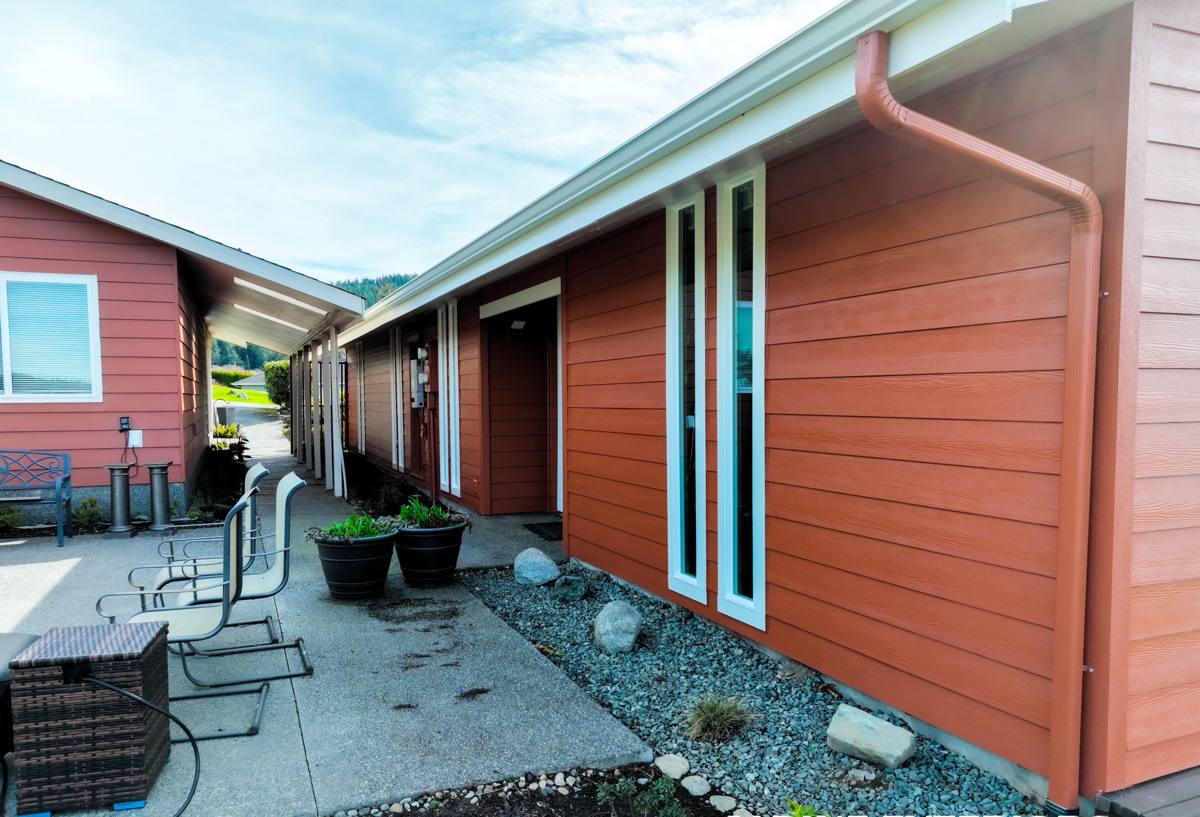
The Real Problem: Wood Still Behaves Like Wood
Priming and painting slow down moisture movement into wood — they don't stop it. Wood is hygroscopic, meaning it absorbs and releases moisture with the seasons, swelling when wet and shrinking as it dries. That movement is normal for a tree. It's a problem for a plank that's supposed to stay flat, tight, and sealed against a wall for thirty years.
Moisture Absorption and Swelling
Every wet-dry cycle stresses the wood fiber and the paint film sitting on top of it. Paint is elastic, but only to a point. Over repeated cycles it micro-cracks, moisture gets underneath, and once water is behind the paint film instead of in front of it, that paint is now trapping moisture against bare wood rather than protecting it. That's when you start seeing cupping, cracking, and eventually soft spots.
End Grain and Butt Joints
The most vulnerable part of any wood board isn't the long flat face — it's the cut ends, where the wood's internal straws are exposed directly to water. Every butt joint, every corner cut, every place a board meets a window or door trim is an entry point. Field-caulking and field-priming those cuts is supposed to seal them, but it depends entirely on how carefully every single cut was primed before installation, and how well that caulk joint holds up over years of expansion and contraction. Miss one, and that's where rot starts — often behind the surface, where you can't see it until the board is soft.
Salt Air, Driving Rain, and a Long Moss Season: Why This Climate Is Unusually Hard on Primed Wood
Semiahmoo sits right on the water, and homes here take on a combination of stresses that inland siding never has to deal with. Salt-laden air off Drayton Harbor and Semiahmoo Bay works its way into paint films and accelerates the breakdown of the resin binders that hold pigment to the surface. That's on top of driving rain that Whatcom County gets in long wind-driven storms off the Pacific — rain that doesn't just fall on a wall, it gets pushed into every seam, lap, and joint horizontally.
Then there's the moss. Our long, wet, mild-temperature stretch from fall through spring is close to ideal moss-growing weather, and moss doesn't just sit on top of siding — it holds moisture against the surface for months at a time on the north- and shade-facing walls that never get a chance to fully dry out. Painted wood under a moss mat is wood that's wet nearly year-round, and that's exactly the condition that rot fungus needs to get established.
None of this means primed spruce "fails" on every house. Plenty of owners keep up with repainting on schedule and it holds fine. It means the margin for error is thin here, and the maintenance schedule that might work in a drier inland climate isn't the schedule this coastline actually demands.
The Maintenance Math Homeowners Don't See Coming
The sales pitch on primed wood siding is usually the upfront cost. What doesn't get mentioned is what it costs to keep it looking good and functioning as a moisture barrier over the life of the house. Paint on wood siding in a marine climate typically needs a fresh coat every 5 to 8 years, sooner on south- and west-facing walls that get the most weather. Skip a cycle and you're not just losing curb appeal — you're letting the substrate itself start absorbing water it was never meant to hold.
| Factor | Primed Spruce (Painted Wood) | James Hardie Fiber Cement |
|---|---|---|
| Repaint / refinish cycle | Every 5-8 years, coastal exposure often sooner | ColorPlus finish: typically 15+ years before touch-up needed |
| Moisture behavior | Absorbs and releases moisture; swells, cups, and can rot at joints and end cuts | Engineered to resist moisture absorption; won't swell or rot |
| Combustibility | Combustible wood substrate | Non-combustible fiber cement |
| Insect vulnerability | Susceptible to carpenter ants, woodpeckers, and rot-related insect activity | Not a food or nesting source for wood-boring insects |
| Typical manufacturer warranty | Varies by paint/primer brand, usually product-only, workmanship separate | Long-term limited warranty on the product, engineered per climate zone |
Paint Failure Isn't a Workmanship Problem — It's a Material Problem
We get called out to a lot of houses where the homeowner assumes the paint job was done wrong. Sometimes it was. More often, the crew did everything right — back-primed the cuts, caulked the joints, applied a quality finish coat — and the siding still failed early because wood siding in a wet marine climate is fighting an uphill battle no matter how carefully it's installed. That's an important distinction, because it means the fix isn't "hire a better painter next time." It's recognizing that the substrate itself is the limiting factor.
This is also why we're careful about the language we use here. We're not saying primed spruce is defective or that anyone who installed it did something wrong. We're saying that after years of doing repair and replacement work on homes with painted wood siding along this stretch of Whatcom County, we made a business decision to stop installing a product whose maintenance demands don't match what most homeowners actually want to sign up for.
Rot and Insect Vulnerability Up Close
Once moisture gets past a compromised paint film and into the wood fiber, spruce doesn't have much natural resistance to offer. It's a softwood chosen for cost and workability, not for rot resistance the way cedar heartwood or certain treated lumbers are. Once a board starts to soften, it becomes an easier target for carpenter ants and other wood-seeking insects looking for a damp, decaying entry point — and by the time that damage shows on the surface, there's usually more of it hidden behind the board than is visible from the yard.
Woodpeckers are another factor coastal homeowners don't always expect. They're drawn to softening or insect-active wood siding, and a bird looking for a meal can open up a hole that then becomes its own water entry point, compounding the problem.
Fire and Code Considerations
Wood siding is a combustible material. In a region where wildfire risk has been drawing more attention from insurers and building departments across Washington, non-combustible cladding is increasingly viewed as a meaningful safety upgrade, not just a nice-to-have. It's one more factor we weigh when we tell homeowners why we standardized on fiber cement rather than wood products.
What We Install Instead: James Hardie Fiber Cement
This company installs only James Hardie fiber cement siding. It's a decision built around the specific challenges of building on the water in Whatcom County — the salt air, the driving rain, and the moss season that all take a toll on painted wood.
ColorPlus Technology
Hardie's ColorPlus finish is baked on in a factory-controlled process rather than brushed or sprayed on site, which gives it far more resistance to fading and cracking than field-applied paint on wood, and dramatically stretches the time before the siding needs any refinishing.
Climate-Engineered HZ Product Lines
James Hardie manufactures different formulations for different climate zones — HZ5 boards, engineered for wetter regions like ours, are built to hold up to sustained moisture exposure in a way generic wood siding was never designed to handle.
Non-Combustible Fiber Cement
Fiber cement is made from cement, sand, and cellulose fiber. It doesn't burn, it doesn't feed insects, and it doesn't absorb and swell with every rain event the way a wood board does.
A Warranty Built for the Long Haul
Hardie backs its siding with a strong, transferable limited warranty — the kind of coverage that reflects confidence in how the product performs over decades, not just years, when it's installed to spec.
What to Ask Before You Choose a Siding Product
- How often will this material realistically need to be repainted or refinished in a marine, moss-prone climate?
- What happens at the cut ends and butt joints — how are they sealed, and by whom?
- Is the product rated or engineered for a wet climate zone, or is it a general-purpose product?
- What does the manufacturer's warranty actually cover, and does it transfer if you sell the house?
- Is the material combustible, and does that matter for your insurance or local code?
- What does a realistic 20-30 year maintenance budget look like for this siding, not just the installed price today?
If you're weighing your options for a siding project in Semiahmoo or anywhere else in Whatcom County, we're happy to walk your home, talk through what our fiber cement installation involves, and give you a straightforward, no-pressure estimate.