 Semiahmoo
 Why Blaine Harbor Windows Wear Out Faster Than the Catalog Says
Blaine Harbor sits close enough to the water that its windows live a harder life than the same product would in an inland Whatcom County neighborhood. Salt-laden air off Semiahmoo and Drayton Harbor works on metal hardware, fasteners, and unprotected frame edges year-round. Add the driving, wind-pushed rain that comes through in fall and winter storms, and you've got moisture finding its way into gaps that would stay dry almost anywhere else. Then there's the long moss season — the stretch of low sun, high humidity, and shade from mature trees that lets moss, algae, and mildew colonize anything that doesn't dry out quickly. None of this means windows here are doomed. It means the details that get skipped on an easy inland install are exactly the details that matter most a few blocks from the water.
We say this as the crew that's already done this work in the neighborhood, not as a sales pitch: a window that's a good fit for a dry, sheltered lot inland can be the wrong choice for a home facing open water or prevailing wind. Getting it right starts with treating Blaine Harbor as its own microclimate, not a generic Whatcom County job.
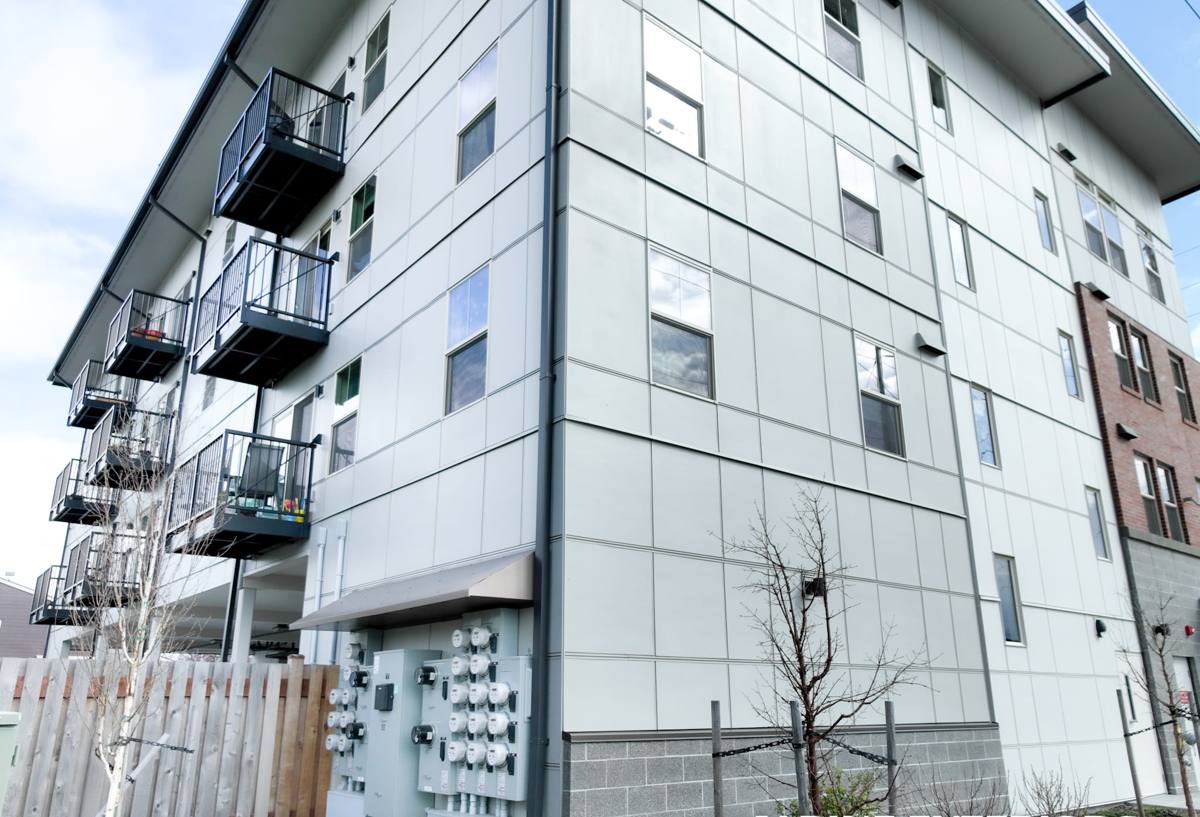
What "Custom" Actually Means Here
Custom doesn't just mean a bigger price tag — it means the window is built to fit an opening, a wall assembly, and a wind/moisture exposure that a stock size won't match. In Blaine Harbor that shows up a few common ways:
Older and Non-Standard Openings
Many homes in this area were built or added onto in eras when window sizes weren't standardized the way they are today. Settling, past remodels, and hand-framed openings mean a stock window frequently doesn't fit without cutting into siding, trim, or structural framing that shouldn't be touched. Custom sizing lets us match the existing rough opening instead of forcing the wall to match the window.
Waterfront and Near-Waterfront Exposure
Homes with a direct or partial water view typically see harder wind-driven rain and more direct salt spray than homes set back a few streets. That exposure changes what frame material, hardware finish, and sealant approach we recommend — it's not a cosmetic upgrade, it's a durability decision.
Mixed Original Materials
Wood-frame homes, older aluminum-frame windows, and additions with mismatched construction all show up in this neighborhood. Custom work means detailing the transition between the new window and whatever's already there — old wood trim, stucco, lap siding — so water has one clear path out and no path in.
Frame and Glass Choices That Actually Hold Up Near Salt Water
There's no single "best" window material — there's a best material for this exposure, this budget, and this home. Here's how we think through it for Blaine Harbor specifically.
Frame Material
Vinyl remains the most common choice for good reason: it doesn't corrode, it doesn't need repainting, and quality vinyl frames handle coastal humidity well. Fiberglass costs more but resists expansion and contraction across our temperature swings slightly better and holds paint if you want a custom color. Wood and wood-clad windows can look excellent on older or historic-style homes, but they demand real maintenance discipline in a salt-air, high-moisture environment — any gap in the finish becomes a place for rot to start. We'll tell you plainly if a wood-clad window is a maintenance commitment you're taking on, not just a purchase.
Glass Package
Low-E coatings and argon gas fill are standard on any window worth installing here — they cut glare off the water, reduce heat loss during windy winter stretches, and help control condensation on the interior pane. Double-pane low-E glass is sufficient for the vast majority of Blaine Harbor homes. Triple-pane adds weight, cost, and a marginal insulation gain that mostly matters in much colder climates or on a noise-sensitive lot near a busy road — we'll be honest if it's not worth the upcharge for your situation.
Hardware and Fasteners
This is where salt air does the most damage, and it's the detail cheap installs skip. We spec corrosion-resistant hardware — stainless steel screws, marine-grade or coated locks and cranks — rather than standard-grade fasteners that will start showing rust streaks and stiff operation within a few seasons this close to the water.
| Factor | Why It Matters in Blaine Harbor | Cost Impact |
|---|---|---|
| Frame material (vinyl vs. fiberglass vs. wood-clad) | Salt-air corrosion resistance and long-term maintenance | Low to High |
| Opening size and shape | Custom/non-standard openings need custom manufacturing | Moderate |
| Glass package (Low-E, argon, tempered where required) | Condensation control, glare off the water, energy loss | Low to Moderate |
| Hardware grade | Salt-air corrosion on locks, cranks, fasteners | Low |
| Old window removal and disposal | Rot or damage found once old unit is out | Variable |
| Trim, flashing, and interior finish work | Correct water management, matching existing finish | Moderate |
As a rough, honest range: many custom vinyl replacement windows installed in this area run somewhere in the low-to-mid four figures per window depending on size and glass package, with fiberglass or wood-clad options running higher. Every home is different — the only way to get a real number is to measure the actual openings.
Flashing and Sealing: The Part That Actually Prevents Water Damage
The window itself rarely fails first in this climate. What fails is the installation detailing around it — and that's the part a homeowner can't easily inspect after the fact. A correct job in a driving-rain environment includes:
- Sill pan flashing that directs any water that does get past the window back outside, not into the wall cavity
- Properly lapped weather-resistive barrier (house wrap or building paper) so water sheds down and over each layer, never up and under it
- Backer rod and quality exterior sealant at the right joints — not sealant used as a substitute for proper flashing
- Head flashing or drip caps above the window where the wall assembly calls for it
- Shimming and squaring the unit so weep holes and drainage paths work as designed instead of pooling water at one corner
Skipping any one of these is invisible on install day and shows up eighteen months later as soft trim, a musty smell, or a stain on the interior wall — usually well after the crew that installed it is gone.
Signs Your Current Windows Are Losing the Fight
Homeowners often live with early warning signs for a while before calling anyone, mostly because none of them look urgent on their own. Worth a second look if you're seeing:
- Condensation or fogging between the panes (not just on the surface) — this means the seal has failed and the insulating gas is gone
- Green or black growth on the frame or sill that comes back quickly after cleaning
- Soft or spongy wood trim around the window, especially at the bottom corners
- Windows that are noticeably harder to open, close, or lock than they used to be
- A draft you can feel with your hand near the frame on a windy day
- Paint or finish that's bubbling, peeling, or discoloring faster on window trim than on the rest of the siding
Any one of these is worth a look. Several together usually means the window and its surrounding flashing both need attention, not just a new sash.
How We Handle a Custom Window Job in Blaine Harbor
The process doesn't change dramatically from one neighborhood to the next, but the details we pay attention to inside it do.
1. On-Site Measurement and Assessment
We measure every opening individually rather than assuming they match. We also check the condition of the framing, sill, and existing flashing while the old window is still in place — that's often the best chance to catch hidden moisture damage before it's covered back up.
2. Material and Glass Selection
We walk through frame material, glass package, and hardware options against your specific exposure — direct water view, partial view, or set-back lot — and your budget, without pushing an upgrade that won't earn its cost here.
3. Manufacturing Lead Time
Custom units are made to order, so there's a lead time between ordering and delivery. We'll give you a realistic window for that up front rather than an optimistic one.
4. Removal and Installation
Old units come out carefully to protect surrounding siding and trim. We address any rot or damage we find before the new window goes in — never seal a new window over a problem that's still there.
5. Flashing, Sealing, and Finish Work
This is where the weatherproofing detail from the section above happens, followed by trim and finish work to match the surrounding exterior as closely as possible.
6. Walkthrough and Cleanup
We walk the finished work with you, confirm every window operates and locks correctly, and clean up the job site before we leave.
Maintaining Custom Windows Through a Coastal Moss Season
Even a correctly installed window needs a little seasonal attention in this climate. A short annual checklist goes a long way:
- Rinse salt residue off frames and glass a few times a year, especially after storms with onshore wind
- Clean and lightly lubricate hardware (locks, cranks, hinges) annually so corrosion doesn't get a foothold
- Check exterior caulk lines each fall before the wet season and re-caulk any cracked or separated joints
- Keep gutters and nearby drainage clear so water isn't sheeting down across window heads
- Trim back vegetation that keeps a window in constant shade, which accelerates moss and mildew growth
- Watch weep holes at the base of the frame for debris or moss buildup that blocks proper drainage
Why Hiring a Crew That Already Works Blaine Harbor Matters
Anyone can sell you a window. Fewer contractors have actually installed enough of them in this specific pocket of Whatcom County to know how the wind comes off the water on this stretch, which frame materials hold up and which struggle, and what the older housing stock here tends to need once the old window comes out. That local pattern recognition is what keeps a job from turning into a callback. A crew with Blaine Harbor experience also tends to have a better read on realistic lead times for custom orders and won't be guessing at flashing details for the first time on your house.
We're not going to tell you this job is more complicated than it is — a well-built, well-installed window is still a well-built, well-installed window. But the margin for error near the water is smaller, and it shows up as a repair bill a couple years down the road if the installation details get shortcut.
If you're weighing custom windows for a Blaine Harbor home, we're glad to come take a look, measure the actual openings, and give you a straight, no-pressure estimate — use the form below to get started.