 Semiahmoo
 Blaine Harbor: A Different Set of Rules for Exteriors
Homes around Blaine Harbor sit close to the water, and that changes what an exterior has to survive. This isn't a climate where you can pick materials off a generic spec sheet and expect them to hold up. Whatcom County's marine exposure — salt-laden air moving off Semiahmoo Bay and the Strait of Georgia, wind-driven rain that hits siding sideways instead of falling straight down, and long stretches of gray, damp weather that feed moss and algae growth — puts real, ongoing stress on every exterior surface. A house a few miles inland deals with a milder version of this. A house near the harbor deals with the full version, year-round.
We work this area regularly, and the pattern is consistent: the homes that hold up best are the ones where the siding, trim, roofing, and flashing details were chosen and installed with this specific exposure in mind — not just "good enough for the Pacific Northwest" but good enough for a harbor-adjacent lot.
What Salt Air and Driving Rain Actually Do to a House
Salt Air
Airborne salt doesn't just sit on a surface — it works into pores, seams, and fastener heads. On untreated or poorly finished wood siding, it accelerates the breakdown of paint film and speeds up rot at the grain. On metal components — nail heads, flashing, gutter hardware, hinges — it drives corrosion faster than it would happen even a mile or two away from the water. Over years, that corrosion shows up as rust streaking, failed fasteners, and metal trim that pits and weakens.
Driving Rain
Wind off the water doesn't let rain fall straight down — it pushes it sideways and up under laps, around window and door trim, and into any gap in the siding assembly. This is why lap siding installed with tight, correct overlaps and properly flashed penetrations matters so much more here than in a sheltered inland yard. A siding system that's merely "watertight enough" in calm conditions can still let moisture behind the cladding when rain is coming in horizontally.
Moss and Algae Season
Whatcom County's long wet season — often stretching from fall through spring — keeps north-facing walls, shaded siding, and anything under tree cover damp for weeks at a time. That sustained moisture is exactly what moss, algae, and mildew need to take hold. On porous or absorbent siding materials, that growth doesn't just sit on the surface — it holds moisture against the material and speeds up wear underneath.
Why We Only Install James Hardie Fiber Cement Here
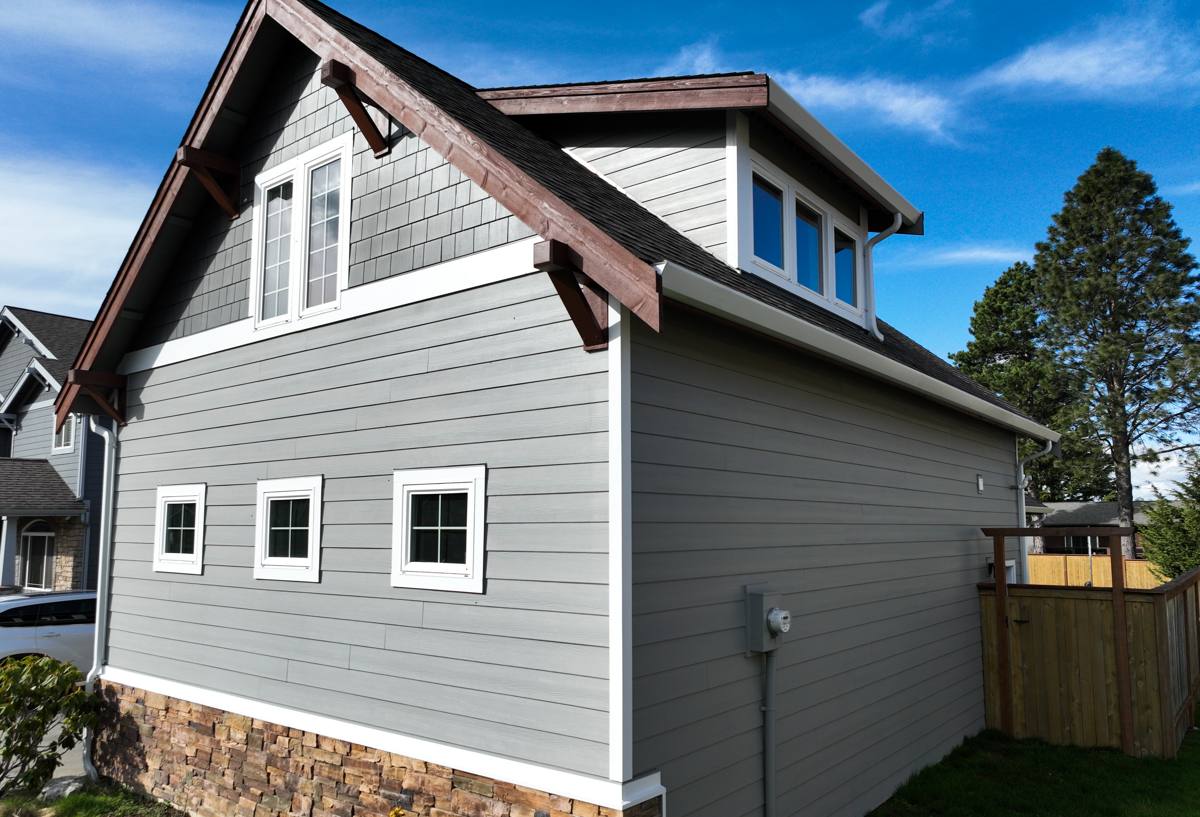
We've made a deliberate call to install James Hardie fiber cement siding exclusively — not vinyl, not LP SmartSide, not Cemplank or Allura, not primed spruce or cedar. In a climate like Blaine Harbor's, that decision matters more than it would somewhere drier and calmer.
- Non-combustible core: Hardie's fiber cement composition doesn't feed a fire the way wood-based products can.
- Engineered for wet climates: Hardie's HZ5 product line is specifically formulated for the kind of freeze-thaw and moisture cycling the Pacific Northwest sees, including coastal exposure.
- Factory-applied ColorPlus finish: baked-on color and a protective coating that resists fading and holds up to UV and moisture far better than field-applied paint on wood substrates.
- Dimensionally stable: fiber cement doesn't swell, cup, or warp with moisture cycling the way wood and some engineered wood products can.
- Strong transferable warranty: backed by a manufacturer with decades of track record on the product, which matters when you're planning to own the home for years or eventually sell it.
None of this is a knock on every alternative product as inherently bad — vinyl, LP SmartSide, and others have real uses and real advantages in the right setting. But for the specific combination of salt exposure, driving rain, and sustained damp that Blaine Harbor homes face, we've found fiber cement gives homeowners the best long-term balance of durability, appearance, and maintenance burden. We'd rather install one product exceptionally well than juggle several and risk cutting corners on any of them.
How We Approach a Siding Job Near the Harbor
Assessment First
Before we talk product or price, we look at exposure: which walls take the worst of the wind-driven rain, which sides stay shaded and damp longest, where the existing siding or trim shows the earliest signs of wear. That tells us where to focus extra attention on flashing, lap overlap, and fastener spacing.
Flashing and Water Management
In a driving-rain environment, the siding itself is only part of the water story. Window and door flashing, kick-out flashing at roof-wall intersections, and proper weather-resistive barrier installation behind the siding are what actually keep water out when it's being pushed sideways by wind. We treat these details as non-negotiable, not upsells.
Fastener and Hardware Choices
Given the corrosion risk from salt air, we pay attention to fastener material and coating, not just length and spacing. Cutting corners here is one of the most common ways a coastal-adjacent siding job fails early.
Roofing, Windows, and Decks in the Same Climate
Siding doesn't work in isolation — the same salt air, rain, and moss pressure that affects walls affects everything else on the exterior.
Roofing
Roof coverings and flashing details near the harbor face accelerated wear from the same moisture and salt exposure. Moss growth on roofs is a particular concern in shaded, north-facing sections, and it can shorten a roof's usable life if left unaddressed.
Windows
Window flashing and sealant details are one of the most common failure points on any coastal-adjacent home. Correctly integrating new or replacement windows with the siding's water management plane is essential — it's not just a window install, it's an integration.
Decks
Outdoor decks near the harbor take a beating from the same driving rain and damp seasons, plus direct sun and salt exposure on top of the structure. Material choice and proper ledger flashing matter as much here as they do on the walls of the house.
Cost Factors for Blaine Harbor Exterior Work
Every home and project scope is different, but these are the variables that most affect cost on harbor-adjacent jobs specifically:
| Factor | Why It Matters Here |
|---|---|
| Existing wall condition | Hidden moisture damage behind old siding is more common near the water and can add repair scope |
| Exposure orientation | Walls facing prevailing wind and rain may need extra flashing detail and labor time |
| Trim and detail complexity | More windows, dormers, and roof-wall intersections mean more flashing points to get right |
| Access and site conditions | Harbor-area lots can have tighter access, slopes, or landscaping that affect staging |
| Product line selection | Hardie's HZ5 formulation and specific colors/textures affect material cost |
What to Look For When Hiring a Contractor in This Area
- Ask specifically how they handle flashing at windows, doors, and roof-wall intersections — not just what siding brand they install
- Ask whether they've worked on homes with direct or near-direct water exposure, not just general regional experience
- Get clarity on warranty terms for both material and labor, and whether the warranty is transferable if you sell
- Ask how they handle moisture found behind old siding during tear-off — a vague answer is a red flag
- Confirm they're licensed and insured to work in Whatcom County
- Ask about maintenance expectations for the specific product they're proposing, given your home's exposure
Maintenance Realities for Homes Near the Water
Even with the right materials, a harbor-adjacent home benefits from periodic attention: rinsing salt residue off siding and windows, keeping gutters clear so water isn't backing up against walls, and checking shaded or north-facing sections for early moss growth before it becomes established. None of this is heavy maintenance, but skipping it in this climate tends to catch up with a house faster than it would somewhere drier.
A Local Crew Matters More Here Than It Sounds Like It Should
There's a real difference between a crew that installs siding generically and one that's spent time on Whatcom County's coastal-adjacent homes specifically. Knowing which wall orientations take the worst weather, how far moss problems tend to progress before they're visible from the ground, and where flashing details get skipped on lower-quality jobs — that's knowledge you build by working this specific area, not by reading a manufacturer's install guide once.
If you own a home in or near Blaine Harbor and want a straight assessment of what your siding, roofing, windows, or deck actually need — not a sales pitch — we're happy to take a look and give you an honest read. Reach out for a free, no-pressure estimate using the form below.