 Semiahmoo
 Custer Sits in a Tough Spot for Siding
Custer sits close enough to Semiahmoo Bay and Drayton Harbor that salt-laden air is a daily fact of life for homes here, not an occasional nuisance. Add Whatcom County's driving rain — the kind that comes in sideways off Georgia Strait during fall and winter storms — and a moss season that can stretch from October through April under the tree cover common in this area, and you have three separate stressors working on a home's exterior at the same time. Most siding products were engineered for a national average climate, not this specific combination. Salt accelerates corrosion of fasteners and trim. Wind-driven rain finds every gap in a wall assembly that wasn't detailed correctly. Moss and algae hold moisture against the surface long after a storm has passed, which matters most for materials that can absorb water or that rely on a paint film to keep water out.
None of this means siding is doomed in Custer. It means the material choice and the installation details matter more here than they would in a drier, calmer climate. That's the whole focus of this page: what a correct siding installation job looks like for a Custer home, and why we install James Hardie fiber cement exclusively to meet these conditions.
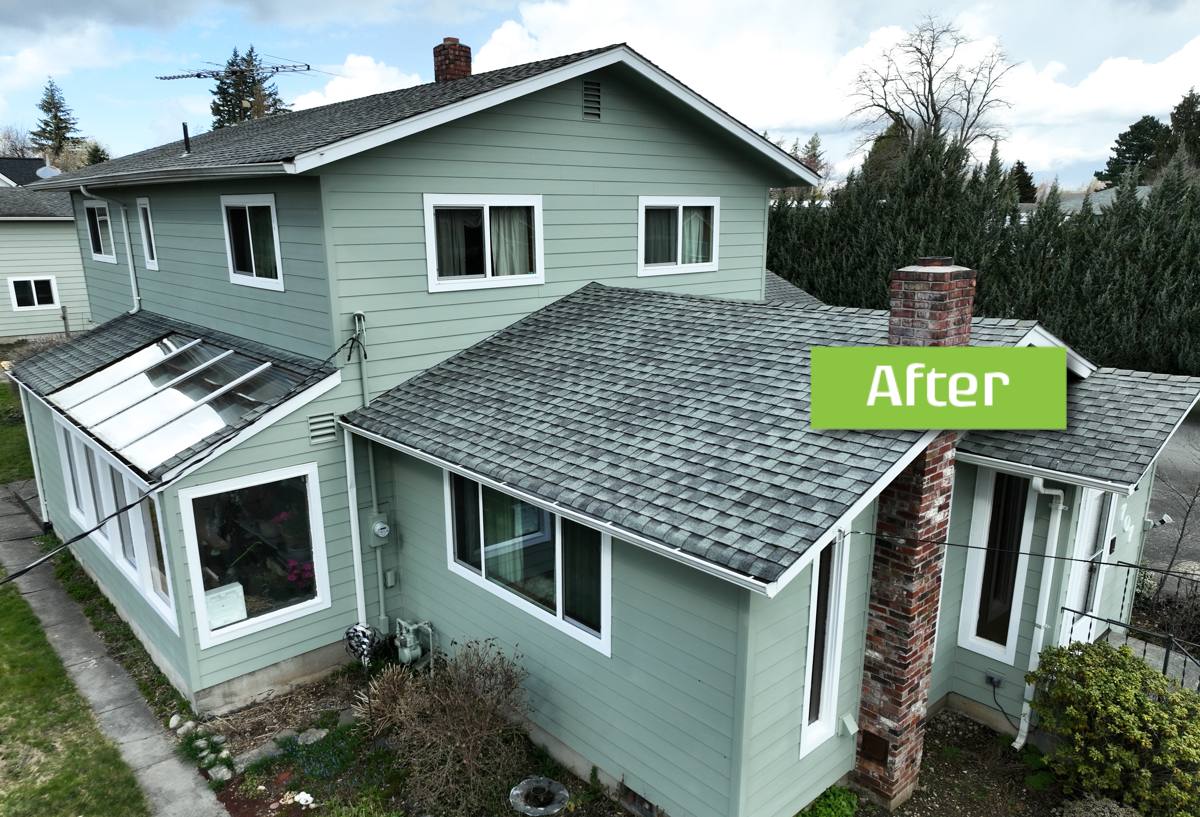
What Custer Homes Actually Need From Their Siding
Moisture Management, Not Just a Pretty Surface
Siding's real job is managing water — shedding it, venting it, and keeping it away from the wood sheathing and framing underneath. In a climate with this much sustained rain, the wall assembly behind the siding matters as much as the siding itself. A correct installation includes a weather-resistive barrier installed shingle-style (so water sheds downward, not into seams), properly lapped and sealed flashing at every window, door, and penetration, and a drainage gap or rainscreen strategy so any moisture that does get behind the cladding can drain and dry instead of sitting against the sheathing.
Salt Tolerance
Fasteners, trim, and the siding material itself all need to hold up to airborne salt without corroding, pitting, or breaking down early. This is one of the clearest reasons material choice matters in Custer specifically — a product that performs fine 30 miles inland can age faster here.
Moss and Algae Resistance
With a moss season that runs most of the fall and winter, siding on shaded walls and under eaves needs a finish that resists organic growth and doesn't feed mold the way some wood-based products can. Regular gentle cleaning helps, but the material and finish do most of the work between cleanings.
Why We Install James Hardie Only — In Custer Specifically
We standardized on James Hardie fiber cement siding company-wide, and Custer's climate is a good example of why. Fiber cement is non-combustible and dimensionally stable, so it doesn't swell, cup, or rot the way wood-based products can when they take on repeated moisture. Hardie's ColorPlus factory finish is baked on under controlled conditions, which gives it better adhesion and UV/moisture resistance than field-applied paint — an advantage in a climate where a compromised paint film lets salt air and rain start working on the substrate underneath. Hardie also engineers region-specific HZ product lines (HZ5 for climates with more moisture exposure), which is a meaningful detail for a coastal-influenced area like this one.
We don't install vinyl, LP SmartSide, Cemplank, Allura, primed spruce, or cedar. Each of those has legitimate uses elsewhere, but in a market with sustained rain, salt exposure, and heavy moss pressure, we'd rather stand behind one product system we can install to spec and back with a strong transferable warranty than mix and match materials that each carry their own trade-offs in this specific climate. That's a decision about installation standards and long-term performance, not a knock on every use case those products have elsewhere.
How Correct Installation Actually Works
1. Site and Substrate Assessment
Before any siding comes off or goes on, we check the condition of the existing sheathing and framing. In an area with this much rain exposure, it's common to find soft or water-damaged sheathing behind old siding, especially around windows, at corners, and near ground level. That gets addressed before new material goes up — covering rot with new siding just delays a bigger problem.
2. Weather-Resistive Barrier and Flashing
A new or repaired barrier goes on shingle-lapped, with self-adhered flashing at all window and door openings, integrated correctly with the barrier so water is directed out and down at every layer. Every penetration — hose bibs, vents, light fixtures, electrical — gets individually flashed and sealed.
3. Rainscreen / Drainage Gap
Where the wall assembly calls for it, we install a drainage gap behind the siding so any incidental moisture can drain and the wall can dry from both sides. This is one of the details that matters most in a wet, wind-driven-rain climate and is easy to skip on a rushed job.
4. Fastening to Spec
James Hardie siding has specific fastener spacing, type, and placement requirements by product line and exposure. Corrosion-resistant fasteners matter everywhere, but especially here given salt exposure. Fastening off-spec is one of the most common causes of early siding failure and is usually invisible until problems show up years later.
5. Trim, Caulking, and Finish Details
Corners, trim boards, and joints get sealed with products compatible with the ColorPlus finish, and touch-up paint is used only where the manufacturer allows it, to preserve the factory finish's performance.
6. Final Walkthrough
We walk the finished job with the homeowner, checking reveal consistency, caulking lines, and that every penetration and transition was sealed correctly.
Material Comparison for Custer's Climate
| Factor | James Hardie Fiber Cement | Vinyl | Wood / Engineered Wood |
|---|---|---|---|
| Moisture response | Dimensionally stable, does not swell or rot | Doesn't absorb water, but can warp or crack in temperature swings | Can absorb moisture, swell, or rot if finish fails |
| Salt air exposure | Engineered finish holds up well; fiber cement itself is inert | Generally tolerant, but fasteners and trim can corrode | Finish breakdown from salt air exposes wood to moisture faster |
| Moss / algae resistance | Factory finish resists organic growth well | Can host algae in shaded, damp areas | More prone to holding moisture that feeds moss/mold |
| Fire resistance | Non-combustible | Combustible | Combustible |
| Finish longevity | Factory-applied ColorPlus, long warranty | Color molded in, can fade; limited repair options if damaged | Field-applied paint, needs repainting on a regular cycle |
Signs a Custer Home Needs New Siding
- Visible cupping, warping, or soft spots, especially on north- and west-facing walls that take the most weather
- Paint that's peeling or bubbling rather than just fading evenly
- Persistent moss or algae staining that comes back quickly after cleaning
- Cracked or missing caulking at trim, corners, and window edges
- Soft or spongy sheathing felt through the siding near the base of walls
- Rising energy bills that suggest the wall assembly is no longer sealing well
- Siding that's original to a home built more than 20–25 years ago, nearing or past its expected service life
What Drives Cost on a Custer Siding Job
| Cost Factor | Why It Matters Here |
|---|---|
| Sheathing condition | Water-damaged sheathing found during tear-off adds repair scope before new siding goes on |
| Home size and wall complexity | More corners, gables, and trim details mean more labor and cut waste |
| Product line and exposure | HZ5-rated products for higher moisture exposure areas cost more than standard lines |
| Rainscreen / drainage gap scope | Full rainscreen assemblies add labor but pay off in a climate this wet |
| Trim and finish detail | Custom trim, corner treatments, and color choices affect material and labor cost |
| Access and site conditions | Tree cover, slopes, and tight lot access common in this area can affect staging and labor time |
What to Verify Before Hiring a Siding Contractor in Custer
- Are they a certified or factory-trained James Hardie installer, not just someone who occasionally installs it
- Do they inspect and address sheathing condition before covering it with new siding
- Will they detail flashing and drainage per manufacturer spec, not just "however it's always been done"
- Do they carry current licensing and insurance for exterior work in Washington
- Will they put the warranty terms — both manufacturer and workmanship — in writing before work starts
- Do they have recent experience with homes in this specific area, not just siding work in general
Why a Crew That Already Works Custer Matters
Siding installation isn't a one-size-fits-all process, and the details that matter most shift by microclimate. A crew that regularly works Custer and the broader Semiahmoo area already knows which walls typically take the worst wind-driven rain, where moss pressure tends to be heaviest under tree cover, and how salt exposure from the bay affects fastener and trim choices. That local pattern recognition shows up in small decisions — extra attention to a north wall's drainage detail, choosing an HZ5 product line without being asked, flagging sheathing issues before they become a surprise mid-project. It's the difference between a crew executing a generic install and one that's solving for the conditions your home actually faces.
If you're weighing a siding replacement or new installation for a home in Custer, we're happy to take a look and talk through what your walls actually need — no pressure, no obligation. Reach out below for a free estimate.