 Semiahmoo
 Why Storm Damage Looks Different at Semiahmoo Resort
Homes around Semiahmoo Resort sit on a narrow spit between Semiahmoo Bay and Drayton Harbor, about as exposed to open water as a Whatcom County roof gets. That position is part of what makes the area beautiful, and it's also exactly why roofs here take a harder beating than roofs ten miles inland. Wind off the water doesn't just blow — it drives rain sideways under laps and flashing that would stay dry in a more sheltered neighborhood. Salt-laden air corrodes fasteners, flashing, and gutter hardware faster than fresh air does. And the long, damp Pacific Northwest moss season keeps roof surfaces wet for months at a stretch, which matters a lot once a storm has already opened up a weak point.
When we get called out to Semiahmoo Resort after a windstorm, we're rarely looking at one simple problem. We're usually looking at a storm event that found a spot already weakened by salt corrosion or moss-trapped moisture, and turned a slow problem into a sudden one. Repairing that correctly means treating the storm damage and the underlying condition together, not just patching the visible hole.
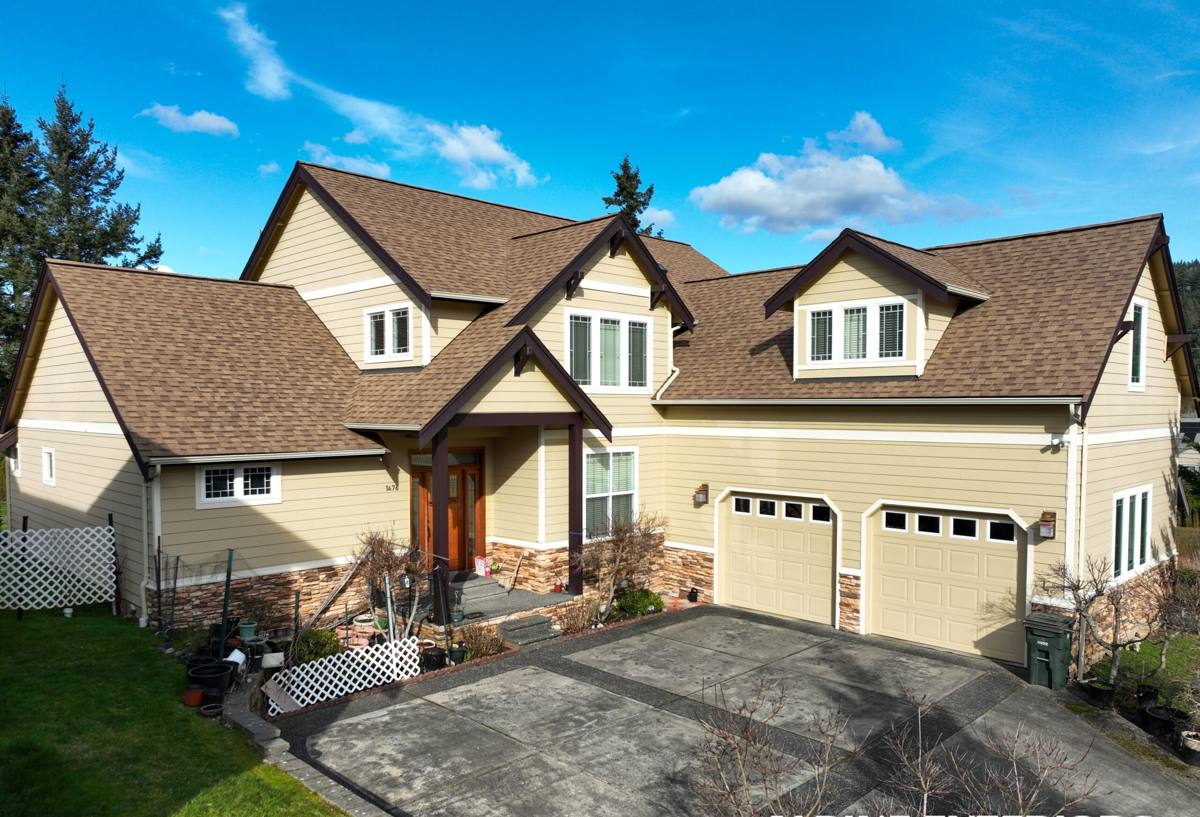
What Storm Damage Actually Looks Like on a Resort-Area Roof
Not all storm damage announces itself with a missing shingle. Some of the most costly damage on Semiahmoo Resort roofs is the kind homeowners don't notice until a stain shows up on a ceiling weeks later. Here's what we typically find after a wind or heavy-rain event in this area:
- Wind-lifted or creased shingles — the tabs may look intact from the ground but the seal underneath is broken, letting wind-driven rain track under the course above.
- Flashing pulled loose at chimneys, skylights, and wall intersections — the highest-wind-exposure areas on the roof, and the first place salt air corrodes fasteners.
- Gutters and downspouts torn free or overflowing — driving rain overwhelms gutters that were already partly blocked by moss and needle debris, sending water behind fascia boards instead of off the roof.
- Moss mats dislodged in sheets — when a big mat of moss tears loose in high wind, it often takes granules and even shingle material with it, leaving a bare, vulnerable patch.
- Fastener backout — corroded nails work loose over a season of salt exposure, then finally fail under wind load, leaving shingles that flap and eventually tear away.
Any one of these can look minor from the ground. On a roof this close to open water, we treat all of them as urgent, because the gap between "cosmetic" and "leaking" is usually just one more storm.
The Damage a Rushed Repair Misses
A lot of storm repair work in this region gets done fast — sometimes because a homeowner wants the tarp off, sometimes because a crew is trying to knock out several jobs before the next front rolls in. The problem is that a fast patch over a storm-damaged section often ignores what let the storm cause damage in the first place.
Underlayment and decking
Once wind or moss has broken the shingle seal, water usually reaches the underlayment before it reaches the living space. If that underlayment has been wet on and off for a season, it can be degraded well beyond the visible shingle damage. Nailing new shingles over compromised underlayment or soft decking just delays the next failure — it doesn't fix it.
Moss-related drainage problems
Moss doesn't just sit on a roof — it holds water against the surface and, when it grows across a valley or along an eave, it can redirect runoff in ways that concentrate water exactly where storm damage already weakened the roof. A proper repair traces the moss and drainage pattern back to its source, not just the spot where the leak showed up inside.
Fastener and flashing corrosion beyond the damaged area
If salt air has corroded fasteners near the storm-damaged section, it's likely doing the same thing nearby. We check flashing and fastener condition in a wider radius around any storm damage on Semiahmoo Resort homes specifically because of this — a single-spot patch on a roof with area-wide corrosion just moves the next failure a few feet over.
Our Storm Damage Repair Process
Storm repair work goes better — and holds up longer — when it follows a consistent process instead of reacting job by job. Here's how we approach it:
- Safety-first temporary protection. If there's an active leak or exposed decking, we tarp it correctly the same day when possible, so the interior and structure stop taking on water while the rest of the process plays out.
- Full roof assessment, not just the damaged section. We walk the whole roof, checking flashing, fastener condition, moss coverage, and drainage — because storm damage on an exposed, salt-air roof rarely stays isolated to one spot.
- Photo documentation. We document damage before and during repair, which matters both for your records and for any insurance claim you may file.
- Repair plan with options. We explain what needs to be fixed now, what's related but not urgent, and what can be scheduled — you decide what to approve, with real numbers in front of you.
- Repair execution. We replace damaged shingles, underlayment, and decking as needed, re-secure or replace corroded flashing, and re-seal penetrations — matching materials and methods to what the rest of the roof can handle.
- Drainage check. Before we call the job done, we confirm gutters, downspouts, and valleys are clear and moving water the way they should, since a repair that ignores drainage often gets undone by the next storm.
Materials and Methods for Salt-Air, High-Moisture Roofs
Not every fastener, flashing metal, or shingle product performs the same way a few hundred feet from open saltwater. Part of doing this repair correctly at Semiahmoo Resort is choosing materials that hold up to that specific exposure, not just whatever is on the truck.
| Component | Standard-Exposure Choice | Our Approach Near the Water |
|---|---|---|
| Fasteners | Galvanized roofing nails | Corrosion-resistant fasteners rated for coastal/salt-air exposure, since standard galvanized nails corrode faster here |
| Flashing | Painted steel | Aluminum or heavier-gauge, corrosion-resistant flashing at chimneys, valleys, and wall intersections |
| Underlayment | Standard felt | Synthetic or self-adhered underlayment in high-exposure areas, for better performance under repeated wet-dry cycling |
| Gutters/hardware | Standard steel hangers | Corrosion-resistant hangers and fasteners to match the gutter material's expected service life |
| Moss treatment | One-time removal | Removal plus zinc or copper strip installation where appropriate, to slow regrowth given the long local moss season |
This isn't about upselling premium materials on every job — it's a professional standard we apply because the alternative is doing the same repair again in a few years. On a roof exposed to Semiahmoo Bay weather, the cheaper fastener or flashing choice often costs more over time in repeat callbacks.
Insurance Claims and Storm Damage: What to Know Before You Call
Many storm-damage repairs on Semiahmoo Resort homes involve a homeowner's insurance claim, and a few things make that process smoother:
- Document the damage before any repair or cleanup happens, if it's safe to do so — photos of debris, the roof, and any interior water intrusion.
- Get a written, itemized estimate that separates storm-caused damage from pre-existing wear — adjusters ask for this distinction, and a vague estimate can slow a claim down.
- Know that not all damage is covered the same way. Sudden wind damage is typically treated differently than gradual deterioration from age or moss, which is one more reason a full roof assessment (not just a patch) matters — it establishes what actually happened.
- Emergency tarping is usually a covered, reimbursable expense when it prevents further damage — keep that invoice with your claim paperwork.
We're not a public adjuster and we don't negotiate your claim for you, but we provide the documentation and itemized estimates that make the claims process go smoother, because we've been through it with enough Whatcom County homeowners to know what adjusters ask for.
Preventing Repeat Storm Damage
The single biggest factor in whether a Semiahmoo Resort roof takes storm damage again next season is what happens between storms — not during them. A short seasonal checklist goes a long way:
- Clear moss buildup before it forms mats that trap water or tear loose in wind.
- Clean gutters and downspouts ahead of the fall storm season, when driving rain and debris load up together.
- Check flashing and fastener condition annually, especially at chimneys, skylights, and valleys — the areas most exposed to wind and salt air.
- Trim back tree limbs that overhang the roof, since falling limbs are a common source of storm-related impact damage.
- Address small leaks or lifted shingles promptly — a small repair now is almost always cheaper than the repair after the next storm finds that same weak spot.
Why Hire a Crew That Already Works Semiahmoo Resort
Storm damage repair isn't a generic skill applied the same way everywhere. A crew that regularly works Semiahmoo Resort already knows which materials hold up to this specific wind and salt exposure, which roof areas tend to take the brunt of a storm off the bay, and how the local moss season affects timing and drainage. That familiarity shows up in faster, more accurate assessments and repairs that are built for the conditions your roof actually faces — not generic conditions from somewhere inland.
It also means faster response. When a storm moves through Whatcom County, roofs near the water tend to need attention first, and a crew already working this area can get to a leaking or storm-damaged roof sooner than one driving in from further out.
Get a Straightforward Assessment
If a recent storm has left your Semiahmoo Resort roof with missing shingles, loose flashing, or a leak you can't quite trace, we're glad to take a look. We'll give you a clear, honest picture of what's storm damage, what's pre-existing wear, and what it actually takes to fix it right — with a free, no-pressure estimate. Fill out the form below and we'll get back to you.