 Semiahmoo
 Storm Damage Roof Repair for Blaine Harbor Homes
The harbor side of Blaine takes weather differently than the rest of Whatcom County. Homes closer to the water sit exposed to whatever comes off Semiahmoo Bay and Drayton Harbor with little to break the wind first, which means storm systems arrive here with more force and drop rain that's driven sideways rather than straight down. Add in the salt air that's part of daily life this close to the water, and a roof in Blaine Harbor is doing harder work year-round than a roof a few miles inland, storm or no storm. When a storm does hit hard enough to cause real damage, that same exposure is what makes a fast, correct repair matter more here than almost anywhere else in the county.
This page covers storm damage roof repair specifically — what causes it in Blaine Harbor, what a correct repair actually involves, and how our process works from the first call to the finished job.
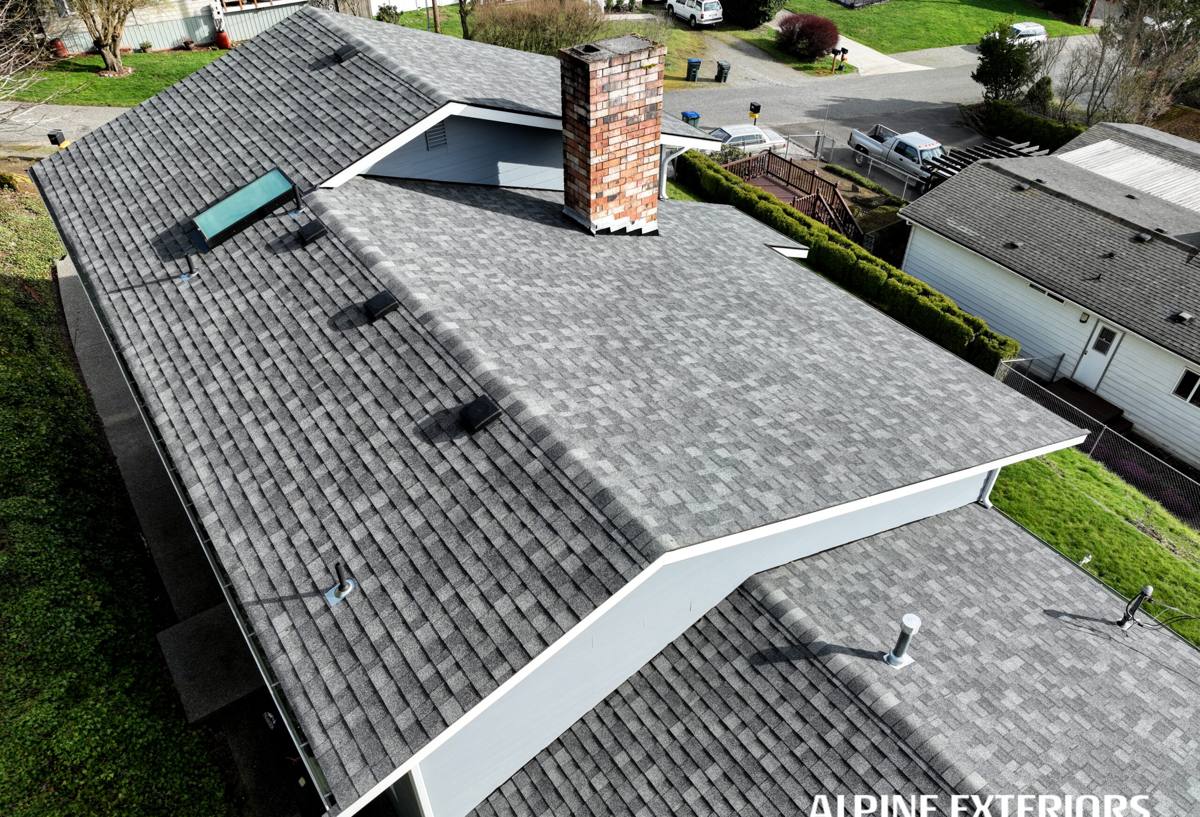
What Makes Storm Damage Different in Blaine Harbor
Wind Off the Water
Wind that builds up over open water and comes ashore at Blaine Harbor doesn't behave like wind that's been slowed down by miles of trees and terrain further inland. It hits roof edges, ridge caps, and any shingle with a weak seal harder and more consistently, which is why wind damage here tends to concentrate at eaves, rakes, and ridgelines rather than being scattered evenly across the roof.
Driving Rain That Finds Gaps
Once wind lifts a shingle edge or works a flashing seam loose, the driving rain that follows off the water doesn't need much of an opening to get underneath the roof covering. That combination — wind damage first, then rain finding the opening — is the pattern behind most of the storm-related leaks we see in Blaine Harbor, and it's why a roof that looks mostly fine from the ground can still be actively taking on water.
Salt Air's Slow Damage
Salt air doesn't cause a storm, but it weakens a roof's ability to handle one. Fasteners, flashing, and any exposed metal on a Blaine Harbor roof corrode faster than the same materials would inland, and a fastener that's already compromised by salt exposure is far more likely to fail outright during a wind event. Roofs here need corrosion-resistant hardware from the start, and storm damage repairs are a good time to catch and replace fasteners that salt air has already been quietly working on.
A Long Moss Season
Whatcom County's mild, damp climate keeps moss growing on shaded and north-facing roof slopes for most of the year, and moss holds moisture against the roof surface longer than a clean, dry shingle would. A roof going into a storm with an established moss problem is starting from a weaker position, since trapped moisture has often already begun softening the deck or lifting shingle edges before the wind even arrives.
Recognizing Storm Damage on a Blaine Harbor Roof
Some storm damage is obvious from the ground. A lot of it isn't, and the damage that's hardest to see from the driveway is often the kind that leads to the worst leaks if it goes unaddressed through the next few storms. A few things worth checking or asking a professional to check after any significant wind or rain event:
- Shingles that are missing, cracked, curling at the edges, or visibly lifted anywhere on the roof
- Granules collecting in gutters or at the base of downspouts, a sign of shingle wear accelerated by wind abrasion
- Dented, creased, or displaced flashing around chimneys, vents, skylights, or roof-to-wall transitions
- Water stains or discoloration on ceilings or in the attic, especially after a storm rather than gradually over time
- Debris damage from branches or wind-carried material, which can puncture or crack roofing material on impact
- Soft spots or visible sagging anywhere on the roof plane, a sign moisture may have already reached the deck
- Loose or missing ridge cap shingles, which are a common early failure point in high wind
A single item on this list doesn't necessarily mean a full replacement is needed. But any of them is a reasonable reason to get a roof looked at, because storm damage tends to get worse, not better, if it sits through the next round of Blaine Harbor weather.
What a Correct Storm Damage Repair Involves
Storm damage repair isn't just patching whatever's visible from the ground and calling it done. A repair that actually holds up in this climate starts with understanding what the storm damaged and what condition the surrounding roof was already in before the storm hit.
1. A Full Roof Inspection, Not Just the Damaged Spot
We walk the roof rather than assess it from a ladder or from the ground, because wind damage is rarely limited to the one spot a homeowner noticed. Adjacent shingles, flashing, and the roof deck underneath the damaged area all get checked, since storm damage that's been left even briefly can let moisture spread further than the original point of impact.
2. Documentation for Insurance
Most storm damage repairs in Blaine Harbor involve an insurance claim, and thorough photo documentation of the damage — before, during, and after repair — makes that process go smoother. We document what we find whether or not a claim ends up being filed, since it gives you a clear record either way.
3. Matching the Repair to the Existing Roof
Where possible, replacement shingles and flashing are matched to the existing roof in material, style, and where feasible, color, so the repair blends in rather than standing out as an obvious patch. Where an exact match isn't available, we'll tell you that upfront rather than after the work is done.
4. Checking and Correcting Underlying Causes
If storm damage exposes an underlying issue — a fastener pattern that was already too sparse, flashing that was undersized for this climate, or ventilation that's been trapping moisture — we address that as part of the repair rather than just replacing what broke and leaving the same vulnerability in place for the next storm.
Repair vs. Full Replacement: How We Make That Call
| Situation | Repair Usually Makes Sense | Replacement Usually Makes Sense |
|---|---|---|
| Damage extent | Isolated to one section, edge, or a handful of shingles | Spread across multiple slopes or a large portion of the roof |
| Roof age | Roof is mid-life with plenty of useful life left | Roof was already near the end of its expected lifespan |
| Deck condition | Deck underneath is sound once exposed | Deck shows rot or soft spots from long-term moisture, not just the storm |
| Shingle availability | A reasonable match to existing material is available | Existing product is discontinued or too weathered to blend a patch |
| Repeat damage | First significant damage event on an otherwise healthy roof | Repeated storm damage suggesting the roof is under-built for this exposure |
We'll walk you through which category your roof falls into and why, in plain terms, before recommending either path. A repair that's honestly the right call is always the cheaper and faster option, and we'd rather tell you that than push a replacement that isn't yet necessary.
Our Process, Start to Finish
- Initial contact and scheduling: We get basic details about the damage and get a crew out to look at the roof as soon as reasonably possible, especially if there's active water intrusion.
- Emergency mitigation, if needed: If the roof is actively leaking or has an open gap, we'll address temporary protection first to stop further water intrusion while the full repair is scoped.
- Full inspection and documentation: We walk the roof, photograph the damage, and check adjacent areas and the deck where accessible.
- Written estimate: You get a clear, itemized estimate that spells out what's being repaired and why, not a one-line number.
- Insurance coordination, if applicable: We can work directly with your insurance adjuster and provide the documentation they need to process a claim.
- The repair itself: Work is done to match the existing roof where possible, using fasteners and flashing suited to this coastal climate.
- Final walkthrough: We go over the completed work with you before considering the job done.
Why a Crew That Already Works Blaine Harbor Matters
A roofing crew that only occasionally works this close to the water can do fine work and still miss the details that matter here — the fastener corrosion resistance, the flashing approach that accounts for wind-driven rain coming off the harbor, the moss patterns on shaded slopes that tell you where a roof has been holding moisture longest. A crew that works Blaine Harbor regularly has seen how storm damage actually plays out on real roofs in this exact exposure, not just how it's described in a training manual. That matters even more after a storm, when out-of-area crews sometimes show up offering fast repairs and then aren't reachable a year later if something wasn't done right the first time. Working with a crew that's local to Whatcom County and plans to still be here for the warranty is worth factoring into the decision, not just the price on the estimate.
After the Repair: Reducing Future Storm Damage
A storm damage repair is a good moment to address the smaller issues that make the next storm more damaging than it needs to be. That can mean upgrading to corrosion-resistant fasteners where salt air has been an ongoing issue, adding or correcting ventilation that's been trapping attic moisture, or clearing back tree limbs that could cause debris damage in the next wind event. None of these are required to complete a repair, but they're worth discussing while a crew is already on the roof, since addressing them separately later usually costs more in labor than handling them during an existing job.
If your Blaine Harbor home has visible storm damage, a suspected leak, or you just want a roof checked after a rough stretch of weather, we're glad to come take a look and give you a straightforward, no-pressure estimate. Reach out using the form below to schedule a free roof inspection.