 Semiahmoo
 Why California Creek Decks Wear Differently
A deck built two miles inland ages differently than one built near the water off Semiahmoo Bay. Homes around California Creek sit close enough to the salt water and open exposure that decks take on a steady combination of salt-laden air, wind-driven rain, and shade that never fully dries out between storms. None of those factors are dramatic on their own, but stacked together over a Whatcom County winter, they shorten the life of fasteners, ledger connections, and decking boards faster than most homeowners expect.
Salt air is corrosive to metal long before rust is visible to the eye. Driving rain doesn't just wet the surface of a deck — it drives moisture sideways into board gaps, under railings, and behind ledger flashing where it has no easy way to escape. And the long moss season that defines this part of Washington keeps decks damp and shaded well past the point where a sunnier deck would have dried out and reset. A deck repair that doesn't account for all three of these conditions tends to fail again within a few years, which is why "just replace the bad boards" is rarely the whole answer here.
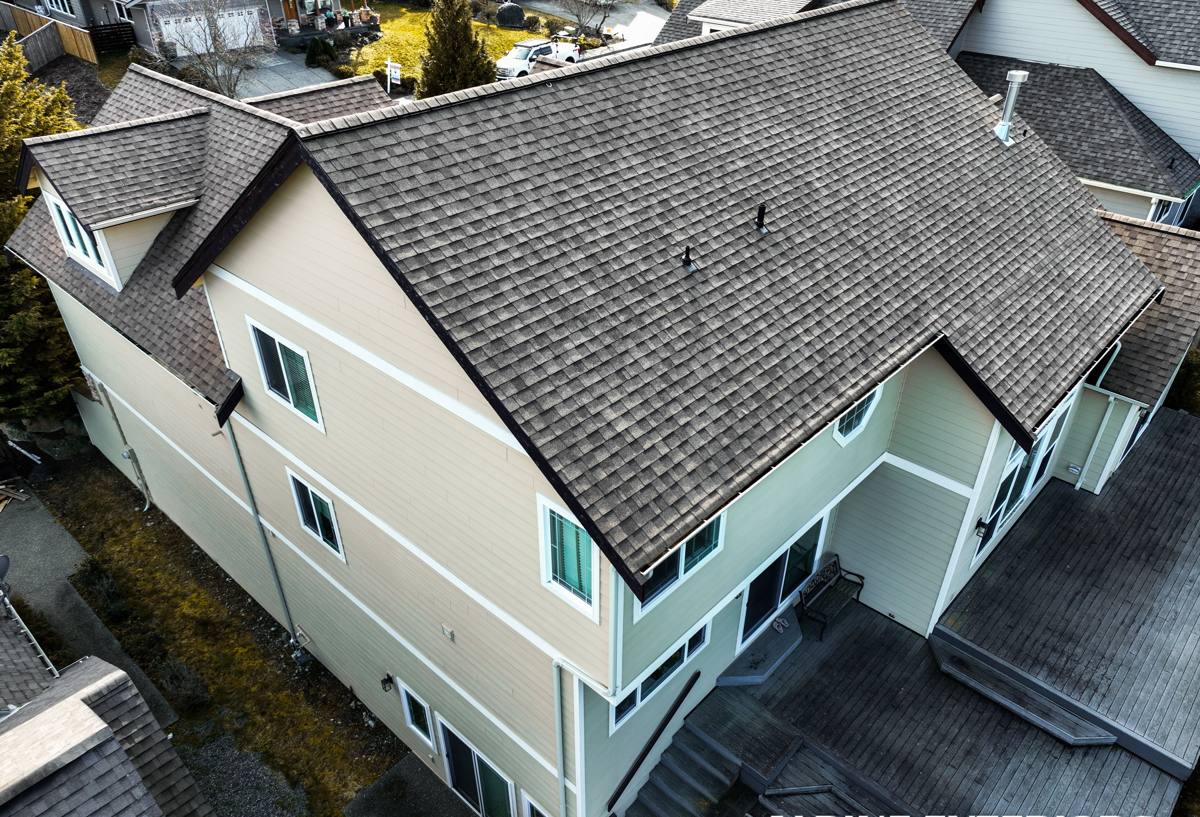
Signs a California Creek Deck Needs Repair
Most deck problems in this area start small and stay hidden until they're not. The list below covers what we look for on service calls in and around California Creek — if two or more of these apply to your deck, it's worth having it looked at before another wet season sets in.
- Soft, spongy, or springy spots underfoot, especially near the house or stair landing
- Visible gaps, cupping, or splitting in decking boards, particularly where boards meet
- Rust streaks bleeding out from screws, nails, or joist hangers
- Dark green or black staining that returns within weeks of cleaning
- A ledger board that looks separated, caulked-over repeatedly, or has staining beneath it
- Railings or posts that flex or wiggle more than they used to
- Stair stringers or the underside of the deck showing soft wood when pressed with a screwdriver
- A musty smell coming from underneath the structure
Any one of these by itself might be minor. Several together usually mean moisture has been getting into the structure for a while, not just the surface.
What a Correct Deck Repair Actually Involves
A deck repair done right is a structural job first and a cosmetic job second. Replacing a few gray, splintered boards makes a deck look better for a season, but if the framing, flashing, or fasteners underneath are compromised, the new boards are just covering the real problem. We treat every repair as an inspection of the whole system, not just the part the homeowner called about.
Ledger Board and Flashing
The ledger board — where the deck attaches to the house — is the single most common failure point we see on older decks in this area, and it's also the least visible. Flashing that was installed correctly decades ago can still fail as caulk shrinks and house wrap ages, letting water track behind the band board and into the rim joist. We check ledger flashing on every repair, not just when it's the stated reason for the call, because a rotted ledger connection is a safety issue, not a cosmetic one.
Framing and Joists
Joists and beams take longer to show damage than decking boards do, since they're shaded from view and often shaded from sun as well. We probe framing members near the ledger, at stair connections, and anywhere staining is visible from below. Sistering a joist — bolting a new piece of lumber alongside a weakened one — is often a better long-term fix than trying to dry out and seal wood that's already lost structural integrity.
Decking Boards and Fasteners
Board replacement is the visible part of most repairs, but the fasteners matter just as much as the boards. In a salt-air environment, standard coated deck screws corrode faster than the wood around them, which is why we spec fasteners rated for coastal and treated-lumber use rather than whatever's cheapest at the yard. We also leave proper gapping between boards so the deck can shed water instead of trapping it — a detail that's easy to skip and expensive to ignore.
Railings and Guardrails
Railing posts anchor into the same framing that takes the brunt of moisture exposure, so a wobbly railing is often a symptom of a framing problem, not just a loose bolt. We check post connections against current code requirements whenever we're already opening up a deck for other repairs, since it's far cheaper to correct during a repair than as a standalone project later.
Choosing Materials for This Climate
Not every decking or framing material handles Whatcom County's salt air, rain, and moss equally well. There's no single "best" choice for every homeowner — budget, maintenance tolerance, and how long you plan to stay in the home all factor in — but the trade-offs below are worth knowing before a repair goes forward.
| Material | Moisture & Salt Air Behavior | Maintenance | General Cost Range |
|---|---|---|---|
| Pressure-treated fir/hem-fir | Good for framing when properly flashed; needs sealed cut ends | Periodic sealing recommended | Lower |
| Cedar | Naturally rot- and insect-resistant; still needs finish upkeep near salt air | Moderate — refinish every few years | Mid-range |
| Composite decking | Doesn't absorb water or rot like wood; some products can retain surface moss if not cleaned | Low — occasional cleaning | Higher upfront |
| Tropical hardwood | Very dense and moisture-resistant when installed correctly | Low to moderate | Higher |
For structural framing that will be enclosed once the decking goes back down, pressure-treated lumber paired with correct flashing is usually the practical choice. For the visible decking surface, the decision often comes down to how much upkeep a homeowner wants to take on versus how much they want to spend up front — we'll walk through that trade-off honestly rather than push whatever has the best margin.
Repair or Replace: How We Make the Call
Homeowners often assume a deck showing damage needs full replacement, and sometimes that's true — but a lot of decks we see in California Creek are structurally sound where it counts and only need targeted work. The decision usually comes down to three questions: is the framing sound, is the ledger connection dry and secure, and is the damage isolated or spread across the whole structure. If the framing and ledger check out, board replacement, fastener upgrades, and re-flashing can add years of life at a fraction of replacement cost. If the framing itself has widespread rot, patching around it just delays a bigger problem — and a bigger bill later.
Our Deck Repair Process
- Inspection. We check decking, framing, ledger flashing, fasteners, and railings — not just the area you flagged as the problem.
- Written scope. You get a clear explanation of what's structural, what's cosmetic, and what we'd recommend versus what's optional.
- Repair or rebuild sections. We replace only what needs replacing, sistering framing where possible instead of tearing out sound structure.
- Flashing and fastener upgrade. Any ledger or flashing work is brought up to current standards, and fasteners are matched to the coastal exposure.
- Final check. We walk the deck with you, point out anything worth watching, and explain simple upkeep to slow moss and moisture damage going forward.
Moss, Mildew, and Ongoing Maintenance
Even a freshly repaired deck will grow moss again in this climate if it's left alone. The combination of shade, rain, and cool temperatures for much of the year makes moss and mildew a maintenance issue, not a one-time fix. A few habits go a long way toward protecting a repair investment:
- Sweep debris and standing organic matter off the deck surface regularly, especially in fall
- Keep gutters and downspouts near the deck clear so runoff doesn't concentrate on one area
- Clean moss and algae with a deck-safe cleaner rather than pressure-washing aggressively, which can strip wood fibers and open it up to faster water absorption
- Re-seal or refinish wood decking on the schedule appropriate to the product, not just when it visibly looks dry
- Check underneath the deck once a year for staining, soft wood, or pooling water
Permits and Code Considerations
Structural deck repairs — especially anything involving the ledger board, footings, or railings — can fall under Whatcom County permitting requirements depending on the scope of work. We handle that conversation as part of the repair process rather than leaving homeowners to sort it out on their own, and we build any required inspections into the project timeline so there are no surprises partway through.
Why Hire a Crew That Already Works California Creek
Deck repair done by a crew unfamiliar with this stretch of coastline often misses the parts of the job that matter most — the fastener selection, the flashing detail, the framing checks that don't show up until you're already under the boards. We work on homes in and around California Creek and Semiahmoo regularly enough to know what the salt air and rain do to a deck here specifically, not just what a general repair manual says. That familiarity means fewer surprises during the job and a repair that's built for the exposure your home actually faces, not a generic one.
If your deck has soft spots, staining, loose railings, or just isn't holding up the way it should, we're happy to take a look. Reach out for a free, no-pressure estimate — use the form below to get started.