 Semiahmoo
 Building a Deck That Holds Up in Laurel
Laurel sits in the same wet, marine-influenced stretch of Whatcom County that shapes every exterior project we take on out of Semiahmoo. A deck here isn't judged on how it looks the week it's finished — it's judged on how it handles its fifth winter, when the moss has had time to work into every joint that wasn't detailed right and the wood has gone through a few dozen freeze-thaw-soak cycles. We build decks in Laurel with that long timeline in mind, not the first-summer version.
This page is specifically about deck building for Laurel properties — new decks, replacement decks, and full rebuilds on failing substructures. If you're comparing materials, thinking through drainage, or just trying to figure out what a correct deck build actually involves before you get quotes, this is written for you.
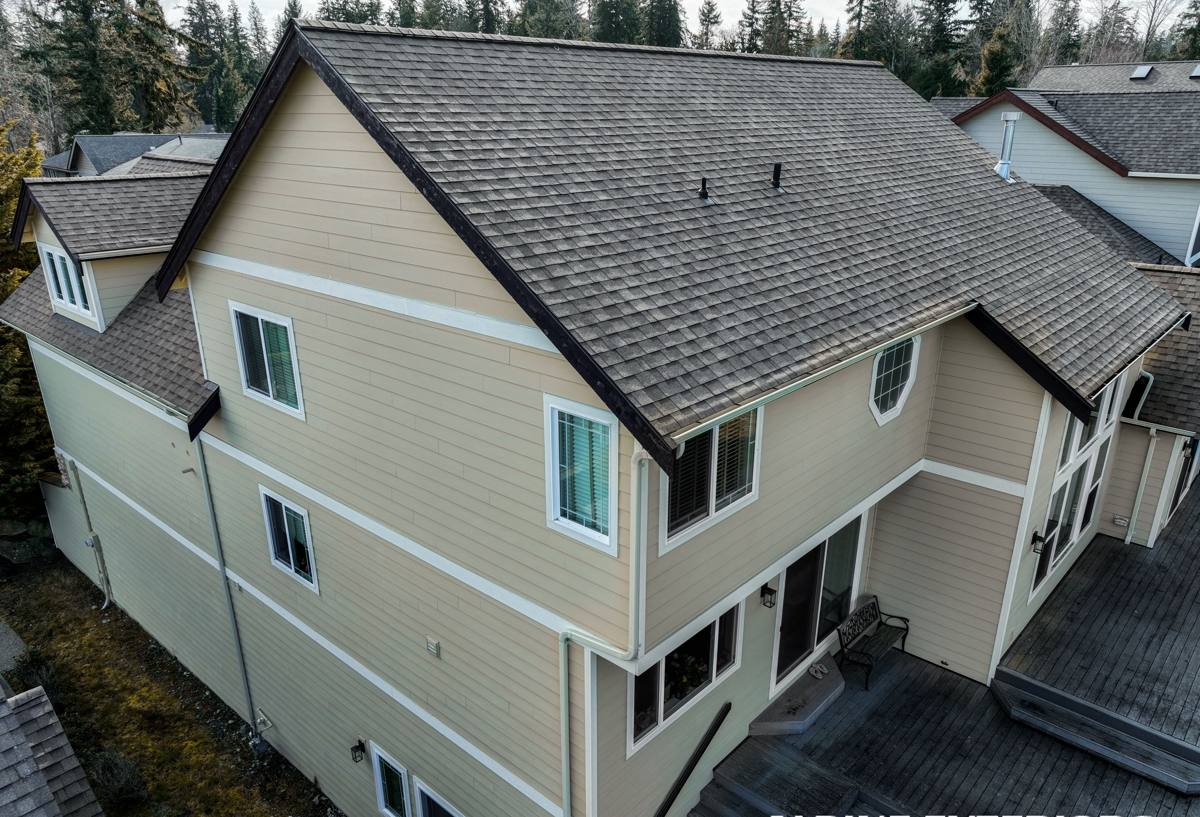
What Laurel's Climate Does to a Deck
Whatcom County doesn't get the driving coastal salt spray you'd see right on the water at Semiahmoo, but Laurel still sits inside the same weather system: long wet seasons, low winter sun that leaves shaded areas damp for days at a time, and a moss and algae season that can run from fall through spring. That combination is hard on decks in a few specific ways.
- Standing water at ledger boards and framing joints — where flashing was skipped or done wrong, this is where rot starts, and it starts hidden.
- Moss and algae on horizontal surfaces — decking that doesn't get afternoon sun holds moisture longer, and moss roots into wood grain and gaps between boards.
- Freeze-thaw cycling — Whatcom County gets enough cold snaps that trapped moisture in end grain or fasteners can freeze, expand, and split wood over several seasons.
- UV and rain together on fasteners and hardware — cheap coated screws and connectors corrode faster here than in a dry climate, even without direct salt exposure.
None of this means a deck in Laurel needs to be over-built or exotic. It means the details that don't show up in a walkthrough — flashing, fastener grade, drainage slope, ledger attachment — matter more here than they would in a dry climate, because the consequences of skipping them show up as rot and structural failure, not just cosmetic wear.
Why Shaded Decks Need Extra Attention
A lot of Laurel lots have mature trees or sit close to neighboring structures, which means partial shade on part or all of the deck for much of the day. Shaded decking stays damp longer after rain, which is exactly the condition moss and wood rot need. On these decks we pay closer attention to board spacing for airflow, joist spacing under the decking, and sometimes recommend a composite or capped material specifically because the maintenance burden of bare wood in constant shade is real and ongoing.
What a Correct Deck Build Actually Involves
A deck is really two projects stacked on top of each other: the structure (footings, posts, beams, joists, ledger) and the surface (decking, railing, stairs). Most deck failures we get called out to inspect are structural problems that were hidden under decking that still looked fine.
Footings and Framing
Footings need to be sized and set to local frost depth and soil conditions, not guessed at. Undersized or shallow footings are one of the most common corner-cuts we see on older decks — the deck feels solid until a wet season shifts the soil and things start to move. We use pressure-treated framing rated for ground contact where it's near soil, and we don't rely on the treatment alone where end grain is exposed to standing water — that's what flashing and proper slope are for.
Ledger Attachment
If the deck attaches to the house, the ledger board connection is the single most important structural and moisture detail on the whole project. It needs correct flashing that sheds water away from the house sheathing, proper lag or through-bolt fastening (not just nails), and a gap or flashing detail that keeps water from wicking behind the ledger into the wall assembly. This is the detail that, done wrong, causes hidden rot in the house itself — not just the deck.
Decking Surface
Board spacing, fastener choice, and drainage slope away from the house all affect how well the deck sheds water and resists moss buildup. We slope decking slightly for drainage and space boards to allow airflow underneath — tight, moisture-trapping gaps are one of the biggest contributors to premature rot and moss growth in this climate.
Decking Material Comparison for This Climate
| Material | Upfront Cost | Maintenance in Wet/Shaded Areas | Typical Lifespan Here |
|---|---|---|---|
| Pressure-treated wood | Lowest | Needs regular cleaning, sealing, and moss treatment | 10-15 years with upkeep |
| Cedar | Mid | Needs sealing/staining to resist graying and moss | 15-20 years with upkeep |
| Composite (capped) | Higher | Occasional washing; resists moss rooting into the surface | 25+ years, manufacturer-dependent |
| PVC decking | Highest | Low maintenance; fully sheds moisture | 25+ years, manufacturer-dependent |
There's no universally "correct" answer here — it depends on how much shade the deck sits in, how much upkeep the homeowner wants to do, and budget. What we won't do is put bare, untreated cut ends or exposed fastener heads into a design and call it done, regardless of material, because that's where this climate finds the weak point first.
A Note on Composite and PVC Products
Capped composite and PVC decking have gotten a lot better over the past decade, and for shaded, moss-prone areas we often recommend them specifically because they don't give moss and algae organic material to root into the way wood does. The trade-off is upfront cost and, on some product lines, a warranty structure that requires specific installation methods — hidden fastener systems, specified gapping, ventilation requirements underneath. We follow manufacturer installation specs exactly on these products because an install shortcut can void the warranty even if the deck looks fine.
Railings, Stairs, and Hardware
Code-compliant railing height, baluster spacing, and stair geometry aren't optional details — they're safety requirements, and we build to current code on every project regardless of what an older deck being replaced had. On hardware, we use corrosion-resistant, code-rated structural connectors and fasteners rated for the decking and framing material in use. In a climate that stays damp for months at a stretch, the difference between standard coated hardware and a corrosion-resistant grade shows up as rust streaks and loosening connections within a few years — a small cost difference at build time that matters a lot ten years out.
Our Process for a Laurel Deck Project
- On-site assessment — we look at drainage, sun/shade exposure, soil, and, for replacements, the condition of the existing structure before quoting anything.
- Design and material walkthrough — we go over material trade-offs honestly, including what each option actually costs to maintain here, not just to buy.
- Permitting — most new decks and many replacements need a permit; we handle that process rather than leaving it to the homeowner.
- Footings and framing — built to span and load requirements, with attention to ledger flashing and drainage from day one.
- Decking, railing, and stairs — installed to spec, including manufacturer requirements for any composite or PVC product.
- Final walkthrough — we go over care and maintenance specific to the material chosen, especially moss and moisture management for this climate.
Signs an Existing Laurel Deck Needs Attention
- Soft or spongy spots in decking, especially near the house or in shaded corners
- Rust streaking from fasteners or visible corrosion on connectors
- Gaps or separation where the ledger meets the house, or staining on the siding above the deck
- Persistent moss or algae that comes back within weeks of cleaning
- Railings or posts that feel loose or move under load
- Standing water that doesn't drain within an hour or two of rain stopping
Any one of these is worth a look before it becomes a structural issue. Hidden ledger rot in particular can go unnoticed for years because the visible decking still looks fine while the connection to the house is failing underneath.
Why a Crew That Already Works Laurel Matters
Deck building isn't exotic construction, but building one that actually holds up through repeated Whatcom County wet seasons takes judgment calls that come from having seen how decks in this specific area age — which details fail first, which materials handle the shade and moss cycle well, and which shortcuts show up as callbacks two or three years later. A crew that works Laurel regularly also knows the local permitting process and typical soil conditions, which keeps the project moving instead of stalling on inspection issues or surprises once footings are dug.
We're not interested in building a deck that looks good in photos and needs to be rebuilt in eight years. We build to hold up through this region's weather, using materials and details matched to how wet, shaded, and moss-prone the specific site is — not a one-size-fits-all spec.
Get an Honest Estimate
If you're planning a new deck or dealing with an aging one in Laurel, we're happy to come take a look, walk you through what we're seeing, and give you a straightforward estimate — no pressure, no upsell on materials you don't need. Use the form below to get started.