 Semiahmoo
 Why Custer's Climate Is Hard on Siding
Custer sits close enough to Semiahmoo Bay and the open water along Whatcom County's coastline that homes here deal with a mix of weather most siding products were never built for. Salt-laden air drifts inland on the wind, driving rain comes in sideways off Pacific storms, and long, damp winters keep exterior walls wet longer than almost anywhere else in the state. None of this is dramatic on its own, but stacked together over years it wears down siding faster than most homeowners expect — which is why "small" siding problems in Custer rarely stay small for long.
Salt Air and Slow Surface Wear
Salt in the air settles on exterior surfaces and holds moisture against them longer than dry inland air would. On wood-based sidings this speeds up rot at seams and fastener points; on paint and factory finishes it accelerates chalking, fading, and adhesion failure. It's a slow process, not an overnight one, which is exactly why it gets missed until a board is already soft.
Wind-Driven Rain Finds Every Gap
Rain that falls straight down is easy for siding to shed. Rain that's being pushed sideways by wind off the water is a different problem — it gets forced up under laps, into unsealed joints, and behind trim that would otherwise stay dry. Once water gets behind the cladding, the siding itself often looks fine on the surface while the sheathing and framing underneath take the damage.
A Long, Wet Moss Season
Whatcom County's moss season runs long. Shaded north-facing walls, tree-lined lots, and mild wet winters give moss and algae months to establish themselves on siding, trim, and butt joints. Moss doesn't just look bad; it holds a film of moisture against the surface underneath it around the clock, which is a slow but steady driver of rot and finish failure in exactly the spots that are hardest to see from the ground.
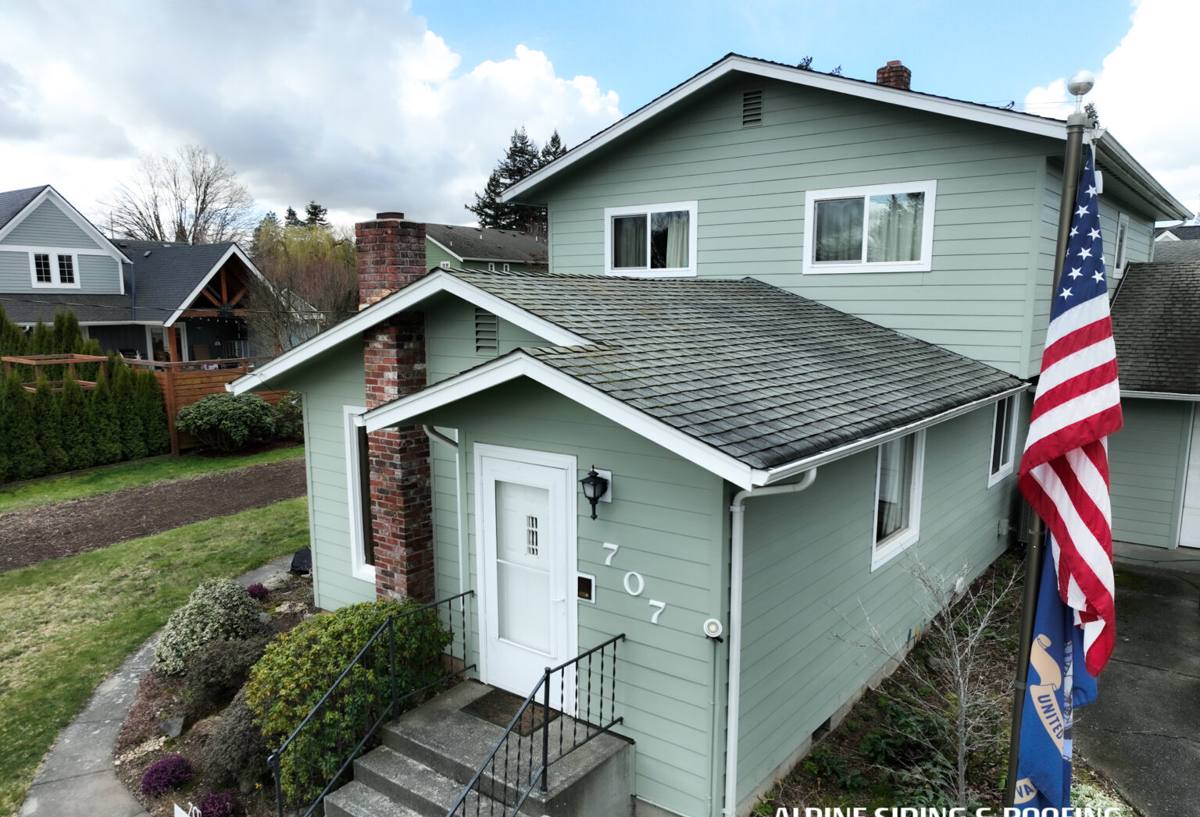
Signs Your Custer Home's Siding Needs Repair
Most siding repairs we get called for in Custer started as something a homeowner noticed months earlier and figured could wait. In this climate, waiting is usually what turns a board repair into a sheathing repair. Watch for:
- Soft or spongy spots when you press on a board, especially near the bottom courses or around windows
- Cracked, split, or visibly warped boards, particularly on walls that face prevailing wind and rain
- Paint or factory finish that's peeling, bubbling, or chalking off in patches rather than evenly across the wall
- Dark staining or streaking at seams, laps, or butt joints — a sign water is tracking behind the surface
- Moss or algae buildup that returns within weeks of cleaning
- Gaps opening up at trim, corner boards, or around penetrations like vents and hose bibs
- A musty smell or visible moisture on the interior side of an exterior wall
Any one of these on its own might be minor. Two or three together, especially on the same wall, usually means water has been getting behind the siding for a while.
Repairs We Commonly Handle Around Custer
Impact and Weather Damage
Falling limbs, ladders, lawn equipment, and wind-thrown debris account for a good share of the isolated repairs we handle — a single cracked or punctured board that's otherwise sound and just needs to be cut out and replaced to match.
Rot at Trim, Corners, and Butt Joints
These are the spots where two pieces of material meet, which makes them the first place a failed seal shows up as rot. It's also where mismatched materials or old caulk-only repairs tend to fail again fastest.
Failed Sealant Around Penetrations
Hose bibs, vents, light fixtures, and utility penetrations all interrupt the siding's water path. When the sealant around them dries out and cracks — which happens faster under salt air and constant damp — water has a direct route behind the cladding.
What a Correct Siding Repair Actually Involves
Finding the Real Cause Before Touching a Board
Replacing a damaged board without figuring out why it failed just buys time until the same spot fails again. A proper repair starts with determining whether the damage is a surface issue — failed caulking, worn-out paint, straightforward impact damage — or a moisture issue coming from a flashing gap, a missing kick-out, or a seam that was never sealed correctly to begin with.
Checking What's Behind the Siding
Wherever there's any sign water has been getting behind the cladding, the repair has to include opening the wall up enough to check the water-resistive barrier, flashing, and sheathing underneath. Patching over wet or damaged sheathing with new siding just hides the problem for another season.
Matching Material, Profile, and Finish
A repair that's structurally sound but looks obviously patched isn't a finished job. That means matching board width and exposure, matching the factory finish as closely as the product line allows, and keeping fastener patterns and caulking lines consistent with the rest of the wall.
Repair or Full Replacement? How We Help You Decide
Not every damaged section needs a full re-side, and not every repair is worth doing on its own. The right call usually comes down to a handful of factors:
| Factor | Leans Toward Repair | Leans Toward Replacement |
|---|---|---|
| Extent of damage | Isolated to one wall or a few boards | Showing up on multiple walls or elevations |
| Age of existing siding | Installed within roughly the last 10-15 years | Original siding from a much older install |
| Moisture behind the wall | Localized to one flashing or seam failure | Found at multiple penetrations or walls |
| Material condition | Boards sound apart from the damaged section | Boards brittle, delaminating, or failing broadly |
| Typical cost range | Roughly $300 to $2,500 depending on scope | Whole-wall or whole-house pricing, quoted after inspection |
We'll always tell you honestly which side of that line your home falls on. A repair that's really a stopgap on a siding system that's failing broadly isn't a good use of your money, and we'll say so before we ever write up a scope.
Why We Repair Custer Homes with James Hardie Fiber Cement Only
Semiahmoo Siding installs and repairs with James Hardie fiber cement exclusively. We don't patch in vinyl, LP SmartSide, Cemplank, Allura, or primed wood, even when one of those would be the faster or cheaper fix on a given day. In a climate like Whatcom County's, mixing materials on the same wall creates problems that outlast the convenience of a quick patch.
Different siding materials expand, contract, and absorb moisture at different rates. A vinyl or engineered-wood patch set into a fiber cement wall moves differently through wet winters and dry summers, which stresses the seams around it and tends to open gaps again within a few seasons — right where water intrusion started the problem in the first place. Wood-based products in particular depend on a well-maintained paint film to keep water out; if that film fails on a small patched section faster than on the surrounding original siding, you're back to square one on just that spot.
James Hardie's HZ5 product line is engineered for wetter, more variable climates like this one, and its ColorPlus factory finish is baked on rather than field-applied, which gives a repaired section a much better chance of holding its color and sheen alongside the original siding for years, not months. It's also non-combustible, which matters less for a repair decision than for a full install, but it's part of why it's the only product we're willing to put on a Custer home, patch or otherwise.
Our Siding Repair Process
- On-site inspection of the damaged area, plus a check of the rest of the exterior for related issues
- Moisture check behind the cladding wherever intrusion is suspected, not just where damage is visible
- A written scope that spells out what's being repaired, what material is being matched, and why
- Removal of damaged boards and trim, with sheathing, flashing, and the water-resistive barrier repaired or replaced as needed
- Installation of matched James Hardie material, fastened and sealed to the same standard as new construction
- Final finish work and a walkthrough so you know exactly what was found and what was done about it
We don't skip the second step. Covering a moisture problem with new siding is the single most common shortcut that turns a repair into a repeat call two winters later.
Why Hiring a Crew That Already Works in Custer Matters
Siding repair is one of those trades where local familiarity changes the outcome, not just the convenience. A crew that regularly works Custer and the surrounding Whatcom County area already knows which wall orientations take the worst of the wind-driven rain, how aggressive moss growth gets on shaded lots in this area, and what flashing and trim details tend to show up on homes built in different eras around the county.
There's also a practical side to it. After a hard storm stretch, response time matters, and a crew that's already local — already stocking common James Hardie profiles and ColorPlus colors used in the area — can get to a damaged section faster and match it more closely than a contractor traveling in from outside the region for a single job.
Keeping a Repair Lasting: Simple Maintenance for Custer Homes
A correct repair should last, but a little seasonal attention goes a long way in this climate:
- Rinse moss and algae off siding gently before it builds into a thick mat, rather than scraping or pressure-washing aggressively
- Keep gutters clear so overflow isn't running down and pooling against siding at corners
- Trim back vegetation that's shading a wall and keeping it damp longer than the rest of the house
- Walk the exterior once a year and press on a few boards near grade and around windows, checking for the soft spots described above
- Re-caulk seams and trim joints as soon as caulk starts to crack or pull away, before water gets a path behind it
If you're seeing any of these signs on your Custer home, or you'd just like an honest read on whether a section needs repair or the siding is telling you something bigger is going on, we're glad to take a look. Reach out for a free, no-pressure estimate — someone will walk the exterior with you, explain what they find, and give you a straight answer either way.