 Semiahmoo
 Building Decks for Birch Bay's Coastline
Birch Bay sits right on the water, and that changes what a deck has to survive. A deck built the same way you'd build one twenty miles inland, away from Semiahmoo Bay, will show problems faster here: fasteners corrode sooner, wood surfaces stay damp longer between dry spells, and moss and algae get a foothold on any part of the deck that doesn't see direct sun or good airflow. None of that means a deck in Birch Bay can't last — it means the build has to account for salt air, driving rain off the water, and a moss season that runs longer than most homeowners expect in Whatcom County.
We build and repair decks throughout Birch Bay and the surrounding Semiahmoo area, and the details below reflect what we've learned building specifically for this stretch of coastline, not a generic checklist pulled from a builder who works forty miles from salt water.
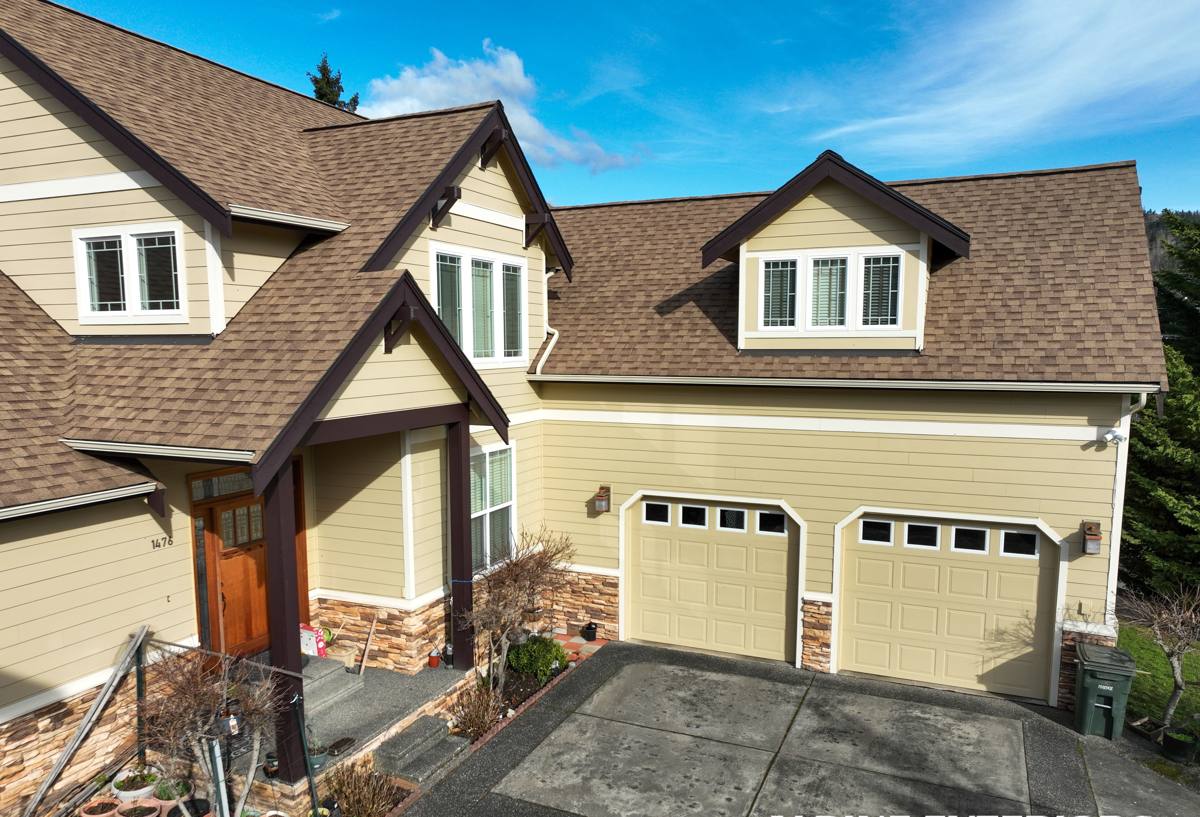
What Salt Air Does to a Deck
Salt-laden air off the bay accelerates corrosion on anything metal — fasteners, joist hangers, railing brackets, and structural connectors. On a deck built with standard construction-grade screws and hangers, that corrosion often shows up first as rust streaking down the face boards, and later as fasteners that have lost enough strength to hold securely. It's a slow process, but it's steady, and it's one of the most common reasons we get called out to older decks near the water for repair rather than routine maintenance.
Where Salt Exposure Concentrates
- Railing posts and top rails facing open water or prevailing wind
- Fastener heads on exposed decking boards, especially on the windward side
- Joist hangers and structural hardware underneath the deck, where salt spray can settle and sit without ever fully drying
- Any bare or scratched metal, since a break in a protective coating gives corrosion a starting point
The fix isn't complicated — it's using hardware rated for coastal or marine exposure from the start, rather than upgrading materials only after a homeowner notices staining or a loose post.
Driving Rain and Drainage
Birch Bay gets its share of wind-driven rain, and a deck's job during those storms is to shed water fast rather than hold it. Two things determine whether a deck handles that well: the gap spacing between boards and the slope of the structure underneath.
Boards set too tight, either from poor installation or from swelling over time, trap water between them. That trapped moisture is exactly what feeds rot in the joists below and algae growth on the board edges. A properly spaced deck lets rain pass through instead of pooling, and a deck built with a slight pitch away from the house keeps water moving toward the yard instead of back toward your siding and foundation.
Drainage Details That Matter
- Consistent board spacing sized for the decking material, not a one-size-fits-all gap
- A slight slope away from the house, built into the substructure before decking goes down
- Flashing where the deck ledger meets the house, so water can't work its way behind siding at the connection point
- Clear space under low decks so air can circulate and moisture doesn't sit trapped against the ground
The Long Moss Season
Whatcom County's moss season isn't limited to a couple of wet months — shaded, damp surfaces here can grow moss and algae for most of the year, and a deck near the bay often stays damp longer than one in a drier, more inland yard. Moss on a deck surface isn't just cosmetic. It holds moisture against the wood or composite surface, and on wood decking it becomes genuinely slick and dangerous underfoot.
Moss takes hold fastest in spots that don't get sun or airflow: under overhangs, along the shaded side of the house, and anywhere debris — leaves, needles, dirt — is allowed to collect and hold water against the boards. A deck design that accounts for sun exposure and airflow from the start will fight moss far better than one that relies on the homeowner power-washing every spring.
Reducing Moss Without Constant Maintenance
- Board spacing and orientation that let shaded areas dry out between rains
- Trimming back overhanging vegetation that keeps sections of the deck in permanent shade
- Choosing a decking surface with a texture and finish that doesn't hold organic debris
- Regular clearing of leaves and needles from between boards, especially in fall
Choosing the Right Decking Material
There's no single "best" decking material for every Birch Bay home — it depends on how much sun the deck gets, how close it sits to the water, and how much upkeep you want to do. Here's how the common options actually compare under coastal conditions:
| Material | Salt Air Performance | Moss Resistance | Maintenance |
|---|---|---|---|
| Pressure-treated wood | Good with coastal-rated fasteners | Needs regular cleaning and sealing | Annual cleaning, periodic sealing/staining |
| Cedar | Naturally decay-resistant, fasteners still matter | Moderate; benefits from finish upkeep | Periodic sealing to maintain appearance and resistance |
| Composite decking | Excellent; won't corrode or absorb salt | Better resistance, but still needs cleaning in shaded areas | Occasional washing; no staining or sealing |
| PVC decking | Excellent; fully synthetic | Good resistance in most exposures | Lowest; periodic washing only |
We'll walk through these trade-offs with you honestly, including cost, based on your specific lot and how exposed it is to wind and water — a deck tucked behind the house has different needs than one facing open water.
What a Correctly Built Deck Involves
Structure First
Everything about a deck's long-term performance starts below the surface boards. Footings need to be sized and set to local frost depth and soil conditions, ledger attachment to the house needs proper flashing and fastening, and joists need to be spaced correctly for the decking material you choose — composite and PVC products often require tighter joist spacing than solid wood.
Hardware and Fasteners
Given the corrosion risk from salt air, we use fasteners and structural hardware rated for coastal or marine exposure — stainless steel or coated hardware built to resist the kind of corrosion that standard hardware succumbs to within a few seasons this close to the water.
Railings and Code Compliance
Railings need to meet Whatcom County building code for height and baluster spacing, and they take the brunt of wind and salt exposure since they're the most exposed part of most decks. We build railing systems with that exposure in mind rather than treating them as an afterthought to the deck surface.
Our Process for a Birch Bay Deck Project
- On-site assessment — we look at sun exposure, wind direction, proximity to the water, drainage on your lot, and the condition of any existing deck or ledger connection.
- Material and design discussion — an honest conversation about wood versus composite versus PVC for your specific site, with real cost and maintenance trade-offs.
- Permitting — we handle the permit process with Whatcom County, including any requirements tied to shoreline proximity where applicable.
- Construction — footings, framing, and decking built with coastal-rated hardware and proper drainage and airflow from the start.
- Final walkthrough — we go over the finished deck with you, including what maintenance it actually needs and what it doesn't.
Why Local Experience Matters for This Job
A deck built for the climate around Semiahmoo Bay needs different choices than one built by a crew that mostly works inland — the hardware, the drainage plan, and the material recommendations all shift once salt air and a long moss season are part of the equation. We work in Birch Bay regularly enough to know which spots along the bay take the harshest wind and spray, and we build to that reality rather than a generic spec sheet. That local familiarity also means faster, more accurate estimates, since we're not guessing at how exposed your particular lot is.
Maintaining a Deck Once It's Built
Even a well-built deck needs some seasonal attention, but the amount depends heavily on the material and design choices made up front. A short, honest maintenance checklist for a Birch Bay deck:
- Clear leaves, needles, and debris from between boards, especially before the wet season settles in
- Rinse off salt residue after storms with heavy wind off the bay
- Check railing hardware annually for corrosion or loosening
- Reseal or restain wood decking on the schedule appropriate to the product — typically every one to three years depending on exposure
- Trim back vegetation that's creating permanent shade over sections of the deck
Get a Free Estimate
If you're planning a new deck, replacing an aging one, or dealing with early signs of corrosion, rot, or moss on an existing deck in Birch Bay, we're happy to take a look and give you an honest assessment. Use the form below to request a free, no-pressure estimate, and we'll walk you through what your specific site needs.