 Semiahmoo
 Roofing in Peace Arch Has to Answer to the Weather First
Peace Arch sits close enough to the water that salt air is part of daily life, not an occasional nuisance. Add Whatcom County's long wet season, driving rain that comes in sideways off the Strait, and a moss season that can run eight or nine months out of the year, and you have a roofing environment that punishes shortcuts fast. A roof system that would be perfectly adequate two hours inland can start showing granule loss, moss colonization, and fastener corrosion here within a few short years if it wasn't specified for this exact climate.
When we install a new roof for a Peace Arch home, we're not just replacing worn shingles or aging composition. We're building a system meant to shed wind-driven rain at every transition, resist moss and algae growth between cleanings, and hold up to the slow corrosive effect of salt-laden air on metal components. That's a different job than a standard reroof, and it changes several of the decisions we make before a single shingle goes down.
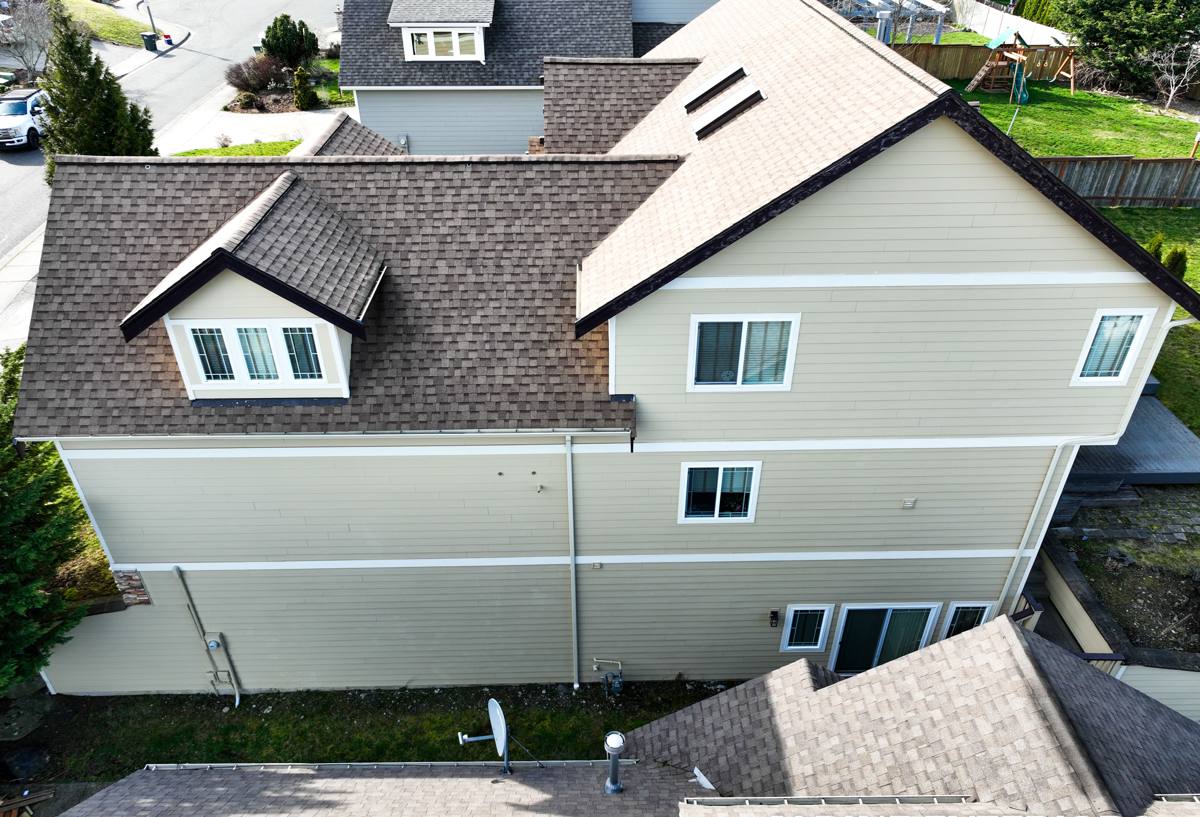
What Semiahmoo's Climate Actually Does to a Roof
Salt Air and Metal Fatigue
Proximity to Semiahmoo Bay and the Strait of Georgia means airborne salt settles on every exposed surface, including your roof. Over time it accelerates corrosion on exposed fasteners, flashing, and any metal component that isn't rated for coastal exposure. Roofs installed with standard interior-grade fasteners or flashing tend to show rust streaking and premature metal failure well before the shingles themselves are worn out.
Driving Rain and Wind-Driven Water
Storms off the water don't fall straight down — they come in at an angle, which pushes water sideways under shingle tabs, around chimney flashing, and into valleys that weren't built with enough overlap. A roof here needs more attention to underlayment coverage, valley design, and edge detailing than a roof built for a calmer inland climate.
Moss and the Long Wet Season
Whatcom County's mild, wet climate is close to ideal for moss growth, and Peace Arch's tree cover and humidity make it worse. Moss holds moisture against the roof surface, lifts shingle edges as it grows, and works its way into seams over time. A new roof needs both the right materials and the right ventilation to slow moss colonization — it won't stop it entirely, but it can buy years between treatments.
What a Correct New Roof Installation Includes
A roof replacement is more than laying new shingles over the old deck. Done right, it's a full system, and every layer matters for a coastal, wet-climate property like this one.
- Tear-off and deck inspection — full removal of the old roofing so we can inspect the sheathing underneath for rot, soft spots, or prior water damage before anything new goes on.
- Deck repair or replacement — any damaged plywood or sheathing gets replaced, not covered over. Installing new roofing over a compromised deck just hides a problem that will resurface.
- Ice and water shield at vulnerable points — eaves, valleys, and roof-to-wall transitions get self-adhering waterproof membrane, since these are the spots where wind-driven rain most often finds a way in.
- Synthetic underlayment across the full roof — a continuous secondary water barrier under the shingles, which matters more here than in drier climates where underlayment rarely gets tested.
- Corrosion-resistant flashing and fasteners — flashing and fasteners chosen for coastal exposure, not standard-grade hardware that will streak and weaken over a few salt-air seasons.
- Balanced ventilation — intake and exhaust venting sized correctly for the attic, so moisture doesn't get trapped underneath the new roof and accelerate deck rot or shingle degradation from below.
- Proper valley and edge detailing — valleys built with adequate overlap and metal or woven detailing suited to heavy, wind-driven rain rather than the minimum code allowance.
Choosing Materials That Make Sense for This Location
Material choice for a Peace Arch roof is less about picking the most expensive option and more about picking the option that actually performs in this specific environment. We walk homeowners through the real trade-offs rather than pushing one product line.
| Material | Coastal / Moss Performance | Maintenance Consideration |
|---|---|---|
| Architectural asphalt shingle (algae-resistant) | Good with copper or zinc granule treatment to slow moss and algae growth | Periodic moss treatment and gutter clearing recommended |
| Standing seam metal | Excellent water shedding in driving rain; needs coastal-rated fasteners and coatings | Low maintenance but requires correct fastener spec to avoid corrosion |
| Composite / synthetic shingle | Strong moisture and moss resistance, consistent performance in wet climates | Higher upfront cost, generally lower long-term upkeep |
| Standard 3-tab asphalt shingle | Weakest option for this climate; more prone to moss and wind lift | Shortest realistic lifespan here; we don't recommend it for this exposure |
We won't install a product we don't think will hold up to your specific site conditions — tree cover, wind exposure, and how close the home sits to the water all factor into the recommendation.
Our Process for a Peace Arch Roof Replacement
1. On-Site Assessment
We start with a walk of the roof and attic, looking at current moss and algae buildup, ventilation, flashing condition, and any signs of past leaks. We also look at tree cover and prevailing wind exposure, since both affect material recommendations for this specific property.
2. Written Scope and Estimate
You get a clear, itemized scope — materials, underlayment system, flashing approach, and ventilation plan — along with a straightforward price range. No vague allowances that turn into surprise add-ons mid-job.
3. Tear-Off and Deck Repair
Old roofing comes off, the deck gets inspected, and any rot or damage is repaired before new materials go down. We document what we find so you know exactly what was replaced and why.
4. Waterproofing and Underlayment
Ice and water shield goes in at eaves, valleys, and penetrations first, followed by full synthetic underlayment — this is the layer that matters most in a driving-rain climate.
5. Roofing Installation
Shingles, metal, or composite roofing goes on per manufacturer spec, with corrosion-resistant fasteners and flashing throughout, and extra attention to valley and edge details.
6. Ventilation and Final Walkthrough
We confirm intake and exhaust venting is balanced, clean up the site, and walk the finished roof with you so you understand what was installed and what future maintenance looks like.
Why Local Experience in This Area Matters
Peace Arch isn't a generic reroof job. Crews who don't regularly work this close to the water can underestimate how much salt exposure and moss pressure change the maintenance timeline of a standard roofing system. A crew that already works in and around Semiahmoo knows to spec coastal-rated hardware without being asked, knows which valley and flashing details actually hold up to wind-driven rain here, and knows realistic moss-treatment intervals for this specific microclimate rather than generic manufacturer guidance written for a drier region.
That familiarity shows up in fewer callbacks, more accurate estimates, and a roof system that's actually built for the conditions it will face rather than a one-size-fits-all installation.
Signs Your Peace Arch Roof May Need Replacement, Not Repair
- Granule loss heavy enough that you can see bare or shiny patches on shingles
- Moss growth that returns quickly after cleaning, especially in shaded valleys
- Visible rust staining around flashing, vents, or fasteners
- Curling, cupping, or lifted shingle edges, particularly on wind-exposed slopes
- Soft spots or sagging when walked, which usually points to deck damage underneath
- Leaks or staining inside the attic near valleys or roof-to-wall transitions
- A roof approaching or past the manufacturer's expected lifespan for this climate
What Homeowners Should Budget For
Cost depends on roof size, pitch, material choice, and how much deck repair turns up once tear-off starts. Coastal-rated fasteners, upgraded underlayment, and algae-resistant or metal roofing all add cost over a bare-minimum installation, but they're the pieces that determine whether a roof holds up in this climate for the long haul or needs early attention. We'd rather walk you through those trade-offs honestly during the estimate than surprise you with them later.
Get a Straightforward Estimate for Your Peace Arch Roof
If your roof is showing moss, granule loss, or age, or you just want an honest read on how many years it has left given this area's salt air and rain, we're glad to take a look. The estimate is free, there's no pressure, and you'll get a clear scope and price range before any work begins.