 Semiahmoo
 Building Decks That Hold Up in California Creek
California Creek sits close enough to Semiahmoo Bay that salt air, wind-driven rain, and long stretches of shade are just part of owning a home here. A deck built the way it would be built inland doesn't last as long out here — the fasteners corrode faster, the wood stays damp longer, and moss finds a foothold in places that would stay dry almost anywhere else. We build decks for this specific stretch of Whatcom County, which means every material and detail choice starts with the question: how does this hold up to salt air and standing moisture over the next fifteen or twenty years, not just the first five.
This page covers what a deck built for California Creek actually needs, what a correct build looks like from the framing up, and how we run the project from first call to final walkthrough.
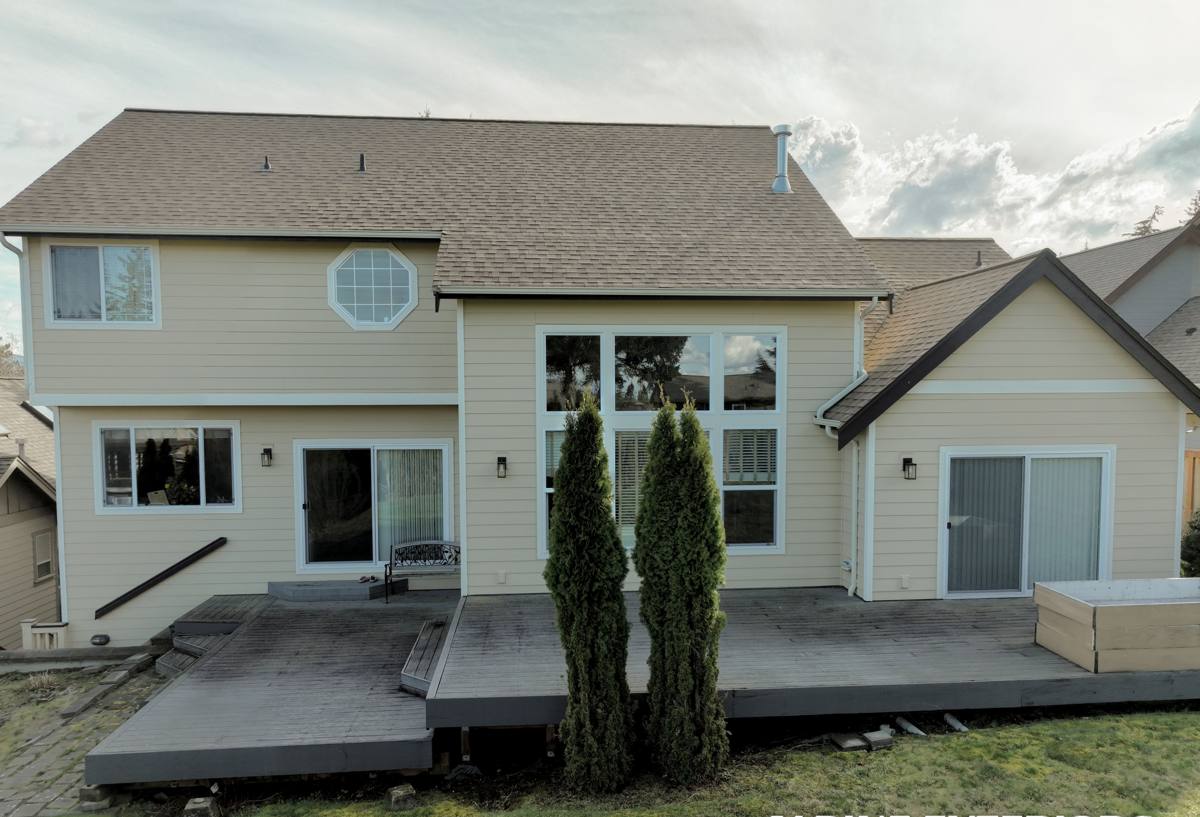
What This Climate Does to a Deck
Whatcom County's marine climate is generally mild, but "mild" doesn't mean easy on building materials. Three things wear on outdoor structures here more than most homeowners expect:
- Salt-laden air: Proximity to the bay means airborne salt settles on metal fasteners, hinges, and hardware. Standard galvanized coatings can start pitting and rusting well before their rated lifespan in a coastal-adjacent setting like this.
- Driving rain: Storms here don't just fall straight down — wind pushes rain sideways into ledger connections, under railings, and into any gap where end grain is exposed. Water finds the weak point in a build faster on a deck facing open exposure than one tucked against a wall.
- Extended moss season: Shaded decks under tree cover or on the north side of a house can stay damp for months at a stretch, especially fall through spring. Moss and algae aren't just cosmetic — they hold moisture against the deck surface and structural members, which accelerates rot in wood and can degrade the surface layer on composite boards over time.
None of this means a deck can't last decades in California Creek. It means the build has to account for these conditions instead of ignoring them.
Where We See the Most Damage
On decks we're asked to repair or replace in this area, the failure points are consistent: ledger board connections that were never properly flashed, fasteners that were the wrong grade for the setting, joists with no ventilation underneath holding moisture against the wood, and railing posts that were undersized or under-fastened for wind exposure. Almost none of it is because the original decking material failed — it's because the structure underneath and the connection details weren't built for this climate.
Getting the Structure Right First
The decking surface is what everyone sees, but the framing and connections are what determine whether the deck is still solid in fifteen years. For California Creek specifically:
Framing and Fasteners
We use fasteners and structural hardware rated for coastal or high-moisture exposure — that means stainless steel or a coating rated well beyond standard galvanized for anything exposed to salt air, including joist hangers, ledger bolts, and post bases. It costs more up front than standard hardware. It's also the single biggest factor in whether a deck's structure is still sound decades out, because a rusted-through hanger or bolt is a structural failure, not a cosmetic one.
Ledger Attachment and Flashing
Where the deck attaches to the house is the most common point of water intrusion on any deck, and driving rain off the bay makes it worse here than in more sheltered inland spots. A correct ledger connection includes proper flashing that directs water away from the house band board, not just a bolted board against siding. This is also where a lot of shortcut installs fail — it looks fine on day one and causes rot behind the wall years later.
Ventilation and Ground Clearance
Joists and beams need airflow underneath to dry out between rain events. Decks built low to the ground or over poorly drained soil — common in low-lying pockets near the creek — need extra attention to grading, ventilation gaps, and sometimes a vapor barrier below to keep moisture from wicking up into the structure from below.
Decking Materials: What Actually Holds Up Here
There's no single "best" decking material for every California Creek home — it depends on budget, sun exposure, and how much maintenance the owner wants to take on. Here's an honest comparison based on how each performs in this specific climate:
| Material | Moss/Moisture Resistance | Maintenance | Typical Lifespan Here |
|---|---|---|---|
| Pressure-treated wood | Fair — needs sealing and cleaning to resist moss buildup in shaded areas | Annual cleaning, re-sealing every 2-3 years | 10-15 years with upkeep |
| Cedar | Good natural resistance, but greys and softens faster in constant damp/shade | Periodic cleaning and sealing to preserve appearance and integrity | 15-20 years with upkeep |
| Composite decking | Very good — resists rot and doesn't feed moss growth the way wood fibers can | Occasional washing to clear surface algae/moss film | 25+ years, varies by product warranty |
| PVC/capped composite | Excellent — fully sealed surface sheds moisture and resists staining | Lowest — occasional rinse | 25-30+ years, varies by product warranty |
For shaded, moss-prone lots — which describes a good number of California Creek properties with mature tree cover — we lean toward steering clients away from bare pressure-treated boards as a primary surface. It's not that treated lumber is a bad product; it's that it demands consistent maintenance to keep moss and moisture from getting a foothold, and that maintenance often doesn't happen on the schedule it needs to. Composite or capped composite decking removes that maintenance burden for homeowners who want to actually use the deck instead of scrubbing it every spring.
Railings and Hardware Above Deck Level
Railing posts and connections take the same salt-air and moisture exposure as the frame below, plus direct sun and rain with no cover. We spec hardware and post bases here the same way we do below deck — rated for the exposure, not just code minimum. Wood railings need the same sealing schedule as wood decking; metal and composite railing systems reduce that upkeep but should still use corrosion-resistant fasteners at every connection point.
Design Choices That Matter in California Creek
Beyond material selection, a handful of design decisions make a real difference in how a deck performs against this climate:
- Board spacing: Slightly wider gaps between deck boards improve drainage and airflow, which matters more here than in drier climates — standing water between boards is what feeds moss growth.
- Orientation to prevailing wind and rain: Where possible, we consider which direction storms typically drive rain and design overhangs, screening, or covered sections accordingly.
- Sun exposure planning: Fully shaded decks need material choices and cleaning plans built around extended damp periods; decks with more sun exposure dry out faster and have more flexibility in material choice.
- Drainage below the deck: On sites with heavier clay soil or low-lying grading near the creek, we look at whether water pools under the structure and plan grading or drainage fixes as part of the deck build, not as an afterthought.
Our Process for a California Creek Deck Project
We run every deck project in this area through the same sequence, because skipping steps is where climate-related failures start:
- On-site assessment: We look at sun exposure, shade patterns, existing drainage, soil conditions, and how the site is exposed to prevailing wind and rain.
- Design and material selection: We walk through the material comparison above against the homeowner's budget and maintenance preference, and design the layout, railing style, and any covered sections.
- Structural plan: Framing layout, footing depth and spacing appropriate to local soil conditions, ledger flashing detail, and hardware specification — all built to code and to the exposure conditions specific to the site.
- Permitting: Deck permits are typically required for structures over a certain height or attached to the home; we handle the permit submission and inspection scheduling as part of the project.
- Construction: Framing first, with every ledger, hanger, and post base inspected before decking goes down. Decking and railing installed to the spacing and fastening detail specified in the design phase.
- Final walkthrough: We go over the finished deck with the homeowner, including a basic maintenance plan specific to the material chosen and the site's sun/shade conditions.
Maintenance Reality for This Area
Whatever material a California Creek homeowner chooses, a little seasonal attention goes a long way in this climate. A basic maintenance checklist we give clients:
- Sweep off fallen leaves and debris regularly in fall — trapped organic matter holds moisture and accelerates moss growth.
- Rinse or wash the deck surface at least once a year, more often on shaded sections, to clear algae and moss film before it embeds in the surface.
- Check railing posts and stair connections annually for looseness — a sign hardware may be corroding or wood may be softening at the connection.
- Inspect the ledger board area where the deck meets the house for any staining or soft spots, which can indicate water getting behind the flashing.
- For wood decking, plan on re-sealing every 2-3 years depending on sun/shade exposure; composite and PVC decking need only periodic washing.
Why Local Experience on This Specific Build Matters
A deck built by a crew that hasn't worked this stretch of Whatcom County will often default to standard-grade hardware, standard flashing details, and whatever decking material is easiest to source — because that's what works in less exposed conditions. On a site near Semiahmoo Bay with real salt air and a long wet season, those shortcuts show up as rust, rot, and moss within a handful of years instead of a couple of decades. Working California Creek regularly means we already know which corners not to cut here: the fastener grade, the ledger flashing detail, the ventilation gap under low-clearance framing. That's not a marketing point — it's the difference between a deck that needs replacing in ten years and one that doesn't.
Get a Straight Answer on Your Deck Project
Every lot in California Creek is a little different — sun exposure, tree cover, soil, and how exposed the site is to wind off the bay all factor into the right build for your home. If you're planning a new deck or need an honest look at whether an existing one is holding up the way it should, we're glad to come take a look and walk you through the options. Fill out the form below for a free, no-pressure estimate.