 Semiahmoo
 Deck Building in Bellingham Takes More Than a Weekend Kit Build
Bellingham sits close enough to the water that a deck here lives a different life than one built forty miles inland. Salt-laden air drifts in off the bay, driving rain comes sideways more often than straight down, and Whatcom County's long, damp shoulder seasons mean moss gets a real head start every year. A deck that would hold up fine in a drier part of the state can start showing problems within a few seasons here if it wasn't built with this specific climate in mind. We build decks for Bellingham homeowners the way this area actually demands, not the way a generic build guide describes it.
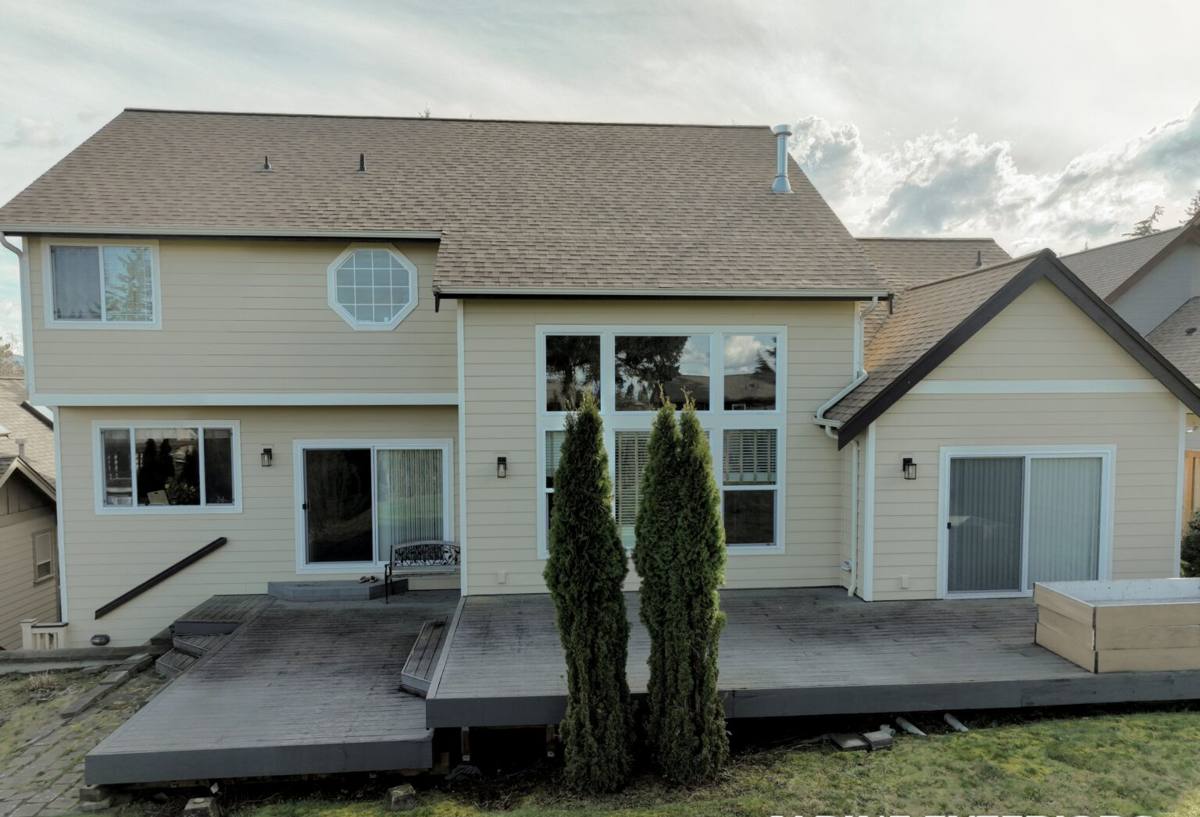
Why Coastal Conditions Change the Job
Three things drive most of the deck problems we get called out to inspect or repair in this area: trapped moisture, corroding hardware, and moss creeping into joints and fastener heads. None of these are dramatic failures at first. They show up as soft spots near a ledger board, rust streaks bleeding out of a screw head, or a slick green film on boards that never quite dry out between rains.
The underlying cause is almost always the same: the deck was built to a standard spec, not to a coastal one. Salt air accelerates corrosion on fasteners and connectors that would last decades elsewhere. Driving rain gets pushed under flashing details that would be adequate in a calmer climate. And constant dampness gives moss and algae the moisture window they need to establish themselves on horizontal surfaces, especially in shaded spots along the north side of a house or under overhangs.
What This Means for a New Deck
Building correctly for Bellingham means treating every connection point — ledger to house, post to footing, joist to beam — as a place where water and salt air will eventually try to get in. The goal isn't to make a deck waterproof, which isn't realistic outdoors, but to make sure water that does get in can get back out, and that nothing holding the structure together corrodes faster than the wood around it.
What a Correctly Built Deck Involves
A deck that's going to hold up here needs attention in a handful of specific places. This isn't an exhaustive engineering checklist, but it covers the parts that most often get shortcut on lower-quality builds.
- Proper ledger board flashing where the deck attaches to the house, so water is directed out and away from the wall sheathing rather than behind it
- Corrosion-resistant fasteners and structural connectors rated for the exposure the deck will actually see, not just the cheapest code-minimum hardware
- Footings set below frost depth and sized for the soil conditions on the specific lot, since drainage varies block to block in this area
- Gapping and spacing between deck boards that allows airflow and drainage instead of trapping standing water
- Joist tape or a comparable protective barrier on top of framing lumber to slow moisture absorption into the structural wood itself
- Post bases that keep wood posts elevated off concrete or soil contact, since ground-level moisture is a major driver of early rot
Skip any one of these and the deck will probably still stand for a while. The difference shows up five to fifteen years out, when a properly detailed deck is still solid and a shortcut deck needs board replacement, hardware repair, or worse.
Choosing Decking Material for Salt Air and a Long Moss Season
There's no single "best" decking material — the right choice depends on how much maintenance a homeowner wants to take on, budget, and how exposed the deck is to shade, rain, and salt air. Here's how the common options actually compare in this climate, without the marketing spin.
| Material | Moisture Behavior | Moss/Algae Resistance | Maintenance | Relative Cost |
|---|---|---|---|---|
| Pressure-treated wood | Absorbs and releases moisture; needs a functioning finish to manage swelling | Low unless cleaned and sealed regularly | High — annual cleaning, periodic sealing | Lowest upfront |
| Cedar | Naturally more stable than treated pine but still absorbs moisture over time | Moderate; still needs cleaning in shaded areas | Moderate to high — sealing every 1-2 years | Mid-range |
| Composite decking | Doesn't absorb water the way wood does, but surface film can trap grime | Better than wood, but still grows algae/moss film in constantly shaded, damp spots | Low — periodic washing, no sealing | Higher upfront |
| PVC/capped composite | Fully resists water absorption | Best of the group, though still needs occasional washing | Lowest — mostly rinsing | Highest upfront |
We don't push one product line over another as a default. What we do is walk a homeowner through how their specific deck will be exposed — full sun versus shaded north side, how close to salt spray, how much upkeep they realistically want to do — and let that drive the recommendation, not a sales script.
Fasteners and Hardware: The Detail Most Decks Get Wrong
This is the part of a deck build that's invisible once the project is done, and it's exactly why so many decks in this region develop problems that trace back to hardware rather than the decking boards themselves. Standard galvanized fasteners are built for general use, not for salt-air exposure. Over time, coastal air breaks down that coating faster than it would inland, and once corrosion starts at a screw head or bracket, it weakens the connection long before the surrounding wood shows any obvious damage.
For structural connectors — joist hangers, post bases, beam hardware — we use fasteners and connectors rated for the level of corrosion resistance the site actually calls for. It costs more than code-minimum hardware. It also means the structural bones of the deck aren't the weak link fifteen years from now.
Footings, Frost Depth, and Site-Specific Drainage
Whatcom County's building requirements set minimum footing depths for a reason, but minimum code depth and the right depth for a specific lot aren't always the same thing. Drainage varies noticeably across Bellingham and the surrounding area — some lots have soil that sheds water quickly, others hold moisture near the surface for days after a storm. A footing that's technically to code but sitting in a spot with poor drainage is more likely to see frost heave or shifting over time than one on a well-drained lot at the same depth.
Before we finalize footing placement and depth, we look at how water actually moves across the specific yard — not just what a generic plan calls for. That's a judgment call that comes from having built and repaired decks across this area, not something a standard spec sheet can tell you.
Our Process, Start to Finish
Homeowners generally want to know what actually happens between calling us and having a finished deck. Here's the shape of it:
- A free on-site walkthrough to look at the yard, sun/shade exposure, existing drainage, and what the deck needs to do for the household
- A straightforward proposal covering materials, structural approach, and realistic cost ranges — no vague allowances that turn into surprise change orders
- Permitting and engineering coordination where required, handled before any digging starts
- Footings, framing, and all the hidden detail work — flashing, fastener selection, drainage — done to hold up to the local climate, not just to pass a quick inspection
- Decking, railing, and finish work, with a final walkthrough so the homeowner understands basic care for whatever material was chosen
We don't rush footings or framing to hit a faster timeline. That stage is where a deck's actual lifespan gets decided, long before the decking boards go down.
Keeping a Deck Ahead of Moss Season
Even a well-built deck needs some seasonal attention in this climate — the goal of good construction is to make that upkeep manageable, not to eliminate it entirely. A simple seasonal routine goes a long way:
- Sweep debris off the deck regularly, especially in fall, so leaves and needles don't hold moisture against the boards
- Rinse or lightly scrub shaded areas before moss gets a real foothold, rather than after it's established
- Check for standing water after heavy rain — pooling in one spot usually points to a drainage or spacing issue worth addressing
- Inspect visible fasteners and connectors once a year for early rust streaking
- Reseal wood decking on the schedule appropriate to the product, rather than waiting until it visibly needs it
Why Local Build Experience Matters Here
A crew that mostly builds decks in drier, inland parts of the state can still build something that looks fine on day one. Whether it holds up depends on details that only really show themselves after a few winters of driving rain and a few summers of shaded moss growth — details a crew learns by working specifically in Bellingham, Semiahmoo, and the surrounding Whatcom County area, not by following a generic national build guide. We've built and repaired enough decks in this specific climate to know where the shortcuts fail first, and we build accordingly from the start.
If you're planning a new deck or replacing an aging one in Bellingham, we're happy to take a look and walk through what your specific lot and layout call for. There's no cost and no pressure to move forward — just a straightforward assessment and an honest estimate using the form below.