 Semiahmoo
 Decks in Drayton Harbor Face a Different Set of Problems
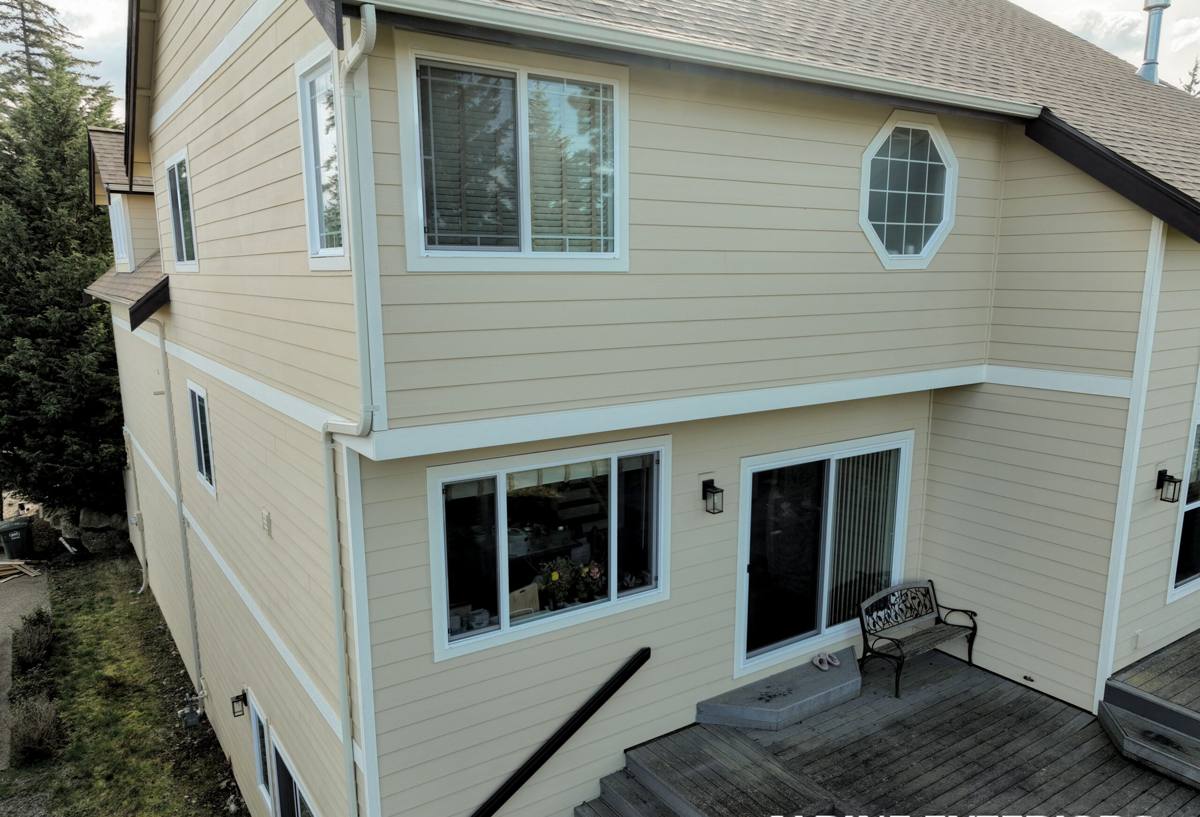
A deck in Drayton Harbor doesn't age the way a deck fifty miles inland does. This stretch of Whatcom County sits close enough to Semiahmoo Bay and the Strait of Georgia that salt-laden air is part of daily weather, not an occasional event. Add in long stretches of driving rain through fall and winter, and a moss and algae season that can run eight months or more under the tree cover common in this area, and you've got a structure that's under constant low-grade attack. None of that means a deck is doomed — it means the repair work has to account for how these decks actually fail here, not how a generic deck fails somewhere dry.
Most of the deck repair calls we take in this neighborhood aren't about one dramatic problem. They're about a handful of small ones — a soft board here, a rusting bracket there, a railing post that's started to wobble — that add up because moisture and salt exposure never really let up long enough for wood or hardware to fully dry out and recover.
How Salt Air and Rain Actually Damage a Deck
Salt Air's Slow Corrosion
Salt in the air settles on every metal surface on a deck — nails, screws, joist hangers, bolts, railing brackets — and speeds up corrosion far beyond what you'd see even a few miles inland. Standard galvanized fasteners that would last decades in a dry climate can start showing rust streaks and pitting in a fraction of that time this close to the water. Once a fastener corrodes, it loses holding strength long before it looks obviously bad, which is why hardware failure is often hiding under boards that still look fine from the top.
Driving Rain and Trapped Moisture
It's not just total rainfall that matters — it's wind-driven rain getting pushed sideways into gaps, ledger connections, and stair stringers that were designed for water to run off, not blow into. Combined with our humidity, that means wood assemblies often don't get a real chance to dry between storms for weeks at a time. Rot doesn't need standing water; it just needs sustained dampness, and that's exactly what a long Pacific Northwest wet season delivers.
Moss, Algae, and the Surfaces They Attack
Shaded, north-facing, or tree-covered decks around Drayton Harbor grow moss and algae for most of the year. Beyond looking bad, that growth holds moisture directly against decking boards and stair treads, and it turns any wood or composite surface slick and dangerous underfoot. Left alone, the areas under heavy moss are almost always the first spots we find soft wood when we start probing a deck.
Signs a Deck Needs Repair Now, Not Later
- Boards that feel spongy, bounce, or flex more than the boards around them
- Visible rust bleeding from screw heads, joist hangers, or post brackets
- Railings or posts that wiggle when pushed — even slightly
- Gaps or separation where the deck meets the house (the ledger board connection)
- Persistent moss or algae that comes back within weeks of cleaning
- Stair stringers that creak, sag, or show daylight where they meet the treads
- Discoloration or staining that spreads rather than staying in one spot
- Nails or screws backing out on their own
Any one of these on its own might be minor. Two or three together, especially near the ledger or stairs, usually means it's time for an inspection rather than a wait-and-see approach.
What a Correct Deck Repair Actually Involves
A repair that just replaces the boards you can see and leaves everything underneath alone is a cosmetic fix, not a structural one. On the coast, that approach tends to fail again within a season or two because the framing and hardware underneath were the real problem. A proper repair works from the structure outward:
1. Ledger and Framing Check
The ledger board — where the deck attaches to the house — is the single most important connection on the whole structure and the one most exposed to wind-driven rain running down the siding. We check flashing, fastener condition, and any signs of moisture intrusion into the rim joist behind it before touching anything cosmetic.
2. Joists, Beams, and Posts
We probe joists and support posts for soft spots, especially near the ground and anywhere moss or standing debris has collected. Localized rot can often be sistered or reinforced; widespread rot in a support member means that piece gets replaced, not patched.
3. Fasteners and Hardware
Every corroded nail, screw, or bracket gets swapped for hardware rated for coastal exposure. Reusing rusted hardware to save time is one of the most common shortcuts we see on older repairs, and it's usually the reason a "fixed" deck fails again within a year or two.
4. Decking Boards and Stairs
Individual boards are replaced where they're actually damaged rather than resurfacing the whole deck by default — though if damage is widespread, a full board replacement is often more cost-effective than patchwork. Stair stringers and treads get the same structural scrutiny as the main deck frame, since stairs take concentrated weight and are often the first thing to develop a soft spot.
5. Railings and Guards
Loose railing posts are almost always a hardware or blocking issue at the base connection, not a problem with the railing itself. We re-secure to solid framing rather than just tightening what's already there.
Repair or Replace? How We Help You Decide
| Factor | Repair Usually Makes Sense | Replacement Usually Makes Sense |
|---|---|---|
| Structural framing | Isolated soft spots in joists or beams | Widespread rot across multiple framing members |
| Ledger connection | Flashing or fastener issue, wood still sound | Rim joist behind ledger is rotted |
| Decking boards | Scattered soft or damaged boards | Most boards show wear, splitting, or rot |
| Age of structure | Under 15-20 years, built to a reasonable standard | Original construction is older or undersized for current code |
| Hardware condition | Corrosion limited to a few connectors | Corrosion widespread across brackets and fasteners |
| Budget goal | Extend usable life for a known cost | Want a long-term reset and possibly a design change |
Most decks we look at in Drayton Harbor land somewhere in the middle — sound framing with localized problems — which is exactly the situation where a well-scoped repair is the honest recommendation over a full tear-out.
Materials That Hold Up in This Environment
For structural repairs, we favor pressure-treated lumber rated for ground contact even on above-grade framing, since the extra moisture protection matters more here than in a drier climate. For fasteners and connectors, we use stainless steel or heavy-duty coated hardware rated for coastal and treated-wood contact rather than standard galvanized — the small added cost up front is minor compared to redoing a repair in a few years because the screws corroded first.
For decking surfaces, both quality wood and composite boards can perform well here, and each comes with trade-offs worth understanding rather than a flat recommendation. Wood costs less initially but needs regular cleaning and refinishing to resist moss and moisture staining. Composite costs more up front, resists rot and doesn't need refinishing, but can still grow surface algae in shaded, damp spots and needs occasional washing like anything else exposed to this climate. We'll walk through what fits your deck's exposure, your maintenance appetite, and your budget rather than pushing one material by default.
Our Deck Repair Process
- Inspection: We check framing, ledger, hardware, and surface boards, probing for soft wood rather than just looking at the surface.
- Written scope: You get a clear breakdown of what's actually wrong, what's cosmetic versus structural, and what we recommend fixing now versus monitoring.
- Repair work: Structural issues are addressed first — framing, ledger, hardware — before any surface or cosmetic work begins.
- Fastener and hardware upgrade: Anything corroded or undersized gets replaced with hardware suited to salt air exposure.
- Final check: We test railings, stairs, and the ledger connection under load before calling the job done.
Why Hiring a Crew That Already Works This Area Matters
Deck repair advice that's correct in a dry inland climate can be wrong here. A crew that hasn't worked decks near the water may under-spec hardware, skip flashing details that matter most against driving rain, or miss that a board looking fine on top is soft underneath a patch of old moss. Working regularly around Semiahmoo and Drayton Harbor means we've already seen how salt exposure, rain patterns, and shade from the tree cover common in this part of Whatcom County actually play out on a deck over time — not in theory, but on the structures we've repaired before. That experience shows up in which fasteners we reach for by default and which framing details we check first, without needing to relearn it on your project.
Questions Worth Asking Before You Hire
- Will you inspect the framing and ledger, or just replace visible boards?
- What fasteners and hardware do you use, and are they rated for coastal exposure?
- Is a written scope provided before work starts, separating structural from cosmetic repairs?
- Do you carry liability insurance and pull permits when the scope requires it?
- How do you handle a repair that turns out larger once you open things up?
If your deck has a soft board, a wobbly railing, or moss that keeps coming back no matter how often you clean it, we're happy to take a look. Fill out the form below for a free, no-pressure estimate — we'll tell you honestly what needs fixing now, what can wait, and what it'll take to get it done right for this climate.