 Semiahmoo
 Why Ferndale Decks Wear Out Faster Than People Expect
If you own a home in Ferndale, you already know your deck doesn't get an easy life. Whatcom County sits close enough to the water that salt-laden air reaches even inland lots, and that air works on fasteners, flashing, and any exposed metal hardware long before most homeowners notice a problem. Add in the region's long stretch of driving rain — often coming in sideways off Georgia Strait weather systems — and you've got moisture finding its way into every joint, seam, and end-grain cut on a deck that wasn't built or sealed with that in mind.
Then there's moss. Western Whatcom County's mild, wet winters give moss and algae months to establish themselves on any horizontal wood surface that doesn't get regular sun and airflow. A shaded deck under a fir canopy, which describes a lot of Ferndale properties, can go green in a single season. Moss holds moisture against the wood surface, and that constant dampness is what actually causes rot — the moss itself is more a symptom than the root cause, but it accelerates everything underneath it.
None of this means decks in Ferndale are doomed. It means they need to be built, and later replaced, with materials and details chosen specifically for this climate rather than a generic set of plans pulled from a supplier catalog. A deck built the same way you'd build one in a dry inland climate will fail here years ahead of schedule.
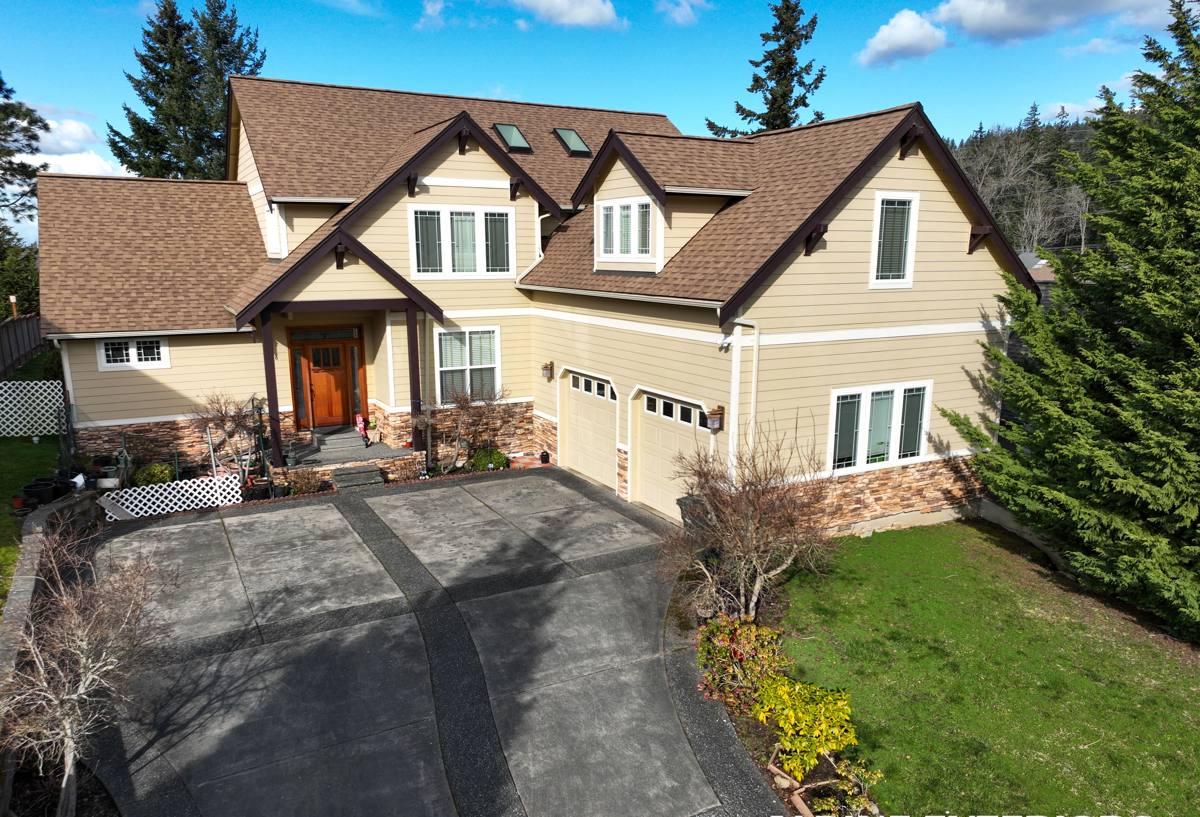
Signs Your Deck Needs Replacement, Not Another Repair
Homeowners often ask us to patch a board or two, and sometimes that's genuinely all that's needed. But there's a point where repair stops making sense and full replacement is the honest answer. Here's how we tell the difference during an inspection.
- Soft or spongy decking boards in more than a couple of isolated spots, especially near the house or at board ends
- Rot or splitting where the deck attaches to the house (the ledger board) — this is a structural concern, not cosmetic
- Wobble or movement in the railing posts, which often signals post rot below the surface
- Visible gaps opening up between joists and beams, or fasteners that have rusted, backed out, or stained the wood around them
- A substructure (joists, beams, footings) that's noticeably older than the decking boards on top, meaning a previous owner resurfaced without addressing what's underneath
- Persistent moss or dark staining that returns within weeks of cleaning, suggesting the wood is already saturated
If the problems are limited to surface boards and the frame underneath is sound, repair or a deck resurfacing project can be the right call. If the framing, ledger connection, or footings are compromised, replacement is the only option that doesn't leave you paying to fix the same deck again in two or three years.
What a Correct Deck Replacement Actually Involves
Starting Below Grade
A deck is only as good as what's holding it up. In this soil and moisture environment, footings need to be set below frost depth and sized appropriately for the load, with post bases that keep wood off direct soil contact. We've seen plenty of older Ferndale decks where the original footings were undersized or the posts were buried directly in the ground — a shortcut that guarantees rot within a decade.
The Ledger Connection
Where the deck attaches to the house is the single most important structural detail on the entire project, and it's also the spot most prone to water intrusion. A correct ledger installation includes proper flashing that directs water away from the house wall rather than behind it, lag bolts or through-bolts rated for the load (not just deck screws), and a small gap or flashing detail that lets any water that does get behind the board drain out instead of sitting there.
Framing and Fasteners
Given the salt air and rain exposure here, we spec corrosion-resistant fasteners and hardware rated for treated lumber contact — cutting corners on hardware grade is one of the most common causes of premature deck failure we see when we tear old decks apart. Joist spacing, beam sizing, and blocking all get set to current code, not just matched to whatever was there before.
Decking Surface and Drainage
The surface material matters, but so does what happens underneath it. Proper board spacing lets water and debris fall through instead of collecting, and the ground or space below the deck needs enough airflow to actually dry out between rain events — which in Ferndale can mean several days in a row during the wet season.
Choosing a Decking Material for This Climate
There's no single "best" decking material — there's a best material for your budget, your maintenance appetite, and how much sun or shade your deck gets. Here's how the common options stack up specifically against Whatcom County's wet, moss-prone conditions.
| Material | How It Handles Local Moisture | Maintenance | Typical Lifespan Here |
|---|---|---|---|
| Pressure-treated lumber | Resists rot well when properly sealed and maintained; still needs a dry, well-ventilated substructure | Annual cleaning and re-sealing recommended, more if shaded | 15-20 years with upkeep |
| Cedar | Naturally moisture- and insect-resistant, but the surface grays and needs protection to stay that way | Regular cleaning, periodic oiling or sealing | 15-20 years with upkeep |
| Composite decking | Doesn't absorb water into the board itself; moss and algae still grow on the surface in shaded, damp spots and need washing | Periodic washing, no sealing or staining required | 25-30+ years, per most manufacturer warranties |
We install all three depending on the homeowner's priorities. Composite has become the more common choice for Ferndale replacements simply because it removes the annual sealing task that a lot of people fall behind on — and a missed sealing cycle on natural wood in this climate shows up fast as graying, checking, or moss growth. That said, composite isn't maintenance-free; it still needs washing to keep algae and pollen film from building up, and board-end and fastener details still have to be done correctly or moisture can get trapped underneath.
A Note on Ground-Contact and Shaded Decks
Low decks close to grade, and decks shaded by mature trees, are the two situations where we're most conservative about material and airflow recommendations, because they're the decks that struggle to dry out between storms. If your lot has either condition, it's worth flagging during your estimate so we can plan ventilation and drainage accordingly rather than defaulting to a standard spec.
Our Deck Replacement Process
We keep this straightforward and try to avoid surprises mid-project, since a deck tear-off can be disruptive if it drags on.
- On-site assessment — we inspect the existing deck's framing, ledger, footings, and any rot or moisture damage, and talk through what you actually use the space for (grilling, entertaining, hot tub, shade needs)
- Written estimate — covers demolition, structural work, material choice, and a realistic timeline, with material options priced out so you can compare
- Permitting — most full deck replacements in Whatcom County require a building permit, particularly for anything attached to the house or built above a certain height; we handle the permit application and inspections as part of the job
- Demolition and disposal — full removal of the old structure, checking the ledger area and any framing we're reusing for hidden rot before we build over it
- Framing and structural work — footings, posts, beams, joists, and ledger flashing installed to current code
- Decking, railing, and stairs — installed per your material choice, with attention to fastening and spacing for drainage
- Final walkthrough — we go over the finished deck with you, including basic care instructions for whatever material you chose
Permits and Local Requirements
We won't pretend to quote exact fee schedules or code sections here, since those change and vary by scope — but in general, any deck replacement that involves new footings, a raised structure, or reattachment to the house is going to fall under Whatcom County or local jurisdiction permitting requirements. Skipping this step is a common shortcut with cheaper operators, and it can come back to bite you at resale when a buyer's inspector or the county flags unpermitted structural work. We pull the permit, schedule the required inspections, and build to what the inspector expects to see — that's part of what you're paying for when you hire a crew that treats this as a real construction project rather than a weekend build.
Maintaining Your New Deck Against Whatcom County Weather
Whatever material you choose, a little seasonal attention goes a long way here.
- Sweep debris off the deck regularly, especially fir needles and leaves that trap moisture against the surface
- Wash the surface at least once a year — more often in shaded areas — to knock back moss and algae before it establishes
- For wood decks, check the sealer or stain annually; once water stops beading on the surface, it's time to reapply
- Keep gutters and downspouts near the deck clear so runoff isn't dumping directly onto or under the structure
- Check railing posts and stair connections yearly for movement or soft spots, particularly after the wettest winter months
- Trim back overhanging branches where practical to give the deck surface more sun and airflow
Why Hire a Crew That Already Works in Ferndale
A deck built to a generic spec sheet can look fine the day it's finished and still fail early once it meets a real Whatcom County winter. Crews that work this area regularly know which details actually matter here — ledger flashing that accounts for driving rain, hardware that won't corrode in salt-influenced air, and framing that's spaced and vented to survive a shaded, moss-heavy site. That local knowledge shows up in the parts of the job you won't see once it's finished, which is exactly where deck failures usually start.
We also know the permitting process for this area, which keeps the project moving instead of stalling on paperwork, and we stand behind our structural work the way any contractor should — not with vague promises, but with a build that's done to code and inspected as it should be.
Get a Straightforward Estimate
If your Ferndale deck is showing soft spots, rot, moss that won't quit, or you're just past due for a rebuild, we're happy to take a look and give you an honest read on repair versus replacement — no pressure, no inflated scope. Fill out the form below and we'll set up a time to come out and walk the deck with you.