 Semiahmoo
 Why Windows Wear Out Faster in Semiahmoo Resort
Semiahmoo Resort sits right on the water, exposed to Semiahmoo Bay and the weather that moves off it. That location is part of what makes the neighborhood desirable, but it's also exactly why windows here take more abuse than windows ten miles inland. Salt-laden air corrodes hardware and coatings faster than dry inland air does. Wind-driven rain pushes water sideways against glass and frames instead of just falling straight down, which finds every weak seal. And the long gray stretch of fall through spring that defines Whatcom County winters means windows sit wet or damp for months at a time, which is exactly the environment moss and mildew need to take hold on sills, tracks, and cladding.
None of this means windows fail quickly in Semiahmoo Resort — it means they fail on a different timeline and for different reasons than a window catalog written for a dry climate assumes. A window that's rated well for insulation but not detailed correctly for wind-driven rain and salt exposure can still leak, corrode, and lose its seal well before it should. That's the gap we focus on closing.
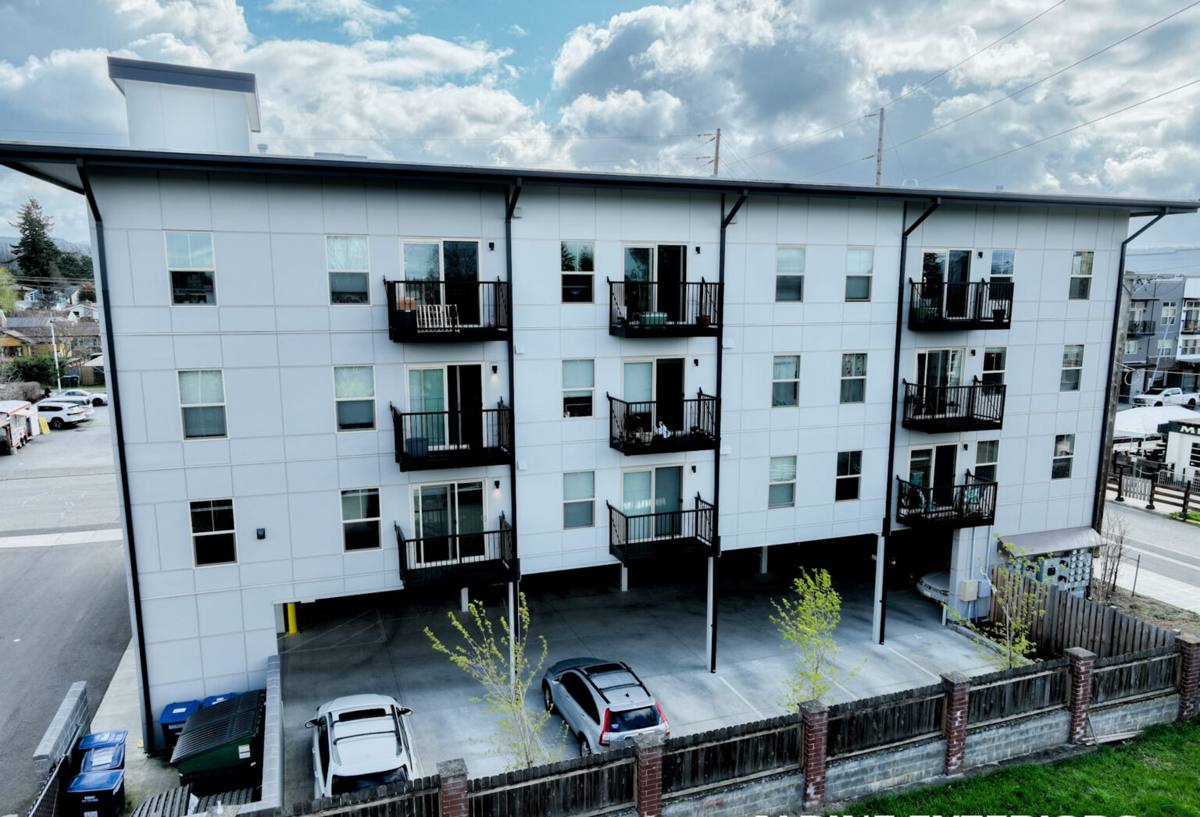
What "Energy-Efficient" Actually Means Here
Energy efficiency gets marketed as a single number — U-factor, or sometimes just "double pane vs. triple pane" — but on the water in Whatcom County, efficiency is really three things working together:
Thermal Performance
How well the glass and frame resist heat transfer. This matters for comfort and heating bills, especially in a house that catches wind off the bay on one or two exposed sides.
Air Sealing
A window with excellent glass but a sloppy installation will still leak air around the frame. In our experience, most of the "drafty window" complaints we hear in this area trace back to failed sealant or poor flashing at install, not the glass itself.
Moisture Management
This is the piece a lot of window sales pitches skip entirely, and it's the piece that matters most this close to the water. A window can be perfectly efficient on paper and still let water intrude at the frame, behind the trim, or into the wall cavity if it isn't flashed and sealed correctly for driving rain. Efficiency and weathertightness are not the same thing, but around Semiahmoo Resort they have to be solved together or the window will underperform no matter what the label says.
Signs Your Current Windows Are Losing the Fight
- Fogging or a permanent haze between the panes — the seal on the insulated glass unit has failed and the argon or air gap is gone
- Visible moss, algae, or black staining building up on sills, tracks, or the cladding directly below a window
- Drafts you can feel with a hand near the frame on a windy day, even with the window latched
- Sashes that stick, drag, or won't latch flush anymore — often a sign of frame swelling from trapped moisture
- Soft or discolored trim or drywall near the interior window edge, which usually means water has been getting behind the frame for a while
- Noticeably higher heating bills in the rooms facing the water compared to interior rooms
Any one of these on its own isn't an emergency. Several of them together, especially on the water-facing side of the house, usually means it's time to stop patching and start planning a replacement before hidden damage gets worse.
What a Correct Installation Actually Involves
The window unit itself is maybe half the job. The other half — the part that determines whether the window performs for twenty years or leaks in three — is how it's integrated into the wall.
Flashing and Water Management
Every opening needs to be flashed so that any water that does reach the frame is directed back out and down, never into the wall cavity. This is non-negotiable on a house that takes wind-driven rain directly off the bay. We flash sills, jambs, and headers in the correct shingle-lap order so water always sheds outward, not just caulk over gaps and hope.
Air and Moisture Barrier Continuity
The window's flange or fin has to tie into the house's weather-resistive barrier as one continuous system, not sit as an isolated patch. A gap here is invisible from outside and inside, but it's where slow, hidden leaks start.
Sealant Selection and Placement
Not every sealant handles salt air and UV exposure the same way. We use products rated for exterior, coastal exposure, and we're deliberate about where sealant goes and where it specifically should not go — a fully sealed perimeter with no way for incidental moisture to escape is its own problem.
Fastening and Support
Windows need to be shimmed level, plumb, and square, and fastened per the manufacturer's pattern — skipping fasteners or over-driving them is a common shortcut that shows up as operational problems and premature seal failure years later.
Frame Material: What Holds Up Near Salt Air
Material choice matters more here than in a typical inland remodel, because salt exposure and constant damp accelerate corrosion and rot differently by material. Here's how the common options actually compare for a home in Semiahmoo Resort:
| Frame Material | Salt Air / Moisture Behavior | Maintenance | Notes |
|---|---|---|---|
| Vinyl | Doesn't corrode; performs well in salt air | Low — occasional cleaning | Good value; quality varies a lot by manufacturer |
| Fiberglass | Excellent — very stable, resists warping and corrosion | Low | Higher upfront cost, strong long-term performer on the water |
| Wood / Wood-clad | Vulnerable if cladding or seals fail; interior wood can rot from trapped moisture | High — requires ongoing sealing and inspection | We recommend this only where the exposure is well-protected |
| Aluminum | Prone to corrosion and pitting in salt air over time | Moderate | We generally steer clients away from bare aluminum for waterfront exposures |
We're not against wood-clad or aluminum windows as a category — they have real advantages in the right setting. But given the direct salt exposure much of Semiahmoo Resort sits under, we're honest with clients when a material choice is likely to create a higher maintenance burden than they're expecting, rather than let a good-looking sample talk them into a frame that will fight the local climate for the next fifteen years.
Glass Packages: Matching the Window to the Exposure
Beyond the frame, the glass package is where most of the actual energy performance comes from.
Double-Pane vs. Triple-Pane
Double-pane with a quality low-E coating and argon fill is the standard baseline and performs well for most Whatcom County homes, including most of Semiahmoo Resort. Triple-pane adds meaningful thermal performance and sound dampening — worth considering on a room that takes direct wind and weather off the bay, or where road or wind noise is a real annoyance, but it adds weight, cost, and isn't necessary on every elevation of every house.
Low-E Coatings
Low-E coatings reduce heat transfer and UV fading. There are different coatings tuned for different priorities — maximizing winter heat retention versus reducing summer solar gain — and the right one depends on which direction a window faces and how much direct sun that side of the house actually gets.
Spacer Systems
The spacer between panes affects how well the seal resists condensation and how long the insulated glass unit lasts before it fogs. In a damp, salt-air climate, we favor warm-edge spacer systems over older aluminum spacers, which conduct heat and cold and are more prone to seal failure over time.
How We Approach a Semiahmoo Resort Window Project
Our process is the same regardless of house size, because skipping steps is where problems start:
- On-site assessment — we look at existing window condition, exposure on each elevation, current signs of water intrusion, and what's actually driving the discomfort or energy loss you're noticing
- Product recommendation — frame material and glass package matched to that specific elevation's exposure, not a one-size answer for the whole house
- Removal and inspection — once old windows come out, we check the framing and sheathing underneath for hidden moisture damage before anything new goes in
- Correct flashing and installation — following the sequence above, every time, not just on the side of the house someone will notice
- Interior and exterior finish work — trim, sealant, and cleanup so the finished job looks right from both sides
- Walkthrough — we go over operation, warranty coverage, and basic care before we consider the job done
Why Local Experience Matters for This Job
Window replacement in Semiahmoo Resort isn't the same job as window replacement in a dry inland subdivision, and it isn't quite the same as a generic "coastal Washington" job either. A crew that already works this specific stretch of shoreline knows the exposure patterns unique to different lots — which elevations take the worst of the wind and driving rain, how moss and salt buildup tend to show up first, and how to sequence a job around the tighter access and weather windows that waterfront and resort-area properties often involve. That familiarity shows up in fewer surprises during the job and in product and detailing choices that are already suited to the site instead of generic recommendations that need to be re-thought once someone sees the actual house.
It also matters for anyone here who deals with resort or community architectural guidelines — knowing what's typically expected for exterior appearance and materials in this kind of setting saves back-and-forth later.
Maintaining Your Investment After Installation
A correctly installed, well-matched window should need very little from you — but a little seasonal attention goes a long way in this climate:
- Rinse salt residue off exterior frames and glass a few times a year, especially after storms
- Keep weep holes and tracks clear of moss, debris, and standing water
- Check exterior sealant annually for cracking or gaps and have any failures addressed promptly
- Wipe down interior sills during the wet season to prevent condensation buildup
- Operate hardware (locks, cranks, latches) periodically even on windows you don't open often, so mechanisms don't seize
If you're noticing drafts, fogged glass, sticking sashes, or moss creeping up your sills, it's worth having your windows looked at before those small issues turn into a wall repair. We're happy to come take a look and put together a straightforward, no-pressure estimate for your Semiahmoo Resort home — just fill out the form below to get started.