 Semiahmoo
 Windows Built for the Wiser Lake Climate, Not a Catalog Photo
Homes around Wiser Lake sit close enough to the water that salt air, wind-driven rain, and a moss season that seems to run nine months out of twelve all show up in the window frames before they show up anywhere else on the house. A window that's rated fine for a dry inland climate can still fail early here — not because the glass was bad, but because the install, the flashing, or the frame material wasn't matched to what this corner of Whatcom County actually throws at a house. We install windows locally, on homes with the same exposure yours has, and we size the job to that reality rather than a national spec sheet.
"Energy-efficient" gets used loosely in this industry. On its own it just means a lower U-factor and a decent Low-E coating. Around Wiser Lake, that's only half the job. The other half is keeping wind-driven rain and salt-laden moisture out of the wall cavity for the next twenty-plus years, which depends far more on flashing detail and installation sequence than on the glass package. We'll walk through both halves below, plainly, so you know what you're actually paying for.
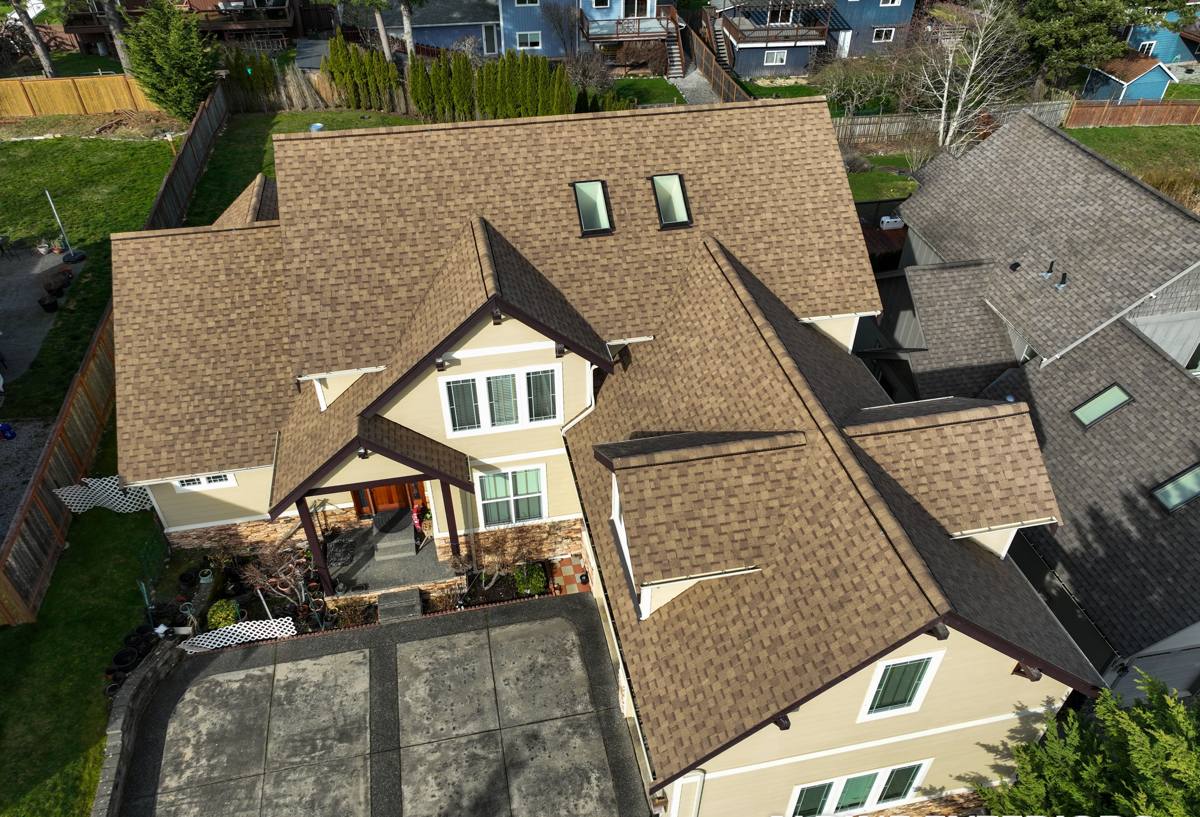
What the Marine Climate Does to Windows Over Time
A few things happen consistently to windows in this area that don't happen the same way further inland:
- Salt air accelerates corrosion on hardware, screen frames, and any exposed fasteners that aren't rated for coastal exposure.
- Driving rain finds gaps that vertical rain never would — wind off the water pushes moisture sideways into seams that a standard install might leave marginal.
- Persistent moisture and shade feed moss and algae growth on sills, tracks, and low-slope trim, which holds water against the frame longer than it should sit there.
- Temperature swings between damp mornings and sunny afternoons stress seals and caulk lines faster than a stable climate would.
None of this means windows fail fast here — good ones don't. It means the margin for error on materials and installation is smaller than in a drier climate, and cutting corners shows up sooner rather than later.
Signs Your Current Windows Are Losing You Money
Most homeowners don't replace windows because one thing broke — they replace them because a combination of small problems adds up. Worth checking for before you call anyone:
- Cold drafts near the frame even with the window latched shut
- Visible condensation or fogging between the glass panes (a failed seal, not a cleaning issue)
- Wood trim or sills that feel soft, or paint that's bubbling near the frame corners
- Difficulty opening or latching that's gotten worse over the past year or two
- Noticeably higher heating bills in months where usage hasn't otherwise changed
- Moss or dark staining building up on the sill or lower frame faster than it used to
Any one of these on its own might just need a repair or a re-caulk. Several at once, especially on a home that's original to its build or hasn't had windows touched in 15-20 years, usually points to the frames and seals reaching the end of their useful life.
Frame Materials: What Actually Holds Up Near the Water
There's no single "best" window material — there's a best fit for your home's exposure, budget, and maintenance appetite. Here's how the common options compare for a Wiser Lake install specifically:
| Material | Moisture/Salt Resistance | Maintenance | Typical Fit |
|---|---|---|---|
| Vinyl (quality, welded corners) | Very good — won't rot or corrode | Low; occasional cleaning | Most homes; best value for the climate |
| Fiberglass | Excellent — very stable in temperature/moisture swings | Low | Homes wanting max durability, higher budget |
| Aluminum-clad wood | Good on the exterior face, but wood interior still needs protection from any leak | Moderate to high | Homeowners who want a wood interior look and will maintain it |
| Bare wood | Poor without diligent upkeep — direct exposure to salt air and driving rain is hard on it | High | We generally steer clients away from this for direct coastal exposure; the upkeep burden is real |
We're not against wood windows as a product — they have a real place in the right setting. But for a home with direct exposure to salt air and wind-driven rain, we tell clients honestly: the maintenance schedule needed to keep bare wood performing here is demanding, and a missed year or two of upkeep can cost more in repair than the upfront savings were worth. Clad and vinyl options give you most of the look with far less risk.
Glass Packages and What's Worth Paying For
On the glass side, the decision that actually matters most for this climate is the Low-E coating and gas fill, not the marketing name on the box:
- Double-pane with Low-E coating and argon fill is the practical baseline for most Wiser Lake homes — solid performance for the cost.
- Triple-pane adds real insulation value and sound dampening, worth considering on north- or water-facing rooms where wind exposure is highest, but it's a bigger jump in cost that doesn't pay off the same way on every elevation.
- Warm-edge spacers (instead of older metal spacers) reduce condensation risk at the glass edge — a small detail that matters more here than in a dry climate, because condensation combined with constant humidity is what eventually feeds mold at the sill.
We'll walk your specific elevations with you rather than quoting one glass package for the whole house — a window facing prevailing wind and rain off the water often justifies a different spec than one on a sheltered wall.
Our Installation Process
The window itself is maybe a third of what determines how it performs in five years. The other two-thirds is the installation — specifically the flashing and the sealing sequence, which is exactly where a fast or inexperienced install fails first in a wet, salty climate.
- Assessment and measurement — we check the existing opening for rot, soft framing, or prior water intrusion before ordering anything. A hidden problem behind an old window gets fixed now, not covered up.
- Removal — old units come out carefully to avoid damaging the surrounding siding and sheathing, since that's what protects the wall cavity while the opening is open.
- Flashing and weather barrier detail — this is the step that matters most here. Proper sill pan flashing, correctly lapped house wrap, and sealant in the right locations (and not in the wrong ones, which can trap moisture) are what actually stop wind-driven rain from getting behind the window over time.
- Setting and shimming the window level, plumb, and square — a window installed slightly out of square stresses the seals and hardware from day one.
- Insulating the gap — low-expansion foam or backer rod and sealant around the frame, sized correctly so it doesn't bow the frame inward.
- Exterior trim and sealant finish — done with materials rated for sun and moisture exposure, not standard interior-grade caulk.
- Interior finish and final function check — every window opens, closes, and locks correctly before we call the job done.
Skipping or rushing step three is the single most common reason a window that tests fine on day one leaks by year three. It's also the step you can't see once trim goes back on — which is exactly why it matters who's doing the work.
What a Correct Job Looks Like — A Homeowner's Checklist
Whether you hire us or someone else, this is what to expect from a properly done window replacement in this climate:
- Sill pan flashing installed under every window opening, not just caulk alone
- House wrap or weather barrier properly lapped over the flashing, shingle-style, so water sheds outward
- Sealant used only where it's supposed to trap water out — not in locations that trap moisture inside the wall
- Window shimmed level, plumb, and square before fastening
- Insulation gap filled evenly without bowing the frame
- Exterior trim and caulk rated for sun and moisture exposure
- A walkthrough where every window's operation is checked before the crew leaves
Why a Crew That Already Works Wiser Lake Matters
General contractors from outside the area can install a window that meets code. What's harder to get right without local, repeated experience is judging how much flashing detail a given exposure needs, which frame materials are worth the extra cost on a water-facing wall versus a sheltered one, and how to sequence a job around Whatcom County's wet stretches so the opening isn't sitting exposed longer than it needs to be. We work homes in this area regularly, which means we're not guessing at any of that — we're applying what we already know holds up here.
It also means if a question comes up after the install — a sill that needs a look, a question about moss buildup on the trim — you're calling a crew that's still working in the neighborhood, not chasing down a company that did one job here and moved on.
Keeping New Windows Performing Long-Term
A well-installed window in this climate still benefits from basic upkeep:
- Rinse salt residue off frames and hardware a couple times a year, especially on wind-facing elevations
- Keep moss and debris cleared from sills and tracks so water doesn't sit against the frame
- Check exterior caulk lines annually for cracking or separation and touch up before a small gap becomes a path for water
- Operate hardware periodically through the year so mechanisms don't seize from disuse and moisture
None of this is heavy maintenance — it's the same handful of checks that keep any exterior component performing near the water, and it takes far less time than dealing with a callback for a leak.
Get a Straight Answer for Your Home
If your windows are drafty, fogged, or just old enough that you're wondering, the most useful next step is a walk-through of your specific openings and exposure — not a generic quote off a price list. We'll tell you honestly which windows need attention now, which can wait, and what a correct install looks like for your home's exact situation. Reach out below for a free, no-pressure estimate.