 Semiahmoo
 Board & Batten in a Marine Climate
Board and batten has become one of the most requested looks in Ferndale over the past few years — clean vertical lines, a mix of modern and farmhouse character, and a shadow-line texture that reads well against the flat gray skies we get for a good chunk of the year. It's a great-looking siding profile. It's also one that punishes a sloppy installation faster than almost any other siding style, because every batten seam is a place for water to either shed cleanly or get trapped.
Ferndale sits close enough to the water that homes here deal with a real combination of stressors: salt-laden air drifting in off Semiahmoo Bay and the Strait of Georgia, long stretches of driving, wind-pushed rain rather than gentle vertical rainfall, and a moss and algae season that can run eight or nine months out of the year on north-facing walls and anything shaded by fir and cedar trees. None of that makes board and batten a bad choice. It just means the installation details matter more here than they would in a drier inland climate, and the material underneath the paint matters even more.
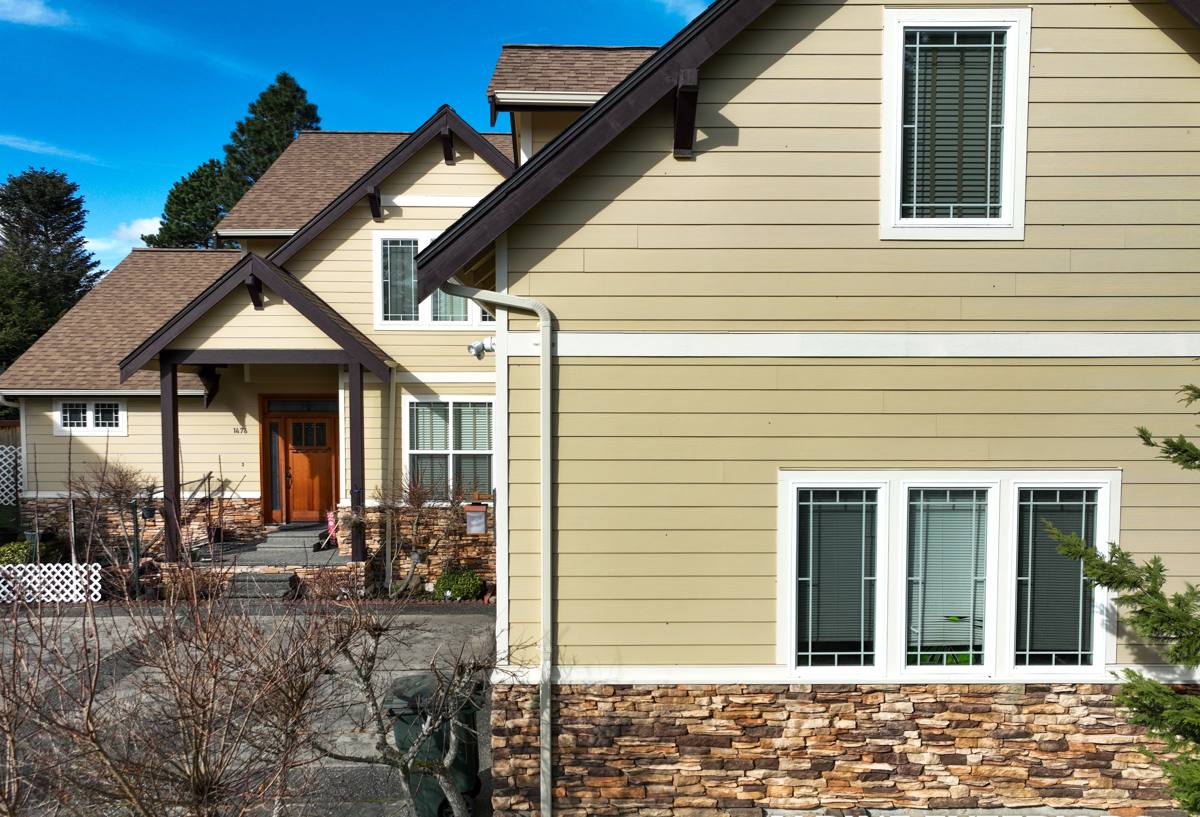
What This Climate Actually Does to Vertical Siding
Wind-driven rain finds vertical seams
Board and batten relies on vertical joints — either the overlap where a batten covers the gap between two boards, or the reveal in a board-on-board style. In a climate with mostly calm, straight-down rain, those joints shed water easily. In Whatcom County, storms coming off the water regularly push rain sideways against west- and south-facing walls. That means the batten overlap, the caulking strategy (or lack of one), and the drainage plane behind the siding all have to be right, not just close enough.
Salt air accelerates fastener and finish failure
Airborne salt is corrosive to fasteners and hard on paint film. Cheap or under-spec'd nails and staples can start bleeding rust through the finish within a few years this close to the water, and a paint system that isn't built for a marine environment will chalk and fade faster than the same product would fifty miles inland.
Moss and organic growth thrive on damp, shaded siding
Ferndale's tree cover and the region's long damp season give moss, algae, and mildew plenty of opportunity, especially on north-facing elevations and anywhere siding stays wet longer because of poor drainage or tight clearance to grade, decks, or landscaping. Siding that absorbs moisture instead of shedding it will hold that green film longer and start to soften underneath it.
What Correct Board & Batten Installation Involves
A board and batten job that's going to hold up here isn't just "nail boards to the wall vertically." The details that actually decide whether it lasts are mostly hidden once the job is done:
- A drainage gap (rainscreen) behind the siding so any moisture that does get past the outer layer has somewhere to go and can dry out instead of sitting against the wall sheathing.
- Correct board and batten spacing and overlap so water sheds past every seam instead of wicking sideways into the joint.
- Weather-resistant barrier and flashing details at every window, door, and penetration — these are the spots that fail first when they're rushed.
- Fastener placement and type matched to the manufacturer's spec, not just "whatever's in the nail gun," especially given how corrosive salt air is on the wrong hardware.
- Proper clearance at the base — from grade, roofing, decks, and hardscape — so the bottom of the wall isn't sitting in a damp microclimate year-round.
- Caulking and sealant used only where the manufacturer calls for it, not as a substitute for good flashing and lap detail.
Skip any one of those and the siding can still look right for a season or two. The failures that show up later — soft spots at the base, rust streaking below fasteners, paint peeling along the battens — almost always trace back to one of these steps being shortcut during install, not to the siding material itself.
Why We Only Install James Hardie for This
Board and batten is available in vinyl, engineered wood, and fiber cement, and each of those reacts differently to the conditions Ferndale actually sees. We made the call years ago to standardize on James Hardie fiber cement for every siding job we do, board and batten included, and it comes down to how the material behaves specifically in a wet, salt-exposed, moss-prone climate:
- Fiber cement doesn't feed moss and mildew the way wood-based products can — it's not an organic food source the way engineered wood or cedar can be, which matters given how long our damp season runs.
- It holds its shape in swings of wet and dry instead of swelling, cupping, or telegraphing seams the way some engineered wood and vinyl products can over time.
- ColorPlus factory finish is baked on and warranted against fading and chipping, which is a real advantage over field-applied paint in a climate that's hard on exterior finishes.
- It's non-combustible, which matters to a lot of homeowners in this region given wildfire smoke seasons and insurance considerations, even in a wet coastal climate.
- Hardie's HZ5 product line is engineered for cold, wet climate zones, which is the right spec for Whatcom County rather than the warm/dry HZ10 formulation used in the Southwest.
We don't install vinyl, LP SmartSide, Cemplank, Allura, or unfinished cedar or spruce board and batten. That's not a knock on every use case for those products — it's that we'd rather stand fully behind one system we know performs in this specific climate than offer several products with different maintenance realities and warranty structures. If a homeowner wants one of those alternatives, we'll say so honestly and point out the trade-offs rather than install something we're not confident will hold up here.
Cost Factors for Board & Batten in Ferndale
Board and batten generally costs somewhat more than standard lap siding, mainly because of the extra material (the battens themselves) and the additional labor in getting reveals and overlaps consistent. Here's what actually moves the price on a given house:
| Factor | Why It Matters |
|---|---|
| Wall prep and existing sheathing condition | Rot, moisture damage, or missing weather barrier behind old siding has to be addressed before new siding goes up — this is common on older Ferndale homes near the water |
| House height and roofline complexity | Multiple stories, dormers, and steep or cut-up roof lines add labor time and staging cost |
| Board and batten style chosen | Board-on-board, batten-over-panel, and reveal-style profiles differ in material quantity and labor |
| Trim and corner detailing | Board and batten often gets paired with more substantial trim, which adds cost but also ties the whole exterior together |
| Number of window and door openings | Every opening needs correct flashing, which is where labor time concentrates on a vertical-seam siding |
| Access and site conditions | Tree cover, tight lot lines, and slope affect staging and cleanup time |
We'll always walk a home before quoting anything — general ranges only get you so far when the real cost drivers are what's happening underneath the existing siding.
Our Process
- On-site assessment. We look at the whole exterior, not just the elevation the homeowner is worried about — moisture patterns, moss growth, existing flashing condition, and any soft spots or previous repairs.
- Scope and product plan. We spec the Hardie board and batten profile, trim package, and colors, and flag any wall sections that need extra prep work before siding goes on.
- Tear-off and inspection of the wall behind the old siding. This is where hidden moisture damage shows up, and we address it before anything new goes on top of it.
- Weather barrier, drainage gap, and flashing installation. This step decides how the house performs in year eight, not year one, so we don't rush it.
- Board and batten installation to manufacturer spec, including correct fastener type and spacing for a marine environment.
- Final detailing and cleanup, with a walk-through so the homeowner can see the finished work before we consider the job done.
Why a Ferndale-Experienced Crew Matters Here
Siding crews that mostly work drier, inland climates don't always think in terms of rainscreens, salt-air fastener corrosion, or moss-prone north walls, because they don't have to. A crew that already works Whatcom County and the Semiahmoo area day to day has seen what happens to siding installed without those details — the soft spots at the base of walls, the streaking under fasteners, the moss lines that show up faster on some homes than others just a few streets apart. That local pattern recognition is what keeps a board and batten job from becoming a callback in three years.
It also means we're realistic about timelines and weather windows. Coastal Whatcom County doesn't give you long dry stretches most of the year, and a crew that plans around that gets a cleaner, better-sealed installation than one trying to force the schedule.
What to Look For Before You Hire Anyone
Whether you end up hiring us or someone else, this is worth checking on any board and batten quote for a home in this area:
- Do they mention a drainage gap or rainscreen behind the siding, or just the siding itself?
- Do they specify which Hardie climate zone product (or equivalent) they're using, or is it just "fiber cement"?
- Will they inspect and address the wall sheathing before installing, not just over the old siding?
- Do they carry manufacturer certification for the product they're installing?
- Is the warranty transferable if you sell the home?
- Will they show you the flashing and fastener plan for windows and doors before work starts?
A contractor who can answer those questions specifically, without hedging, is one who's actually thought through how the job performs in this climate — not just how it looks the day it's finished.
Get a Straight Answer for Your Home
Every Ferndale home carries its own combination of sun exposure, tree cover, and wind exposure off the water, and that changes what board and batten needs to hold up on that specific wall. We're happy to take a look, walk you through what we'd actually do differently on your house, and give you a straightforward, no-pressure estimate — use the form below to get started.