 Semiahmoo
 Ferndale's Climate Puts Real Demands on a Siding Job
Ferndale sits close enough to the water and to Whatcom County's marine weather patterns that siding here works harder than siding in a drier inland climate. Homes take on salt-laden air moving in off the coast, long stretches of driving rain through fall and winter, and a moss season that can run for months where shaded north- and west-facing walls stay damp far longer than the rest of the house. None of that is unusual for this part of Washington — but it means a siding installation that would hold up fine somewhere drier can fail early here if it's not built and installed with this climate specifically in mind.
Salt air accelerates corrosion on fasteners and trim metal. Driving rain finds its way behind poorly lapped siding and around under-flashed penetrations. Moss and algae hold moisture against the surface of the siding itself, which matters a lot if that surface is something that swells, rots, or delaminates when it stays wet. This page is about what a correct siding installation looks like for a Ferndale home given all of that — not siding installation in general.
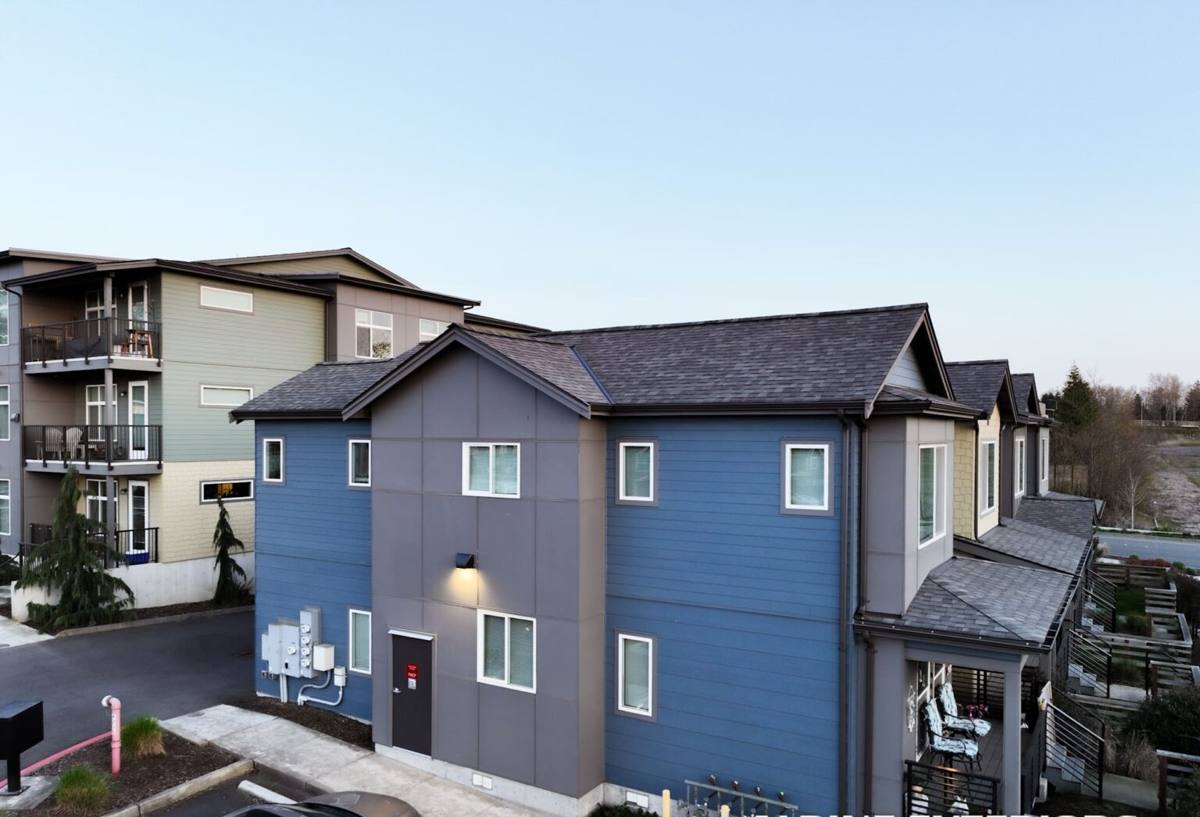
What "Correct" Actually Means for a Ferndale Installation
A siding job can look fine from the curb and still be wrong underneath. The parts nobody sees — the weather-resistive barrier, the flashing details, the fastening pattern, the clearances — are what actually determine whether a wall stays dry for the next 30 years or starts showing problems in five.
Weather-Resistive Barrier and Flashing
Every wall needs a continuous drainage plane behind the siding, lapped correctly from the bottom up so water is shed outward rather than trapped. Around windows, doors, and any wall penetration, flashing has to be integrated with that barrier in the right sequence — flashing over the barrier at the top, barrier over flashing at the sides and bottom — so water is always directed out, never funneled behind the siding. In a climate with as much sustained rain as Ferndale sees, a flashing detail that's "close enough" is a callback waiting to happen, usually a year or two down the road when the damage is already inside the wall.
Fastening and Clearances
Fastener spacing, type, and depth all matter for wind and moisture performance, and near the coast the fasteners themselves need to resist corrosion — galvanized or stainless fasteners installed to the manufacturer's schedule, not whatever was on hand. Clearance above grade, above roofing, and above decks and patios also matters more here than in a dry climate, because any siding installed too close to grade or to a horizontal surface will wick moisture and start soft, discolored, or moss-covered within a couple of seasons.
Joints, Caulking, and Trim
Butt joints, corners, and trim-to-siding transitions are where a lot of installations quietly fail. Every joint needs the right sealant, applied to a properly prepared surface, and butt joints should be backed or flashed rather than just caulked and hoped for. This is also where factory-finished products have a real advantage over field-painted or field-primed materials, since a factory finish doesn't depend on site conditions or weather windows the day the crew happens to be working.
Why We Only Install James Hardie Fiber Cement
We install James Hardie fiber cement siding exclusively — we don't install vinyl, LP SmartSide, Cemplank, Allura, primed spruce, or cedar. That's not a marketing position, it's a decision based on what actually holds up in this climate over decades, not just what looks good at handoff.
Fiber cement is non-combustible, doesn't expand and contract with temperature swings the way vinyl does, and doesn't carry the moisture and rot exposure that wood-based products do if a joint or fastener ever lets water in. James Hardie's HZ5 product line is engineered specifically for the kind of wet, marine-influenced climate Ferndale sits in, and the ColorPlus factory finish means the color and the moisture-resistant topcoat are baked on under controlled conditions rather than applied on-site in whatever weather shows up that week. The warranty backing it is also transferable, which matters to homeowners who may sell within the life of the siding.
None of that replaces correct installation — even the best siding fails if it's flashed wrong or fastened wrong — but starting with a product engineered for this climate gives a Ferndale home a real margin for error that vinyl or untreated wood products simply don't have.
How Different Siding Materials Actually Hold Up Here
| Factor | James Hardie Fiber Cement | Vinyl | Cedar / Wood |
|---|---|---|---|
| Salt air exposure | Stable; no corrosion of the panel itself | Can become brittle over time near the coast | Accelerated weathering and finish breakdown |
| Driving rain / moisture | Engineered HZ5 line for wet climates; won't rot | Water can get behind panels at seams | Absorbs moisture; rot risk if finish fails |
| Moss and algae exposure | Factory finish resists staining and buildup | Can trap moisture at laps | Holds moisture against grain; feeds growth |
| Fire exposure | Non-combustible | Combustible | Combustible |
| Ongoing maintenance | Occasional wash and caulk check | Low, but limited repair options if cracked | Regular refinishing/sealing required |
Our Installation Process for Ferndale Homes
Every job starts with an in-person look at the specific walls involved, not a generic estimate. We walk the exterior, note grade clearances, existing moisture damage, roof-to-wall intersections, and any areas with heavier shade or exposure that make them more moss-prone. From there:
- Remove existing siding down to the sheathing and inspect for hidden rot or moisture damage before covering anything back up
- Repair or replace any compromised sheathing — never install new siding over a wet or damaged substrate
- Install a continuous, properly lapped weather-resistive barrier
- Flash all windows, doors, and penetrations in the correct sequence relative to the barrier
- Install James Hardie panels or lap siding to manufacturer fastening and clearance specifications
- Seal joints, corners, and trim transitions with appropriate sealants
- Final walk-through with the homeowner before calling the job complete
We don't skip the tear-off-and-inspect step, even when it adds time to the job. In a climate where hidden moisture damage is common, installing new siding over a problem you can't see just guarantees it resurfaces later — often after the warranty conversation has already gotten more complicated.
Signs Your Current Siding Is Already Failing
Homeowners often call us after noticing one or two of these, not realizing how far the underlying problem has already progressed:
- Soft or spongy spots when pressed, especially near the bottom courses or under windows
- Persistent moss or algae staining that comes back within weeks of cleaning
- Visible gaps or separation at butt joints and corners
- Peeling or bubbling paint on wood-based siding
- Warping, buckling, or waviness across a wall section
- Interior signs — musty smell, staining, or soft drywall near exterior walls
Any of these can mean the weather-resistive barrier or flashing behind the siding has already been compromised, not just that the surface needs attention.
What Drives the Cost of a Siding Installation
| Cost Factor | Why It Matters |
|---|---|
| Extent of tear-off and sheathing repair | Hidden rot found once old siding comes off can add material and labor |
| Wall complexity | Dormers, multiple gables, and cut-ins take more time and material than flat elevations |
| Siding profile chosen | Lap width, panel style, and trim details affect material cost and labor time |
| Access and site conditions | Slopes, tight setbacks, or landscaping to work around can affect staging and labor |
| Existing moisture damage | Structural repairs behind the siding are priced separately from the siding itself |
We give a written, itemized estimate after the on-site walkthrough rather than a phone quote, because the biggest cost variable — hidden damage behind the existing siding — can't be known until the walls are actually opened up.
Why Hiring a Crew That Already Works This Area Matters
A contractor who regularly works in Ferndale and the surrounding Whatcom County area already knows which wall orientations tend to hold moss, how much clearance local grading typically leaves at the base of a wall, and what a marine climate does to fasteners and trim over time. That local familiarity shows up in the details — the flashing sequence, the fastener choice, the clearance decisions — that separate a siding job that lasts a couple of decades from one that starts showing problems in year three.
It also matters for warranty support. James Hardie's transferable warranty is only as good as the installation behind it, and a local crew that's still around and reachable years later is worth more than the lowest bid from someone passing through.
Caring for Your Siding After Installation
James Hardie siding is low-maintenance, not no-maintenance. A simple annual routine goes a long way in this climate:
- Rinse the exterior yearly, focusing on shaded and north-facing walls where moss is most likely
- Check caulked joints and trim transitions for cracking or separation
- Keep gutters clear so overflow doesn't run down and pool against siding
- Trim back vegetation and landscaping to maintain airflow and clearance at grade
- Address any soft spots, staining, or gaps promptly rather than waiting for the next wash cycle
If you're weighing a siding replacement or repair for a Ferndale home, we're happy to take a look and walk you through exactly what your walls need — no pressure, no obligation. Use the form below to request a free estimate.