 Semiahmoo
 Board & Batten Siding in a Salt-Air, High-Rain Climate
Blaine sits right on Semiahmoo Bay, in the corner of Whatcom County where marine weather off the Salish Sea meets the last stretch of coastline before the Canadian border. That location gives the town its character — and it gives siding a rough ride. Board and batten is one of the best-looking profiles you can put on a home here: the vertical lines read as farmhouse, coastal, or modern depending on the trim details, and it holds up visually on the larger wall sections common in this area. But "looks right" and "performs right" are two different questions, and in a bay-side climate, the second one matters more.
This page covers what board and batten needs to actually work in Blaine — not as a generic siding profile, but as a system that has to shed wind-driven rain, resist salt-air corrosion on its fasteners, and survive a moss season that runs longer here than it does twenty miles inland.
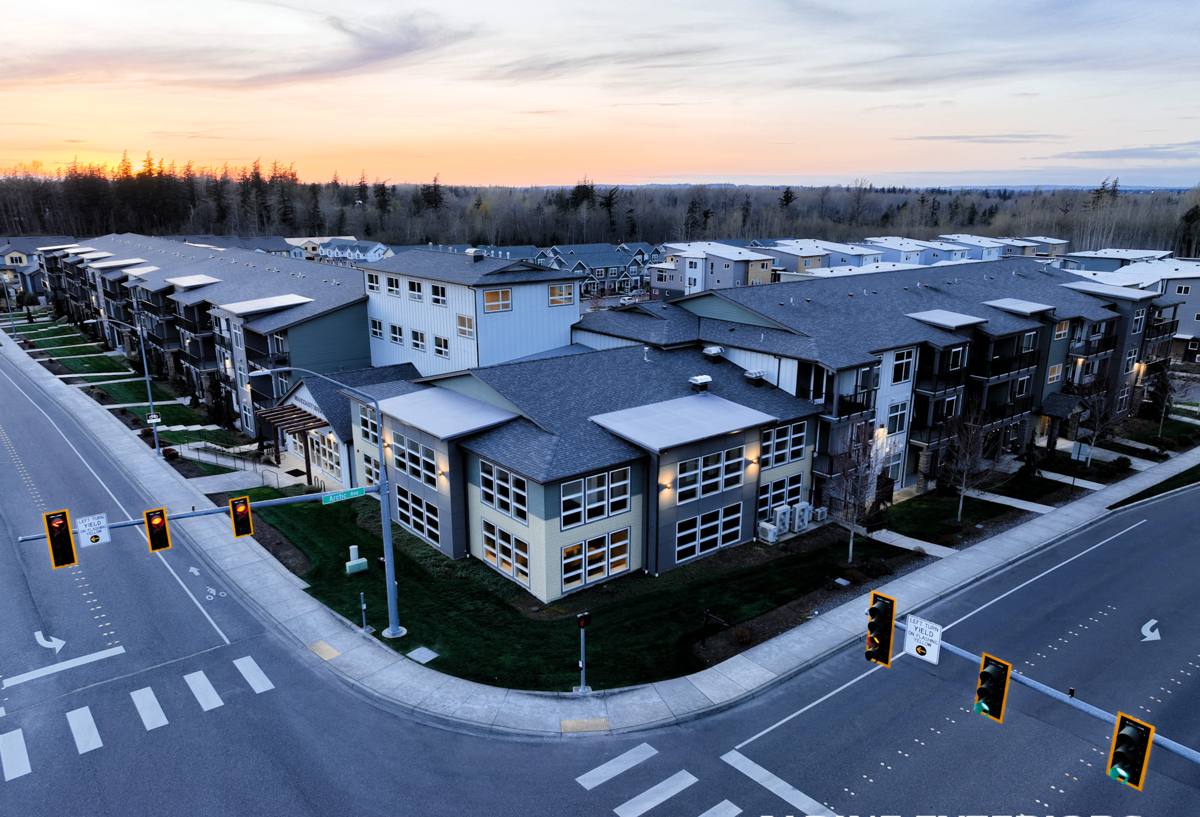
What Blaine's Climate Actually Does to Siding
Salt Air and Fastener Corrosion
Homes close to Semiahmoo Bay take on airborne salt that settles on exterior surfaces and, more importantly, works into any exposed metal. Standard fasteners, uncoated flashing, and cheap trim hardware corrode faster here than they would a short distance inland. On a board and batten wall, that matters because the battens themselves are fastened through the field boards — every one of those fastener points is a place where corrosion can eventually telegraph through the finish or loosen the batten. The fix isn't complicated, but it has to be deliberate: corrosion-resistant fasteners rated for the exposure, and flashing details that don't rely on caulk alone to keep water off metal.
Driving Rain and Wind-Driven Moisture
Whatcom County gets a lot of rain, but the rain that damages siding isn't the straight-down kind — it's rain pushed sideways by wind off the water. Board and batten has more vertical seams than a lap profile, and every seam is a potential entry point if the water-resistive barrier and flashing behind it aren't doing their job. The batten strips are cosmetic; the actual weather protection lives in the layer underneath. A board and batten wall that looks perfect from the street but was installed without correct WRB lapping and joint flashing will fail from behind, often years before anyone notices from the outside.
Moss and Algae in the Shoulder Seasons
North- and west-facing walls that stay shaded and damp through the fall and spring grow moss and algae faster in Blaine than they would in a drier part of the state. Board and batten's vertical battens create small ledges and shadow lines that can hold moisture longer than a flat lap profile if the reveal and batten spacing aren't planned with drainage in mind. This is a durability issue as much as a cosmetic one — sustained moisture against any siding material shortens its service life.
Why We Only Install Board & Batten in James Hardie Fiber Cement
We don't offer board and batten in vinyl, LP SmartSide, primed spruce, or cedar. That's a deliberate standard, not a lack of options. In a coastal, high-moisture climate like Blaine's, the material behind the profile matters as much as the profile itself, and here's why fiber cement is what we put on these walls:
- Non-combustible core. Fiber cement doesn't feed a fire the way wood-based products can, which matters for insurance and for peace of mind.
- Dimensionally stable in wet-dry cycling. Blaine's swing between soaked winters and drier summers stresses siding materials that swell and shrink. Hardie's fiber cement moves far less than wood-based or vinyl products, which keeps batten reveals tight and joints stable over time.
- Factory-applied ColorPlus finish. Salt air is hard on field-applied paint — it breaks down UV protection and adhesion faster near the water. ColorPlus is baked on at the factory with a finish designed to outperform site-applied paint, which reduces repaint cycles on a home that's already fighting the elements.
- HZ5 product engineering for this climate. James Hardie makes climate-specific formulations, and the HZ5 line is engineered for the wetter, more humid Pacific Northwest conditions rather than a one-size-fits-all national product.
- A real transferable warranty backed by the manufacturer, not just the installer — which matters if the home changes hands, a common scenario in a market like this one.
None of that means other products don't have a place elsewhere. Vinyl is inexpensive, LP SmartSide has real fans, and cedar has genuine character. But we've made a professional call that on a Blaine home, exposed to salt air and driving rain, fiber cement is the material that lets a board and batten installation actually last as long as it looks good — and we'd rather stand behind one product we know performs than offer several we'd have to caveat.
What a Correct Board & Batten Installation Involves
Water Management Comes First
Before a single board goes up, the wall needs a continuous water-resistive barrier, correctly lapped shingle-style so water always drains outward and down, with flashing integrated at every window, door, and penetration. On a board and batten wall this step is invisible once the siding is on — which is exactly why it's the step that separates a durable installation from one that fails quietly behind the finish.
Layout and Batten Spacing
Batten spacing isn't just a design choice — it affects how the wall drains and how it reads visually across a large elevation. We plan reveal width and batten placement around the home's actual wall sections, window and door openings, and corner details, rather than starting from a fixed spacing and forcing it to fit.
Fastening and Gaps
Fiber cement needs the manufacturer-specified fastener pattern, penetration depth, and clearance from panel edges — get this wrong and you invite cracking or fastener pull-through over time. Expansion gaps at joints, trim, and transitions need to be sized correctly and treated with the right sealant, not just caulked shut, so the wall can move seasonally without stressing the material.
Trim and Termination Details
The places where board and batten meets a window, a roofline, or a foundation are where most siding failures start. Correct flashing and trim termination at these points is what keeps water out for the long term, not the field material itself.
Board & Batten Material Options: Trade-Offs for a Bay-Side Home
| Material | Behavior in Salt Air & Driving Rain | Maintenance Over Time |
|---|---|---|
| James Hardie fiber cement | Dimensionally stable, non-combustible, engineered finish holds up to UV and moisture | Occasional wash; repaint cycle is long thanks to factory finish |
| Vinyl | Can warp or become brittle with UV and temperature swings; seams can allow moisture behind panels | Low upkeep but limited repair options if damaged or faded |
| Cedar | Attractive but absorbs moisture readily; more prone to moss growth and rot in shaded, damp areas | Regular refinishing and moisture monitoring required |
| Primed spruce / engineered wood | Vulnerable to swelling and edge damage if moisture reaches the substrate | Paint maintenance and moisture inspection needed regularly |
What Drives the Cost of a Board & Batten Project
Every home is different, so we won't quote a number without seeing the walls, but these are the real factors that move the price up or down on a Blaine project:
| Factor | Why It Matters |
|---|---|
| Tear-off vs. overlay | Removing old siding to inspect and repair the sheathing and WRB underneath costs more upfront but avoids covering hidden moisture damage |
| Wall height and complexity | Multi-story walls, dormers, and cut-ins increase labor and material waste |
| Trim and corner detail | Board and batten's visual impact often comes from trim width and corner treatment — more detail means more labor |
| Existing moisture damage | Rot or water intrusion found once old siding comes off adds repair scope before new siding can go on |
| Home size and wall area | Straightforward square footage math, but larger homes benefit more from material efficiency planning |
Our Process for Blaine Board & Batten Projects
- Walk-through and assessment. We look at existing siding condition, wall orientation relative to prevailing weather off the bay, and any signs of moisture or moss buildup before recommending anything.
- Water management plan. We map out WRB, flashing, and drainage details specific to that home's exposure before touching layout or batten spacing.
- Layout and material order. Reveal width and batten spacing get planned around the home's actual elevations, then Hardie material is ordered in the specified HZ5 formulation and ColorPlus finish.
- Installation to manufacturer spec. Correct fastening, gapping, and trim termination — no shortcuts on the details that don't show up until years later.
- Final walkthrough. We go over the finished work with the homeowner and flag anything worth knowing for long-term upkeep.
Why a Crew That Already Works in Blaine Matters
Board and batten installed the same way in Spokane and in Blaine will not perform the same way. A crew that already works this stretch of Whatcom County knows which elevations take the worst of the wind off Semiahmoo Bay, understands how long moss season actually runs here versus a drier inland town, and has already worked through the fastener and flashing choices that hold up against salt air rather than learning it on your wall. That local pattern recognition is the difference between a board and batten installation that's still tight and dry in fifteen years and one that needs remedial work in five.
A Few Things Worth Confirming With Any Contractor You're Considering
- Do they tear off old siding to inspect the sheathing, or install over it without checking?
- What fastener type and coating do they use, and is it rated for coastal/salt-air exposure?
- Do they detail flashing at every window, door, and wall penetration, or rely on caulk alone?
- Can they explain their batten spacing and reveal plan before the job starts, not just after?
- What warranty applies to the material, and what applies to their labor — and are those two things different?
If you're weighing board and batten for a home near Semiahmoo Bay, we're happy to take a look and talk through what your specific walls need — no pressure, no obligation. Reach out below for a free estimate.