 Semiahmoo
 Asphalt Shingle Roofing Built for Marietta's Conditions
Marietta sits close enough to the water that salt air is part of daily life, and that changes what a roof has to deal with over the decades it's expected to last. Add in Whatcom County's driving winter rain and a moss season that can run from fall through spring, and you've got a climate that's genuinely tougher on roofing than most manufacturers' warranty testing accounts for. Asphalt shingle roofing remains the right call for most Marietta homes because it's proven, repairable, and cost-effective — but only when it's specified and installed with this specific coastal environment in mind.
A shingle roof that's installed the same way you'd install one in a dry inland climate will underperform here. The difference isn't the shingle itself so much as everything underneath and around it: the underlayment, the flashing details, the ventilation, and the moss-prevention measures baked in at install time rather than bolted on later.
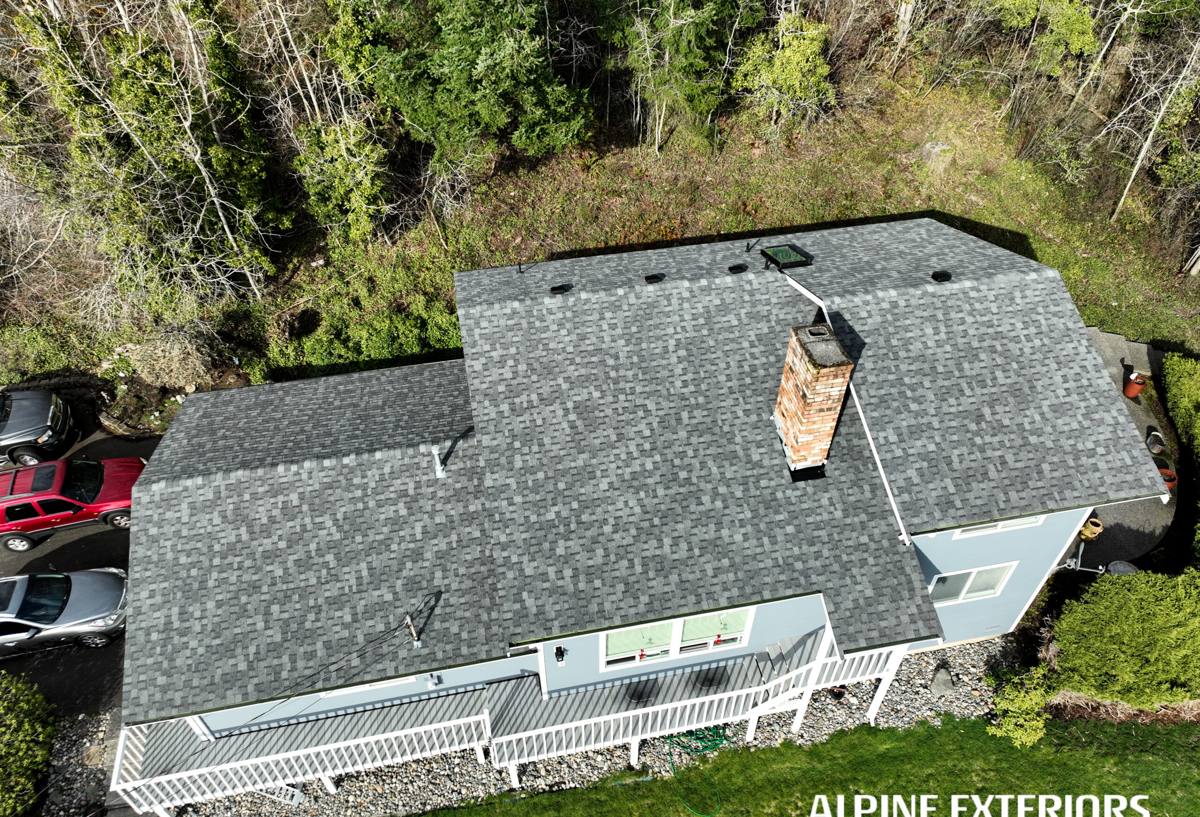
What Semiahmoo's Coastal Climate Does to a Roof
Salt Air and Metal Components
Salt-laden air accelerates corrosion on any exposed metal — nails, flashing, vent stacks, and drip edge. Standard electro-galvanized fasteners can start showing rust streaks on a shingle roof within a handful of years this close to the water. That staining isn't just cosmetic; it signals the fastener itself is weakening, and a fastener failure is how shingles start lifting in wind.
Driving Rain
Whatcom County storms often come with real horizontal push behind the rain, not just straight-down volume. That matters at every penetration point on the roof — vent boots, chimney flashing, valleys, and the edges where the roof meets siding or a dormer. Wind-driven rain finds gaps that vertical rain would never reach, which is why flashing detail work matters more here than in calmer climates.
Moss Season
Between the shaded, moisture-retaining tree cover common around Marietta and a rain season that can stretch most of the year, moss has a long window to establish itself. Moss isn't just unsightly — its root structure holds moisture against the shingle surface, lifts shingle edges as it grows, and can work its way under tabs over time, undermining the seal that keeps water out.
What a Correctly Installed Shingle Roof Needs Here
For Marietta, that means:
- Corrosion-resistant fasteners and flashing (stainless or high-grade coated) rather than standard electro-galvanized hardware
- A synthetic or ice-and-water underlayment at eaves, valleys, and penetrations — not just felt across the field
- Balanced intake and exhaust ventilation to keep the roof deck dry from underneath, which also slows moss growth from the inside out
- Zinc or copper strips near the ridge on shaded roof planes, where moss pressure is highest
- Properly lapped step flashing at every wall and dormer intersection, not caulk-dependent shortcuts
- Shingle products with manufacturer algae-resistance (AR) granules built in, since generic granules discolor faster in wet, shaded coastal conditions
None of this is exotic. It's standard practice for anyone who roofs coastal Pacific Northwest homes regularly — but it's exactly the kind of detail that gets skipped by crews that mostly work drier, inland jobs and treat every roof the same.
Choosing the Right Shingle for a Marietta Home
Not every asphalt shingle line performs the same way in this climate. The table below covers the general tiers homeowners choose between, and the trade-offs that matter locally.
| Shingle Tier | Typical Lifespan | Coastal Performance Notes |
|---|---|---|
| 3-tab / standard | 15–20 years | Lower wind rating; edges more prone to lifting in driving coastal wind; budget option |
| Architectural / laminate | 25–30 years | Better wind resistance and thicker profile; the common choice for Marietta re-roofs |
| Premium / designer laminate | 30+ years | Heaviest mat, strongest algae-resistant granule packages, best fit for full sun and salt exposure |
For most Marietta homes we recommend at least a mid-tier architectural shingle with algae-resistant granules as the baseline, not an upgrade — the moss and staining pressure here makes that feature worth having from day one rather than watching a bargain roof discolor within a few seasons.
Signs a Marietta Roof Needs Attention
Because coastal wear shows up differently than inland wear, it's worth knowing what to watch for specifically:
- Dark streaking that doesn't wash off — often algae growth, not just dirt
- Moss visible along the ridge, valleys, or north-facing slopes, even in small patches
- Rust-colored streaks below nail heads or metal flashing
- Granules collecting in gutters, which signals the shingle surface is wearing down
- Curling or cupped shingle tabs, especially on the sides that face prevailing wind and rain
- Soft spots or discoloration on interior ceilings near exterior walls, which often trace back to flashing failures rather than the shingle field itself
Catching these early is almost always cheaper than waiting. A flashing repair or partial moss treatment now is a fraction of the cost of deck repair after sustained water intrusion.
Repair, Restoration, or Full Replacement?
Not every roof issue in Marietta means a full tear-off. We generally sort roofs into three categories:
Targeted Repair
Isolated flashing failures, a handful of damaged shingles, or a single problem valley can often be repaired without touching the rest of the roof — as long as the surrounding shingles are still in reasonable condition and the repair can be properly integrated rather than patched over.
Moss and Algae Treatment
Roofs with surface growth but sound shingles underneath can often be cleaned using low-pressure methods appropriate for asphalt (never high-pressure washing, which strips granules and shortens shingle life) along with zinc or copper strip installation to slow regrowth.
Full Replacement
When a roof is past its practical service life, showing widespread granule loss, or has underlayment and deck issues beneath the shingles, a full replacement is the honest recommendation. Trying to patch a roof that's structurally at the end of its life usually costs more over time than doing the job right once.
Our Process for a Marietta Shingle Roof
- On-site assessment: we inspect the existing roof, deck condition, ventilation, and flashing details, and check for moss or algae pressure specific to your lot's sun and tree exposure
- Written scope and estimate: a clear breakdown of materials, underlayment, flashing, and ventilation work — no vague allowances
- Tear-off and deck inspection: old roofing removed down to the deck so we can actually see and address any rot or soft sheathing before it's covered back up
- Underlayment and flashing installation: ice-and-water membrane at vulnerable areas, corrosion-resistant flashing and fasteners throughout
- Shingle installation: installed to manufacturer spec for wind and moisture performance, with attention to nailing pattern — a common source of premature failure when rushed
- Ventilation check: intake and exhaust balanced so the roof deck can dry properly year-round
- Final walkthrough: we review the finished roof with you, including care and moss-prevention guidance specific to your property
Why a Crew That Already Works Marietta Matters
Roofing crews that work Whatcom County's coastal communities regularly build habits that inland crews don't need: they default to corrosion-resistant hardware, they don't skip zinc strip installation as an "extra," and they know which roof orientations on a given street tend to hold moss longest based on tree cover and sun exposure. That local pattern recognition is hard to replicate on a one-off job by a crew unfamiliar with Semiahmoo's specific mix of salt air, rainfall, and shade.
It also matters for warranty follow-through. A shingle manufacturer's warranty is only as good as the installation behind it, and a local crew that's still in the area — not one that drove in from out of region for a single project — is the one who'll actually be reachable if something needs attention down the road.
Maintenance That Extends the Life of a Shingle Roof Here
A few habits make a real difference in Marietta's climate:
- Keep gutters clear so water isn't backing up under the roof edge during heavy rain events
- Trim back overhanging branches to reduce shade and debris buildup, both of which feed moss growth
- Have moss and algae growth treated early rather than waiting for it to spread across a full slope
- Schedule a roof check after major windstorms, since lifted or cracked shingles aren't always visible from the ground
- Avoid pressure washing — it strips protective granules and shortens shingle lifespan
If you're dealing with moss buildup, a roof that's due for replacement, or you just want an honest read on how much life is left in your current shingles, we're happy to take a look. Estimates are free and there's no pressure attached — just a straight assessment of what your Marietta roof actually needs.