 Semiahmoo
 Windows for Marietta Homes Need to Do More Than Save on Heating
Marietta sits close enough to the water that "energy-efficient windows" means something different here than it does thirty miles inland. Yes, a good window cuts your heating bill. But in this stretch of Whatcom County, the window also has to survive salt-laden air off the bay, wind-driven rain that hits siding sideways for days at a time, and a moss season that runs longer than most homeowners expect. A window that's efficient on paper but poorly sealed or poorly flashed will fail here faster than it would in a drier climate, and it usually fails quietly — as a soft spot in the wall sheathing you don't find until a remodel five years later.
We install windows in Marietta as part of our regular siding work, not as a side trade we picked up. That matters because a window is never really a standalone product — it's a hole in your wall assembly, and how that hole is flashed, sealed, and tied into the siding around it determines whether the window performs for twenty years or ten.
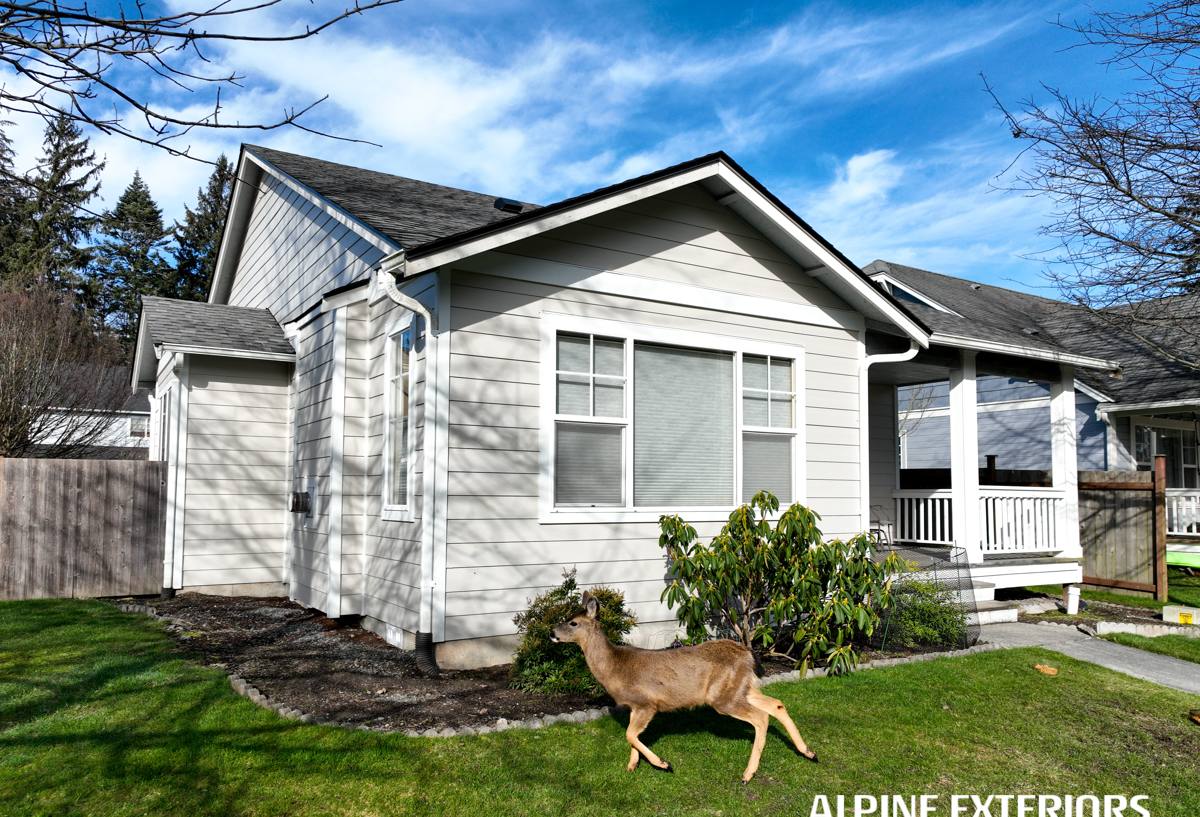
What Semiahmoo's Climate Actually Does to a Window
Salt Air
Homes close to Semiahmoo Bay and the Strait get a steady dose of airborne salt. It corrodes exposed fasteners, pits weaker aluminum components, and degrades cheap weatherstripping faster than inland installs. This doesn't mean every window needs marine-grade hardware — it means the hardware, cladding, and fasteners actually used need to be rated for coastal exposure, and installers need to know which products hold up and which quietly don't.
Wind-Driven Rain
Rain here rarely falls straight down. Storms off the water push it sideways into south- and west-facing walls, which means water is testing your window's flashing and seals under real pressure, not just sitting against the glass. A window that's watertight in a calm rain but leaks under wind-driven rain is a common and preventable failure, and it almost always traces back to installation details rather than the window unit itself.
Moss and Prolonged Dampness
Whatcom County's moss season stretches long, and it's not just a roof and gutter issue. Moss and algae hold moisture against window sills, trim, and the siding-to-window transition for weeks at a time. If that transition isn't detailed to shed water and dry out between rains, you get slow rot in the trim and sheathing around the frame — invisible until it's a bigger repair.
What "Energy-Efficient" Should Mean for a Marietta Home
Efficiency ratings on a spec sheet (U-factor, solar heat gain coefficient, air leakage) matter, but they only describe the window unit itself — not how it performs once it's in your wall. For this area, we look at three things together:
- A U-factor low enough to matter given our mild-but-damp winters, where the bigger issue is often moisture and drafts more than extreme cold
- Weatherstripping and seal systems rated for marine/coastal exposure, not just a standard suburban product line
- Installation detailing — flashing, sill pans, and sealant work — that keeps the unit's factory rating intact once it's actually built into your wall
A high-end window installed with shortcuts on flashing will underperform a mid-range window installed correctly. We'd rather talk you through that trade-off honestly than sell you on a spec sheet number that won't survive contact with a Marietta winter.
Frame Material: What Holds Up Here
| Frame Material | Coastal Performance | Maintenance | Typical Trade-Off |
|---|---|---|---|
| Vinyl | Good — won't corrode or rot, handles salt air well | Low; occasional cleaning | Can flex/discolor over decades in constant damp shade; lower cost |
| Fiberglass | Very good — dimensionally stable, resists moisture and salt exposure | Low | Higher upfront cost than vinyl |
| Aluminum (uncoated/older style) | Weaker — prone to pitting and corrosion near salt air over time | Moderate to high | We generally steer homeowners away from this near the water |
| Wood-clad | Fair — interior wood look, but cladding integrity at joints is critical near salt/moisture | Higher; joint sealant needs monitoring | Best appearance option, requires disciplined installation and upkeep |
None of these is universally "wrong" — the right call depends on your home's exposure (how much direct wind and rain a given wall takes), your budget, and how much upkeep you want to do. We'll walk your specific walls with you rather than push one material across the board.
What a Correct Installation Actually Involves
This is where most window problems in this area actually start — not with the window itself, but with the installation. A correct job includes:
- Opening inspection — checking the existing sheathing and framing around the old window for hidden moisture damage before anything new goes in
- Sill pan flashing — a sloped, sealed pan under the window so any water that does get past the frame drains back out instead of soaking into the wall
- Proper flashing sequence — flashing tape and building paper layered so water always sheds downward and outward, never trapped behind a layer above it
- Sealant selection — using sealants rated for the temperature swings and UV/salt exposure here, not a generic caulk that hardens and cracks within a couple seasons
- Siding integration — tying the window trim and flashing back into the surrounding siding so there's no gap or reverse-lap where wind-driven rain can get pushed in
- Interior air sealing — sealing the interior gap around the frame so conditioned air isn't leaking out around the unit, which is a big part of the "efficient" half of energy-efficient windows
Skipping any one of these steps doesn't usually cause an immediate problem. It causes a problem in three to seven years, after a few moss seasons and a few real windstorms off the water — which is exactly why cutting corners here is hard for a homeowner to catch at the time of installation.
Our Process for a Marietta Window Job
We keep the process straightforward and walk you through it as we go:
- Walk-through and assessment — we look at each opening, note sun/wind exposure per wall, and check for any existing moisture damage
- Honest product recommendation — frame material and glass package based on that wall's actual exposure, not a one-size answer
- Careful removal — old units come out without tearing up more siding or trim than necessary
- Structural check — any soft sheathing or rot found during removal gets flagged and addressed before the new window goes in, not covered over
- Flashing and sealing per the sequence above — done to hold up specifically to wind-driven rain, not just a light drizzle
- Trim and siding tie-in — finished so the new window reads as part of the wall, not a patch
- Final check — operation, seal, and cleanup before we consider the job done
Why a Crew That Already Works Marietta Matters
Window installation quality is mostly about judgment calls you don't see in the finished product: how much flashing overlap is enough for this wall's exposure, whether this particular siding profile needs a different trim detail to shed water correctly, whether a given spot has taken storm damage before. A crew that works this specific stretch of Whatcom County coastline regularly has already made those calls dozens of times on homes with the same salt air, the same wind patterns off the water, and the same moss season you're dealing with. That's different from a crew that installs windows broadly across a whole region and treats a Marietta home the same as one twenty miles inland.
Because we do siding and windows together, we're also not treating your window as an isolated product install. We're thinking about how it integrates with the rest of your exterior wall assembly — which is where most of the moisture problems in this climate actually start.
Cost Factors to Expect
| Factor | Why It Moves the Price |
|---|---|
| Number and size of openings | More/larger windows means more material and labor |
| Frame material | Vinyl, fiberglass, and wood-clad carry different unit costs |
| Existing damage found during removal | Rotted sheathing or framing needs repair before a new window goes in — this is the most common source of a job costing more than the initial estimate |
| Wall exposure | Walls that take direct wind-driven rain often warrant extra flashing detail and sealant work |
| Trim and siding tie-in complexity | Matching existing siding profiles and trim adds labor versus a simple swap |
We won't quote a number without seeing the actual openings — too much of the real cost depends on what we find once the old window comes out, and we'd rather give you an honest range up front than a low number that changes later.
Simple Maintenance That Extends the Life of the Job
- Rinse salt residue off frames and glass a few times a year, especially after storms
- Clear moss and debris from sills and the trim-to-siding joint before it holds moisture for weeks
- Check exterior caulk lines annually and have any cracked sealant redone before a wet season starts
- Operate hardware periodically even on windows you rarely open, to keep seals and mechanisms working
- Watch for soft trim or discoloration at the base of a window, which is often the first visible sign of a flashing issue underneath
If you're weighing new windows for a Marietta home, we're glad to walk the property, look at each opening's actual exposure, and give you a straight answer on what's worth doing now versus what can wait. There's no pressure and no cost to get our take — the form below gets you a free estimate.