 Semiahmoo
 Building New Near Semiahmoo Bay: What Blaine Harbor Asks of Your Windows
If you're framing a new home in Blaine Harbor, your windows are going to spend the next few decades facing conditions most inland Whatcom County builds never deal with. The bay sits right there, which means salt-laden air moving across the siding and glazing year-round, wind-driven rain that doesn't just fall straight down but gets pushed sideways into wall assemblies, and a moss and algae season that runs long because the air stays damp and the sun angle stays low for much of the year. None of that is a reason to over-engineer a house. It is a reason to get the window install right the first time, because a new build only gets one chance at a clean, dry, correctly flashed opening before the siding closes over it.
New-construction window work is different from swapping out old windows in an existing wall. You're not working around finished interior trim or matching an old opening — you're setting the standard the house will live with. That's an advantage if the crew doing it understands coastal exposure, and a real liability if they treat it like any other install.
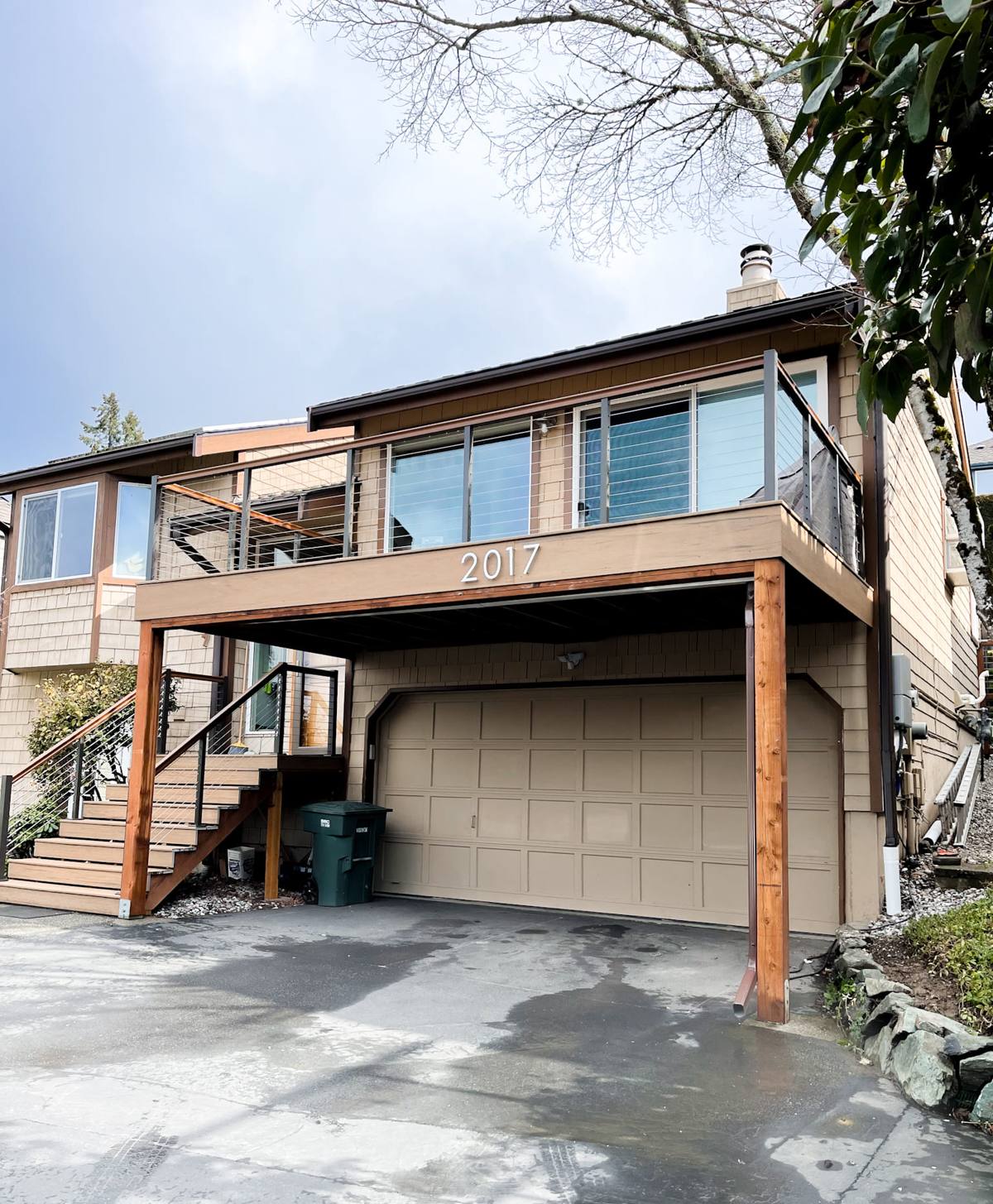
New-Construction Windows vs. Replacement: Why the Method Matters Here
New-construction windows come with a nailing fin (sometimes called a flange) around the perimeter of the frame. That fin gets integrated directly into the wall's weather-resistive barrier before siding goes on, creating a continuous water-management system from the roof down to the foundation. Replacement windows, by contrast, are built to fit into an existing finished opening without disturbing the surrounding wall — useful for remodels, but not what you want on a new build.
On a house going up a few blocks from open water, that fin-to-barrier connection is doing real work. Wind-driven rain during a fall or winter storm off the Strait doesn't behave like a light inland shower — it can push moisture sideways into a wall assembly that a poorly lapped or gapped installation will happily let through. Get the sequence right during framing and the house is protected for its whole life. Get it wrong and you're looking at hidden rot behind the siding years before anyone notices a drip inside.
What a Correct New-Construction Install Actually Involves
Rough Opening and Flashing Sequence
Every opening starts with the rough framing being checked for square, level, and correct size before a window ever shows up on site — undersized or racked openings cause installers to force units, which stresses frames and breaks factory seals. From there, the flashing goes on in a strict shingle-lap order: sill first, then jambs, then head, each layer overlapping the one below it so water is always directed outward and down, never trapped behind a lap that runs the wrong way.
Sill Pan and Sloped Sills
A sloped sill pan under the window is one of the cheapest insurance policies in the whole build. It gives any water that gets past the exterior seal — and over enough years, some always does — a way out instead of a place to pool. In a climate with Blaine Harbor's rainfall totals and a moss season that keeps surfaces damp well past when other parts of the state have dried out, skipping the sill pan is the kind of shortcut that doesn't show up as a problem until the framing behind it already has.
Sealant, Backer Rod, and Fastener Choice
Sealant beads need backer rod behind them to get the right joint depth and avoid three-sided adhesion that tears the seal apart as the building moves seasonally. And because salt air accelerates corrosion on anything less than fully rated hardware, fasteners and flashing components on a coastal build should be stainless steel or otherwise corrosion-resistant — not the cheapest galvanized option, which can start showing rust streaks on siding within a few years this close to the bay.
Choosing Frame Material and Glass for a Marine Climate
Material choice on a new build near Semiahmoo isn't about chasing the fanciest option — it's about matching the product to salt exposure, moisture, and the amount of maintenance you're actually willing to do.
| Frame Material | Coastal Performance | Maintenance | Typical Fit |
|---|---|---|---|
| Vinyl | Doesn't corrode; UV-stable modern formulations hold up well | Low — occasional cleaning | Most new-construction homes on a normal budget |
| Fiberglass | Very stable dimensionally, resists moisture and salt well | Low | Homes wanting higher-end durability, larger openings |
| Aluminum-clad wood | Good exterior protection, but any breach in the cladding exposes wood to salt-damp air | Moderate — cladding seams need periodic checking | Homeowners who want a wood interior look |
| Bare aluminum | Prone to pitting and corrosion in salt air over time; poor thermal performance | Higher | Not something we recommend for this location |
We steer most Blaine Harbor new builds toward vinyl or fiberglass for exactly this reason — it's less about brand preference and more about not handing a homeowner a maintenance chore that shows up as corroded hardware or a compromised seal ten years down the road. Where a client wants the look of wood, aluminum-clad units can work, but we're upfront that the cladding needs to stay intact and sealed to keep salt air off the wood underneath.
On glass, Low-E coatings and argon-filled dual or triple panes are standard on new builds now, but the specific coating and Solar Heat Gain Coefficient should be picked for orientation — south and west-facing glass benefits from a different balance than shaded north walls, especially with the muted, overcast light that's common for a good stretch of the year here.
Meeting Washington State Energy Code on a New Build
Washington's energy code sets minimum U-factor requirements for new-construction fenestration, and Whatcom County inspectors check for it. That's a floor, not a target — on a house facing direct exposure toward the water, it's worth going a step above code minimum on U-factor and air infiltration ratings, because a slightly better window costs little more at the time of a new build compared to what it costs to upgrade later. We also make sure whatever's specified carries a wind-driven rain performance rating appropriate for the site's exposure, not just a generic package pulled off a builder's standard spec sheet.
Our Process for Blaine Harbor New-Construction Projects
We work new builds the same deliberate way every time, because skipping a step is how coastal homes end up with hidden problems:
- Review the plans and window schedule before framing is finalized, flagging any opening sizes or orientations that need special attention for this site
- Verify rough openings are square, correctly sized, and properly framed before flashing begins
- Install sill pan flashing, then shingle-lap jamb and head flashing in the correct sequence, tied into the house wrap or weather-resistive barrier
- Set windows plumb, level, and square, with proper shimming so the frame isn't stressed
- Seal with backer rod and appropriate sealant, using corrosion-resistant fasteners throughout
- Photograph flashing details before siding closes over them, so there's a record of what's behind the wall
- Coordinate timing with the builder or GC so windows go in at the right point in the framing sequence — not too early, not so late that the opening sits exposed through a stretch of bad weather
Mistakes We Catch on New Builds Near the Water
Most of what causes trouble later isn't exotic — it's ordinary shortcuts that matter more here than they would inland. Reversed flashing laps that let water track backward into the wall. Sealant applied without backer rod, so it tears instead of flexing with the building. Fasteners that aren't corrosion-rated, which streak and eventually loosen faster in salt air than anywhere inland. And sills or trim left with no attention to how they'll drain, which combined with the region's long damp season is exactly what feeds persistent moss and algae growth on north- and west-facing surfaces. None of these are dramatic on install day. They're the kind of thing that costs a homeowner real money five or ten years out.
Why Local Experience in Blaine Harbor Matters
A crew that mostly works drier, inland jobs can install a technically correct window and still miss the details that matter specifically on a site facing Semiahmoo Bay — the flashing detail that needs to handle sideways rain, the fastener spec that needs to survive salt air, the drainage path that needs to keep working through a moss season that doesn't really let up. Working this stretch of Whatcom County regularly means we're not guessing at wind exposure or moisture behavior — we've seen what holds up on these builds and what doesn't, and we spec and install accordingly rather than defaulting to a generic package built for a different climate.
If you're framing a new home in Blaine Harbor and want windows installed right the first time, we're happy to walk the plans with you and put together a straightforward, no-pressure estimate — just fill out the form below.