 Semiahmoo
 Building a Deck That Can Handle the Peace Arch Climate
A deck in the Peace Arch area doesn't fail the way a deck fails inland. Out here the problems show up slower and quieter — a fastener bleeding rust two years early, a stair stringer gone soft where it meets the ground, a section of decking that never quite dries out between October and April. The combination of salt-laden air off the Strait, driving wind-blown rain, and a moss season that can stretch five or six months puts real, cumulative stress on outdoor wood structures. Building a deck here correctly means designing for that from the framing up, not bolting on a generic build and hoping it holds.
We build and repair decks for homes throughout Semiahmoo and the surrounding Whatcom County shoreline, and Peace Arch properties have their own particular exposure — open sightlines to weather, proximity to salt spray, and yards that stay shaded and damp longer than homes set back from the water. This page is about what that means for your deck specifically, not decks in general.
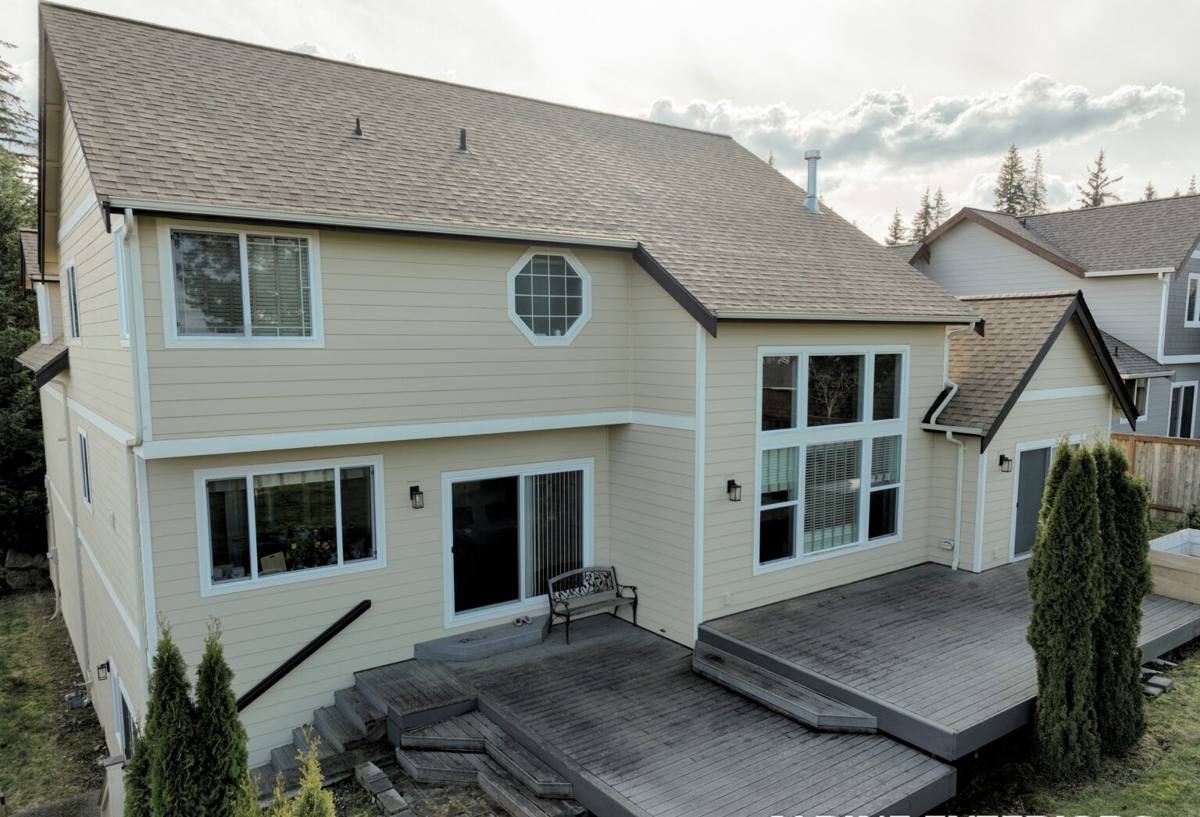
What Salt Air and Coastal Moisture Actually Do to a Deck
Homeowners often assume the biggest threat to a deck is rot in the boards themselves. That's part of it, but the more common failure point we see near the water is the hardware and connections — the parts you don't see once the deck is finished.
Fasteners and Hardware
Standard hot-dip galvanized screws and joist hangers hold up fine in drier, inland conditions. Closer to salt air, that coating breaks down faster than most people expect, and once it does, corrosion moves quickly through the fastener and into the surrounding wood fiber, weakening the connection long before the board itself looks bad. This is why hardware selection matters more here than the decking material choice itself in a lot of cases.
Wood Movement and Moisture Cycling
Wood decking near the coast goes through more expansion and contraction cycles per year than it would inland, because it rarely gets a long, sustained dry stretch to fully stabilize. That constant wet-dry cycling is what opens up checking and cupping over time, and it's also what works fasteners loose if they weren't set correctly to begin with.
Choosing a Decking Material for This Specific Climate
There's no single "best" decking material — there's a best material for your budget, your maintenance appetite, and how exposed your particular lot is to wind-driven rain and salt spray. Here's how the common options actually compare in this environment, not in a showroom.
| Material | Moisture Behavior Here | Maintenance Burden | Realistic Lifespan |
|---|---|---|---|
| Pressure-treated pine | Absorbs and releases moisture readily; needs a functioning finish to manage that cycling | Re-seal or re-stain every 1–2 years near the water | 15–20 years with upkeep |
| Cedar | Naturally more decay-resistant, but still moves with moisture and grays without finish | Periodic cleaning and finish renewal | 20–25 years with care |
| Composite (capped) | Doesn't absorb moisture into the core; resists moss growth better than wood | Occasional washing; no staining or sealing | 25–30+ years, manufacturer-dependent |
| PVC decking | Fully moisture-resistant, most stable in wet-dry cycling | Lowest ongoing maintenance | 25–30+ years |
We install all of the above. Our job is to walk your specific site — how much sun it gets, how sheltered it is, what your budget and maintenance tolerance actually are — and tell you honestly which category fits, rather than pushing whatever has the best margin.
Where We're Cautious
Uncapped composite boards from the early generation of that product had real moisture-absorption problems at cut edges and fastener penetrations, and we still see call-backs on older installs. Today's fully capped composites don't share that issue, but it's worth knowing the difference exists, since "composite decking" as a category covers a wide range of actual performance.
What a Correctly Built Deck Requires in This Climate
Ledger Attachment and Flashing
Where a deck attaches to the house is the single most common source of hidden rot we find in this region — not on the deck itself, but in the rim joist and wall sheathing behind it. A ledger board needs proper flashing that sheds water away from the house wall, not just caulk, which fails silently over a few wet seasons. This is also the connection point most responsible for a deck's structural safety, so it's not an area to shortcut.
Framing and Fastener Selection
We frame with fasteners and structural hardware rated for the exposure the deck will actually see — which, for anything within reach of coastal air, generally means stainless or heavy-duty coated hardware rather than standard-grade galvanized. It costs more up front and saves a rebuild later.
Footings, Drainage, and Ground Clearance
Whatcom County's wet winters mean standing water and saturated soil for long stretches. Footings need to be set below frost depth and clear of ground moisture, and the underside of the deck needs enough clearance and airflow to actually dry out between rain events. A deck built too low to the ground, or over poorly draining soil, will trap moisture against the framing no matter how good the decking material is.
Moss, Algae, and Long-Term Deck Care
Whatcom County's moss season is long, and a deck that sits in partial shade — common on lots near mature trees or close to neighboring structures — can stay damp enough to grow moss and algae for much of the fall through spring. Beyond looking bad, moss holds moisture against the decking surface and makes it slippery, which is a real safety issue on stairs and landings.
Design Choices That Reduce Moss Buildup
- Gapping between boards sized to shed water rather than trap it
- Decking orientation and layout that avoids low, shaded pockets where water pools
- Material selection that resists moisture retention in shaded areas
- Adequate under-deck clearance for airflow and drying
- Keeping overhanging vegetation trimmed back where it's practical to do so
None of these eliminate the need for occasional cleaning, but a deck designed with drainage and airflow in mind needs far less scrubbing and pressure-washing over its life than one that wasn't.
How We Approach a Deck Build in Peace Arch
Site Assessment
We start by walking the lot — sun exposure, wind exposure, drainage patterns, how the ground behaves after a heavy rain, and how the new deck will tie into the existing structure. This is where material and hardware recommendations get made specific to your property instead of generic.
Permitting
Deck construction in Whatcom County, whether the property sits inside city limits or in the unincorporated area, typically requires a building permit once the deck exceeds a certain height or size — the exact thresholds depend on your jurisdiction. We handle that process as part of the job so you're not left tracking down requirements yourself.
Construction
Footings and framing go in first, built to the exposure standards described above, followed by ledger flashing, decking installation, and railing and stair work. We inspect our own structural connections before decking goes down, since that's the point where hidden problems are cheapest to fix.
Final Walkthrough
Before we consider the job done, we walk it with you — checking fastener finish, board spacing, railing stability, and stair safety — and go over what maintenance, if any, the specific material you chose will need going forward.
Repair, Rebuild, or New Build — Knowing Which You Need
Not every aging deck needs to be torn out. We regularly find decks where the surface decking has worn out but the underlying framing is sound, and vice versa — decking that looks fine sitting on a ledger connection or footings that have failed. A proper inspection separates cosmetic wear from structural risk before we recommend anything.
Signs a Deck Needs More Than a Fresh Coat of Stain
- Soft or spongy spots when you press on the decking or stair treads
- Rust staining streaking down from fasteners or hardware
- Visible gaps or movement where the deck meets the house
- Wobble in the railing posts under light pressure
- Persistent moss or dark staining that returns quickly after cleaning
If you're seeing any of those, it's worth having it looked at before deciding whether repair or replacement makes sense.
Why Local Experience with Peace Arch Properties Matters
A contractor who builds decks all over the region, including exposed properties near Semiahmoo, has already worked through the fastener failures, the ledger flashing shortcuts, and the moss-trap layouts that show up specifically in this climate — and knows which material and hardware combinations are worth the extra cost here and which aren't. That's different from experience built mostly on inland, drier-climate builds. It also means we're a known, findable crew if a warranty issue or maintenance question comes up years down the road, not a name that only shows up for the original build.
Get an Estimate
If you're planning a new deck or need an honest read on whether an existing one is still sound, we're glad to come out, walk the property, and give you a straightforward assessment — no pressure, no obligation. Use the form below to request a free estimate.