 Semiahmoo
 Windows Built for Peace Arch's Weather, Not a Showroom
Peace Arch sits close enough to Semiahmoo Bay and the Strait of Georgia that homes here take a different kind of weathering than houses even a few miles inland. Salt-laden air corrodes hardware and finishes faster than most manufacturers' warranties assume. Driving rain off the water pushes water sideways into gaps that would stay dry in a calmer climate. And Whatcom County's long, damp moss season keeps trim, sills, and siding wet for weeks at a stretch, which means any weak point in a window's flashing or seal stays wet longer and fails sooner. Window replacement in this neighborhood isn't just a cosmetic upgrade — it's a chance to fix the water and air management details that determine whether the next set of windows lasts fifteen years or thirty.
We work on homes throughout Semiahmoo and Peace Arch regularly, so we're not guessing at what this stretch of coastline does to a house. We've opened up enough old window openings here to know where builders cut corners decades ago, and we build our replacements to not repeat those mistakes.
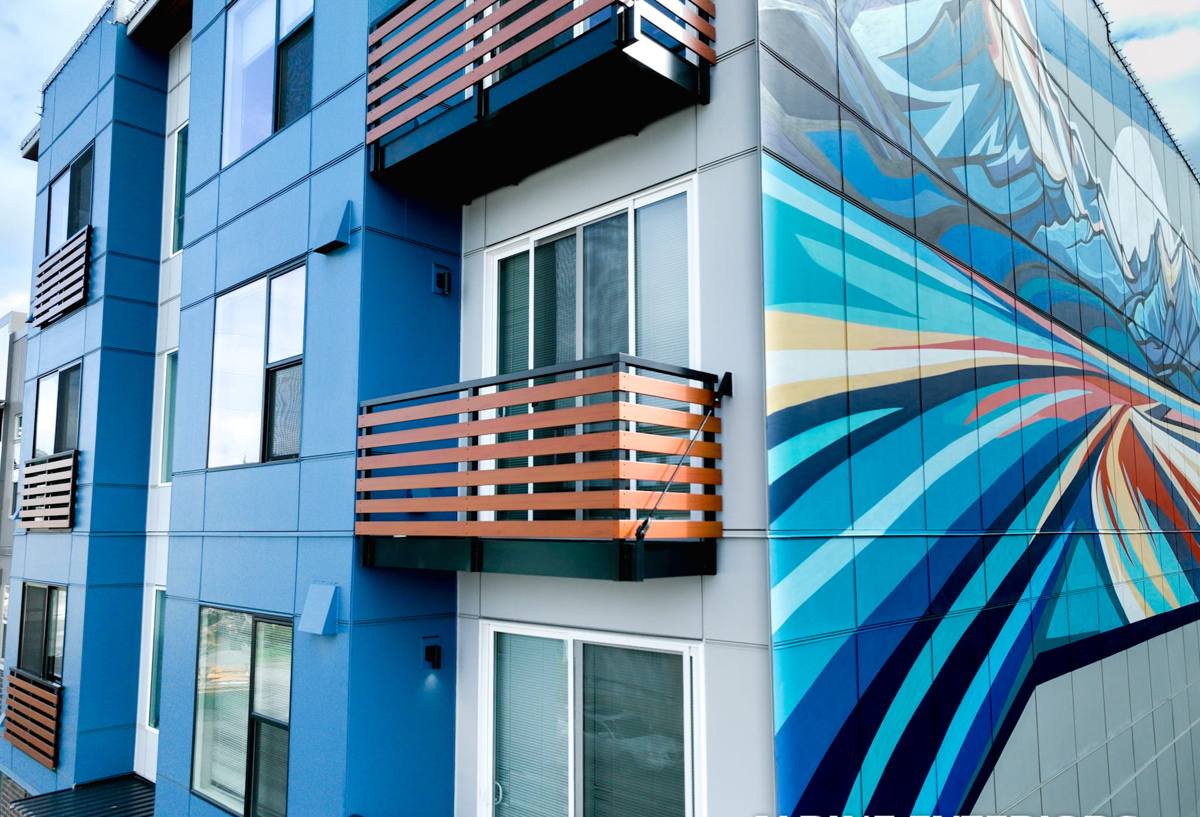
What Peace Arch's Climate Does to Windows Over Time
Salt Air and Metal Fatigue
Aluminum frames, steel reinforcement, and even some vinyl hardware components corrode faster near the water. Rollers stick, locks bind, and balance mechanisms wear out ahead of schedule. If your windows are getting hard to open or close, that's often the first sign the hardware is losing the fight against salt exposure — well before the glass or frame shows visible damage.
Driving Rain and Wind-Driven Water
Storms coming off the water don't just fall straight down — they hit siding and window openings at an angle, under pressure. A window that would perform fine in a sheltered inland lot can leak in a Peace Arch storm if the flashing, sill pan, and sealant details aren't built for wind-driven rain specifically. This is one of the most common reasons we get called to a home that "just started leaking" — the window itself may be fine, but the water management around it was never adequate for this exposure.
Moss Season and Prolonged Moisture
Whatcom County's wet season runs long, and moss doesn't just grow on roofs — it takes hold on north-facing trim, sills, and anywhere organic debris collects against wood or composite material. Sustained moisture near a window opening is what turns a small gap into rot. The longer that dampness sits, the more it works into the framing behind the window, which is why we pay close attention to drainage and airflow around every opening we replace, not just the window unit itself.
Signs Peace Arch Homeowners Should Watch For
- Condensation forming between the panes (a sign the seal has failed, not just a humidity issue)
- Soft or discolored trim and sill material around the window frame
- Windows that stick, won't latch fully, or have become hard to operate
- Visible daylight or a noticeable draft along the frame edges
- Rising heating bills without a clear cause elsewhere in the home
- Fogging, staining, or a musty smell near the window on damp mornings
- Peeling paint or bubbling finish on interior trim near the glass
Any one of these on its own might be minor. Two or three together usually means the window's seal or the flashing behind it has already let moisture in, and it's worth having someone look before it spreads into the framing.
What a Correct Window Replacement Involves Here
Swapping in a new window is the easy part. What actually determines how long it lasts in a Peace Arch exposure is everything around it:
- Full removal, not a pocket replacement, when the opening calls for it. Inserting a new sash into an old frame is faster and cheaper, but it buries any existing rot or flashing problems instead of fixing them. We'll tell you honestly when a pocket install is appropriate and when it isn't.
- Inspecting the opening once the old window is out. This is where we find out whether the sheathing, framing, and old flashing are sound. On a coastal property, this step matters more than it does inland — we've found water damage behind windows that looked fine from outside.
- Correct sill pan and flashing integration. The sill pan needs to shed any water that gets past the window to the outside, not into the wall cavity. Flashing needs to integrate with the home's water-resistive barrier in the right shingle-lap order — over at the top, under at the sides and bottom.
- Sealing that accounts for wind-driven rain, not just still-air conditions. Standard caulking practices assume rain falls straight down. We detail sealant and flashing for lateral water pressure, which is the norm here, not the exception.
- Insulating the gap between frame and rough opening properly. Too little insulation leaves a cold, drafty gap. Too much (or the wrong type, packed too tight) can bow the frame and affect how the window operates. This is a detail that's easy to rush and easy to get wrong.
- Interior and exterior trim finished to shed water, not trap it. Given how long moss season runs, we pay attention to drainage paths so trim doesn't stay saturated for weeks at a time.
Choosing Materials for a Salt-Air, High-Moisture Exposure
There's no single "best" window material for every home — the right choice depends on your home's exposure, your budget, and how much upkeep you want to take on. Here's how the common options hold up specifically in a Peace Arch setting:
| Frame Material | Salt Air Performance | Moisture Behavior | Maintenance |
|---|---|---|---|
| Vinyl | Good — won't corrode | Doesn't absorb water; seals are the main failure point | Low — occasional cleaning |
| Fiberglass | Very good — stable and corrosion-resistant | Minimal expansion/contraction, holds seals well | Low |
| Wood (clad exterior) | Depends on cladding — bare wood struggles near salt air | Needs sound cladding and flashing to keep core wood dry | Higher — finish and joints need monitoring |
| Aluminum | Prone to corrosion and pitting near the water over time | Conducts moisture and cold readily; condensation-prone | Moderate to high near the coast |
We install a range of these depending on the home, but we'll walk you through the honest trade-offs for your specific exposure rather than pushing one product line. If a material or install approach isn't a good fit for a Peace Arch home's conditions, we'll say so and explain why — usually it comes down to how the material handles sustained moisture, how forgiving it is of minor installation variance, or how it ages under salt exposure, not because any one product is inherently bad.
Our Process, Start to Finish
1. On-Site Assessment
We look at your current windows, the condition of the openings, and how your home is oriented relative to prevailing wind and rain. A window on the water-facing side of a Peace Arch home often needs more attention to flashing detail than one on a sheltered wall.
2. Straightforward Estimate
You get a clear breakdown of what's being replaced, what material and install approach we're recommending and why, and what it costs — no pressure, no inflated "today only" pricing tactics.
3. Scheduling Around Our Weather
We plan installs with an eye on the forecast. Getting an opening open, flashed, and closed back up during a dry window matters more here than in a drier climate, and we build our schedule accordingly.
4. Installation
Old windows out, openings inspected and repaired if needed, new windows set plumb and level, flashed and sealed correctly, then trimmed out inside and outside.
5. Walkthrough
We check operation on every window with you before we consider the job finished — smooth opening, closing, and locking, with no gaps or drafts.
Cost Factors for Peace Arch Homes
Every home is different, but a few things consistently move the price of a window replacement project up or down in this area:
| Factor | Why It Matters Here |
|---|---|
| Number and size of openings | Straightforward — more and larger windows means more material and labor |
| Condition of existing framing | Coastal moisture means hidden rot repair is more common than in drier inland areas |
| Frame material chosen | Fiberglass and higher-end vinyl cost more upfront but resist salt-air wear longer |
| Full-frame vs. pocket replacement | Full-frame costs more but is often the right call when moisture has already reached the framing |
| Exposure and orientation | Water-facing walls need more careful (and sometimes more time-consuming) flashing work |
| Trim and finish work | Matching existing trim profiles or upgrading materials affects total cost |
We'll go through which of these apply to your home during the estimate, so there aren't surprises once work starts.
Why Hire a Crew That Already Works This Area
A window installer who mostly works inland, drier neighborhoods can do a technically fine install and still leave you under-protected against what a Semiahmoo winter actually throws at a house. Wind-driven rain, sustained dampness, and salt exposure aren't edge cases here — they're the baseline. Crews who work Peace Arch regularly know to check for the rot patterns this exposure tends to cause, to flash for lateral water pressure as a default rather than an afterthought, and to recommend materials that hold up to salt air rather than just what's cheapest to stock.
We're not going to tell you every job here is complicated — plenty of straightforward replacements go smoothly. But when there's a wrinkle, it usually shows up because of this exact climate, and having a crew that's seen it before means it gets caught and handled instead of becoming next year's leak.
If your windows in Peace Arch are drafty, hard to operate, or showing signs of moisture damage, we're happy to take a look and give you a straightforward, no-pressure estimate — just fill out the form below.