 Semiahmoo
 Roof Repair Built for Blaine's Weather, Not a Generic Climate
Blaine sits right on the water at the top of Whatcom County, which means roofs here take a different beating than roofs even twenty miles inland. Salt-laden air off the strait works into fasteners, flashing, and vent boots. Wind-driven rain doesn't just fall on a roof, it gets pushed sideways and up under laps that would stay dry in a calmer climate. And the long, damp shoulder seasons here give moss and moisture months to work rather than weeks. A roof repair that doesn't account for all three of those things tends to fail again within a year or two, sometimes in the exact same spot.
We work on homes in Blaine and around Semiahmoo regularly, so we're not learning the local conditions on your dime. We know which roof styles and details tend to cause trouble in this pocket of Whatcom County, and we repair accordingly instead of applying a one-size-fits-all patch.
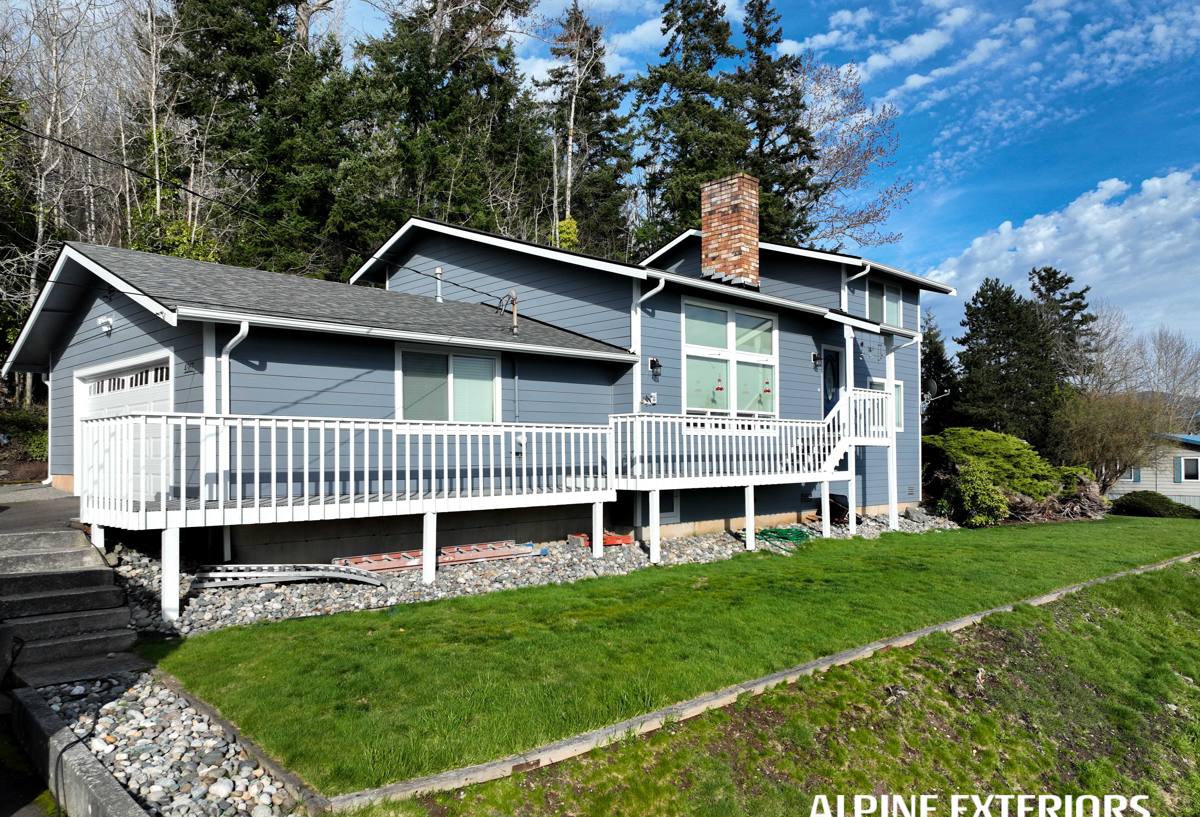
What Blaine Homes Actually Need From a Roof Repair
Salt Air and Metal Fasteners
Homes close to the water deal with accelerated corrosion on exposed nail heads, metal flashing, and any hardware that isn't rated for coastal exposure. A repair that reuses corroded fasteners or standard-grade flashing is a repair with a short clock on it. We use corrosion-resistant fasteners and flashing materials suited to marine-influenced air, not because it's required everywhere, but because it's the right call this close to Semiahmoo Bay.
Wind-Driven Rain
Blaine gets weather that comes off the water sideways. That means water can find its way under shingle laps, around chimney flashing, and into valleys that would be fine in a straight-down rain. Repairs need to address the direction water actually travels here, not just seal the visible gap.
Moss and Extended Damp Seasons
Whatcom County's wet season runs long, and shaded or north-facing roof sections in Blaine can stay damp for weeks at a stretch. Moss doesn't just look bad — it holds moisture against the roofing material, lifts shingle edges, and works its way into fastener lines. Any honest roof repair in this area has to deal with moss as a root cause, not just clean it off the surface.
Common Roof Repair Issues We See Around Blaine
- Lifted or cracked shingles from wind-driven rain finding a weak edge
- Moss growth lifting shingle tabs and holding moisture against the deck
- Corroded flashing around chimneys, skylights, and roof-to-wall transitions
- Failed pipe boots (the rubber collars around plumbing vents dry out and crack over time)
- Valley leaks where two roof planes meet and water volume is highest
- Ice-dam-style backup during a hard freeze snap, even though it's rare here, because gutters were already compromised
- Nail pops and popped fastener lines from age and thermal movement
What a Correct Repair Actually Involves
A roof repair that holds up in this climate isn't just about the visible damage. It's about understanding why that spot failed and making sure the fix addresses the cause.
1. Diagnose Before Patching
We start by tracing the leak or damage back to its actual source, which is often several feet from where the stain or drip shows up inside. Water travels along the underlayment and rafters before it shows itself, so patching only the visible spot is one of the most common reasons a "fixed" roof leaks again.
2. Check the Surrounding Material, Not Just the Failure Point
If shingles are brittle or granules are washing off nearby, a spot repair next to that material won't last. We look at the condition of the roofing around the repair area so we're not tying a new patch into material that's already failing.
3. Match Flashing Details to How Water Actually Moves
Flashing is the single biggest point of failure on most roof repairs we see. Step flashing, counter-flashing, valley metal, and vent boots all need to be layered correctly so water sheds over each piece in sequence. We rebuild these details properly rather than caulking over a gap, which is a temporary fix at best.
4. Address Moss and Drainage, Not Just the Hole
If moss or standing water contributed to the failure, we treat that as part of the repair. That can mean moss removal and treatment, clearing debris from valleys, or improving how water exits a low spot on the roof.
Our Process for a Blaine Roof Repair
- Inspection: We get on the roof (or use a lift/drone when pitch or access calls for it) and document the actual condition, not just the reported problem area.
- Honest assessment: We tell you what's a repair and what's actually pointing toward a bigger issue, like widespread granule loss or deck rot, that a patch won't solve.
- Written scope: You get a clear explanation of what failed, why, and what we're going to do about it, in plain language.
- The repair itself: Matching materials where possible, correct flashing sequencing, and fasteners suited to coastal exposure.
- Cleanup and check: We clear debris, check attic access points if relevant, and confirm the fix from both outside and inside where accessible.
Repair vs. Replacement: How We Help You Decide
Not every roof problem in Blaine needs a full replacement, and not every roof problem should be treated with another round of patches. Here's how we generally think about it.
| Factor | Repair Usually Makes Sense | Replacement Worth Discussing |
|---|---|---|
| Age of roof | Under roughly 15 years, single localized issue | Nearing or past manufacturer's expected lifespan |
| Extent of damage | One or two isolated areas | Multiple sections showing granule loss, curling, or moss damage |
| Underlying deck | Solid, no rot found | Soft spots or rot found during inspection |
| Flashing condition | Mostly sound, one detail failing | Corroded or undersized throughout |
| Repair history | First or second repair on this roof | Same area repaired multiple times already |
If a roof is otherwise sound, a targeted repair is the honest and cost-effective answer. If we find the same failure pattern showing up in several spots, we'll say so plainly rather than stringing along a series of patches that don't actually solve the underlying problem.
Cost Factors for Roof Repair in Blaine
Every roof and every leak is different, so we won't quote a number without seeing the roof, but a few things reliably move the cost of a repair up or down:
| Factor | Why It Matters |
|---|---|
| Roof pitch and access | Steeper roofs or difficult access require more time and safety setup |
| Extent of flashing work | Rebuilding flashing details takes longer than a straight shingle swap |
| Material matching | Older or discontinued shingle colors may require a wider blend area |
| Deck condition | Rot found under the roofing adds carpentry work before re-roofing that section |
| Number of penetrations | Chimneys, skylights, and multiple vents each add their own flashing detail |
Most straightforward roof repairs in this area land in a broad low-to-mid hundreds range, with more involved flashing or deck repair work running higher. We'll give you real numbers once we've actually seen the roof.
Why It Matters That We Already Work in Blaine
Roofing crews that aren't familiar with Semiahmoo and Blaine's specific exposure tend to under-spec materials for the salt air, or they treat wind-driven rain like a standard vertical rainfall problem. Neither mistake shows up immediately — they show up eighteen months later as a callback. Because we work this part of Whatcom County regularly, we spec fasteners, flashing, and sealants for what actually happens here, and we've seen enough local roofs to recognize a moss or flashing problem before it becomes a deck problem.
Signs You Should Get a Roof Looked At
- A water stain on a ceiling or ceiling near an exterior wall
- Visible moss buildup, especially on shaded or north-facing slopes
- Shingle granules collecting in gutters or at downspout outlets
- Daylight visible through the attic roof deck
- Curling, cracked, or missing shingles after a windstorm
- Rust streaks running down from flashing or metal roof-to-wall transitions
- A musty smell in an attic space that wasn't there before
Catching any of these early is almost always cheaper than waiting until there's active dripping inside the house.
Get a Straight Answer on Your Roof
If you're seeing signs of a problem, or you just want a second opinion before winter weather rolls back in, we're happy to take a look. We'll tell you honestly whether it's a repair, what caused it, and what it'll take to fix it right the first time. Fill out the form below for a free, no-pressure estimate.