 Semiahmoo
 Siding Built for the California Creek Microclimate
California Creek sits close enough to Semiahmoo Bay and the Strait of Georgia that homes here take a different kind of weathering than houses even a few miles inland. Marine air carries salt onto exterior walls year-round, winter storms push rain sideways instead of straight down, and the tree cover and low winter sun along the creek corridor keep siding damp long after a storm passes. Any siding installed here has to be chosen and installed with that combination in mind — not just picked because it looks good on the day it goes up.
This page covers what a proper siding installation for a California Creek home actually involves: the climate stress points, what correct workmanship looks like, and why the details matter more here than they would on a drier, more sheltered lot.
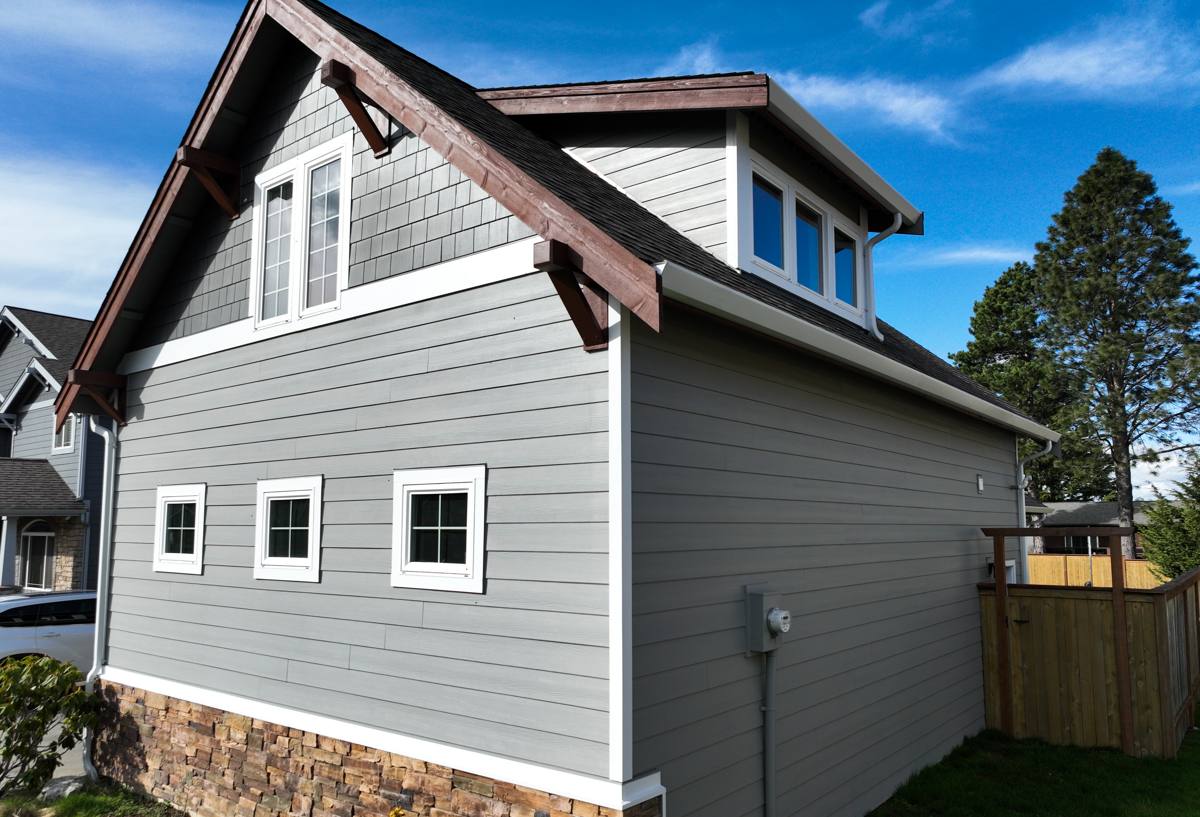
What This Climate Actually Does to Siding
Salt Air
Airborne salt from the bay settles on exterior surfaces and accelerates corrosion of fasteners, flashing, and any metal trim that isn't rated for a marine environment. It also breaks down cheaper paint finishes faster than inland exposure would, leaving chalking, fading, and early peeling on siding that wasn't built to handle it.
Driving Rain
Whatcom County's storms off the strait don't just fall — they're pushed by wind, which means rain gets driven into laps, seams, and penetrations that a calmer climate would never test. A water-resistive barrier and flashing detail that's "good enough" in a low-wind region can fail here within a few seasons.
A Long Moss Season
Shade from mature trees along the creek, combined with cool, damp air for most of the year, gives moss and algae a long window to take hold on north-facing and shaded walls. Once organic growth gets a foothold in a porous or poorly finished surface, it holds moisture against the wall and speeds up rot underneath — even if the siding itself looks intact from the street.
What a Correct Installation Involves
Siding failures around here are rarely about the siding material sitting on the wall — they're almost always about what's behind it or how the seams were handled. A correct job for a California Creek home includes:
- A continuous, properly lapped water-resistive barrier with no gaps at seams or penetrations
- Correctly flashed windows, doors, and any wall penetration (vents, hose bibs, light fixtures) so water is directed out, not in
- Rain-screen or drainage gap detailing where the wall assembly calls for it, so moisture that does get behind the cladding can drain and dry
- Fasteners and trim hardware rated for coastal/marine exposure, not standard interior-grade hardware
- Manufacturer-specified nailing patterns, clearances, and caulking — skipped or rushed on this step is where most early failures start
- Proper clearance between siding and grade, decks, and roof lines so splash-back and standing water don't sit against the bottom course
None of this is visible once the job is finished, which is exactly why it matters who does the work. Two houses can look identical from the sidewalk and have completely different lifespans underneath.
Why We Install Only James Hardie Fiber Cement
We don't install vinyl, LP SmartSide, primed spruce, cedar, or other fiber cement brands. That's a deliberate standard, not a sales pitch, and it matters more in a climate like California Creek's than almost anywhere else in the county.
Vinyl expands and contracts more with temperature swings and can warp or loosen over time, which opens gaps for wind-driven rain to work into. Wood products — cedar or primed spruce — look good initially but need consistent maintenance to resist moisture and rot, and a shaded, damp lot like this one shortens that maintenance window considerably. Other fiber cement brands vary in how well their factory finishes hold up to salt exposure and how forgiving they are of installation error.
James Hardie's fiber cement is non-combustible, dimensionally stable in wet and dry cycles, and available in HZ product lines engineered for specific climate zones, including wetter coastal conditions. The ColorPlus factory finish is baked on under controlled conditions, which gives it better long-term color retention and resistance to the fading and chalking that salt air causes faster on field-painted surfaces. It also carries a strong transferable warranty — but that warranty only holds up if the installation itself is done to spec, which is the other half of why we standardized on one product and install it the same correct way every time.
Material Comparison for This Climate
| Material | Moisture/Salt Behavior | Maintenance Burden | Typical Lifespan Here |
|---|---|---|---|
| James Hardie fiber cement | Dimensionally stable; factory finish resists salt-driven fading | Low — occasional wash, no repainting on ColorPlus finish | 30+ years with correct install |
| Vinyl siding | Can warp/loosen with temperature swings; seams vulnerable to wind-driven rain | Low-moderate; replacement of damaged panels needed over time | 15-25 years |
| Cedar / primed spruce | Absorbs moisture; prone to rot without consistent upkeep | High — regular repainting/staining and moisture checks | 10-20 years without diligent maintenance |
| Other fiber cement brands | Varies by manufacturer's finish and moisture engineering | Moderate — depends on finish quality | Varies widely |
Cost Factors for California Creek Projects
Every home is different, so we don't quote a number without seeing the house, but a few things consistently move the price on jobs in this area:
| Factor | Why It Matters Here |
|---|---|
| Existing wall condition | Homes with prior moisture intrusion often need sheathing repair before new siding goes on — a common find on shaded, damp lots |
| Wall complexity | Dormers, bump-outs, and multiple roof intersections mean more flashing detail, which takes time to do right |
| Rain-screen detailing | Adding or upgrading drainage gap assemblies costs more upfront but pays off directly in this rainfall pattern |
| Trim and fastener grade | Marine-rated hardware costs more than standard-grade but is non-negotiable this close to the bay |
| Access and site conditions | Tree cover and lot layout along the creek can affect staging and scaffolding time |
As a rough range, full siding replacement with James Hardie typically runs in the mid-teens to low-$20s per square foot installed, depending on the factors above — but the only accurate number comes from an on-site look at your specific walls.
Our Process
1. On-Site Assessment
We walk the exterior, check for existing moisture damage or moss buildup, and look at how the house is oriented relative to prevailing wind and rain — details that change our approach more on a creekside lot than on a sheltered, inland one.
2. Product and Color Selection
We help you pick the right Hardie line and ColorPlus finish for your home's exposure, factoring in how much shade and salt air a given elevation actually gets.
3. Prep and Repair
Any compromised sheathing, framing, or existing water damage gets addressed before new siding goes up — installing new siding over a wet or rotted wall just hides the problem.
4. Installation to Spec
Water-resistive barrier, flashing, drainage detailing, and fastening are done to manufacturer specification, not shortcuts we know won't survive a wet winter here.
5. Final Walkthrough
We go over the finished work with you, confirm clearances and trim details, and make sure you understand the warranty coverage you now have.
What to Look for in a Contractor for This Area
Not every siding crew has actually worked this stretch of Whatcom County, and it shows in the details they do or don't think about. Before hiring anyone for a California Creek project, it's worth asking:
- Have they installed siding on homes with similar shade and moisture exposure, not just drier inland lots?
- Do they specify marine-rated fasteners and trim hardware, or standard-grade by default?
- Can they explain their rain-screen/drainage detailing, not just "we'll caulk it well"?
- Are they certified to install the specific Hardie product line they're proposing?
- Will they show you what's happening behind the siding — barrier, flashing, sheathing condition — before it's covered up?
- Is their warranty backed by the manufacturer, and does their installation practice actually meet the terms that keep it valid?
Why Local Experience Matters
A siding job done to a generic standard can still fail here within a decade if it wasn't built for the specific conditions along the creek — salt exposure, shade-driven moss, and rain that comes in sideways more often than most product installation guides assume. Crews that already work this part of Whatcom County know which elevations need extra flashing attention, where moss tends to establish first, and how the local weather pattern actually behaves through a full year, not just on a dry install day. That local pattern recognition is often the difference between siding that looks good at year one and siding that's still performing at year twenty.
If you're planning a siding project for a California Creek home, we're happy to take a look and give you an honest read on what your house needs — no pressure, no obligation. Reach out using the form below to set up a free estimate.