 Semiahmoo
 Why Window Installation Near the Peace Arch Is Its Own Job
Homes close to the Peace Arch border crossing and the Semiahmoo shoreline sit in one of the more demanding window environments in Whatcom County. You've got marine air rolling in off Semiahmoo Bay and Drayton Harbor, wind-driven rain that doesn't fall straight down, and a wet season that runs long enough for moss and algae to get a real foothold on north-facing walls and sills. A window that's correctly installed in a dry inland climate can still fail here in a few years if the installer didn't account for salt exposure, sill drainage, and constant moisture cycling. This page is about that one job — window installation for Peace Arch area homes — not a general overview of what windows we sell.
The upside is that this climate is well understood by anyone who's worked it for a while. The failures are predictable, and so are the fixes. Getting it right isn't exotic; it just requires not skipping steps that installers in drier parts of the state can sometimes get away with skipping.
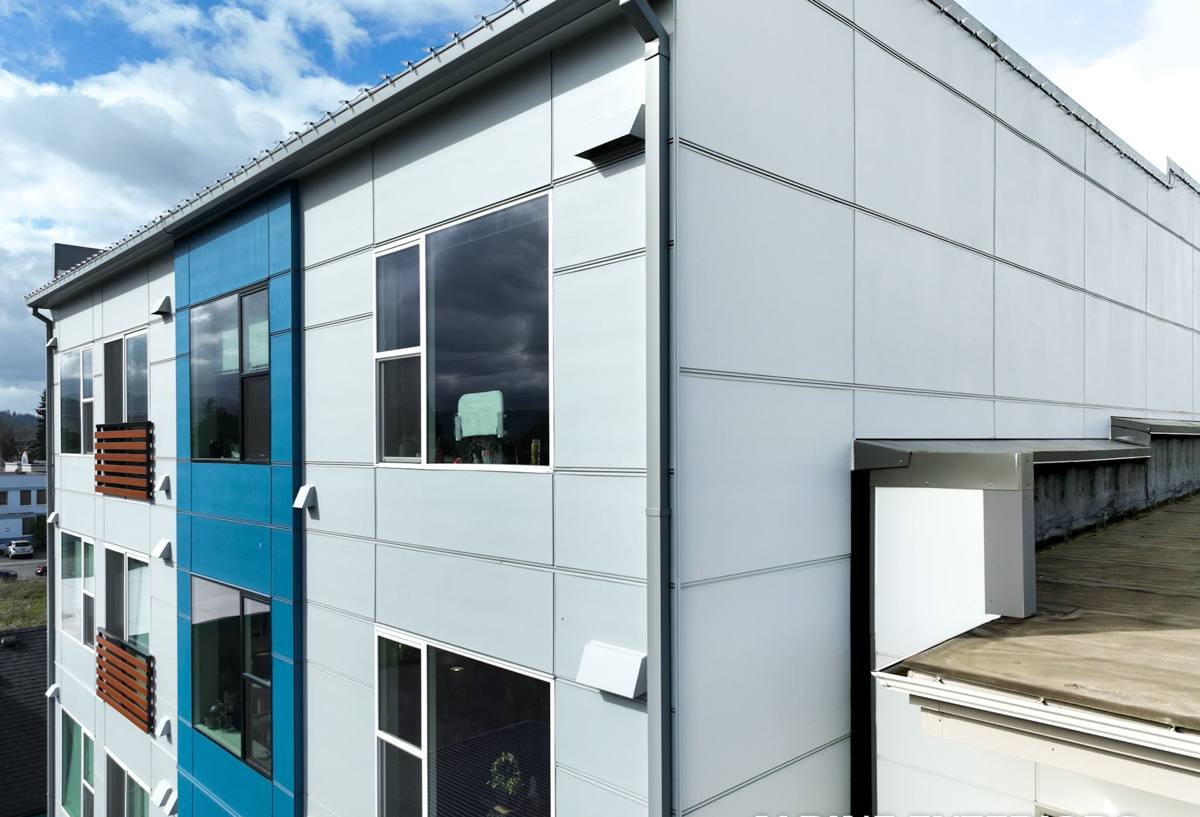
What Salt Air, Driving Rain, and Moss Actually Do to a Window
Salt Air
Airborne salt from the bay settles on frames, hardware, and especially aluminum or lower-grade vinyl components. Over years it accelerates corrosion on screws, hinges, and cranks, and it can pit or dull metal cladding and hardware finishes faster than a few miles inland. It's not usually dramatic — it's a slow wear pattern that shows up as stiff locks, streaked frames, and hardware that needs replacing well before the glass unit itself fails.
Driving Rain
Wind off the water pushes rain sideways into wall assemblies, not just straight down onto sills. That means the flashing and drainage plane behind the window trim matter as much as the window unit itself. A window can be top-quality and still leak into the wall cavity if the head flashing, sill pan, and weather-resistive barrier weren't integrated correctly during installation.
Moss and Sustained Moisture
Whatcom County's wet season is long, and shaded or north-facing walls near the Peace Arch stay damp for extended stretches. Moss and algae growth on siding and trim around windows holds moisture against the wall longer than it would otherwise sit, which is hard on wood trim, caulk joints, and any exposed fasteners. It's a slow-motion problem, but it's a real one for older homes with original wood trim around the openings.
Signs Your Current Windows Are Losing That Battle
- Fogging or a visible haze between the panes of a double-pane unit (failed seal, letting moisture in)
- Soft or discolored wood trim at the sill or jambs, especially on the weather side of the house
- Visible moss, algae, or dark staining on siding directly around the window frame
- Drafts you can feel with a hand near the frame on a windy day
- Locks, cranks, or hardware that have become stiff, corroded, or hard to operate
- Paint or finish peeling from the frame or trim faster than on other parts of the house
- Visible daylight or gaps around the frame from outside
Any one of these on its own isn't necessarily an emergency, but a few of them together usually mean the window or its flashing has already let moisture in and it's a matter of time before it shows up as rot.
What a Correct Installation Actually Involves
The window unit is maybe half the job. The other half is everything around it, and that's where most long-term failures actually start.
Removal and Opening Prep
Old windows come out carefully so we can inspect the rough opening — sill, jambs, and header — for hidden rot or past water damage before anything new goes in. On a coastal property, this step catches problems that a homeowner would otherwise not find until the next window failed too.
Sill Pan and Flashing
A sloped sill pan directs any water that does get past the window back outside instead of into the wall framing. Head flashing and properly lapped weather-resistive barrier integration are what actually stop wind-driven rain from working its way in around the frame — this is the single most common corner cut on lower-budget installs, and it's the one that causes the most expensive repairs down the road.
Air Sealing and Insulation
The gap between the window frame and rough opening gets sealed with backer rod and sealant or low-expansion foam — not stuffed with fiberglass alone, which does nothing for air infiltration. Proper sealing is also what keeps condensation from forming inside the wall cavity during our cooler, damp months.
Hardware and Finish Selection
Given the salt exposure this close to the water, we steer clients toward corrosion-resistant hardware finishes and frame materials that don't depend on paint alone for weather protection. This is a judgment call based on the specific wall's sun and wind exposure, not a one-size answer for every opening on the house.
Frame Material Comparison for This Climate
| Material | How It Handles Salt Air & Rain | Maintenance | Typical Lifespan |
|---|---|---|---|
| Vinyl | Good — won't corrode or rot; performance depends on quality of the extrusion | Low — occasional cleaning | 20–30+ years |
| Fiberglass | Excellent — very stable in temperature swings and moisture, holds finish well | Low | 30+ years |
| Wood | Needs a well-maintained exterior finish or cladding to stand up to driving rain and salt air | High — regular refinishing on exposed sides | Varies widely with upkeep |
| Aluminum | Prone to pitting and corrosion in salt air over time unless it's a marine-grade finish | Moderate | Varies; hardware often fails before the frame |
| Wood-clad (vinyl or fiberglass exterior) | Good — exterior shell protects the wood from direct weather exposure | Low to moderate | 25–30+ years |
There's no single "correct" material for every home — a shaded, wind-exposed wall on the water side of a house has different needs than a sheltered wall on the lee side. We walk through this with you room by room rather than quoting one material for the whole house by default.
How We Approach a Peace Arch Area Window Project
- On-site assessment. We look at each opening individually — sun exposure, wind exposure, existing trim condition, and any visible signs of past water intrusion.
- Honest scope. If trim or sheathing around an opening needs repair before a new window goes in, we tell you before the work starts, not after we've already opened the wall.
- Material and hardware recommendation based on that specific wall's exposure, not a blanket recommendation for the whole house.
- Careful removal with attention to protecting interior finishes and landscaping.
- Sill pan, flashing, and air-sealing done to manufacturer specification — this is the step that determines whether the installation actually performs in our climate.
- Interior and exterior finish work to match the surrounding trim and siding.
- Walkthrough so you know how to operate and maintain the new hardware, and what to watch for going forward.
What Affects the Cost of a Window Installation Here
| Factor | Why It Matters Locally |
|---|---|
| Number and size of openings | Straightforward — more and larger openings mean more material and labor |
| Hidden trim or sheathing repair | Common on older homes near the water once we open up the wall and find past moisture damage |
| Frame material chosen | Fiberglass and quality vinyl cost more up front than budget aluminum but need far less upkeep in salt air |
| Hardware finish | Corrosion-resistant hardware options cost a bit more but hold up much better this close to the bay |
| Access and wall height | Second-story or hard-to-access openings add labor time |
| Existing flashing condition | If prior flashing was done wrong, correcting it properly adds time but prevents repeat failures |
We don't publish a flat per-window price because the honest answer depends on all of the above — but we'll give you a clear, itemized quote after the on-site look, and we'll flag anything that's likely to add cost before we start, not after.
Why a Crew That Already Works This Area Matters
Window installation isn't just a manufacturer's spec sheet applied the same way everywhere. A crew that regularly works homes near Semiahmoo and the Peace Arch already knows which walls in this area tend to take the worst of the wind-driven rain, which older trim details need extra attention, and which hardware finishes actually hold up against the salt air instead of just looking good on install day. That's not something you get from a crew that mostly works drier, inland parts of Whatcom County and treats a coastal job the same as any other.
It also means we're not guessing about how a given product line performs here — we've seen how different frame materials and finishes actually age in this exact climate over years, not just what the marketing brochure claims.
A Simple Checklist Before You Hire Anyone for This Job
- Ask specifically how they handle sill pan flashing and weather-resistive barrier integration — not just "we install windows"
- Ask what hardware finish they recommend for a home this close to salt water, and why
- Ask them to inspect the rough opening for existing rot or moisture damage before quoting a final price
- Get a written, itemized quote rather than a single lump-sum number
- Confirm who's actually doing the work — subcontracted labor versus their own crew
- Ask about the manufacturer's warranty terms and how installation errors affect that warranty
If you're in Semiahmoo, the Peace Arch area, or elsewhere in Whatcom County and want an honest look at your current windows or a quote on replacements, we're glad to come take a look. There's no pressure and no obligation — just a straight assessment of what your home actually needs. Use the form below to request a free estimate.