 Semiahmoo
 Why Blaine Harbor Windows Wear Differently Than Windows Inland
Houses in Blaine Harbor sit close enough to open water that salt-laden air is a constant, not an occasional event. Combine that with Whatcom County's long wet season and the moss growth it feeds, and window assemblies here take a different kind of abuse than the same window would see twenty miles inland. Salt air accelerates corrosion on hardware, fasteners, and unprotected metal components. Driving rain off the water pushes moisture sideways into places a standard installation on a calmer site would never see wind-driven water reach. And a moss season that can stretch most of the year keeps nearby siding, trim, and sill areas damp for long stretches, which matters a lot once a window's exterior sealant starts to fail.
None of this means Blaine Harbor homes need exotic products. It means the installation details — flashing sequence, sealant choice, drainage path, hardware selection — have to be treated as load-bearing decisions, not afterthoughts. A window that's a fine fit for a dry inland lot can underperform here if it's installed the same generic way.
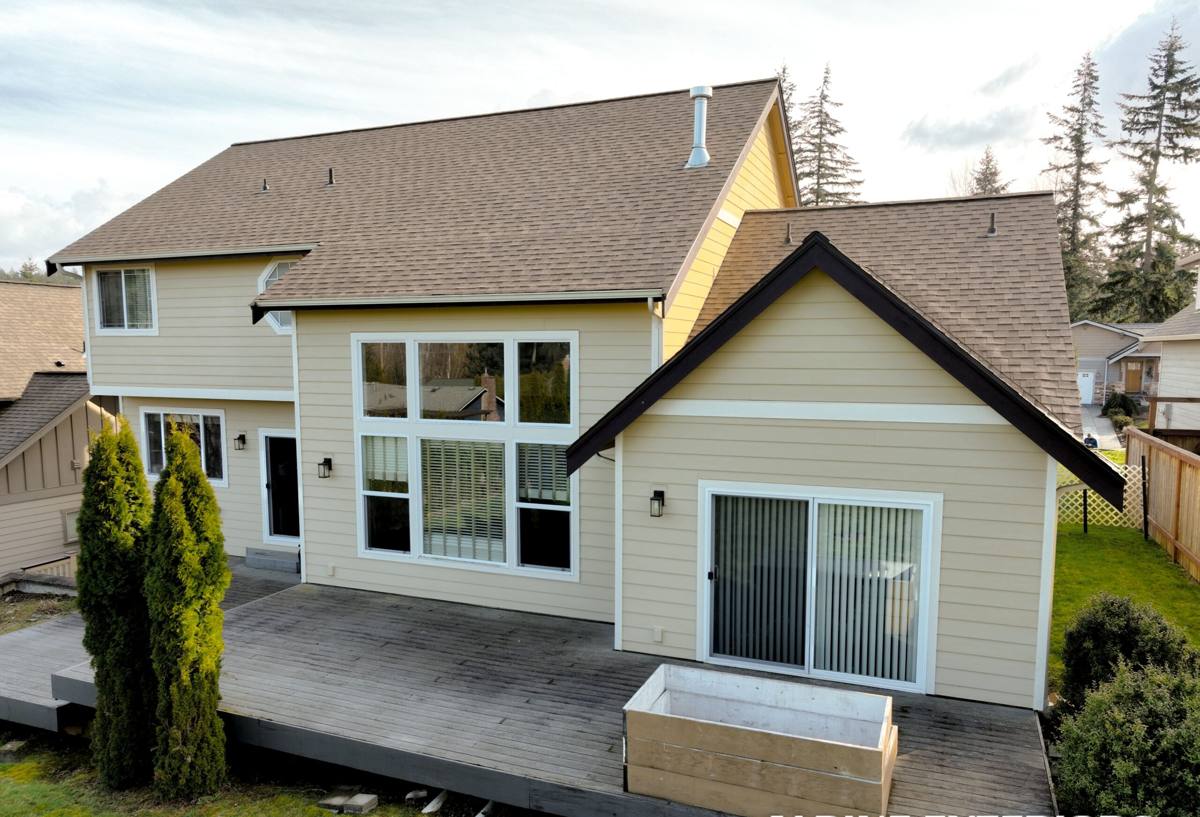
How to Tell a Window Is Losing the Fight
Coastal wear on windows is often gradual, so homeowners tend to notice the symptoms before they connect them to the window itself. Watch for these signs, especially on window exposures facing the water or prevailing wind:
- Hardware — locks, cranks, hinges — that feels gritty, stiff, or has visible white or green corrosion
- Condensation forming between the panes of a double-pane unit, which means the seal has failed
- Soft or discolored wood trim around the frame, or paint that keeps bubbling no matter how often it's redone
- A draft you can feel with your hand near the frame edge on a windy day
- Moss or dark streaking building up on the sill or the siding just below the window
- Difficulty opening or closing the sash, which often means the frame has swollen or warped
Any one of these on its own isn't necessarily an emergency. Several of them together, especially on the same window, usually means moisture has been getting past the seal for a while.
What a Correct Installation Actually Involves
Flashing and Drainage Come First
The window itself is the easy part. What separates a job that lasts from one that fails in five years is what happens around it — the flashing tape, the sill pan, and the path water takes if it ever does get behind the trim. On a site exposed to driving rain off the water, we treat every window opening as if it will see wind-driven moisture at some point, because on this stretch of coast it will. That means a sloped sill pan so any water that reaches the opening drains back out instead of pooling, and flashing that laps correctly with the weather-resistive barrier already on the wall — over at the top, under at the sides and bottom, so gravity is always working with the water, not against it.
Sealant Selection Matters More Here
Not every exterior sealant holds up to constant salt air and UV. We use products rated for the coastal exposure and flexible enough to handle the temperature swings and building movement that happen over years, rather than a generic caulk that looks fine on install day and chalks or cracks within a couple of seasons.
Hardware and Fasteners
Cheap fasteners and hardware corrode faster in salt air, sometimes visibly within a year or two. We spec corrosion-resistant fasteners and hardware for anything installed on a water-facing or wind-exposed elevation, which costs a little more up front and saves a callback later.
Frame Material: What Actually Holds Up on This Coast
There's no single "best" window material for every situation, but some perform more predictably than others in a salt-air, high-moisture environment. Here's how the common options compare for a Blaine Harbor exposure:
| Material | Coastal Performance | Maintenance Burden | Trade-offs |
|---|---|---|---|
| Vinyl | Good — won't corrode or rot, handles moisture well | Low | Frame color and size options are more limited than wood or fiberglass |
| Fiberglass | Very good — dimensionally stable, resists moisture and salt exposure | Low | Higher upfront cost than vinyl |
| Wood (clad exterior) | Fair to good, depends entirely on the cladding and how well it's sealed | Moderate to high | Interior wood look/feel, but exterior cladding seams are a moisture entry point if not detailed well |
| Aluminum | Poor to fair without a marine-grade finish — prone to corrosion and thermal transfer | Moderate | We generally steer clients away from bare aluminum on water-facing walls here as a matter of our own standard, not because it can't be used well elsewhere |
For most Blaine Harbor homes we recommend vinyl or fiberglass on exposures that take direct salt spray or driving rain, and reserve wood-clad units for more protected elevations where a client wants that look and is willing to keep up with the maintenance.
Our Process, Start to Finish
- On-site assessment. We look at each window's exposure individually — a window on the water side of the house gets evaluated differently than one on a sheltered wall.
- Honest scope and estimate. You get a written breakdown of what's being replaced, what materials we're recommending and why, and a price — no pressure to upsell beyond what the house actually needs.
- Removal and opening prep. We check the existing sheathing and framing for hidden water damage before anything new goes in — a surprisingly common find on older coastal homes.
- Sill pan and flashing installation. This is the step that determines whether the window lasts fifteen years or thirty-five, and we don't shortcut it.
- Window set and shim. Level, plumb, and square, with proper insulation in the gap — not just spray foam and hope.
- Exterior sealant and trim. Coastal-rated sealant, trim reinstalled or replaced as needed, and a final check of the drainage path.
- Walkthrough. We show you what was done and answer questions before we consider the job finished.
Why It Matters That the Crew Already Works Blaine Harbor
Window replacement isn't a one-size-fits-all product install — it's a judgment call on every opening about exposure, drainage, and what the wall assembly behind the siding actually looks like. A crew that regularly works Blaine Harbor and the wider Semiahmoo area has already seen how these specific conditions — salt air, wind-driven rain, extended damp seasons — play out on real houses, not just in a manufacturer's spec sheet. That shows up in small decisions: which elevations get upgraded flashing details as a matter of course, which sealants actually hold their flexibility through a Whatcom County winter, and where a wall is more likely to already have hidden water damage worth checking before new windows go in.
It also matters for straightforward logistics — knowing local permitting expectations, being available for a follow-up visit without a long drive, and standing behind the work because we're still going to be working in this neighborhood next year and the year after.
What Affects the Cost
Window replacement pricing varies by opening, so we don't quote a flat per-window number until we've actually looked at the house. In general terms, cost is driven by:
| Factor | Why It Matters |
|---|---|
| Frame material | Vinyl is typically the most economical; fiberglass and wood-clad cost more upfront |
| Window size and configuration | Larger units and operable styles (casement, awning) cost more than fixed picture windows of the same size |
| Exposure and condition of the opening | Water-facing walls or openings with hidden damage need more prep work before install |
| Number of windows done together | Doing several openings in one visit is typically more efficient per-window than one-off replacements |
| Trim and siding repair | If siding or trim around the opening is deteriorated, that repair adds to the scope |
Most straightforward single-window replacements run in the low-to-mid four figures per window; full-house projects vary widely based on the count and condition of the openings. We'll give you real numbers after we've actually looked at your windows, not a phone-quote guess.
Living With Moss Season: Post-Install Care
A correctly installed window doesn't need much upkeep, but a little seasonal attention goes a long way on this coast:
- Rinse salt residue off frames and glass periodically, especially after storms
- Keep gutters and any nearby moss buildup clear of the window head so water isn't sheeting directly onto the frame
- Check exterior caulk lines once a year for cracking or separation and have it touched up before it becomes an entry point
- Operate locking hardware a few times through the winter so it doesn't seize from disuse and corrosion
- Wipe down interior sills if condensation forms, since standing moisture indoors can damage wood trim over time
If your windows in Blaine Harbor are showing any of the wear signs above, or you're just ready to stop fighting drafts and fogged glass, we're happy to come take a look. The estimate is free, there's no pressure, and you'll get a straight answer about what your house actually needs.