 Semiahmoo
 Window Replacement Built for Sumas' Climate
Sumas sits at the edge of Whatcom County, tucked against the Nooksack Valley and the international border, and its windows work harder than most homeowners realize. From the salt air that drifts in off Semiahmoo Bay and the Strait to the driving rain that funnels down through the valley all winter, this corner of the county puts old windows through a slow, steady beating. Add a moss season that can stretch from October into May, and you have the three forces that shorten the life of a window system faster than sun ever could: constant moisture, wind-driven rain that finds every gap, and organic growth that holds water against wood, trim, and seals long after a storm has passed.
A window that was installed correctly ten or fifteen years ago in this climate can still be doing its job. A window that was installed with shortcuts — no flashing, caulk instead of proper sealant, framing left to soak up moisture — usually shows it well before then. Our job on a Sumas window replacement is straightforward: get the water management right first, then worry about the glass and the trim.
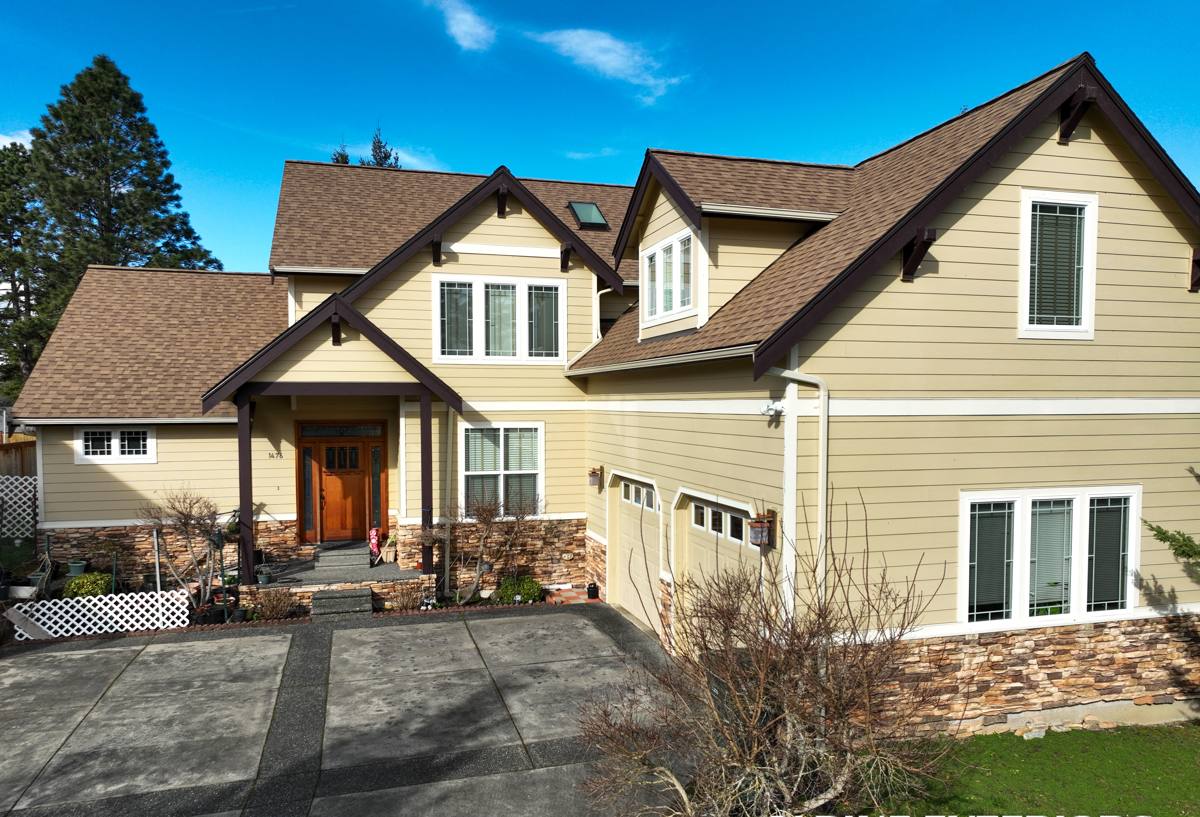
Signs a Sumas Home Needs New Windows
Most homeowners don't call about windows until something is visibly wrong, but by then the damage is often past the glass itself. Here's what we look for, and what you should be watching for between now and your next inspection:
- Fogging or a permanent haze between panes — the seal has failed and the gas fill is gone
- Soft or spongy wood at the sill or bottom corners of the frame
- Moss or dark streaking building up on the frame or exterior trim, especially on north-facing walls
- Windows that are hard to open, won't stay up, or don't latch flush anymore
- Visible daylight or a draft you can feel with your hand along the frame edge
- Peeling paint or bubbling on interior sills, which usually means moisture is already inside the wall cavity
- Noticeably colder rooms near the window, or condensation forming on the glass every morning
Any one of these on its own might just mean a repair. Two or three together, especially on a home that's had its original windows for 20+ years, is usually the point where replacement is the more honest recommendation.
What a Correct Window Replacement Job Actually Involves
Removal and Inspection
Pulling the old window is where a lot gets decided. This is the point where we find out whether the rough opening has hidden rot, whether prior flashing was done right, and whether the sheathing underneath is sound. Skipping a real look here is how a window job ends up sealing moisture damage inside a wall instead of fixing it.
Flashing and Moisture Management
In a climate that gets sustained, wind-driven rain, flashing tape and pan flashing at the sill aren't optional extras — they're the difference between water shedding away from the house and water finding its way behind the siding. We flash every opening so water has a deliberate path out, not just a hope that caulk will hold.
Installation and Sealing
The window gets set plumb, level, and square, shimmed correctly so it isn't relying on the frame to hold its shape, then sealed with proper exterior sealant at the right points — not everywhere, since trapping moisture in the wrong spot causes its own problems. Interior insulation around the frame gets filled without overpacking, which can bow the frame and cause operating issues later.
Trim and Finish Work
Exterior trim gets re-caulked and, where needed, back-primed before it goes back up, since bare wood against a wet wall is exactly how moss and rot get started again in a year or two. Interior trim gets reset clean, and the whole opening gets a final check for operation and squareness before we call it done.
Choosing Materials for Whatcom County Weather
There's no single "best" window material — there's the right material for the exposure, budget, and maintenance appetite of the specific home. Here's how the common options hold up under Sumas conditions:
| Material | Moisture Performance | Maintenance | Notes for This Area |
|---|---|---|---|
| Vinyl | Good — won't rot, handles driving rain well | Low | Most common choice; budget-friendly, wide color range now available |
| Fiberglass | Excellent — very stable in temperature swings | Low | Higher upfront cost, holds paint well if a custom color is wanted |
| Wood-clad | Good exterior, but sensitive to installation quality | Higher — exterior clad still needs joint attention over time | Best interior look; we're selective about where we recommend it given the moss season |
| Aluminum | Poor — conducts cold, prone to condensation | Low | We generally steer homeowners away from it for this climate; it's not a fit for our moisture and comfort standards here |
We don't push one brand or material on every job. What matters more than the material itself is whether it's installed with the flashing and sealing steps above — a premium window installed poorly will fail faster than a mid-range window installed right.
Full-Frame Replacement vs. Insert Replacement
Not every window needs to come out down to the studs. Where the existing frame is sound and square, an insert replacement (new window unit set into the existing frame) is faster and less invasive. Where there's rot, water damage, or the frame has shifted out of square, a full-frame replacement is the only way to actually fix the problem instead of building a new window around an old one that's already failing.
| Factor | Insert Replacement | Full-Frame Replacement |
|---|---|---|
| When it fits | Existing frame is dry, square, and structurally sound | Rot, water intrusion, or a frame that's out of square |
| Labor and time | Faster, less disruption to siding/trim | More labor; siding and trim around the opening are disturbed |
| Access to flashing | Limited — relies on prior flashing being intact | Full access to re-flash the opening correctly |
| Best for | Newer homes with one bad seal, no structural issues | Older homes, or any opening with a moisture history |
We'll tell you honestly which one your home needs rather than defaulting to whichever is easier for us to sell or install.
Our Process, Start to Finish
- Walkthrough and assessment — we look at every window being considered, not just the ones you flagged, and check for signs of moisture behind the trim
- Honest recommendation — insert vs. full-frame, and which materials make sense for the exposure on each side of the house
- Written estimate — clear line items, no vague allowances
- Scheduled installation — one opening at a time, with the home weather-tight at the end of each day
- Flashing, install, and seal — done to the standard outlined above on every unit, not just the "problem" windows
- Final walkthrough — we check operation, sightlines, and cleanup with you before we consider the job finished
Why a Crew That Already Works in Sumas Matters
Window replacement done right depends on understanding the specific way weather hits a specific house. A crew that regularly works this side of Whatcom County already knows what driving rain does to a west-facing wall over a winter, how far moss travels up a shaded elevation, and where valley homes tend to trap moisture differently than homes closer to the water. That's not a marketing point — it changes real decisions on site, like where to add extra flashing, which trim details need back-priming, and which openings are worth a closer look before anyone commits to a scope of work.
It also means callbacks are simple. If a seal needs a second look after the first hard rain of the season, we're not driving in from somewhere unfamiliar with the area — we're already working this part of the county.
Energy Efficiency and Everyday Comfort
Lower energy bills are a real benefit of new windows, but for most Sumas homeowners the bigger day-to-day difference is comfort: fewer cold drafts near seating areas, less condensation fogging the glass on cold mornings, and rooms that hold heat evenly instead of losing it at every window edge. Double-pane units with a modern low-E coating and proper gas fill make the biggest difference in a climate with this much temperature swing between summer afternoons and winter nights. We'll walk you through glass and frame options based on which rooms and exposures matter most to you, rather than a one-size answer for the whole house.
Get a Straight Answer on Your Windows
If you're not sure whether your windows need repair, insert replacement, or a full-frame job, that's exactly what a free estimate is for. We'll take a look, tell you what we actually see, and give you a clear, no-pressure quote — no obligation, no pressure to decide on the spot. Use the form below to get started.