 Semiahmoo
 Why Blaine Harbor Roofs Wear Differently Than Roofs Inland
Blaine Harbor sits close enough to the water that the air itself is part of the maintenance equation. Salt-laden air moves off Semiahmoo Bay and settles on every exposed surface, including your roof. Combine that with Whatcom County's long, wet stretch of fall and winter weather and you get a roofing environment that's noticeably tougher on materials than what you'd find twenty miles inland. Homeowners here don't need a roof that just looks good on install day. They need one that's built to handle salt exposure, sustained rain, and months of shade and moisture that feed moss growth.
We work on roofs throughout Semiahmoo and Blaine Harbor specifically, which matters more than it might sound. A roofing crew that mostly works dry, inland neighborhoods tends to default to standard specs. A crew that works the harbor knows where water actually collects on these homes, which north-facing slopes stay damp longest, and which shingle lines hold up honestly under salt air instead of just on paper.
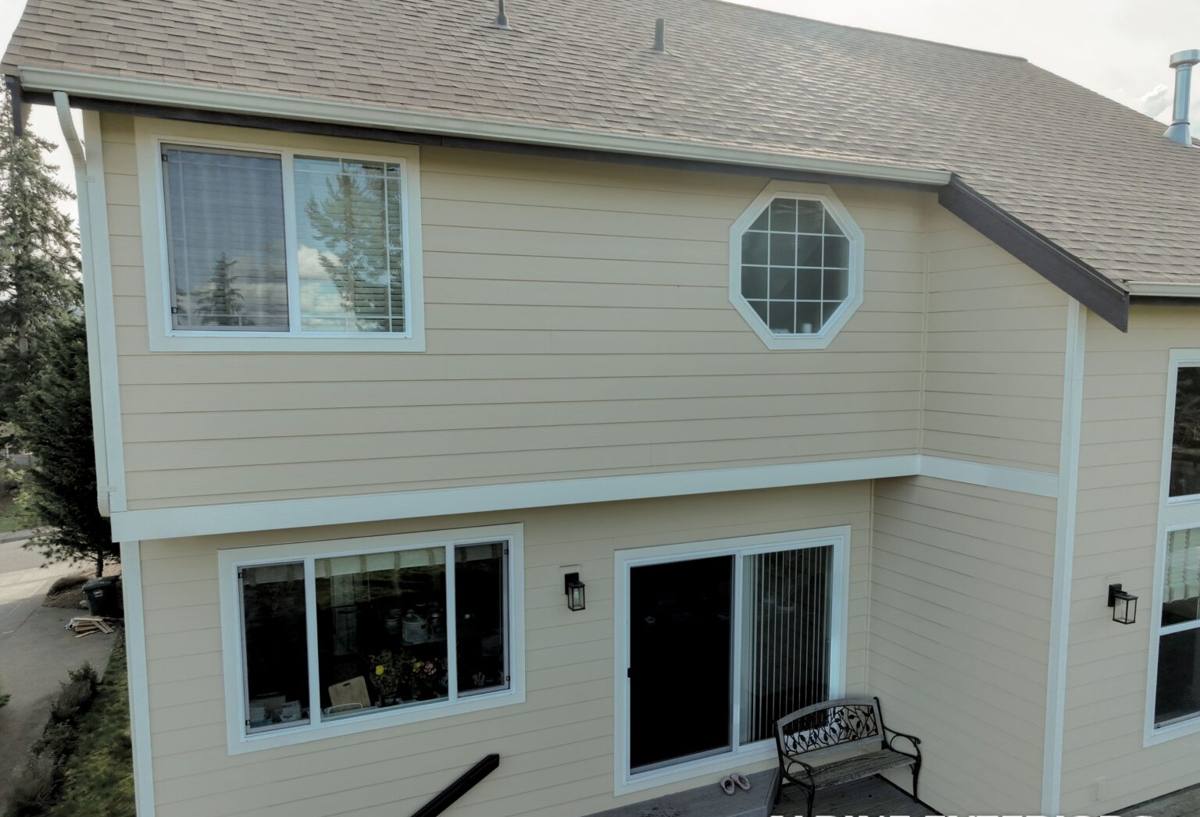
What a Roof Built for Blaine Harbor Actually Needs
Driving Rain and Wind-Driven Water
Storms coming off the water don't always fall straight down. Wind-driven rain pushes water sideways and upward under shingle edges, at ridge caps, and around any roof penetration. A roof that's only built to shed water in calm conditions will eventually leak here, usually at the details rather than the open field of shingles: valleys, chimney flashing, vent boots, and eaves.
Moss and Sustained Moisture
Whatcom County's moss season is long. Shaded, north-facing roof sections that don't get much direct sun can stay damp for weeks at a time, which is exactly what moss needs to establish. Moss holds moisture against the shingle surface, lifts shingle edges as it grows, and shortens the life of the roofing system if it's left unmanaged.
Salt Air and Metal Components
Fasteners, flashing, and vents are often the first parts of a roof to show wear near the water. Salt air accelerates corrosion on lower-grade metal, so the fasteners and flashing used on a Blaine Harbor roof matter as much as the shingle itself.
Choosing the Right Shingle for This Environment
Not every asphalt shingle product is a good fit for a harbor-adjacent home. We steer homeowners toward architectural (dimensional) shingles with algae-resistant granules and a solid manufacturer wind rating, and we're deliberate about the fastener and flashing metals paired with them. A shingle that performs well in a dry climate can still underperform here if the supporting details — underlayment, ventilation, and metal components — weren't specified with salt air and moss in mind.
| Shingle Type | Typical Lifespan (This Climate) | Moss/Algae Resistance | Best Fit |
|---|---|---|---|
| Three-tab (standard) | 15-20 years | Lower unless algae-resistant granules specified | Budget-conscious re-roofs on well-ventilated homes |
| Architectural/dimensional | 25-30 years | Good, especially with algae-resistant (AR) granules | Most Blaine Harbor homes, especially shaded or north-facing roofs |
| Premium/designer | 30+ years | Best available in asphalt category | Homes wanting maximum longevity or a heavier architectural look |
We don't push a single brand as the answer for every roof. The right call depends on your roof's exposure, pitch, existing ventilation, and how much shade the surrounding trees throw across it. We'll walk you through the honest trade-offs, including maintenance expectations, rather than just quoting the highest-margin option.
What a Correct Installation Actually Involves
Asphalt shingle roofing looks simple from the ground, but the parts nobody sees are what determine whether it lasts. A correct install for this climate includes:
- Ice-and-water shield or high-quality synthetic underlayment at eaves, valleys, and around penetrations, not just field felt
- Balanced attic ventilation (intake at the soffits, exhaust at the ridge) so moisture doesn't get trapped under the deck
- Corrosion-resistant flashing and fasteners suited to salt air, not generic hardware
- Properly lapped and sealed valleys, which are the most common failure point in wind-driven rain
- Correct nailing pattern and shingle exposure per manufacturer spec, which directly affects the wind warranty
- Sound decking — any soft or water-damaged sheathing replaced before new shingles go down, not covered over
Skipping any one of these doesn't usually cause an immediate problem. It shows up two or five years later as a leak, premature granule loss, or moss taking hold faster than it should. Cutting corners on a roof is expensive precisely because the mistakes are invisible until they aren't.
Our Process, Start to Finish
1. On-Site Inspection
We walk the roof (or use a drone where pitch or access makes that safer) and check the deck, flashing, ventilation, and current shingle condition. We'll tell you honestly whether you need a full replacement, a repair, or just a maintenance visit.
2. Straightforward Written Estimate
You get a clear scope of work and price before anything is scheduled — no vague allowances, no surprise change orders once the tear-off starts.
3. Tear-Off and Deck Check
Old roofing comes off down to the deck so we can actually see what's underneath. Any soft or rotted sheathing gets flagged and replaced before new underlayment goes on.
4. Installation to Spec
Underlayment, flashing, ventilation, and shingles go in per manufacturer requirements, which is what keeps your product warranty valid and your labor warranty meaningful.
5. Cleanup and Walkthrough
We clean the site, including a magnetic sweep for stray nails, and walk the finished roof with you before calling the job done.
Repair or Replace? Reading the Signs
Not every roofing issue on a Blaine Harbor home means a full replacement. The signs that usually point toward repair versus full replacement are different, and it's worth knowing the difference before you spend money either way.
Usually a Repair
Isolated leaks around a single penetration, a handful of wind-lifted or cracked shingles, flashing that's failed at one chimney or vent, or moss buildup on an otherwise sound roof.
Usually a Replacement
Widespread granule loss, multiple soft spots in the decking, shingles original to a home built more than 20-25 years ago, or recurring leaks in different spots each storm season, which usually means the underlayment and flashing system has broken down system-wide rather than at one point.
What Drives Cost on a Blaine Harbor Roof
| Factor | Why It Matters Here |
|---|---|
| Roof pitch and access | Steeper roofs and limited access near the water add labor time and safety setup |
| Deck condition | Hidden moisture damage under old shingles isn't known until tear-off; sound decks cost less to finish |
| Shingle grade selected | Standard vs. architectural vs. premium changes material cost and expected lifespan |
| Ventilation upgrades needed | Older homes often need added soffit or ridge venting to meet current standards |
| Number of penetrations/valleys | More flashing detail work means more labor, but it's the work that prevents leaks |
| Moss/organic buildup on tear-off | Heavier buildup can mean extra deck inspection and cleanup time |
Maintaining a Shingle Roof in This Climate
A well-installed roof still needs some attention in a climate like ours. A short annual routine goes a long way toward getting the full lifespan out of your shingles:
- Clear gutters and downspouts before the fall rains start, since clogged gutters back water up under the eaves
- Have moss treated or gently removed before it establishes on shaded slopes, rather than after it's thick
- Trim back overhanging branches to reduce shade, debris, and abrasion on the roof surface
- Check flashing around chimneys, skylights, and vents for lifted edges or sealant that's dried and cracked
- Schedule a walk-through inspection every few years, or after any major windstorm, to catch small issues early
Why a Crew That Already Works Blaine Harbor Matters
Roofing specs aren't one-size-fits-all, and a contractor who mostly works drier, inland parts of the region can miss details that matter right on the water. Working regularly in Semiahmoo and Blaine Harbor means we already know which shingle lines and flashing details hold up under salt air, where moss tends to establish first on local roof lines, and how to sequence a tear-off around Whatcom County's rain patterns so your home isn't left exposed. That local track record isn't a guarantee, but it does mean fewer surprises and a spec built for the actual conditions your roof faces, not a generic one pulled off a national template.
If you're weighing a repair, a full replacement, or just want an honest read on how much life is left in your current roof, we're glad to take a look. Use the form below to request a free, no-pressure estimate for your Blaine Harbor home.