 Semiahmoo
 Why Point Roberts Roofs Wear Differently
Point Roberts sits on a small peninsula surrounded on three sides by the Strait of Georgia, which means every roof out here deals with conditions that a typical inland Whatcom County home never sees. Salt-laden air moves off the water and settles on exposed metal, fasteners, and shingle granules year-round. Add in wind-driven rain that comes sideways off the Salish Sea during fall and winter storms, and a long, damp moss season that runs from roughly October through April, and you have a roofing environment that punishes shortcuts fast.
None of this means asphalt shingles are the wrong choice for a Point Roberts home — they remain one of the most practical, cost-effective roofing systems available, and a properly installed shingle roof holds up well here. But "properly installed" is doing a lot of work in that sentence. A roof detailed the same way you'd detail one in a dry climate, or even a milder part of western Washington, tends to show problems years earlier than it should: lifted shingle tabs from wind, moss working under the granule layer on shaded north slopes, and corrosion at fasteners and flashing that were never rated for salt exposure.
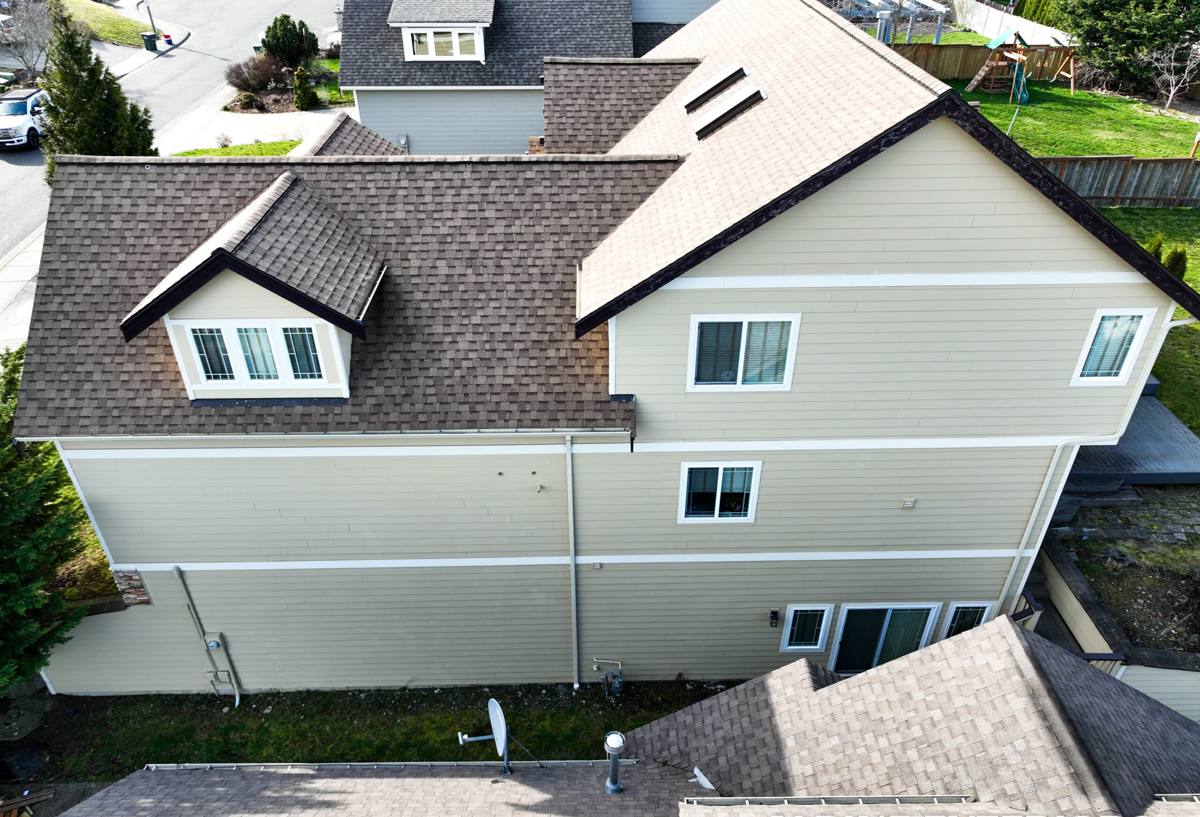
What a Correctly Installed Roof Needs Here
Underlayment and Ice-and-Water Protection
Wind-driven rain doesn't just land on a roof, it gets pushed under shingle tabs and along seams. A synthetic underlayment with good tear strength, combined with a self-adhered ice-and-water shield at eaves, valleys, and any low-slope transitions, gives the roof a real second line of defense instead of relying on the shingles alone to shed every drop.
Corrosion-Resistant Fasteners and Flashing
Standard electro-galvanized nails and thin flashing don't hold up long this close to the water. We use fasteners and flashing metals rated for coastal exposure so the roof isn't losing its grip or rusting through at the exact points — valleys, chimneys, wall intersections — where a failure does the most damage to the structure underneath.
Ventilation That Actually Balances
Damp regional air makes attic ventilation more important, not less. A roof needs balanced intake at the eaves and exhaust at the ridge so moisture isn't trapping itself against the underside of the deck, which is one of the quiet causes of premature sheathing rot and shingle failure from below.
Choosing the Right Shingle for This Climate
Not every asphalt shingle product is built the same way, and the differences matter more in a marine climate than they do further inland. Here's how the common options stack up for a Point Roberts roof:
| Shingle Type | Typical Lifespan | Moss/Algae Resistance | Wind Performance |
|---|---|---|---|
| 3-tab (economy) | 15-20 years | Low unless AR-rated | Adequate, less margin in gusts |
| Architectural/laminate | 25-30+ years | Better mat structure, still needs AR granules | Higher wind ratings available |
| Algae-resistant (AR) laminate | 25-30+ years | Copper- or zinc-infused granules resist staining | Same as standard laminate line |
| Impact-rated laminate | 25-30+ years | Same AR options available | Reinforced mat, strong wind performance |
For most Point Roberts homes, an algae-resistant architectural shingle is the practical middle ground — it costs more upfront than 3-tab, but the combination of a thicker laminated mat and granules that resist moss and algae staining pays for itself in fewer maintenance calls and a longer service life in a climate that's actively working against a roof every month of the year.
The Installation Process, Step by Step
- Tear-off and deck inspection. Old roofing comes off down to the deck so we can check every sheet of sheathing for soft spots, delamination, or moisture damage before anything new goes down. Covering up a bad deck is the single most common shortcut that shortens a new roof's life.
- Deck repair. Any compromised sheathing gets replaced, not patched over.
- Underlayment and ice-and-water shield. Installed per manufacturer spec at all vulnerable areas — eaves, valleys, penetrations, low-slope sections.
- Flashing. New step flashing, valley metal, and counterflashing at chimneys and walls — reused old flashing is a false economy on a coastal roof.
- Shingle installation. Correct nailing pattern and placement per manufacturer requirements, which is what actually determines the wind and workmanship warranty coverage.
- Ridge and intake ventilation. Balanced venting installed or corrected as part of the job, not treated as an afterthought.
- Cleanup and final walk-through. Site cleared, gutters checked for debris, and the finished roof reviewed with the homeowner before we consider the job done.
Moss, Algae, and Salt Air: What Homeowners Should Watch For
Even a well-built roof needs a little homeowner attention in this climate. Moss and algae favor shaded, damp roof sections — typically north-facing slopes or areas under overhanging trees — and left unchecked, moss can lift shingle edges and hold moisture against the roof surface far longer than it should sit there.
- Have moss growth removed gently (never pressure-washed directly against shingles) rather than left to spread
- Keep gutters and valleys clear of needles and debris, which hold moisture and feed moss growth
- Trim back branches that keep sections of the roof shaded and slow to dry after rain
- Check flashing and fastener heads periodically for early signs of corrosion, especially after storm seasons
- Address any lifted or missing shingle tabs promptly — wind-driven rain finds gaps fast
- Confirm attic ventilation isn't blocked by insulation or debris, which limits its ability to dry the deck
Flashing and Ventilation Details That Get Missed
Most shingle roof failures we see don't start with the shingles themselves — they start at the details around them. Chimney flashing that wasn't properly stepped and counterflashed, valley metal that's too narrow for the volume of water this region sees in a heavy rain event, or a ridge vent installed without matching intake at the eaves. Any one of these can undercut an otherwise good shingle installation. It's worth asking any contractor bidding your roof exactly how they're handling flashing at each penetration and how they're balancing intake and exhaust ventilation, rather than just asking what shingle brand they use.
Why Point Roberts' Location Matters for Scheduling
Point Roberts is a U.S. exclave — the only practical way to get materials, equipment, and crews onto the peninsula by road is through a Canadian border crossing. That's a real logistical factor for roofing work here, not a minor detail. Material orders need to be planned with border timing in mind, and a crew that already routes jobs through Point Roberts regularly has that logistics worked out, rather than treating it as a special trip that gets pushed to the bottom of the schedule. It also means we're not guessing at how this coastal, wind-exposed site differs from a typical Whatcom County job inland — we've already accounted for it in how we bid and schedule the work.
What Affects the Cost of a Shingle Roof Here
| Cost Factor | Why It Matters |
|---|---|
| Roof size and pitch | More surface area and steeper pitches take more labor and safety setup |
| Number of existing layers | Tear-off of multiple old layers adds disposal and labor time |
| Deck condition | Rotted or soft sheathing found during tear-off requires replacement before shingles go on |
| Flashing complexity | Multiple valleys, chimneys, or wall intersections mean more custom metal work |
| Shingle grade chosen | 3-tab vs. architectural vs. impact-rated changes material cost per square |
| Ventilation upgrades | Adding or correcting ridge and intake venting is often worth doing while the roof is open |
We don't quote a Point Roberts roof off a generic per-square number pulled from a mainland job. Pitch, tree cover, existing deck condition, and how much flashing and ventilation work the roof actually needs all get looked at directly before we give a number, so the estimate reflects the real job rather than a rough average.
Why Hiring a Crew That Already Works Point Roberts Matters
A shingle roof is only as good as the details a crew is willing to get right when nobody's checking — the nailing pattern, the flashing laps, the underlayment coverage at the eaves. In a climate that sends wind-driven rain sideways and grows moss on anything shaded and damp for six months of the year, those details are the difference between a roof that lasts its full rated life and one that starts showing problems in year eight. A crew that regularly works Point Roberts and the surrounding Whatcom County coastline already knows which details matter most for this specific exposure, has already solved the border-crossing logistics for getting materials and equipment on site, and isn't learning the local climate on your roof.
If you're weighing a repair against a full replacement, or just want a straight answer on what condition your current roof is really in, we're glad to take a look. Reach out for a free, no-pressure estimate — the form below gets you started.