 Semiahmoo
 Siding That Has to Work Year-Round in Laurel
Laurel sits inland enough from the water to feel like it should be sheltered, but homes here still take on the same weather pattern that defines the whole Semiahmoo area: salt-tinged air moving off the bay, long stretches of driving rain through fall and winter, and short, damp daylight hours that let moss and algae get a foothold on anything that stays wet too long. Whatcom County's siding doesn't get a dry season to recover in. It gets wet, stays wet, dries slowly, and repeats that cycle for eight or nine months a year.
That's the environment we design every Laurel installation around. Fiber cement siding, installed correctly, is built to take that cycle without swelling, rotting, or feeding the moss and mildew that climb the shaded and north-facing walls of so many houses in this area. This page is specifically about fiber cement siding for Laurel homes — what the local climate demands from it, what a correct installation actually involves, and why the crew doing the work matters as much as the product itself.
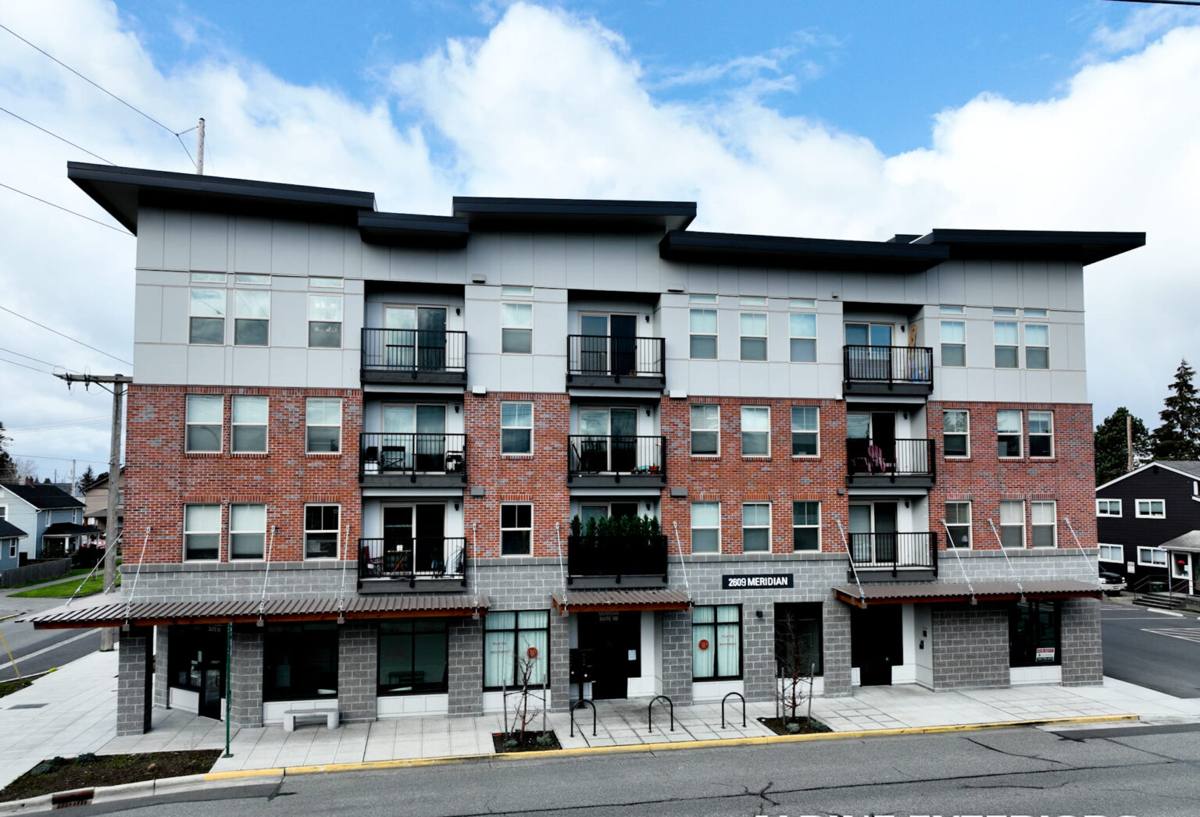
What Salt Air and Moss Season Actually Do to Siding
Every siding material fails in its own way out here, and it's worth understanding what you're up against before you pick one.
Salt Air
Airborne salt is corrosive to exposed metal fasteners and trim, and it accelerates the breakdown of finishes that aren't formulated to resist it. Paint film on wood or engineered wood siding chalks and fades faster near the coast. Vinyl can become brittle and discolored sooner than the manufacturer's brochure suggests. None of this is dramatic — it's a slow, steady wear pattern that shows up as a house that looks tired five or six years before it should.
Driving Rain
Wind-driven rain doesn't just fall on a wall, it gets pushed sideways into every seam, lap, and penetration. Siding systems that rely on caulk and paint film as their primary defense — rather than proper flashing, drainage gaps, and water-resistant substrate — start to let moisture behind the cladding. Once water gets behind siding here, the region's humidity and mild temperatures mean it rarely dries out fast enough to prevent rot or mold before the next storm arrives.
The Long Moss Season
Whatcom County's moss and algae season isn't really a season — it's most of the year on shaded or north-facing walls, under eaves, and anywhere airflow is limited. Moss holds moisture directly against the siding surface, which is a problem for absorbent materials like untreated wood or fiberboard products, and it's simply unattractive on any material if the surface finish doesn't resist staining.
Why We Install James Hardie Fiber Cement — and Nothing Else
We install James Hardie fiber cement siding exclusively. We don't install vinyl, LP SmartSide, Cemplank, Allura, or primed wood siding, and that's a deliberate standard, not an oversight. Each of those alternatives has legitimate strengths, but each also has a trade-off — moisture sensitivity, installation tolerance, finish durability, or long-term maintenance burden — that we're not willing to put our name behind on a coastal Whatcom County home. Fiber cement is cement, sand, and cellulose fiber. It doesn't swell when it absorbs moisture, it won't feed rot fungus the way wood-based products can, and it's non-combustible.
James Hardie specifically engineers its HardieZone products by climate region, and the Pacific Northwest falls into their wetter, moisture-intensive HZ5 engineering zone. That means the product formulation and installation specifications are built around exactly the conditions Laurel deals with — not a generic national spec. The factory-applied ColorPlus finish is baked on under controlled conditions and backed by its own finish warranty, so it holds color and resists the fading and chalking that salt air accelerates on field-painted materials.
Hardie Line Options for Laurel Homes
| Product Line | Best Use | Why It Fits Laurel |
|---|---|---|
| HardiePlank Lap Siding | Most full-house re-sides | Classic horizontal lap sheds driving rain when lapped and flashed correctly |
| HardiePanel Vertical Siding | Accent walls, gables, modern facades | Clean vertical lines drain quickly and resist moss buildup better than deep-groove textures |
| HardieShingle | Craftsman and cottage-style accents | Adds texture without the moisture risk of real wood shingles in a wet climate |
| HardieTrim | Corners, fascia, window and door trim | Matches the plank system so trim doesn't rot out before the field siding does |
What a Correct Fiber Cement Installation Involves
Fiber cement is only as good as the installation behind it. It's a forgiving material in terms of durability, but it's unforgiving of shortcuts in the details that keep water out — and those details are exactly where a lot of substandard installs fail.
- Weather-resistant barrier installed correctly behind the siding, lapped shingle-style so water sheds downward and outward, not into seams
- Proper flashing at every window, door, and roof-to-wall intersection — the single most common failure point on poorly installed siding jobs
- Correct fastener type, spacing, and embedment depth per James Hardie's HZ5 installation specification, not a generic nailing pattern
- Minimum clearance maintained between the siding's bottom edge and roofing, decks, and grade so splash-back moisture can't wick into the material
- Butt joints and panel seams sealed or flashed per spec rather than relying on caulk alone as the only water barrier
- Adequate drainage gap behind the siding so any moisture that does get behind the cladding can drain and evaporate instead of sitting against the wall sheathing
- Factory-cut edges primed or field-touched where the ColorPlus finish is cut through, so raw edges aren't left exposed to weather
Skip any one of these and you can end up with a wall that looks fine from the street for a couple of years while moisture works its way in behind it — a problem that's expensive to find and expensive to fix once it's hidden behind finished siding.
Our Process for a Laurel Siding Project
- On-site assessment. We walk the exterior, check the condition of the existing siding, sheathing, and trim, and look specifically at drainage patterns, shaded moss-prone walls, and any areas showing prior water intrusion.
- Product and color selection. We help you choose the right Hardie line, plank width, and ColorPlus finish for your home's style and exposure, factoring in which walls take the most weather.
- Written scope and estimate. You get a clear, itemized plan before any work starts — no surprise change orders for work that should have been scoped upfront.
- Tear-off and substrate check. Old siding comes off and we inspect the sheathing underneath for hidden rot or moisture damage before anything new goes on.
- Weather barrier and flashing installation. This is the step that determines whether the siding lasts twenty years or five, and it's where we spend the most care.
- Siding installation to HZ5 spec. Proper fastening, gapping, and lapping, with trim and accessories matched to the system.
- Final walkthrough. We review the finished work with you and address anything before we call the job complete.
Cost Factors for Fiber Cement Siding in Laurel
Every home is different, and we don't quote a price without seeing the house, but these are the variables that actually move the number:
| Factor | Why It Matters |
|---|---|
| Home size and wall complexity | More corners, gables, and dormers mean more cutting, flashing, and labor |
| Substrate condition | Rotted sheathing found during tear-off adds repair work before new siding can go on |
| Product line and finish | Plank vs. panel vs. shingle accents, and premium ColorPlus finishes, price differently |
| Trim and accessory scope | Full trim replacement costs more than reusing sound existing trim |
| Access and site conditions | Tight lot lines, slopes, or landscaping that limits staging can add labor time |
As a rough range, most full-house fiber cement re-sides in this region land somewhere in the mid five figures for an average single-family home, with smaller projects and accent work priced well below that. We'll give you an exact number after we've actually looked at your walls.
Living With Fiber Cement Through Moss Season
Correctly installed Hardie siding is low-maintenance, not no-maintenance. The ColorPlus finish resists moss staining far better than raw or field-painted materials, but shaded north walls and areas under overhangs can still collect surface growth over time, the same as a roof or fence would. A periodic soft wash — never a high-pressure blast aimed at seams and edges — keeps the finish looking like it did on install day. Because the color is baked into the factory finish rather than painted on site, occasional cleaning doesn't strip or dull it the way pressure washing can wear down field-applied paint.
Why the Crew Matters as Much as the Product
James Hardie siding installed to spec by an experienced crew and the same siding installed by someone unfamiliar with HZ5 detailing can look identical for the first year or two — the difference shows up later, in whether water stays out. A crew that already works Laurel and the wider Semiahmoo area knows which walls in this microclimate take the worst of the driving rain, which sides collect moss fastest, and how local permitting and inspection typically go, so there are fewer surprises mid-project. That local familiarity is part of what you're paying for, not a separate line item — it's baked into how the job gets planned and executed from the first walkthrough.
If you're weighing a siding replacement or repair in Laurel, we're happy to walk your property, look at what's actually going on with your current siding, and give you a straightforward, no-pressure estimate for a James Hardie fiber cement system built for this coastline. Use the form below to get started.