 Semiahmoo
 Building Decks for Bellingham's Marine Climate
Bellingham sits on Bellingham Bay in Whatcom County, and that location shapes what a deck has to survive here. You get salt-tinged air off the water, long stretches of driving rain especially from fall through spring, and a moss season that can run most of the year if a deck doesn't get enough sun or airflow. A deck built to a generic national spec — the kind you'd see in a big-box how-to guide — will often look fine for a year or two and then start showing problems: soft spots at the ledger board, rust bleeding from fasteners, green film on the boards by December. A deck built for this specific climate looks the same on day one, but it's put together differently underneath.
This page covers what we actually do differently for a custom deck build or replacement in Bellingham, and what to look for whether you hire us or someone else.
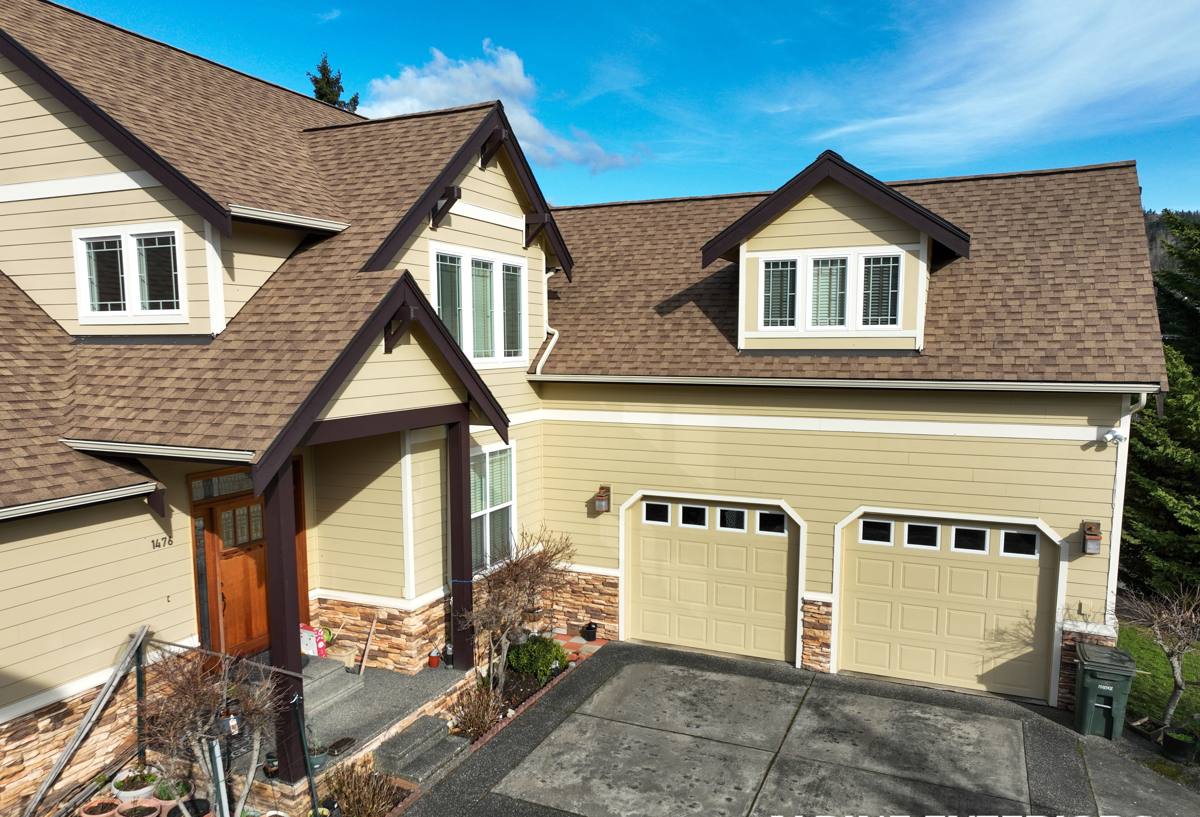
What Salt Air, Rain, and Moss Do to an Unprotected Deck
Three climate factors do most of the damage to decks in this area, and they compound each other:
- Salt air accelerates corrosion on any exposed metal — screws, joist hangers, post bases, railing brackets. Standard zinc-coated fasteners can start rusting within a few seasons this close to the water, and once a fastener corrodes it loses holding strength long before it looks obviously bad.
- Driving rain doesn't just fall straight down here — wind pushes it sideways and up under rail caps, ledger flashing, and stair stringers. Any gap or seam that would be a non-issue in a dry climate becomes a point of water intrusion in Whatcom County.
- Moss and mildew take hold wherever wood or composite decking stays damp and shaded. Beyond looking bad, moss holds moisture against the board surface, which shortens the life of wood decking and can make any decking material slick and dangerous underfoot.
None of these are dramatic, one-time failures. They're slow, cumulative problems, which is exactly why they get missed during a build and only show up two or three years later — often after the workmanship warranty has expired.
Choosing Decking Material for This Climate
There's no single "right" decking material for Bellingham — it depends on your budget, how much upkeep you want to do, and how much sun the deck actually gets. Here's how the common options actually perform locally, not just on paper.
| Material | How it handles our climate | Maintenance reality |
|---|---|---|
| Cedar | Naturally rot- and insect-resistant, ages to a silver-gray if left unfinished; needs sealing to resist moss and moisture staining | Re-seal or re-stain every 2-3 years in this rainfall; more often on shaded, north-facing decks |
| Pressure-treated fir/pine | Budget-friendly structural option; the treatment resists rot but the surface still needs a sealed finish to shed water and resist moss | Annual inspection, re-sealing every 1-2 years, watch for checking and warping |
| Composite (capped) | Resists moisture absorption and won't rot; capped composites resist moss better than early uncapped versions but still need cleaning in shaded spots | Periodic washing, no sealing or staining required |
| PVC decking | Fully synthetic, essentially immune to moisture damage and insects; performs well in damp, low-sun locations | Occasional washing; higher upfront cost |
If your deck sits under trees or on the north or east side of the house where it doesn't get much direct sun, we'll usually steer you toward composite or PVC, or at minimum a cedar deck with a real maintenance commitment — those low-sun, high-shade spots are where moss and mildew take hold fastest in this area.
Structural Details That Matter More Here Than Elsewhere
The visible decking is maybe a third of what determines how long a deck lasts in Bellingham. The parts underneath and behind the finish surface do the real work:
Ledger flashing
Where the deck attaches to the house is the single most common failure point in wet Pacific Northwest climates. We flash the ledger board properly — house wrap integration, flashing tape, and a drip edge — so wind-driven rain can't work its way behind the siding and rot the rim joist. This is invisible once the deck is built, which is exactly why it's the detail corners get cut on.
Fasteners and hardware
Given the salt air off the bay, we use stainless steel or high-grade coated fasteners and hardware rated for coastal or treated-lumber exposure, not the cheapest zinc-coated screws off the shelf. It costs a little more upfront and saves you rust streaks and weakened connections down the road.
Joist protection
Joist tape over the top of each joist keeps standing water from soaking into end grain and fastener holes — the spots that rot first on an unprotected deck frame.
Footings and drainage
Footings are set below frost depth per code and, just as important, graded so water doesn't pool against posts. On sites with heavier rain runoff, we'll route drainage away from the footings rather than let it sheet across the yard and sit at the base of every post.
Airflow underneath
Low decks with poor ventilation underneath trap moisture and grow moss faster on the boards above. Where the site allows it, we build in enough clearance and skirting airflow to let the underside dry out between rains.
Our Deck-Building Process
Whether it's a new custom deck or a full replacement of an aging one, the process looks the same:
- On-site consult. We look at sun exposure, drainage, existing structure (for replacements), and how you actually plan to use the space, then talk through material options honestly — including what we wouldn't recommend for your specific spot and why.
- Design and quote. You get a clear scope: dimensions, material, railing style, stairs if needed, and a firm price — no vague allowances that turn into surprise change orders.
- Permitting. We handle the permit application and inspections required for the project.
- Demo (if replacing). Old decking, framing, and any hidden rot get removed and hauled off; we don't build new decking over a frame we haven't inspected.
- Framing and flashing. Footings, ledger flashing, joist layout, and joist tape go in first — the parts that determine whether the deck lasts 10 years or 25.
- Decking, railing, and finish. Boards, railings, stairs, and any finish or sealant get installed to the manufacturer's spec, including proper fastener spacing for the material's expansion and contraction in our wet-to-dry seasonal swings.
- Final walkthrough. We go over the finished deck with you, including what maintenance it needs and how often.
Permits and Code in Whatcom County
Most new decks and many deck replacements in Bellingham and unincorporated Whatcom County require a building permit, particularly once you're above a certain height off grade or attaching structurally to the house. Requirements vary by exact scope and jurisdiction, so we confirm what's needed for your specific project and pull the permit as part of the job rather than leaving that step to you. Skipping a required permit isn't worth the risk — it can complicate a future home sale and, more practically, means nobody but your contractor ever checked the framing and footings.
Maintaining Your Deck Year-Round
A well-built deck in this climate still needs some seasonal attention. What that looks like depends on the material, but a general Whatcom County maintenance checklist covers:
- Sweep leaves and debris off the deck regularly in fall — trapped wet leaves are where moss gets its first foothold
- Rinse or scrub visible moss or algae before it spreads, especially on shaded boards
- Check and clear gaps between boards so water drains through instead of pooling
- Inspect railing connections and stair stringers once a year for movement or rust bleed at fasteners
- Re-seal or re-stain wood decking on the schedule appropriate to its exposure — sooner on shaded, north-facing sections
- Confirm downspouts and grading near the deck still direct water away from footings and posts
Why Hire a Crew That Already Works Bellingham
A deck built by a crew that mostly works drier inland climates will often be structurally sound but missing the details that matter specifically here — the ledger flashing detail, the fastener grade, the material choice for a shaded, salt-air site. Those aren't things you can easily inspect once the deck is finished and the boards are down. A crew that regularly builds and repairs decks around Bellingham and the rest of Whatcom County has already seen which details fail first in this climate, and builds to prevent those failures from the start rather than fixing them as warranty callbacks.
What a Custom Deck Typically Costs
Deck pricing depends heavily on size, material, height off grade, railing style, and site access, so treat these as broad planning ranges rather than a quote:
| Factor | Why it moves the price |
|---|---|
| Decking material | Pressure-treated lumber costs the least upfront; cedar costs more but needs ongoing finish work; composite and PVC cost more upfront but need little maintenance |
| Height and footings | A deck more than a few feet off grade needs deeper footings, more framing, and often stairs and guardrails, which adds labor and material |
| Railing style | Basic wood or metal-baluster railing costs less than cable rail or glass panel systems |
| Site access and demo | Tight side-yard access or removing an existing failing deck adds labor time before the new build even starts |
| Roof or cover addition | A covered deck or pergola adds structural requirements and cost beyond an open deck |
We'll always walk your specific project and give you a real number rather than a rough per-square-foot estimate that ignores your site's particular challenges.
If you're planning a new deck or need to replace one that's showing its age, we're glad to take a look and put together a free, no-pressure estimate — just fill out the form below.