 Semiahmoo
 Siding Installation Built for Bellingham's Climate
Homes in and around Bellingham deal with a specific combination of weather stress that a lot of siding products simply weren't built for: salt-laden air moving in off the water, long stretches of driving rain, and a moss season that can stretch from fall through spring. Any siding installation in this part of Whatcom County has to account for all three at once, not just one of them. That's the lens we use on every Bellingham job — not "what siding looks good," but "what siding, installed which way, actually holds up here."
We install James Hardie fiber cement siding exclusively. This page walks through what Bellingham homes specifically need from a siding installation, what a correct install actually involves, and how our process works from first look to final walk-through.
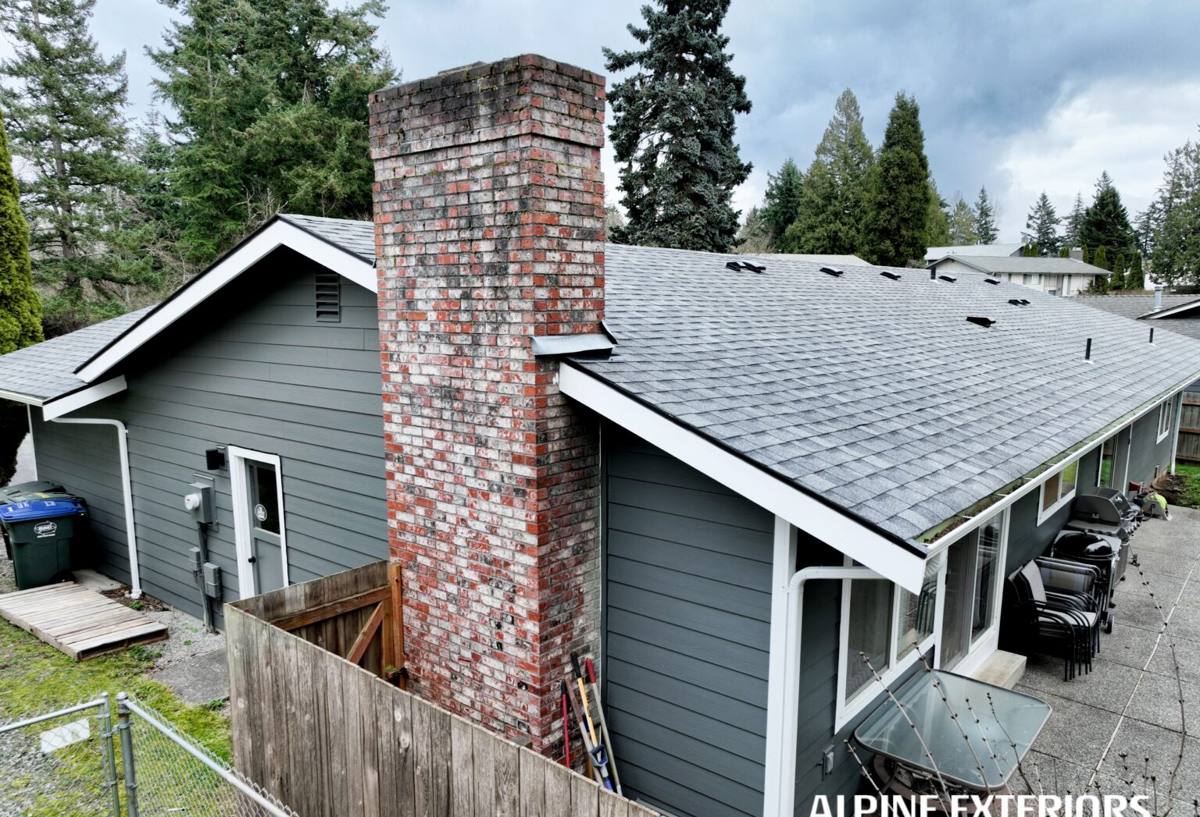
What Bellingham's Climate Actually Does to Siding
Salt Air
Proximity to Semiahmoo Bay and the greater Salish Sea means airborne salt is a constant, low-grade factor on exterior surfaces here — more so than most homeowners realize until they see how fasteners, trim, and lower-quality siding materials age over a decade near the water. Salt exposure accelerates corrosion on unprotected metal and can degrade some engineered wood products faster than the same product would age inland.
Driving Rain
Whatcom County storms don't just drop rain straight down — wind off the water pushes it sideways into wall assemblies, which puts real pressure on siding laps, seams, and any point where water can find a way behind the cladding. A siding system is only as good as its weakest joint, and driving rain finds the weak joint eventually.
Extended Moss Season
Cool, damp, and shaded conditions for much of the year create ideal moss and algae growth conditions on north-facing walls, under eaves, and anywhere airflow is limited. Moss holds moisture against the siding surface long after a storm has passed, which is exactly the kind of sustained dampness that degrades poorly protected siding over time.
None of these three factors alone would be a huge problem. Together, over 15-20 years, they're why some siding jobs in this area look tired well before their expected lifespan — and why the choice of material and the quality of the install both matter more here than they would in a drier, calmer climate.
Why We Install Only James Hardie Fiber Cement
James Hardie fiber cement is a cement-based composite, not wood or wood-derived material. That distinction matters directly for the three climate stresses above:
- Salt air: Fiber cement doesn't corrode, and Hardie's ColorPlus factory-applied finish is engineered to resist fading and hold its bond in coastal-adjacent conditions better than field-applied paint on wood-based siding.
- Driving rain: Fiber cement doesn't swell or warp when it takes on moisture at a lap joint the way some engineered wood products can, which keeps the reveal lines straight and the seams tight over time.
- Moss and sustained dampness: Fiber cement is non-combustible and dimensionally stable, and it doesn't feed fungal growth the way wood fiber can. It won't eliminate moss growth on the surface — nothing does — but it won't break down structurally from prolonged damp contact the way some materials can.
We don't install vinyl, LP SmartSide, Cemplank, Allura, primed spruce, or cedar. That's a deliberate standard, not a sales pitch — we've made a professional call that Hardie's material properties, factory finish, and warranty structure are the right fit for what Whatcom County homes go through year after year, and we'd rather build our whole process around one product we trust completely than offer five and hope the homeowner picks the right one.
What a Correct Siding Installation Actually Involves
The material is half the equation. The other half is installation, and this is where most siding problems actually originate — not from the product itself, but from shortcuts taken putting it on the wall. A correct Hardie installation in a climate like Bellingham's includes:
Water Management Behind the Siding
Every wall assembly needs a drainage plane — a weather-resistant barrier and, ideally, a rainscreen gap — so that any moisture that does get past the siding surface has somewhere to go instead of sitting against the sheathing. This matters more here than in drier climates because driving rain increases the odds that water reaches the barrier in the first place.
Flashing at Every Penetration
Windows, doors, hose bibs, light fixtures, vents — every penetration through the siding is a potential entry point for water if it's not flashed correctly. This is detail work that doesn't show up in a finished photo but determines whether the wall stays dry for the next 20 years.
Correct Fastening and Clearances
Hardie specifies fastener type, spacing, and placement for a reason — get it wrong and you compromise both the warranty and the physical performance of the siding. Ground clearance and clearance from roof lines, decks, and other surfaces also need to follow manufacturer specs so moisture and debris don't sit against the bottom edge of the siding.
Caulking and Joint Treatment
Butt joints and trim intersections need to be treated correctly — sealed where sealing is called for, left to breathe where it isn't. Over-caulking is as much of a problem as under-caulking; it can trap moisture instead of letting it escape.
Painting and Touch-Up (When Needed)
ColorPlus finished boards come factory-painted and don't need field painting under normal circumstances, which is one less place for a paint job to fail in coastal air. Cut edges get sealed with Hardie-approved products during installation to maintain that protection at every seam.
Our Bellingham Installation Process
| Step | What Happens |
|---|---|
| 1. On-site assessment | We walk the exterior, check existing siding and sheathing condition, note problem areas (north-facing walls, low-clearance sections, past water intrusion signs). |
| 2. Written estimate | Scope, product line, color, and cost broken out clearly — no vague allowances. |
| 3. Tear-off and prep | Remove old siding, inspect and repair sheathing as needed, install or verify the water-resistive barrier. |
| 4. Flashing and drainage plane | Flash every penetration, install rainscreen furring where called for, before a single board goes up. |
| 5. Hardie installation | Boards, panels, or shingle-style siding installed to manufacturer fastening and clearance specs. |
| 6. Trim and joint finishing | Corner trim, joint treatment, and caulking done to spec — not "close enough." |
| 7. Final walk-through | We review the finished job with you before calling it complete. |
Why a Crew That Already Works Bellingham Matters
Siding installation is a skill that improves with local repetition. A crew that has already installed Hardie siding on homes exposed to Semiahmoo Bay's wind and moisture patterns knows, without guessing, which walls need extra attention to flashing, which orientations tend to hold moss, and where clearance issues tend to show up on older Whatcom County homes. That's not something a crew from outside the region picks up on their first job here — it's the kind of judgment that only comes from doing the work in this specific climate, repeatedly.
It also means we're not learning the region's building patterns on your project. Older homes near the water sometimes have sheathing or framing quirks from past decades of construction; a crew unfamiliar with the area can miss those until they're already mid-install.
Signs Your Current Siding May Be Failing
Before deciding whether a full siding installation makes sense, it helps to know what to actually look for:
- Soft or spongy spots when you press on the siding, especially near the bottom edge
- Persistent moss or algae staining that returns quickly after cleaning
- Visible warping, bowing, or gaps at seams and joints
- Paint that's peeling or bubbling rather than just fading
- Interior signs — musty smell, discoloration, or soft drywall near exterior walls
- Siding that's original to a home built more than 20-25 years ago with no major upgrades since
Any one of these is worth a look. Several together usually means the siding is past the point where patching makes sense.
Cost Factors for a Bellingham Siding Project
Every home is different, and we don't quote sight-unseen, but the factors that actually move the number on a Bellingham job are consistent:
| Factor | Why It Matters |
|---|---|
| Home size and wall complexity | More square footage and more corners, gables, and trim details mean more labor. |
| Existing siding condition | Tear-off, sheathing repair, and moisture damage remediation add scope beyond the siding itself. |
| Siding profile chosen | Lap siding, shingle-style, and panel systems carry different material and labor costs. |
| Color and finish | Factory ColorPlus finishes vs. field-painted primed product affect both cost and long-term maintenance. |
| Site access | Tight lots, multi-story sections, or difficult staging areas affect labor time. |
We provide a detailed, itemized estimate after the on-site assessment — not a rough guess based on square footage alone.
Maintenance After Installation
A correctly installed Hardie system in Bellingham's climate is low-maintenance, not no-maintenance. A simple annual rhythm keeps it performing:
- Rinse the exterior annually, focusing on north-facing and shaded walls where moss tends to establish
- Keep gutters clear so overflow doesn't run down and sit against siding sections below
- Trim back vegetation that holds moisture against exterior walls
- Check caulking at trim joints every few years and touch up as needed
- Address any impact damage or cracked boards promptly rather than letting moisture find its way in
None of this is heavy work, but skipping it in a climate this damp shortens the useful life of any siding system, Hardie included.
Get a Free Estimate
If you're weighing a siding replacement for a Bellingham-area home, we're glad to walk the exterior with you, point out what we see, and put together a clear, itemized estimate — no pressure, no obligation. Use the form below to get started.