 Semiahmoo
 Why Birch Bay Roofs Wear Differently Than Roofs Inland
A roof in Birch Bay does a different job than a roof twenty miles inland. Sitting this close to the water means salt-laden air moving across every shingle, flashing seam, and exposed fastener almost year-round. Add Whatcom County's long wet season, driving rain that comes in sideways off the water during winter storms, and a moss season that can stretch from fall through spring, and you have a roof that ages faster than the manufacturer's warranty chart assumes. None of this means a roof here is doomed to fail early. It means repairs have to account for what's actually attacking the roof, not just patch the spot that's leaking today.
We work on homes throughout the Semiahmoo and Birch Bay area regularly, and the failure patterns repeat. Understanding them is most of what separates a repair that lasts from one you'll be paying for again in two years.
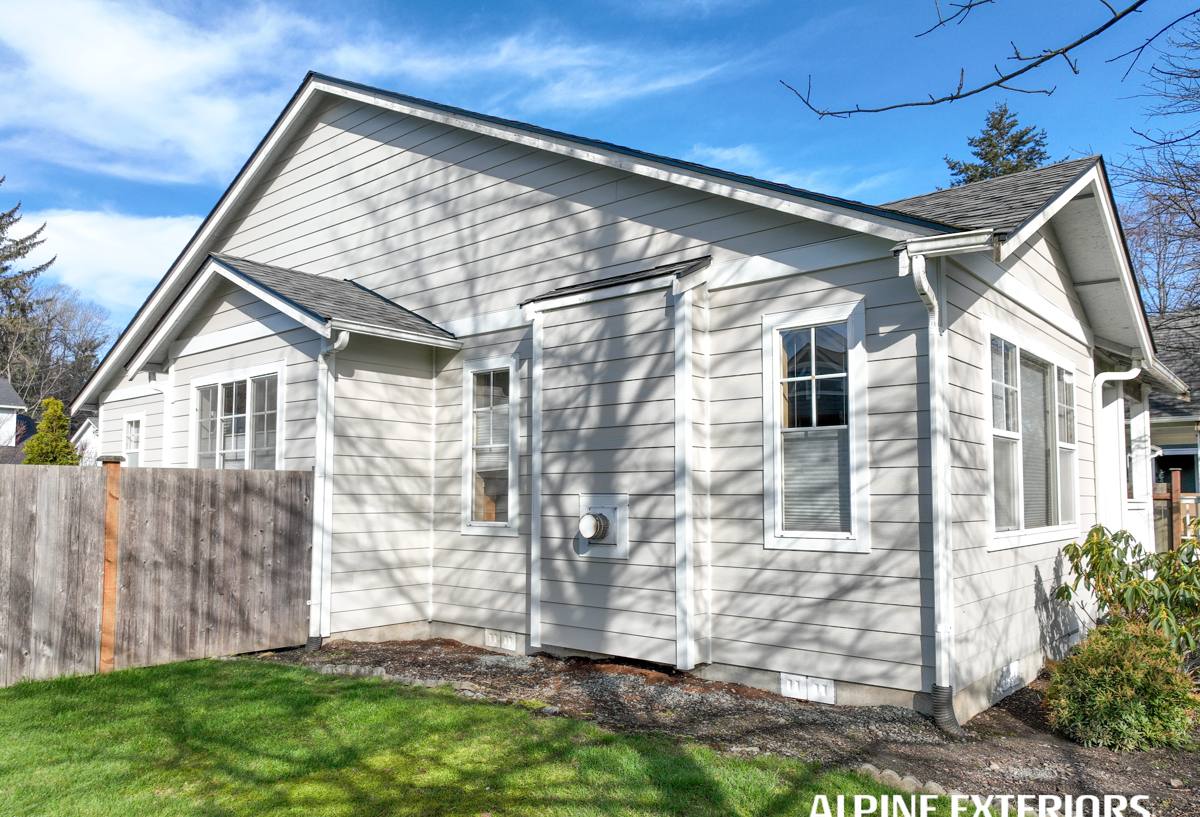
Common Roof Problems We See on Birch Bay Homes
Moss and Organic Growth
Moss doesn't just sit on top of shingles looking bad. It holds moisture against the roofing surface, lifts shingle edges as it grows, and works its way under tabs and around fasteners. On a roof with north-facing slopes or heavy tree shade, moss can establish itself within a couple of growing seasons and start causing granule loss and small lifts that let water in during the next hard rain.
Wind-Driven Rain Intrusion
Rain that falls straight down is rarely the problem. Rain pushed sideways by wind off the water finds every weak point — a slightly lifted shingle tab, a nail that's backed out a sixteenth of an inch, a flashing lap that's fine in normal weather but not aggressive enough for a real storm. Leaks that only show up during specific wind directions are almost always a flashing or fastener issue, not a shingle failure.
Corrosion at Metal Fasteners and Flashing
Salt air accelerates corrosion on exposed metal. Standard fasteners, cheaper flashing, and older vent boots that use uncoated metal parts corrode faster here than in a drier, inland climate. Once a fastener starts rusting, it loses its grip, backs out slightly, and creates a path for water — often long before the surrounding shingle looks like it needs attention.
What a Correct Roof Repair Actually Involves
Diagnosis Before Patching
A leak's entry point and the spot where water shows up on the ceiling are often several feet apart, because water travels along the underlayment or a rafter before it drips. A correct repair starts by tracing the actual path — checking the flashing, valleys, penetrations, and shingle courses upslope from the interior stain — instead of just sealing the spot that's visibly wet.
Matching Materials and Technique, Not Just Color
Patching in a new shingle that matches color but not the original installation pattern can create a new leak point instead of fixing one. Correct technique means integrating new material into the existing courses and laps the way the roof was originally shingled, so water still sheds the way the roof design intended.
Flashing and Underlayment Get the Same Attention as Shingles
Most repeat leaks we get called out for started as a "shingle repair" that never addressed the flashing or underlayment underneath. If the flashing at a chimney, skylight, or wall intersection is the actual failure point, replacing shingles alone won't fix anything. A repair that's going to hold up through another wet season addresses the whole assembly at that spot — underlayment, flashing, and the roofing material — not just the top layer.
Roof Repair or Roof Replacement: How We Help You Decide
Not every leak means a new roof, and not every roof past its "expected life" needs full replacement immediately. We look at the whole roof's condition, not just the spot that's failing, before recommending either option.
| Factor | Repair Usually Makes Sense | Replacement Usually Makes Sense |
|---|---|---|
| Age of roof | Well within expected service life | At or past expected life for the material |
| Extent of damage | Isolated to one area or system (a valley, a vent boot, one slope) | Multiple areas failing, or granule loss/curling across most of the roof |
| Moss and moisture history | First significant moss issue, deck still sound | Long-term moss damage with soft or discolored decking underneath |
| Flashing condition | Flashing sound, shingles are the issue | Flashing corroded or undersized throughout |
| Underlayment exposure | Underlayment intact where checked | Underlayment brittle, torn, or missing in multiple spots |
We'll tell you honestly which category your roof falls into. If a repair will genuinely hold, we're not going to talk you into a replacement — and if a repair would just be a temporary patch on a roof that's already failing in several places, we'll say that too, along with why.
Our Roof Repair Process
- Inspection and diagnosis. We get on the roof (or use ground and interior evidence when access is limited) to trace the actual leak path and check the surrounding roof condition, not just the reported problem area.
- Written explanation and estimate. You get a plain explanation of what's failing, why, and what the repair involves — before any work starts.
- Repair using matched materials and correct technique. Shingles, flashing, and underlayment are addressed together where the failure requires it, integrated into the existing roof rather than just capped over.
- Cleanup and check. Debris, old material, and displaced granules are cleared from the roof and gutters before we consider the job done.
- Follow-up if needed. If a repair area needs a second look after a hard rain, we stand behind the work.
Moss Prevention Is Part of a Good Repair, Not an Upsell
If moss caused or contributed to the damage we're repairing, we'll talk to you about what's driving the growth — shade, slope, debris buildup, gutter condition — and what reasonable steps reduce the chance of it coming back. This isn't about selling a separate service; a repair that ignores the reason the roof failed in the first place is just delaying the next call.
Timing Matters in This Climate
Late summer and early fall are the best windows for roof repair in Whatcom County — the roof surface is dry, moss growth has slowed, and work gets done before winter storms arrive. Winter repairs are sometimes unavoidable when a leak shows up mid-storm, and we handle those, but a planned repair in dry weather almost always goes cleaner and lasts longer than emergency work done between storm systems.
Signs Your Birch Bay Roof May Need Repair Now
- Visible moss buildup, especially on north-facing or shaded slopes
- Granules collecting in gutters or at downspout outlets
- Shingle tabs that look lifted, curled, or cracked
- Water stains on interior ceilings that appear or worsen after wind-driven storms specifically
- Rust streaks below flashing, vent boots, or fasteners
- Daylight visible through the roof deck from inside an attic
- Sagging or soft spots noticeable when walking the attic or from ladder inspection
- A roof that's due for its next professional inspection based on age or last known repair date
If more than one or two of these apply, it's worth having someone look at the whole roof rather than just the spot that's obviously a problem — a roof under enough stress to show one symptom often has a related issue nearby that hasn't announced itself yet.
Why It Matters to Hire a Crew That Already Works This Area
Roof repair advice that's correct in a dry inland climate can be wrong here. Fastener choices, flashing details, and even the timing of a repair all shift when the roof spends most of the year exposed to salt air and wind-driven rain off the water. A crew that regularly works Birch Bay, Semiahmoo, and the surrounding Whatcom County coastline has already seen how local roofs fail and what actually holds up against these specific conditions — not just what a general repair manual recommends.
That local pattern recognition is what keeps a repair from becoming a temporary fix. It's the difference between sealing a symptom and correcting the actual point of failure for the conditions this roof will keep facing every winter.
Get a Straight Answer About Your Roof
If you're dealing with a leak, moss damage, or a roof that's just due for a look after another wet Whatcom County winter, we're happy to come take a look and tell you honestly what it needs. Reach out for a free, no-pressure estimate using the form below — we'll walk the roof, explain what we find, and give you options, not a sales pitch.