 Semiahmoo
 Blaine Harbor Decks Face a Different Set of Problems
A deck built a few miles inland in Whatcom County ages differently than one built near Blaine Harbor and Semiahmoo Bay. The harbor brings salt-laden air on top of the region's already heavy rainfall, and the tree cover and shade around many harbor-area lots keep decks damp long after a storm has passed. None of that means a deck can't last out here — it just means the material choices, fastener selection, and framing details have to account for conditions a generic deck spec doesn't.
This page covers what we've learned building and repairing decks specifically in the Blaine Harbor area: what tends to fail first, what holds up, and what a correctly built deck looks like for this stretch of coastline.
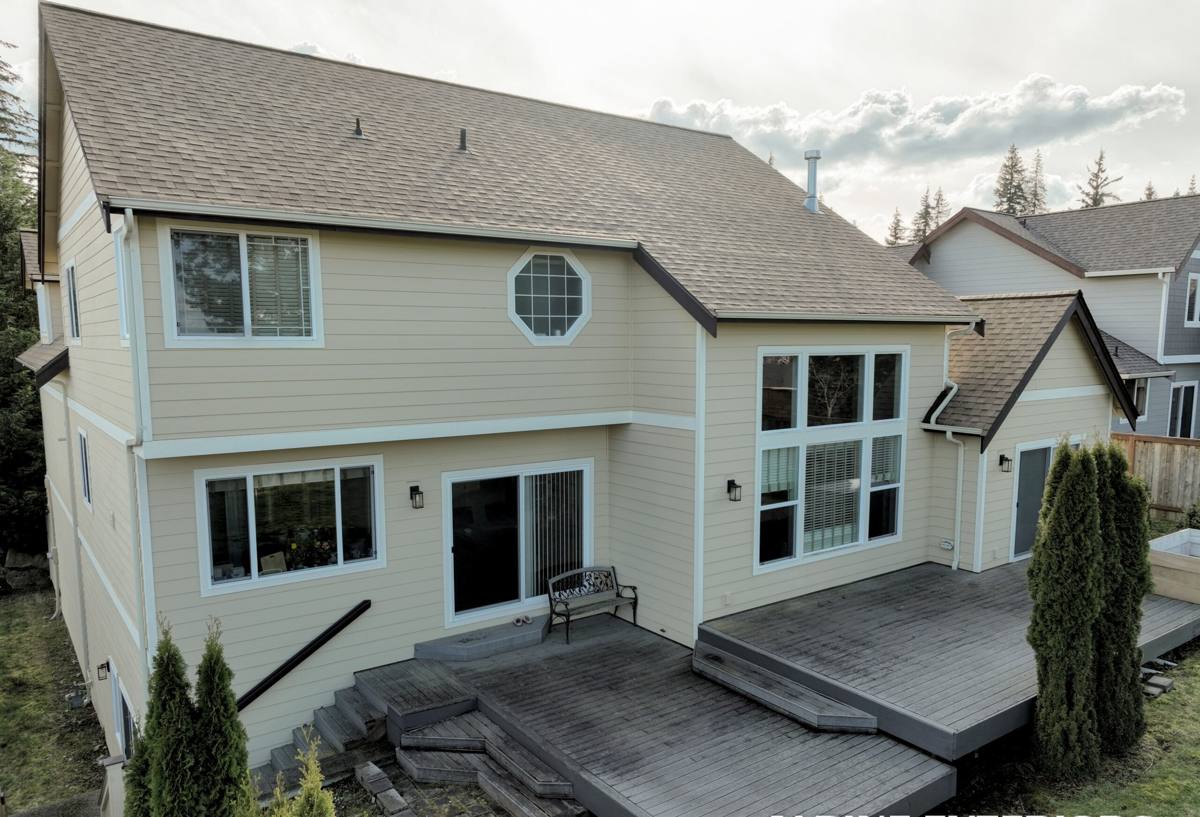
What Salt Air and Moss Actually Do to a Deck Over Time
Two separate mechanisms are working against a harbor-area deck at the same time, and they attack different parts of the structure.
Salt Air and Metal Hardware
Airborne salt accelerates corrosion on any exposed metal — nails, screws, joist hangers, bolts, and railing brackets. Standard electro-galvanized fasteners that would be fine 15 miles inland can start rusting within a few years this close to the water. Once a fastener corrodes, it loses holding strength before it ever looks obviously bad, which is why so many deck failures near the water start with hardware nobody thought to inspect.
Moisture, Shade, and Moss
Whatcom County's long wet season is one thing; a shaded harbor lot that stays damp between rains is another. Moss and algae don't just look bad on decking boards — they hold moisture against the wood surface, and on stairs and ramps they create a real slip hazard. Moss growing in the gaps between boards also traps organic debris that keeps the framing below wetter longer than it should be.
Choosing Decking Material for a Marine, Wet-Shade Environment
There's no single "best" decking material — there's a best fit for how exposed the site is, how much upkeep the homeowner wants to do, and budget. Here's how the common options actually perform in Blaine Harbor conditions specifically:
| Material | Moisture/Salt Behavior | Maintenance | Typical Lifespan Here |
|---|---|---|---|
| Pressure-treated lumber | Resists rot with proper sealing; needs re-sealing more often in salt air | Annual cleaning + sealant every 1-2 years | 10-15 years with upkeep |
| Cedar | Naturally rot- and insect-resistant, but greys and can absorb moisture if unsealed | Sealant or stain every 1-3 years, regular moss removal | 15-20 years with upkeep |
| Composite decking | Doesn't rot or absorb water; some boards can trap surface moss if not cleaned | Periodic washing, no sealing required | 25-30 years |
| PVC/capped composite | Fully sealed surface, best resistance to salt exposure and moisture | Occasional washing only | 25-30+ years |
For lots directly exposed to harbor wind and spray, we lean homeowners toward composite or capped PVC on the walking surface, because the maintenance burden of keeping a wood surface sealed against salt air year after year is real and easy to fall behind on. Wood is still a good, honest choice for homeowners who want that look and are committed to the upkeep schedule — it's a trade-off in appearance and cost versus maintenance, not a right-or-wrong answer.
Framing and Fasteners: Where Deck Failures Actually Start
Decking boards are the visible part, but framing and fasteners are what actually fail first near the water — and they're the part most homeowners never check.
- Joist hangers and structural screws should be stainless steel or heavy hot-dip galvanized rated for coastal exposure — not standard electro-galvanized, which corrodes noticeably faster in salt air.
- Joists and beams should be either naturally durable species or pressure-treated lumber rated for ground contact where applicable, with cut ends field-treated before installation.
- Post bases should sit above grade on proper standoff hardware, never buried or set directly in standing water after heavy rain.
- All structural connections get inspected for corrosion at the first sign of rust bleed on the wood surface, not after a board feels soft.
We build the frame to the same standard whether it's a deck the homeowner will see every day or the substructure underneath composite boards — because the frame is what actually holds the deck up long after the surface material has been chosen for looks.
Railings and Hardware: The Parts People Touch Every Day
Railings take a double hit near the harbor: they're handled constantly (transferring salt and moisture to hands and back to the rail), and they're often the most exposed part of the structure to wind-driven rain. Aluminum and stainless cable railing systems hold up well here because they don't rely on painted or coated finishes that can chip and expose bare metal to salt air. Wood railings need the same sealing discipline as wood decking — arguably more, since hand contact wears finishes faster on top rails than anywhere else on the structure.
Where the Deck Meets the House: Ledger Boards and Drainage
The single most common point of hidden rot on any deck — harbor-area or not — is the ledger board where the deck attaches to the house. In a climate with this much driving rain, a poorly flashed ledger connection lets water track behind the siding and into the wall framing, and that damage often isn't visible until it's extensive.
A correct ledger connection includes proper flashing that directs water away from the house, a small gap or flashing detail that prevents wood-to-wood water trapping, and lag bolts or through-bolts sized and spaced to code — not just nailed on. We also grade and space decking boards to shed water quickly rather than pool it, since standing water combined with shade is exactly what accelerates moss growth and wood decay.
Our Deck Building Process in Blaine Harbor
The steps aren't unusual, but where we spend extra attention is specific to this site conditions:
- Site assessment — we look at wind exposure, shade pattern, drainage slope, and how close the structure sits to salt spray, since that determines hardware and material recommendations.
- Design and material selection — we walk through the decking, framing, and railing options above with the actual trade-offs for the specific lot, not a one-size answer.
- Permitting — decks attached to the house or elevated above a certain height typically require a permit through Whatcom County or the City of Blaine depending on the property; we handle that process as part of the job.
- Framing and structural work — built to the corrosion-resistant hardware standard above, with ledger flashing done correctly the first time.
- Decking, railing, and finish work — installed with proper board spacing for drainage and airflow underneath.
- Walkthrough — we go over the maintenance schedule for whatever material was chosen, so there are no surprises two years in.
Maintenance Checklist for a Harbor-Area Deck
Whatever material a deck is built from, a few habits make the biggest difference in how long it lasts this close to the water:
- Sweep debris out of board gaps regularly — trapped leaves and needles hold moisture and feed moss growth.
- Rinse salt residue off decking and railings after storms with onshore wind, especially in fall and winter.
- Check fasteners and hardware once a year for rust bleed or loosening, particularly on stairs and railing posts.
- Re-seal wood decking and railings on the schedule for that species — don't wait until the finish has visibly failed.
- Keep gutters and downspouts near the deck clear so runoff isn't dumping extra water onto or under the structure.
- Address moss with a proper deck-safe cleaner rather than pressure-washing alone, which can damage wood fibers and open the surface to more moisture.
Why Local Experience in Blaine Harbor Matters
A deck built to a generic spec sheet can look identical to one built for this environment — until year three or four, when the difference in hardware, flashing, and material choice starts to show. Working in and around Semiahmoo and Blaine Harbor regularly means we already know which fastener grades hold up, which lots get hit hardest by wind-driven salt spray, and which shaded areas need extra attention to drainage and moss control before they ever become a problem. That's the difference between a deck that needs major repair in five years and one that just needs normal upkeep for twenty.
If you're planning a new deck or need an honest look at one that's showing its age, we're happy to come out and take a look. Request a free, no-pressure estimate using the form below.