 Semiahmoo
 Blaine Harbor Decks Live in a Tougher Climate Than Most
If your deck sits anywhere near Blaine Harbor, it's dealing with a combination most inland Whatcom County homes never see: salt-laden air off Semiahmoo Bay, driving rain that comes in sideways during winter storms, and a moss season that can run from October clear through May. Any one of those is manageable on its own. Together, on a structure that's mostly exposed wood and metal fasteners, they shorten the life of a deck faster than most homeowners expect.
Salt air is corrosive to standard fasteners and hardware. Driving rain finds every gap in flashing, end grain, and board spacing. And moss doesn't just look bad — it holds moisture against wood and decking surfaces for months at a stretch, which is exactly the condition rot and mildew need to take hold. A deck repair that doesn't account for all three isn't really a repair; it's a delay.
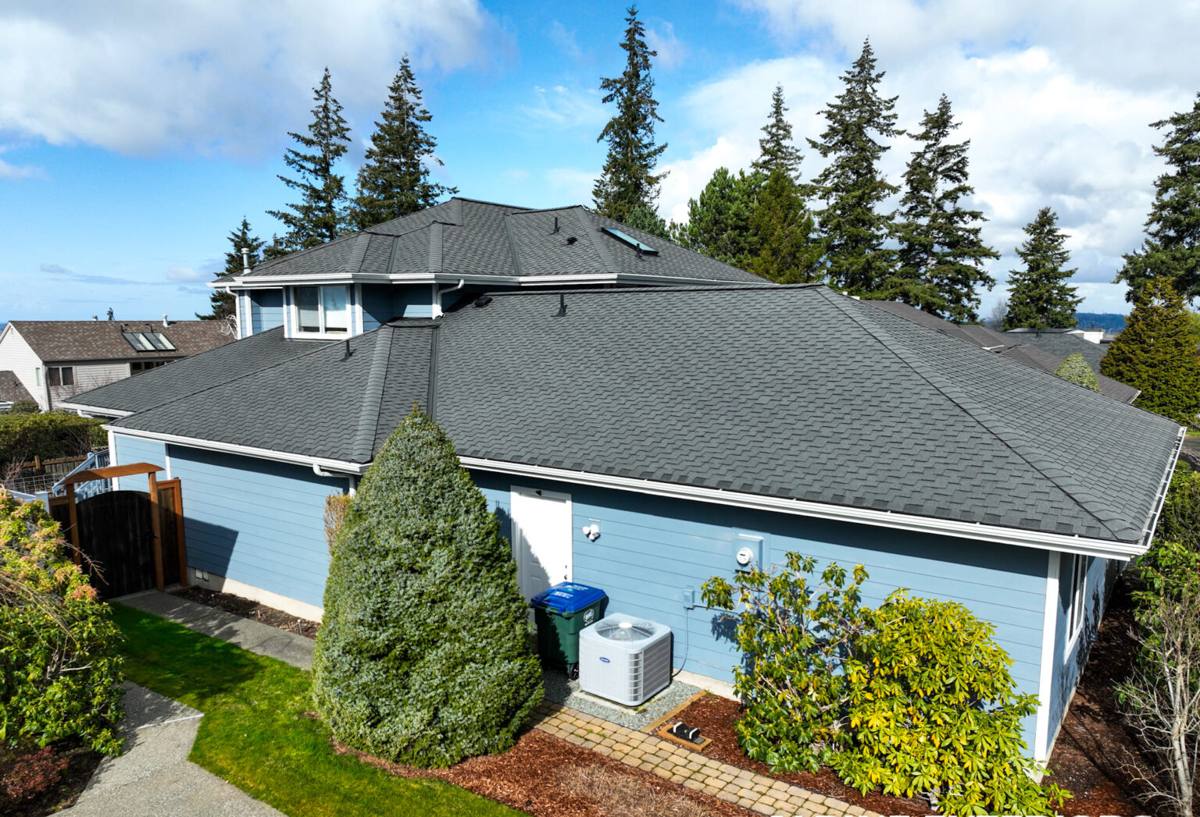
What Salt Air, Rain, and Moss Actually Do to a Deck
Salt air
Fine salt spray carries further inland than people assume, especially with the wind patterns around the harbor. It accelerates corrosion on exposed screws, nails, joist hangers, and any uncoated metal hardware. Once a fastener starts to corrode, it loses holding strength long before it looks obviously bad — which is why a deck can feel "loose" or "bouncy" well before anything looks broken.
Driving rain
Wind-driven rain doesn't just fall on a deck, it gets pushed into joints, under ledger boards, and into end grain that isn't sealed. End grain (the cut ends of boards) soaks up water many times faster than the flat face of the wood. Repeated soaking and drying cycles are what cause boards to cup, split, and eventually rot from the inside out.
Long moss season
Moss and algae thrive in the shaded, damp conditions common on decks that don't get much direct sun for half the year. Beyond the slip hazard, moss holds water against the decking surface long after the rain has stopped, extending every wet cycle. It also tends to establish first in board gaps and around fastener heads — the same spots most prone to trapped moisture and hidden rot.
Signs a Blaine Harbor Deck Needs Repair
Most deck problems in this area show up gradually, and homeowners often notice the cosmetic symptoms long before they understand the underlying cause. Here's what we look for, and what you can check yourself before calling anyone:
- Soft or spongy spots when you walk across the decking, especially near the house or along the edges
- Boards that have visibly cupped, warped, or split along the grain
- Rust streaks bleeding out from screw heads or around joist hangers
- A railing or post that flexes or wiggles more than it used to
- Persistent green or black staining that comes back within weeks of cleaning
- Gaps opening up between the ledger board and the house siding or trim
- Stairs that feel less solid than the rest of the deck
- A musty smell coming from underneath the deck, especially after rain
None of these automatically mean a full rebuild. Most of the time they point to a specific, fixable problem — but only if someone actually gets underneath the deck and checks the framing, not just the surface boards.
What a Correct Deck Repair Actually Involves
A repair that only replaces the boards you can see is a cosmetic fix, not a structural one. Here's what we check on every deck repair in this area before we touch a single board:
Framing and structure
Joists, beams, and the ledger board connection to the house get checked for rot, corrosion, and proper attachment. The ledger connection is one of the most common failure points on older decks — if flashing behind it has failed, water has likely been getting into that joint for years.
Fasteners and hardware
Any hardware showing rust or corrosion gets replaced, not just the piece that's visibly failing. If one joist hanger near the harbor-facing side has corroded, the others on that same exposure are usually not far behind.
Posts and footings
Post bases are checked for rot at the point where wood meets concrete or ground — a classic trap for standing water. Footings are checked for movement or settling, which shows up as a deck that's slightly out of level.
Drainage and moisture path
We look at how water actually moves off and away from the deck: board spacing, slope, and whether anything (planters, debris, moss buildup) is trapping water where it shouldn't sit.
Repair or Replace? Honest Cost Factors
Not every deck problem needs a full rebuild, and not every deck is worth repairing indefinitely. These are the factors that actually drive that decision:
| Factor | Leans toward repair | Leans toward replacement |
|---|---|---|
| Framing condition | Joists and ledger are solid, damage is localized | Rot has spread through multiple structural members |
| Age of deck | Under 15 years, built to a decent original spec | Older deck nearing the end of its practical service life |
| Fastener corrosion | Isolated to a few visible spots | Widespread corrosion across most hardware |
| Decking material | Good quality lumber or composite in otherwise sound shape | Original material was undersized or low-grade for this exposure |
| Budget and timeline | Want to extend service life a number of years | Want a long-term, lower-maintenance solution now |
Broadly, targeted repairs run in the hundreds to a few thousand dollars depending on scope, while a full rebuild is a bigger investment but resets the clock on the whole structure. We'll give you a straight answer on which side of that line your deck falls, and why — not just a quote.
Our Repair Process
- Full inspection. We get under the deck, not just walk the surface — checking joists, the ledger connection, posts, footings, and hardware condition.
- Moisture and damage mapping. We identify exactly which sections are affected and how far the damage has spread, so the repair addresses the actual problem, not just the symptom.
- A clear scope and plan. You get a written explanation of what needs to be replaced, what can be sound and left alone, and what it will cost — before any work starts.
- The repair itself. Damaged framing and boards are replaced with materials and fasteners suited to this exposure, hardware is upgraded where needed, and flashing details are corrected, not just patched over.
- Final check and cleanup. We check that the repaired sections are solid, level, and draining properly, and we leave the site clean.
Materials and Fasteners That Actually Hold Up Here
What we use on a Blaine Harbor deck repair is not the same as what we'd spec for a deck twenty miles inland, and that's intentional — it's a matter of matching materials to the exposure, not upselling.
- Stainless steel fasteners in high-exposure areas, since standard galvanized hardware corrodes noticeably faster this close to salt air
- Corrosion-resistant or coated joist hangers and structural hardware, matched to the fastener type used with them
- Properly sealed end grain on any cut lumber, since unsealed cuts are where rot most often starts
- Flashing details at the ledger board that actually shed water away from the house, not just cosmetic trim
- Decking material chosen based on your priorities — quality treated lumber where a natural look and lower upfront cost matter, composite where lower long-term maintenance is the priority
We'll walk you through the trade-offs on decking material honestly: treated lumber costs less upfront but needs periodic sealing and cleaning to hold up in this climate; composite costs more upfront but handles moisture and moss with less maintenance over time. Neither is automatically "better" — it depends on how much upkeep you want to do.
Keeping Moss and Algae From Coming Back
Repairing rot without addressing why the deck stayed wet in the first place just means you'll be back here again in a few years. Part of a proper repair is closing that loop:
Adequate board spacing lets water drain through rather than pool on the surface. Keeping the area around and under the deck clear of debris and overgrowth helps sunlight and air reach the surface, which slows moss regrowth. Where a deck sits in heavy shade for most of the year, periodic cleaning is going to be part of the maintenance routine no matter what material it's built from — that's the nature of this climate, not a sign anything was done wrong.
Why It Matters Working With a Crew That Already Knows Blaine Harbor
A deck repair crew that works this specific area regularly knows which exposures take the worst of the wind and salt spray, which fastener upgrades are worth it here versus overkill inland, and what kind of moisture damage to expect based on how a deck sits relative to the water. That's not something you get from a general contractor who repairs a deck here once and moves on to a job in a completely different climate.
It also means faster, more accurate diagnosis. When we already know the common failure points for decks in this exposure, we're not guessing — we're checking the specific spots that tend to fail first, so you're not paying for an open-ended investigation.
After the Repair: A Simple Maintenance Routine
A repaired deck in this climate holds up a lot longer with a small amount of regular attention:
- Clear moss and debris from the surface and gaps a couple of times a year, more often in heavy shade
- Check and re-seal any exposed end grain or cut edges every year or two
- Rinse off salt residue after major storms if the deck faces open water directly
- Do a quick check under the deck once a year for new rust spots or soft framing
- Keep gutters and downspouts near the deck clear so runoff isn't dumping extra water onto it
If you're seeing soft spots, corrosion, or a deck that just doesn't feel as solid as it used to, we're happy to take a look and give you a straight assessment — no pressure, no obligation. Fill out the form below for a free estimate.