 Semiahmoo
 Why Roofs in Custer Take a Different Kind of Beating
Custer sits close enough to Semiahmoo Bay and the Strait of Georgia that homes here deal with a combination most inland Whatcom County roofs never see: salt-laden air, wind-driven rain that comes in sideways off the water, and a moss season that can run eight or nine months out of the year. None of that is dramatic on its own, but stacked together over a few winters, it wears through the weak points in a roof system a lot faster than the manufacturer's warranty paperwork assumes.
Roof repair in Custer isn't just "patch the leak and move on." It's understanding which part of the assembly failed first, whether the cause is still active, and whether a targeted repair will actually hold given what this stretch of the county throws at a roof every year.
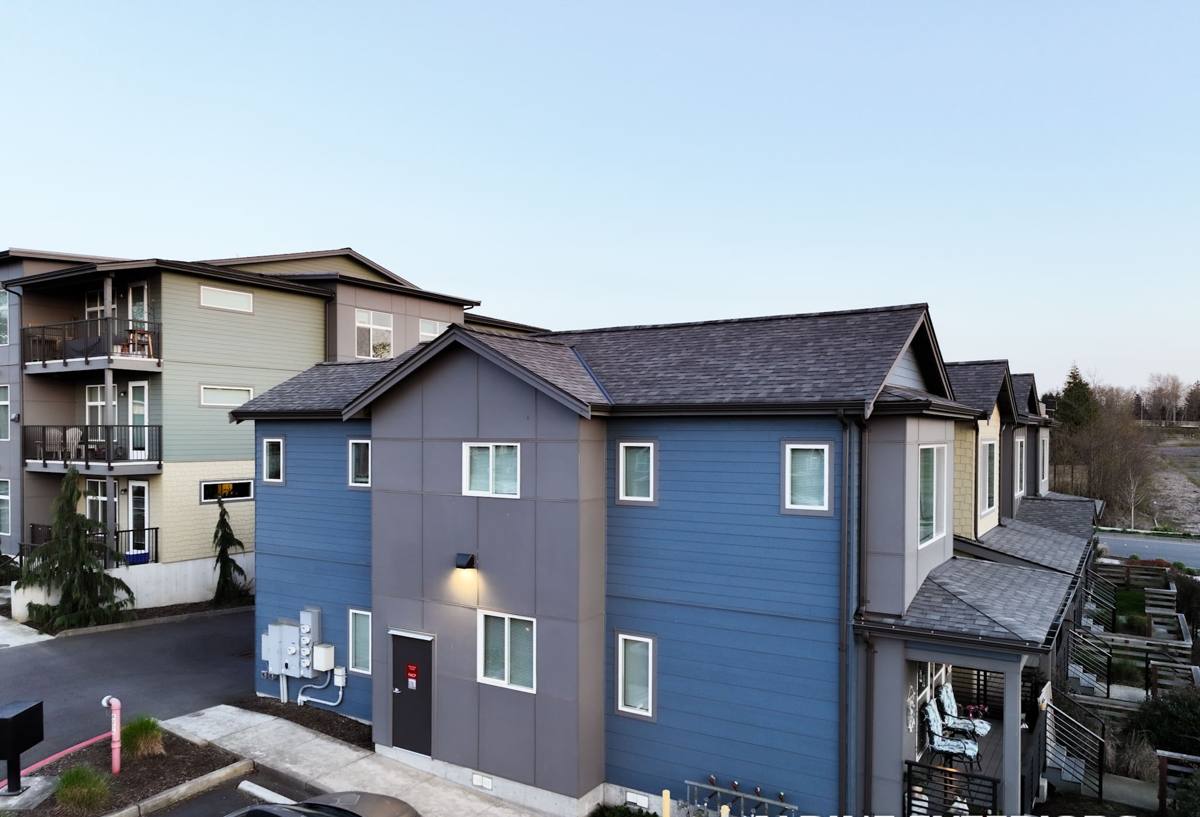
Common Roof Problems We See on Custer Homes
Moss and algae doing more than cosmetic damage
Moss doesn't just look bad on a north-facing slope or under fir trees — it holds moisture against the shingle surface for weeks at a time, and its root structure works into the granule layer and shingle mat. Over a few seasons that lifts shingle edges, which is exactly where wind-driven rain finds its way underneath. By the time a homeowner notices a stain on the ceiling, the moss has usually been doing damage for a year or more.
Flashing where the roof meets the siding
This is the junction we get called out for most often, and it overlaps naturally with the siding side of our work. Step flashing, kickout flashing at roof-to-wall corners, and counterflashing around chimneys and dormers all rely on being lapped correctly with the roofing material above and the siding or trim below. When that overlap is wrong — or when caulk was used to cover a gap instead of proper flashing — driving rain off the bay pushes water sideways right through it.
Valleys and low-slope transitions
Valleys carry more water than any other part of the roof, and they're where undersized or worn valley metal shows its age fastest. On homes with a lower-slope porch roof or dormer, ponding and slow drainage after a long rain event are common, especially where the original underlayment wasn't rated for it.
Corrosion from salt air
Proximity to the bay means airborne salt settles on exposed metal — nail heads, flashing, gutter fasteners, vent caps. Standard fasteners and thin-gauge flashing corrode noticeably faster here than they would twenty miles inland. We see this most on roofs that are otherwise in decent shape but have rust streaks bleeding down from fastener heads or flashing seams.
What a Correct Roof Repair Actually Involves
A repair that holds starts with an honest diagnosis, not a guess based on where the ceiling stain showed up. Water travels sideways along rafters and sheathing before it drips, so the visible sign inside is rarely directly under the actual entry point on the roof.
- Tracing the leak path from the interior stain or damp spot back to the actual point of entry on the roof deck
- Checking the condition of the decking itself — soft or delaminated sheathing has to be addressed, not just covered over
- Replacing damaged underlayment and, in vulnerable spots like valleys and eaves, upgrading to a self-adhered membrane rather than felt
- Rebuilding flashing at roof-to-wall transitions with proper step and kickout pieces, not sealant alone
- Matching shingle or roofing material as closely as possible so the repair doesn't stand out or create a new water path
- Using corrosion-resistant fasteners given how much salt air this area sees
We also treat moss as part of the repair scope where it's contributed to the failure, not as a separate cosmetic add-on. Removing it without addressing the underlying shade and moisture conditions just means it comes back in a season or two.
Repair or Replace? What Actually Drives the Decision
Not every leak means a new roof, and not every roof with a few soft spots is worth chasing with repairs indefinitely. Here's how we weigh it on Custer homes specifically:
| Situation | Usually a Repair | Usually Points to Replacement |
|---|---|---|
| Isolated flashing failure at one wall or chimney | Yes — rebuild that section correctly | Not on its own |
| Moss coverage on one or two slopes, shingles otherwise intact | Yes — clean, treat, repair any lifted shingles | Not on its own |
| Widespread granule loss across most slopes | Sometimes, if isolated to one exposure | Often — material is past its service life |
| Soft or delaminated decking in multiple areas | Only if very localized | Yes — extensive deck damage changes the math |
| Roof is under 10 years old with a known, fixable cause | Yes | Rarely |
| Multiple past repairs to different areas within a few years | Short term, maybe | Worth a full assessment before spending more |
Cost for a straightforward flashing or valley repair on a typical Custer home is usually a modest, contained expense — think low hundreds up to around a thousand dollars, depending on access and how closely the material needs to match. Deck repair, multi-area moss remediation, or anything involving removing and resetting larger sections of roofing pushes into a broader range, and it's worth getting an honest look before assuming either extreme.
How Our Repair Process Works
1. Inspection from the ground and the roof
We look at gutters, fascia, flashing, valleys, and the attic side if it's accessible, not just the spot where the leak showed up inside.
2. A written explanation of what we found
Before any work starts, you get a plain explanation of what's actually failing, why, and what it will take to fix it — not a vague line item.
3. The repair itself
We rebuild the failed section properly, matching materials where we can, and we don't leave sealant doing a flashing's job.
4. A check of what's around the repair
If we're up there fixing one flashing detail, we'll flag anything nearby that's heading toward a problem — loose fasteners, thinning granules, a gutter pulling away — so you know about it before it becomes its own emergency call.
Signs a Custer Roof Needs Attention Now
- Dark streaks or a stained ceiling patch that shows up or spreads after a heavy rain
- Visible moss buildup, especially on north- or shade-facing slopes
- Granules collecting in gutters or at downspout outlets
- Daylight visible through the roof deck from inside the attic
- Rust streaking below flashing or fastener heads
- Shingles that look lifted, curled, or cracked at the edges
- A musty smell in an upstairs room or closet that wasn't there before
- Sagging or a soft feel underfoot in a section of roof you can safely see from a ladder
Any one of these on its own might be minor. A few of them together, especially heading into the wetter months, is worth a look before the next storm off the bay turns a small issue into interior damage.
Why a Crew That Already Works in Custer Matters
A roofer who mostly works drier, inland parts of Whatcom County will size up a Custer roof the same way they'd size up one further from the water — and that's how flashing details end up under-built for what this area actually sees. Knowing which wall assemblies here catch wind-driven rain, how long moss actually takes to become structural rather than cosmetic in this microclimate, and which fastener and flashing choices hold up against salt air isn't something you get from a general roofing checklist. It comes from doing the work here, season after season, and seeing what fails and what doesn't.
It also matters for the roof-to-siding transitions specifically. Because we work on both sides of that junction, we're not guessing at how the flashing should integrate with the wall assembly below it — we build it the way we'd want to find it if we were the ones re-siding that wall five years from now.
Keeping a Repair From Becoming a Recurring Problem
Moss control between visits
Zinc or copper strips near the ridge, along with periodic gentle cleaning, slow moss regrowth without the damage that comes from aggressive scraping or pressure washing.
Gutter and downspout maintenance
Given how much rain this area sees over a wet season, clogged gutters back water up under the eave edge more often than people expect. Clearing them before the fall rains start is one of the cheapest things a homeowner can do to protect a recent repair.
A once-a-year look after storm season
A quick check after the roughest winter weather has passed catches loosened flashing or shifted shingles while they're still a small fix, rather than a callback in the middle of the next storm.
If you're seeing signs of trouble on a Custer roof, or you just want an honest opinion on whether it's a repair or something bigger, we're happy to take a look. The estimate is free, there's no pressure attached to it, and you'll get a straight answer either way — just fill out the form below to get started.