 Semiahmoo
 Why Ferndale Roofs Take a Different Kind of Beating
Ferndale sits close enough to the Salish Sea that salt-laden air reaches homes well inland, and that air does something most homeowners never think about until it's too late: it accelerates the corrosion of fasteners, flashing, and metal roofing components years ahead of what a manufacturer's warranty assumes. Add in the driving, wind-pushed rain that comes through Whatcom County in fall and winter storms, and you have a roof that isn't just shedding water from above — it's fighting moisture pushed sideways under shingle tabs and around every penetration.
Then there's moss. Whatcom County's long, mild, wet stretch from October through April gives moss, lichen, and algae months of uninterrupted growing conditions on any roof that doesn't get much direct sun or airflow. Moss isn't just cosmetic — it holds water against the roofing material long after a storm has passed, which is exactly the kind of sustained moisture exposure that shortens the life of asphalt shingles, rots decking, and works its way into fastener holes.
None of this means Ferndale homes need exotic materials or gimmicks. It means the replacement has to be done with this specific combination of salt exposure, driving rain, and moss pressure in mind — not with a generic approach that would work fine in a drier inland climate.
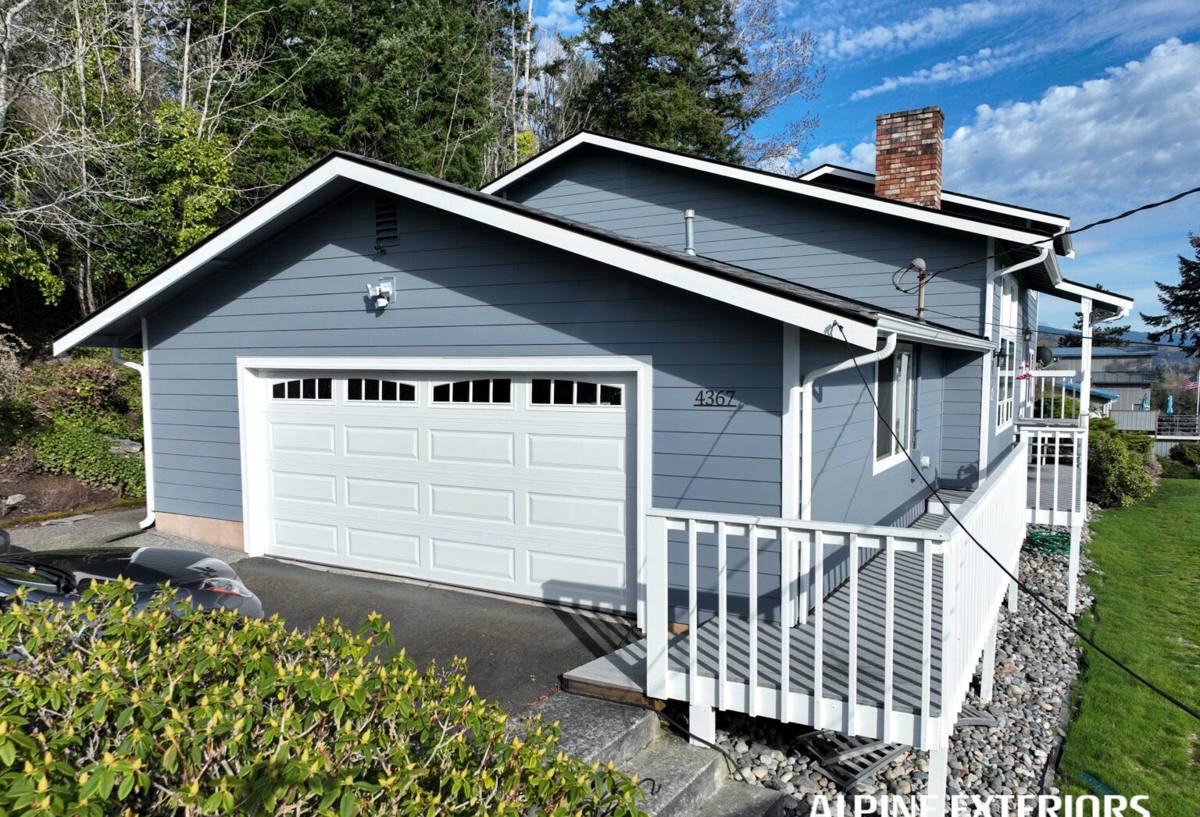
Signs a Ferndale Roof Needs Replacement, Not Another Patch
Every roof reaches a point where patching stops being the honest answer. In this climate, that point often arrives sooner than the shingle's rated lifespan would suggest, because moisture cycling and moss do their damage from the inside of the roofing system as much as the outside.
- Granules collecting in gutters or at downspout outlets, leaving shingles looking smooth and glassy
- Shingle tabs that are curling, cupping, or lifting at the edges, especially on slopes that stay shaded most of the day
- Moss or thick lichen mats covering more than a small patch of the roof, particularly along ridges and in valleys
- Soft or spongy spots underfoot on the roof deck, or sagging visible from the ground
- Water stains on interior ceilings or in the attic that reappear after every heavy rain, not just once
- Flashing around chimneys, skylights, or vent pipes that's rusted, lifted, or was never properly stepped and counter-flashed to begin with
- A roof that's already had two or more repair visits for leaks in different spots within a couple of years
One or two of these on their own might mean a targeted repair is still reasonable. Several at once, or a roof already past 20-25 years in a climate this wet, usually means the underlying materials and decking have absorbed more moisture cycles than they can keep shedding safely.
What an Honest Roof Replacement Actually Involves
A roof replacement is only as good as the layers nobody sees once the new shingles or panels go down. Skipping steps here is how a roof that looks fine from the driveway ends up leaking within a few winters.
Full Tear-Off and Deck Inspection
We don't install new roofing over old layers. A full tear-off is the only way to actually see the deck — and in a climate where moisture works its way under shingles over time, hidden deck rot is common enough that it has to be assumed possible until proven otherwise. Any soft, delaminated, or water-stained sheathing gets replaced before anything new goes on top of it.
Underlayment and Flashing Built for Wind-Driven Rain
Because storms here don't always drop rain straight down, underlayment choice and flashing detail matter more in Ferndale than in a drier, calmer climate. That means synthetic or self-adhered underlayment at eaves, valleys, and other vulnerable transitions, and step flashing plus counter-flashing at every wall and chimney intersection — not just a bead of sealant standing in for proper metalwork.
Ventilation That Actually Moves Air
A roof deck that can't dry out between storms stays damp longer, which feeds moss growth and slowly breaks down sheathing and shingle adhesive from underneath. Balanced intake and exhaust ventilation is part of a correct replacement, not an upsell — it's what lets the roof system dry between the wet spells that define this region's roofing season.
Materials Chosen for Salt Air and Moss, Not Just Looks
Fastener and flashing metals matter more near the water. We favor corrosion-resistant fasteners and flashing metals over standard-grade options, and where shingles are used, we look at products with algae-resistant granules rather than standard lines, since the difference in moss and algae streaking over ten years can be significant on a shaded, north-facing slope.
Comparing Roofing Materials for Ferndale's Climate
There's no single "best" roofing material for every Ferndale home — it depends on the roof's exposure, the home's style, and the budget. Here's how the common options actually compare once you factor in salt air, driving rain, and moss pressure.
| Material | Typical Lifespan Here | Moss & Moisture Behavior | Relative Cost | Best Fit |
|---|---|---|---|---|
| Standard asphalt shingle | 15-20 years | Moderate moss risk without algae-resistant granules; needs periodic cleaning | Lowest | Budget-conscious homes, well-sunned roof planes |
| Algae-resistant architectural shingle | 20-30 years | Better resistance to streaking and moss on shaded slopes | Moderate | Most Ferndale homes, especially shaded or north-facing roofs |
| Standing-seam metal | 40-50+ years | Sheds water and moss growth well due to smooth, sloped surface; needs quality fasteners near salt air | Higher | Long-term owners, homes closer to the water |
| Composite/synthetic shake or slate look | 30-50 years | Low moisture absorption, good moss resistance | Higher | Homeowners wanting a specific look with lower maintenance |
Cost isn't only about the material — deck condition, roof pitch, number of penetrations, and the amount of tear-off required all factor into the final number. A roof with a straightforward shape and sound decking will always cost less to replace correctly than one with multiple valleys, dormers, and hidden rot, regardless of which material you choose.
Our Replacement Process, Step by Step
- On-site inspection and estimate. We walk the roof (or use a lift/drone where pitch or safety requires it), check the attic for moisture and ventilation issues, and give you a written scope and price — no guessing after the fact.
- Material selection. We go over the options above in the context of your roof's exposure, shading, and budget, so you understand the trade-offs before committing.
- Scheduling around the weather. Roof replacement needs a dry window. In Whatcom County that means watching forecasts carefully and staging materials so the deck isn't left exposed longer than necessary.
- Tear-off and deck repair. Old roofing comes off down to the deck, damaged sheathing is replaced, and the deck is inspected before anything new is installed.
- Underlayment, flashing, and ventilation installation. This is the part that determines whether the roof performs in ten years, not just on day one.
- New roofing installation. Installed to manufacturer spec, with attention to nailing patterns and exposure — details that matter more in a windy, wet climate than in calmer regions.
- Cleanup and final walkthrough. Magnetic sweep for stray fasteners, gutter check, and a walkthrough so you know what was done and what to watch for going forward.
Why a Crew That Already Works Ferndale Matters
Roofing crews that split time across very different climates tend to default to generic specs — the same underlayment, the same ventilation approach, regardless of where the house sits. A crew that regularly works Ferndale and the surrounding Whatcom County area already knows which roof orientations hold moss longest, which older neighborhoods tend to have particular decking or flashing quirks, and how to sequence a job around a wet forecast without leaving a deck exposed overnight.
There's also a practical accountability angle: a local crew is the one you can call back next storm season if something needs a look, and the one whose work is visible on other roofs around town. That's a different relationship than a crew that finishes a job and moves on to another region entirely.
What to Expect During the Project
Most straightforward residential roof replacements in this area take one to three days on-site, depending on roof size, pitch, and how much deck repair turns up once tear-off starts. Expect noise and some vibration during tear-off, a work zone around the perimeter of the house for material staging and debris, and dust or debris control measures near windows and landscaping. We'll flag anything that changes the scope — like unexpected deck rot — before proceeding, not after the invoice.
Because this region doesn't offer long stretches of guaranteed dry weather, especially outside summer, we build a small weather buffer into scheduling rather than promising a start date we can't control. A roof rushed onto a wet deck is a roof that starts its life with a moisture problem baked in — that's not a trade-off worth making to hit a calendar date.
Keeping a New Roof Healthy After Installation
A correctly installed roof still needs basic upkeep in a climate this wet. None of it is complicated, but skipping it shortens the life you paid for.
- Keep gutters and downspouts clear so water isn't backing up under the roof edge during heavy rain
- Have overhanging branches trimmed back to reduce shade and debris buildup, which slows moss regrowth
- Schedule a gentle roof cleaning (not high-pressure washing, which can strip granules) if moss starts to reappear on shaded slopes
- Check attic ventilation isn't blocked by insulation or storage, since airflow is what keeps the deck drying between storms
- Have flashing around chimneys, skylights, and vents visually checked every couple of years, since these are the first spots to show wear
If you're weighing whether your roof needs full replacement or can hold on with targeted repair, we're happy to take a look and give you a straight answer either way. Reach out for a free, no-pressure estimate — the form below gets you a real inspection and a written scope, not a sales pitch.