 Semiahmoo
 Roofing Built for Life Near Blaine Harbor
Homes around Blaine Harbor sit in one of the more demanding roofing environments in Whatcom County. You've got salt-laden air coming off the water, wind-driven rain that finds every weak seam, and a moss season that seems to stretch longer every year. A roof that would hold up fine twenty miles inland can start showing real trouble here in half the time. If you're planning a new roof installation for a Blaine Harbor property, the details of material choice, ventilation, and flashing work matter more than they would on a typical build.
We install new roofs across Semiahmoo and the greater Blaine area, and Blaine Harbor properties get a specific approach from us — not because the framework changes, but because the exposure does. This page walks through what that means in practice: what the climate does to a roof over time, what a correct installation actually involves, and how we run the job from first look to final inspection.
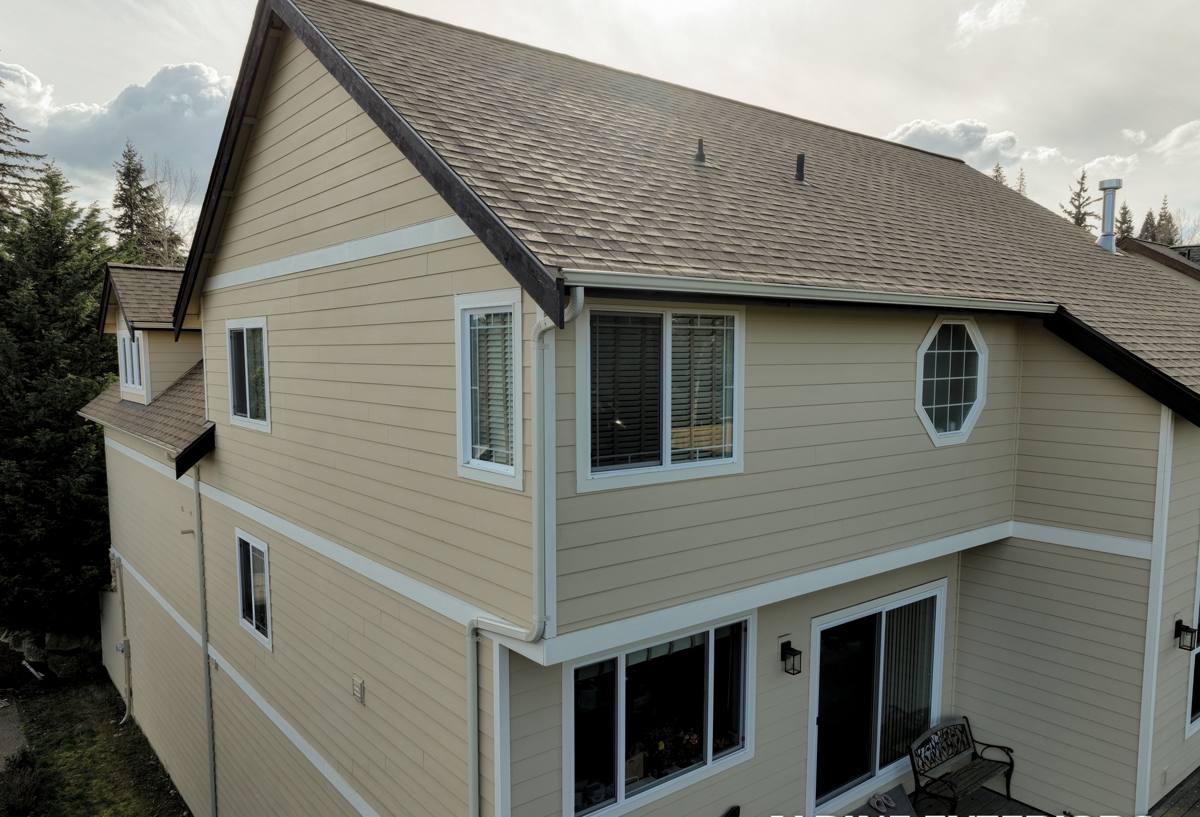
What Blaine Harbor's Climate Does to a Roof
Three things drive most of the roofing failures we see in this stretch of Whatcom County, and they compound each other.
Salt Air and Corrosion
Proximity to the water means airborne salt settles on every exposed surface, including your roof. Over years, that salt exposure accelerates corrosion on unprotected fasteners, flashing, and any metal components that aren't rated for a marine-adjacent environment. A roof built with standard-grade hardware in this location will show rust and fastener failure well ahead of schedule.
Driving Rain and Wind
Rain here rarely falls straight down. Wind off the water pushes it sideways and up under laps, edges, and vents that would stay dry in a calmer setting. That means underlayment quality, flashing details, and fastening patterns carry more weight than they would on a sheltered inland roof. A roof that's merely "watertight in a normal storm" isn't enough.
Moss and Moisture Retention
Cooler, damp conditions for a large part of the year create a long moss season on north-facing slopes and shaded roof sections. Moss holds moisture against the roofing surface, works into laps and granule layers, and can lift shingles or shorten the life of the material underneath. Left unmanaged, it turns a roof surface into a slow, steady moisture trap.
What a Correct Installation Involves
A new roof is really a system of layers working together — the roof covering is the part you see, but it's the least likely part to fail first if everything underneath it is done right.
Tear-Off and Deck Inspection
We remove the old roofing down to the deck rather than layering over it. That's the only way to actually see what condition the sheathing is in — soft spots, old leak staining, or delaminated plywood don't show up until the surface is off. Any damaged decking gets replaced before anything new goes down.
Underlayment
Given the wind-driven rain exposure here, we lean toward a synthetic or self-adhered underlayment with strong lap performance rather than the bare minimum felt product. In vulnerable zones — eaves, valleys, low-slope transitions — an ice-and-water or self-sealing membrane goes down as a second line of defense, so wind-blown moisture that gets past the roof covering still has somewhere to be stopped.
Flashing
Flashing is where most leaks actually originate, not the field of the roof. Chimneys, sidewalls, valleys, and any roof-to-wall transition get new metal flashing, properly lapped and sealed, rather than reusing old pieces or relying on sealant alone to bridge a gap. In a salt-air environment, we favor corrosion-resistant metal and fastener choices over standard-grade hardware.
Ventilation
A roof deck that can't breathe traps moisture from both directions — humid indoor air pushing up, and damp coastal air pressing down. Balanced intake and exhaust ventilation keeps the deck drier, which slows moss colonization from underneath and extends the life of the roofing material itself.
Fastening and Wind Rating
We fasten to the manufacturer's high-wind specification rather than a minimum builder-grade pattern, and we check that the chosen material's wind rating actually fits an exposed, near-water lot. Skipping this step is one of the more common shortcuts that shows up as lifted shingles after the first serious windstorm.
Choosing a Roofing Material for This Exposure
There's no single "best" roofing material for every home — it depends on your roof's slope, your budget, and how much long-term maintenance you want to take on. Here's how the common options compare for a Blaine Harbor exposure specifically.
| Material | Salt Air Behavior | Moss Resistance | Maintenance Load |
|---|---|---|---|
| Architectural asphalt shingle | Good with corrosion-resistant fasteners/flashing | Moderate — benefits from algae-resistant granules | Low to moderate |
| Standing seam metal | Very good with marine-grade coatings/fasteners | Very good — sheds moisture, little for moss to grip | Low |
| Cedar shake | Fair — needs vigilant fastener and finish maintenance | Poor without regular treatment and cleaning | High |
| Synthetic composite shingle | Good | Good, varies by product | Low to moderate |
We don't push cedar shake in this location as a rule. It can look great, but it demands a maintenance commitment — regular treatment, cleaning, and fastener checks — that most homeowners don't want to keep up with once the salt air and moss season start working on it. If you want that look, we'll talk through what upkeep actually requires before you commit, rather than let you find out the hard way in year three.
Algae-Resistant Granules
Most quality asphalt shingles now come in versions with algae-resistant (AR) granules built in, usually copper- or zinc-infused. In a moss-prone area like this, that upgrade is worth the modest cost difference over standard granules — it won't eliminate moss risk entirely, but it slows the growth that standard shingles invite.
Our Process, Start to Finish
- On-site assessment — we walk the roof and attic, check current ventilation, look for existing moisture or moss damage, and note anything specific to your home's exposure to wind and water.
- Written estimate — a clear breakdown of material options, scope, and cost, so you're comparing real numbers rather than guessing.
- Scheduling around weather — we plan tear-off and dry-in around the forecast; we don't leave a deck exposed overnight if rain is likely.
- Tear-off and deck repair — old roofing removed, deck inspected, any damaged sheathing replaced.
- Underlayment and flashing — installed to the standards described above, with extra attention at valleys, penetrations, and wall transitions.
- Roof covering installation — fastened to the correct wind-rated pattern for your material and roof exposure.
- Ventilation check — intake and exhaust balanced before we call the job finished.
- Final walkthrough — we go over the finished roof with you, including care and inspection tips specific to a Blaine Harbor property.
Signs Your Roof May Already Be Telling You Something
- Granules collecting in gutters or at the base of downspouts
- Dark streaking or visible moss growth, especially on north-facing slopes
- Curling, cupping, or lifted shingle edges
- Rust staining around flashing, vents, or fasteners
- Soft spots or sagging when walked on
- Daylight visible through the attic decking
- Interior water stains after a wind-driven rain event
- Higher heating or cooling bills without another clear cause
Any one of these on its own isn't necessarily an emergency, but a few together usually means the roof is past patching and into replacement territory.
Maintaining a New Roof in This Environment
A well-installed roof still benefits from some ongoing attention here, more than it would in a drier or more sheltered part of the county.
Moss Management
Even with algae-resistant shingles, a periodic gentle roof cleaning and moss removal — done correctly, without pressure-washing that strips granules — keeps shaded slopes from building up a moisture-holding layer.
Gutter and Drainage Checks
Driving rain moves a lot of water fast. Clean, properly pitched gutters and downspouts matter more here than in calmer inland areas, since a clogged gutter during a wind-driven storm backs water up under the roof edge rather than away from it.
Annual Flashing Inspection
Flashing and sealant at penetrations are the first things worth checking each year, since they're the first thing salt air and wind-driven rain go after. Catching a small flashing issue early is a lot cheaper than repairing the water damage it causes later.
Why Local Experience on Blaine Harbor Roofs Matters
A crew that mainly works drier, more sheltered neighborhoods can install a technically sound roof that still underperforms here, simply because the standard specs they default to weren't built for this level of salt exposure and wind-driven rain. Fastener grade, flashing metal choice, underlayment selection, and ventilation balance all need to be dialed in for a harbor-adjacent lot specifically, not just for "Pacific Northwest" in general.
We work roofs in and around Semiahmoo and Blaine regularly, which means we're not guessing at how a given material or detail holds up here — we're accounting for what this specific stretch of Whatcom County does to a roof over the years, and building the installation around that from the start.
Get a Straightforward Estimate
If your roof is showing wear, or you're planning ahead rather than waiting for a leak, we're glad to take a look and walk you through what we find — no pressure, no sales script. Use the form below to request a free estimate for your Blaine Harbor home.