 Semiahmoo
 Windows Built for California Creek's Coastal Exposure
Homes near California Creek sit close enough to Semiahmoo Bay and Drayton Harbor to catch salt-laden air off the water almost year-round, and close enough to the Cascades' rain shadow gap that Whatcom County's winter storms come in sideways more often than straight down. That combination is hard on windows in ways that inland homes never have to deal with. Frames corrode faster, sills take on moisture they can't shed, and the long gray stretch of moss season gives algae and mildew months to work into any gap a builder left unsealed. A window that's fine in Bellingham's drier pockets or east of the interstate can fail early out here if it wasn't chosen and installed with this specific exposure in mind.
This page covers custom window replacement and installation for California Creek homes specifically — what the local climate actually demands, what a correct install looks like, and why the crew doing the work matters as much as the window brand on the label.
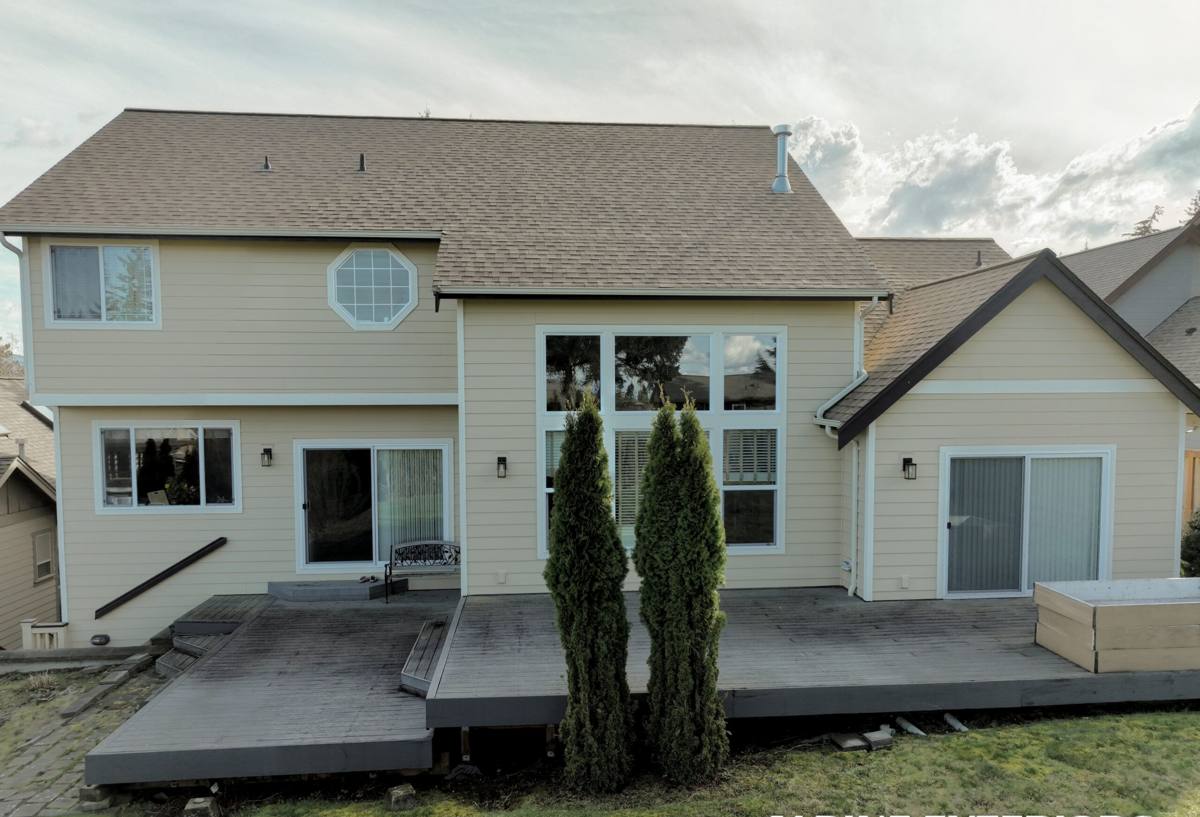
What Salt Air, Driving Rain, and Moss Season Actually Do to Windows
Salt Air and Corrosion
Airborne salt from the bay settles on everything nearby, including window hardware. Cheaper aluminum components, uncoated fasteners, and low-grade weatherstripping hold up poorly under that kind of steady exposure. Over a few winters you'll see chalky corrosion on hinges and locks, stiff or sticking sashes, and hardware that stops sealing tightly — which then lets in the wind-driven rain the corrosion was supposed to help keep out in the first place.
Driving Rain and Water Intrusion
Storms coming off the water don't just fall on a window, they push against it. That means flashing details, sill pans, and the seal between the window unit and the wall assembly matter more here than they would on a sheltered inland lot. A window that's watertight in a light rain can still leak under wind-driven rain if the flashing wasn't lapped correctly or the sealant bead was skipped in a spot nobody sees until there's a stain on the drywall two winters later.
Moss Season and Sustained Moisture
Whatcom County's long wet season means extended stretches where wood trim, sills, and any gap in the building envelope stay damp for days at a time. That's exactly the environment moss, algae, and mildew need to establish. On windows specifically, sustained moisture around the frame is what turns a small installation flaw into rot, and it's why material choice and drainage details deserve more attention here than they would in a drier climate.
Signs Your Current Windows Aren't Keeping Up
- Fogging or a hazy film between panes of double-pane glass — the seal has failed and the gas fill is gone
- Soft, discolored, or spongy trim and sills around the window frame
- Drafts you can feel by hand along the sash or frame edge on a windy day
- Hardware that's stiff, corroded, or won't latch fully closed
- Visible gaps between the window frame and siding or trim
- A musty smell near the window that wasn't there before, especially after a wet stretch
- Paint or finish peeling specifically around the window opening rather than the wall generally
Any one of these can be minor on its own. Two or three together usually means water has been getting past the seal for a while, and the window opening — not just the window unit — needs attention.
What a Correct Custom Window Job Actually Involves
"Custom" window work means the unit is built or configured to fit the actual opening and the actual conditions of your home, rather than forcing a stock size to fit. For California Creek homes, that has a few extra layers beyond just measuring the rough opening:
Assessment Before Anything Is Ordered
We check the condition of the existing framing, sill, and sheathing before recommending a product. If there's hidden moisture damage from a prior leak, that needs to be addressed as part of the job — installing a new window into a compromised opening just repeats the same failure on a longer timeline.
Material and Glazing Selection
Frame material, glass package, and hardware finish all affect how a window holds up to salt air and sustained rain. We'll walk through the honest trade-offs for your specific exposure rather than defaulting to whatever's easiest to install.
Flashing and Drainage Detail
This is the part that determines whether a window actually stays dry through a driving-rain storm. Proper flashing integration with the house wrap or building paper, a sloped sill pan, and correctly lapped layers (so water is always directed outward and downward, never trapped) matter more than the window brand itself.
Sealing and Insulation
The gap between the window unit and the rough opening gets insulated and sealed to control both air leakage and moisture, using materials suited to a low-expansion, non-water-absorbing standard rather than whatever's cheapest.
Finish Work
Trim, caulking, and paint or stain get finished to shed water rather than collect it — small details like caulk lines and drip edges matter a lot more here than they would in a drier region.
Frame Material Comparison for This Climate
| Material | Salt Air Performance | Moisture Handling | Maintenance |
|---|---|---|---|
| Vinyl | Good — won't corrode | Good, if drainage details are correct | Low; occasional cleaning |
| Fiberglass | Very good — dimensionally stable, resists corrosion | Very good | Low |
| Aluminum-clad wood | Fair — cladding protects the wood, but hardware and joints need quality control | Good on the exterior face; interior wood still needs to stay dry | Moderate |
| Bare wood | Poor without diligent upkeep — salt air accelerates finish breakdown | Requires regular refinishing to stay ahead of moisture | High |
| Uncoated aluminum | Poor — prone to pitting and corrosion near salt air | Fair, but hardware corrosion undermines seals over time | Moderate to high |
We don't push one material as the only answer. A well-detailed aluminum-clad wood window can perform fine here if it's installed and maintained correctly, and plenty of homeowners want the look of real wood on the interior. What we won't do is install a product where the maintenance burden or moisture behavior doesn't match what the homeowner is signing up for — that's a conversation we have up front, not a surprise two years in.
Our Process
- On-site assessment — we look at each opening, note any existing damage, and measure for a true custom fit rather than assuming stock sizes.
- Product walkthrough — we go over frame material, glazing options, and hardware finishes suited to your exposure and budget, with the trade-offs explained plainly.
- Written estimate — scope, materials, and timeline in writing before any work starts.
- Removal and opening prep — old units come out carefully, and we inspect and repair the framing and sheathing underneath before the new window goes in.
- Installation — proper flashing sequence, sill pan, insulation, and air-sealing, not just setting the unit and caulking the outside edge.
- Finish and cleanup — trim, paint or stain touch-up, and a clean job site when we're done.
- Walkthrough — we go over the finished work with you and answer questions about care and warranty coverage.
What Drives Cost on a Custom Window Job
| Factor | Why It Matters Here |
|---|---|
| Frame material | Fiberglass and quality vinyl generally cost more upfront than bare wood or basic aluminum but need less upkeep against salt air |
| Opening condition | Hidden rot or water damage found during removal adds repair scope before the new window can go in correctly |
| Glazing package | Higher-performance glass and gas fills cost more but help with both energy efficiency and condensation control in a wet climate |
| Number and size of openings | Larger custom shapes or multiple openings on one wall take more time to flash and finish correctly |
| Access and site conditions | Second-story or hard-to-reach openings add labor time and equipment needs |
| Trim and finish scope | Matching existing trim profiles or repainting a full elevation adds to the finish line item |
We give straightforward, itemized estimates so you can see where the money is going rather than one lump number. If a cheaper option exists that still holds up in this climate, we'll tell you — and if a cheaper option won't hold up, we'll tell you that too.
Why Local Experience with California Creek Homes Matters
A crew that only occasionally works this close to the water can miss the details that matter most out here — the extra attention flashing needs against driving rain, the hardware finishes that actually hold up to salt air, and the drainage detailing that keeps moss-season moisture from turning into rot. Working regularly in this specific pocket of Whatcom County means we've seen how different products and install methods actually perform after a few real winters here, not just on a spec sheet. That experience shapes which materials we recommend and how we detail the install, rather than applying a one-size-fits-all approach borrowed from a drier region.
Local permitting and code requirements can also vary by jurisdiction within the county, and a crew that regularly works in the area already knows what's expected before the job starts, which keeps the process moving instead of stalling on paperwork.
Keeping New Windows Performing Long-Term
- Rinse salt residue off exterior frames and hardware periodically, especially after storms
- Keep weep holes and drainage channels clear of debris, moss, and dirt
- Check and refresh exterior caulking annually, since UV and salt exposure break it down faster here
- Operate hardware regularly through the year so mechanisms don't seize up between uses
- Watch for and clear moss or algae buildup on sills and trim before it holds moisture against the frame
- Have any soft trim, staining, or drafts checked promptly rather than waiting for a bigger problem
A properly installed window in the right material for this climate shouldn't need much beyond this — but the maintenance habits matter more here than in a drier part of the state, simply because the exposure is more constant.
Get a Straight Answer for Your Home
If your windows near California Creek are showing any of the signs above, or you're planning a remodel and want windows chosen and installed for this specific coastal exposure, we're glad to take a look and give you a straightforward, no-pressure estimate. Use the form below to get started.